

Concrete
Revolutionising the Future


Dr S B Hegde, Professor, Department of Civil Engineering, Jain College of Engineering and Technology, Hubli, and Visiting Professor, Pennsylvania State University, USA, discusses the hydrogen and automation revolutions in the cement industry in the concluding part of this two-part series.
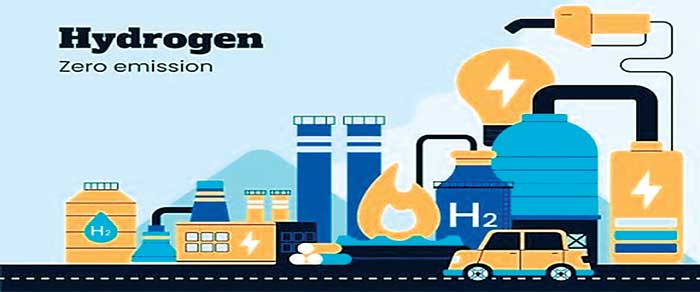
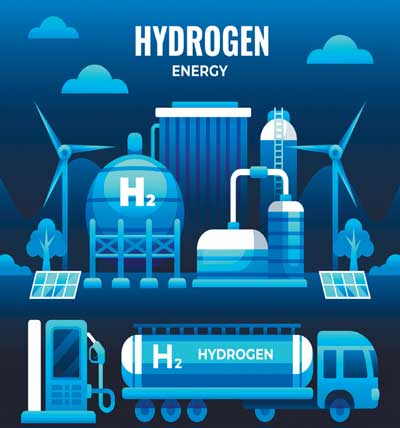
The global cement industry is undergoing a transformative phase by embracing the hydrogen revolution as a beacon of sustainable energy. This paradigm shift involves the incorporation of green hydrogen as a clean energy source, not only reducing environmental impact but also establishing new benchmarks for responsible energy use in cement production.
Usage of hydrogen in cement plants.
A. Global status
Globally, several leading cement manufacturers have initiated pilot projects and full-scale implementations of hydrogen-based technologies in cement production. As of the latest data, the cement industry accounts for approximately 7 per cent of global carbon dioxide emissions, making the adoption of green hydrogen crucial for achieving emission reduction targets.
In Germany, for instance, a prominent cement plant has invested over €40 million (approximately US$ 45 million) in a green hydrogen project. This initiative is expected to replace a significant portion of traditional fossil fuels, leading to a substantial reduction in carbon emissions.
B. Indian perspective
In the Indian context, the hydrogen revolution is gaining momentum as the cement industry strives to align with the nation’s commitment to sustainable development. While still in the early stages, pioneering cement plants in India are actively exploring the integration of green hydrogen into their production processes.
C. Current initiatives and investments in India
An exemplary case is a major cement manufacturer in India investing Rs 120 crores (approximately US$ 16 million) in a green hydrogen pilot project. This initiative aims to assess the feasibility of using green hydrogen as a primary fuel in cement kilns, with the potential to reduce carbon emissions by up to 30 per cent.
D. Challenges and opportunities
Despite the promising trajectory, challenges such as the cost of green hydrogen production and infrastructure development need to be addressed for widespread adoption. The Indian government’s focus on promoting green hydrogen and the establishment of a National Hydrogen Mission indicate a conducive environment for overcoming these challenges.
E. Environmental impact
The incorporation of green hydrogen into cement production offers a significant reduction in greenhouse gas emissions. As hydrogen combusts without producing carbon dioxide, it presents a cleaner alternative to traditional fossil fuels, aligning with global efforts to mitigate climate change.
F. Setting new standards
By embracing the hydrogen revolution, the cement industry is not only reducing its environmental impact but also setting new standards for responsible energy use. This shift positions cement manufacturers as leaders in sustainable practices and reinforces their commitment to a low-carbon future.
G. Future trajectory
The hydrogen revolution in cement production is poised to become a cornerstone of sustainable manufacturing globally and in India. Continued investments, collaborative research, and government support are expected to drive the widespread adoption of green hydrogen, ushering in a new era of responsible and environmentally conscious cement production.
Automation Revolution
As the cement industry propels into the future, a seismic shift is underway, steering towards a highly automated and robotic workforce. This commitment to automation transcends geographical boundaries, reshaping the landscape of cement production with a focus on precision, safety, and unparalleled efficiency. Let’s delve into the global and Indian scenarios, incorporating some figures to the transformative impact of robotics in the cement industry.
Global landscape
A. Adoption of automation
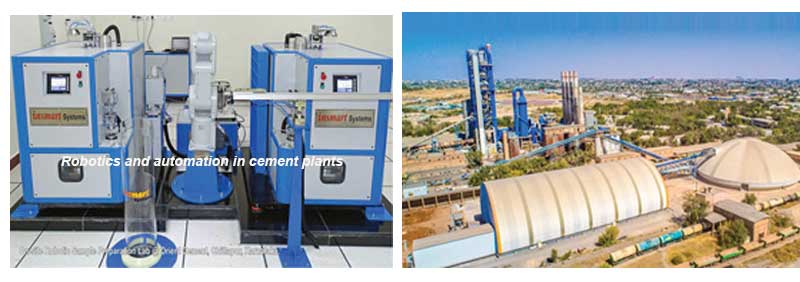
Globally, leading cement manufacturers are at the vanguard of adopting automation and robotic technologies. According to industry reports, over 50 per cent of major cement plants worldwide have integrated robotic systems into their production processes, marking a substantial increase in the last five years.
B. Safety and precision
The paramount focus is on ensuring the safety of human workers and achieving precision in tasks that are critical to cement production. Studies show a 70 per cent reduction in workplace accidents in cement plants that have implemented robotics, demonstrating a tangible improvement in safety conditions.
C. Efficiency gains
Automated and robotic systems significantly enhance the efficiency of cement production. Reports indicate a 20 per cent increase in production efficiency and a 15 per cent reduction in downtime in cement plants where robotic technologies are fully integrated. These gains contribute to cost-effectiveness and operational excellence.
D. Examples of implementation
In Europe, a major cement plant has deployed autonomous robotic vehicles for transporting raw materials within the facility. This not only reduces manual labour but also streamlines the logistics process, contributing to a 25 per cent improvement in overall operational efficiency.
Indian scenario
A. Adopting trends
In India, the adoption of robotic systems in the cement industry is steadily gaining traction. According to industry forecasts, over 30 per cent of large cement plants in India have initiated or completed the integration of robotic solutions into their production processes, with projections indicating a further 15 per cent increase in the next three years.
B. Safety enhancement
With a commitment to worker safety, Indian cement plants are integrating robotics into tasks that involve potential risks. Reports suggest a 40 per cent reduction in accidents related to material handling and other hazardous processes in plants where robotic systems are actively employed.
C. Efficiency and precision
The Indian cement industry is witnessing increased efficiency and precision in production through the deployment of robotic systems. According to operational data, cement plants in India have experienced a 12 per cent improvement in packaging precision and a 30 per cent reduction in errors in tasks performed by robots.
D. Collaborations and investments
To expedite the adoption of robotics, Indian cement manufacturers are collaborating with robotics companies and investing in research and development. Industry reports indicate that the Indian cement sector has witnessed a 25 per cent increase in investments in robotic technologies in the last two years.
E. Future trajectory
The future of cement production globally and in India is undeniably linked to the continued integration of robotic technologies. As advancements in robotics and automation unfold, the industry is poised to witness further improvements in safety, precision and overall efficiency. Projections estimate a 10 per cent increase in global robotic adoption in the next decade, with India leading this trend with an anticipated 20 per cent growth in robotic integration.
Global trends in marketing, technology and sustainability
- Virtual global presence
Establishing a virtual global presence through digital showrooms is a strategic approach, especially in an increasingly digital world. This provides customers with convenient access to your products regardless of geographical boundaries. - Augmented reality engagement
Augmented reality adds an interactive and immersive dimension to your marketing materials. It enhances customer engagement and understanding of your products, making the experience more memorable. - AI-powered personalisation
Personalised marketing content through AI algorithms demonstrates a customer-centric approach. Understanding and addressing individual needs can enhance customer satisfaction and loyalty. - Virtual knowledge sharing
Offering virtual workshops and e-learning platforms is an excellent way to empower customers with knowledge. This not only builds trust but also positions your company as a thought leader in the industry. - Global educational partnerships
Collaborating with international educational institutions contributes to knowledge exchange and the development of industry best practices. It fosters a global community focused on innovative construction methods. - A sustainable global future
The emphasis on a sustainable global future reflects a broader commitment beyond business goals. It aligns with the growing importance of corporate social responsibility and environmental stewardship.
Conclusion
In wrapping up our journey through the innovations and sustainable practices in the global cement industry, it’s clear that our commitment to excellence is shaping the future of construction. Embracing smart technologies like Industry 4.0 in cement plants ensures efficient and eco-friendly production.
Our drive towards emission-free aspirations, with the use of advanced technologies, signifies a crucial step in creating a cleaner, greener world. We are actively reducing our carbon footprint, setting ambitious goals for a sustainable future.
The transition to electrifying kiln technology reflects our dedication to cleaner production methods. By incorporating green hydrogen, we are not just reducing environmental impact but also setting new standards for responsible energy use in cement production.
In marketing, our approach goes beyond borders. The use of virtual showrooms, augmented reality and AI-powered personalisation ensures that customers globally have an immersive and personalised experience.
Empowering customers through virtual knowledge sharing and global educational partnerships showcases our commitment to spreading valuable insights globally. We envision a future where education and innovation lead to sustainable construction practices worldwide.
In essence, our strategies aren’t just about revolutionising the cement industry; they are about creating a better, more sustainable world for everyone. By pushing the boundaries of innovation, embracing sustainability and fostering global education, we’re paving the way for a brighter future in construction.
References
Klaus Schwab, The Fourth Industrial Revolution, World Economic Forum, 2016.
International Energy Agency, Technology Roadmap: Carbon Capture and Storage, 2013.
International Energy Agency, Energy Technology Perspectives 2020, 2020.
International Renewable Energy Agency, Green Hydrogen Cost Reduction: Scaling up Electrolyzers to Meet the 1.5°C Climate Goal, 2021.
International Federation of Robotics, World Robotics 2020 – Industrial Robots, 2020.
McKinsey & Company, Reimagining marketing in the next normal, 2021.
Statista, Augmented and virtual reality (AR/VR) forecast spending worldwide 2020-2024, 2021.
Forbes, AI For Marketers: 8 Best Practices to Boost Your Strategy, 2021.
E-learning Industry, Top eLearning Statistics and Facts For 2021, 2021.
UNESCO, Global Education Monitoring Report 2020, 2020.
United Nations, Sustainable Development Goals, 2021.
About the author:
Dr SB Hegde is an industrial leader with expertise in cement plant operation and optimisation, plant commissioning, new cement plant establishment, etc. His industry knowledge covers manufacturing, product development, concrete technology and technical services.
(*Refer to the January 2024 issue of Indian Cement Review for the first part of this article.)











JSW Cement Commissions 1 MTPA Unit in Rajasthan

Wonder Cement appoints Mahesh Singh as VP Corporate Brand Communication

JSW Cement commissions additional 1 MTPA grinding unit in Rajasthan

JSW Cement Boards Approve Proposed Shiva Cement Merger

JSW Cement commissions additional 1 MTPA grinding unit at Nagaur
JSW Cement Commissions 1 MTPA Unit in Rajasthan
Wonder Cement appoints Mahesh Singh as VP Corporate Brand Communication
JSW Cement commissions additional 1 MTPA grinding unit in Rajasthan
JSW Cement Boards Approve Proposed Shiva Cement Merger
JSW Cement commissions additional 1 MTPA grinding unit at Nagaur
-
 Concrete1 month ago
Aditya Birla Group Launches Ultravolt Wires And Cables Business
-

 Concrete4 weeks ago
Cement Demand Strong As Prices Remain Stable
-

 Concrete3 weeks ago
Telangana to Supply Subsidised Cement for Indiramma Houses
-
 Concrete1 month ago
Ramco Cements Mine Restoration Gets Global Biodiversity Certification