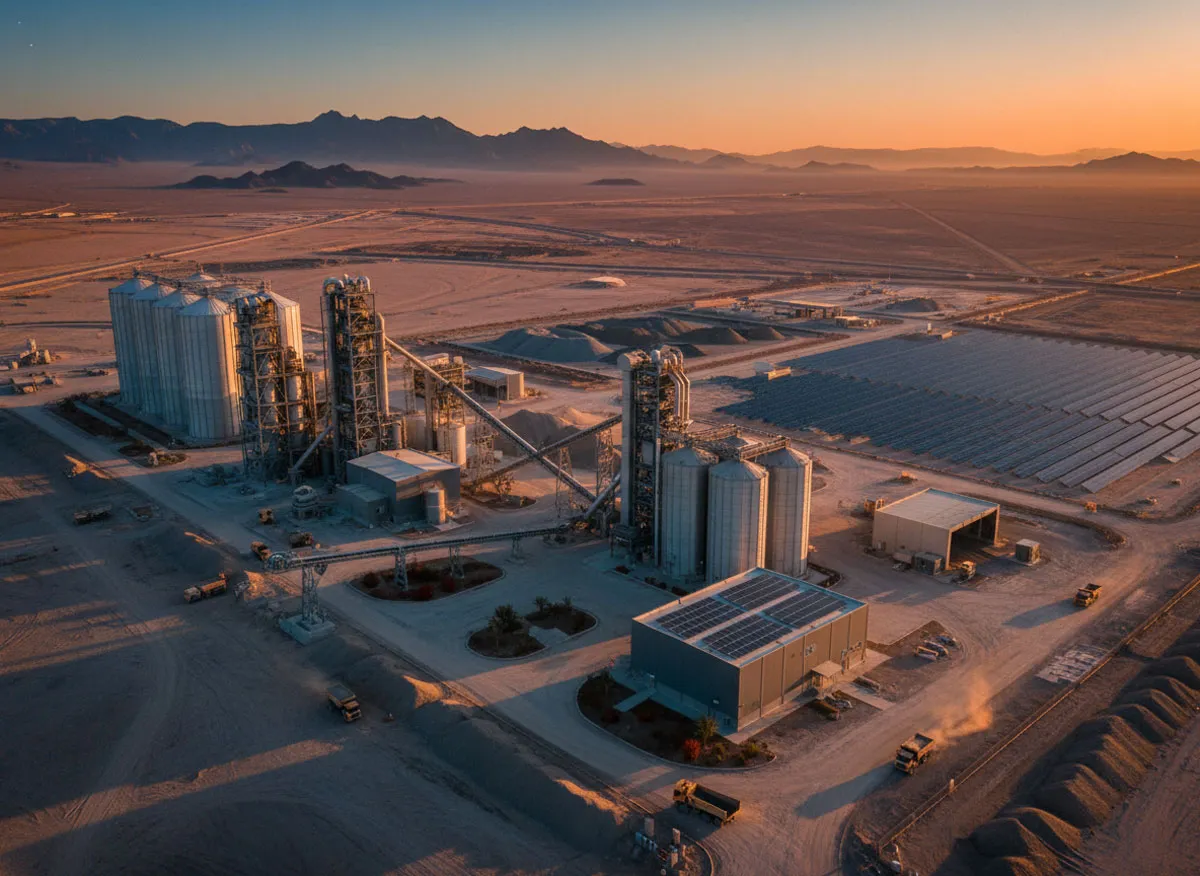
Pankaj Kejriwal, Executive Director, Star Cement, talks about new technologies in modern cement manufacturing and explores elements such as AFR, AI, CCU, WHR, et al.
Sustainable technology is the combination of two complementary ideas. The first is technology that is meant to remedy, improve, or offset carbonisation, environmental setbacks or problems. The second is technology that is produced using green or ecologically responsible materials or processes.
Technology can be developed to create systems that are environmentally sustainable. It will allow us to replace traditional practices with more sustainable ones. Renewable energy, AI and robotics, electric vehicles and automated systems are just some of the many ways technology can contribute to sustainability.
Sustainability continues to make its way higher on business executives list of priorities. Industrial Leaders across the organisations are also treating sustainability as a priority to drive business efficiency and revenue growth.
Digital technologies are critical to help enterprises reach environmental sustainability targets and enable new business models and revenue streams. Digital technologies are already impacting environmental sustainability, and they will continue to play a role in sustainability for the foreseeable future.
Artificial Intelligence (AI) solutions can be used to assess, predict and mitigate climate change and support sustainable waste management. For example, AI techniques can be used to monitor environmental issues like CO2 emission. The data gathered from this is then processed, leveraging machine learning techniques, to predict environmental changes. Adaptive systems and continuous intelligence techniques are used to regularly adjust business and engineering systems to cope with environmental changes and challenges.
When it comes to waste management and accelerating recycling processes, AI techniques have also become common place. Perspective analytics and market knowledge graphs are used to map the movement of waste materials and reduce unnecessary shipping while improving material reuse.
Leverage Internet of Things (IoT) to increase transparency when it comes to energy reduction and smart buildings. For instance, one can run connected assets to focus on energy reduction to benefit the enterprise and society. It is particularly important to run connected assets in industries such as manufacturing. Smart building technologies adapt dynamically to the times people work and types of office environments. Smart buildings can leverage IoT by adjusting lighting and heating, ventilation and air conditioning (HVAC) based on occupancy to reduce energy waste.
Cement manufacturing is an energy-intensive process that has undergone significant technological advancements in recent years. These modern trends and technologies have helped to improve the efficiency and sustainability of their operations. One of the key technologies in modern cement manufacturing is the use of alternative raw materials and alternative fuels.
In the past, cement was primarily produced using limestone, which was abundant and widely available. However, the increasing demand for cement has led to a depletion of limestone reserves and a need to find alternative sources of raw materials. Today, using a variety of alternative materials, including fly ash, slag, and recycled concrete, which not only help to reduce the demand for limestone, but also improve the sustainability of cement production.
Similarly, instead of coal now various alternative fuels such as RDF, bamboo, tyre chips, carbon black, agricultural waste, pharma waste and plastic waste are being used as fuel in cement kiln and captive power plant. Studies are underway to develop the technology to use solar energy for heating kiln thereby drastically reducing the carbon footprints.
Automation and technology contribute towards reduction of dust emission. It is essentially required to put in place the latest technology, management systems and continuous online monetary system that helps to routinely implement the activities that facilitate adherence to the emission norms prescribed under the pollution control legislation. The real-time data of online stack monitoring and ambient air-quality management system (AAQMSI is published on the web for better monitoring and control.
Several environmental impacts riddle the cement production process and, as a result, personal protective measures, such as helmets, goggles, masks earplugs and protective clothing are employed by operatives to address health and safety issues. Drilling limestone beds during mining produces large quantities of dust, for example, but wet drilling, where possible, minimises dust generation.
Other steps are also taken to minimise environmental impact. Rock blasting, which is most commonly conducted in limestone mines, may lead to ground vibration, flying rock, dust generation, and high noise levels. Sequential and controlled blasting helps minimise ground vibration, while blast holes can be optimised to avoid excessive generation of flying rock. Reducing the powder factor (i.e., the quantity of explosive used per tonne of rock broken) helps to minimise dust generation. Similarly, detonators and explosives can be managed so as to avoid high noise levels and control the peak particle velocity of the entire blasting operation. During surface mining, watering limestone can reduce dust generation.
In addition, green cement is a step in this direction. Green cement is an eco-friendly cement that uses a carbon-negative process of manufacturing. The major raw materials used to produce green cement include mostly the discarded waste from the industry. The slag from the blast furnace and fly ash are the chief materials used in the manufacturing of green cement.
A few types of the newly invented green cement are:
1. Ekkomaxx Cement
- Magnesium Oxychloride Cement
- Geopolymer cement
- Ferrocrete
5. Calcium Sulphoaluminate Cement
- Sequestrated Carbon Cement
- Cement Produced Using Superheated Steam
Now, technology is being developed where cement will be produced with Reactive Hydrothermal Liquid-phase Densification. This type of cement is produced using the same raw materials as ordinary Portland cement, but at lower temperature and through different chemical reaction that produces less CO2 compared with traditional Portland cement production process.
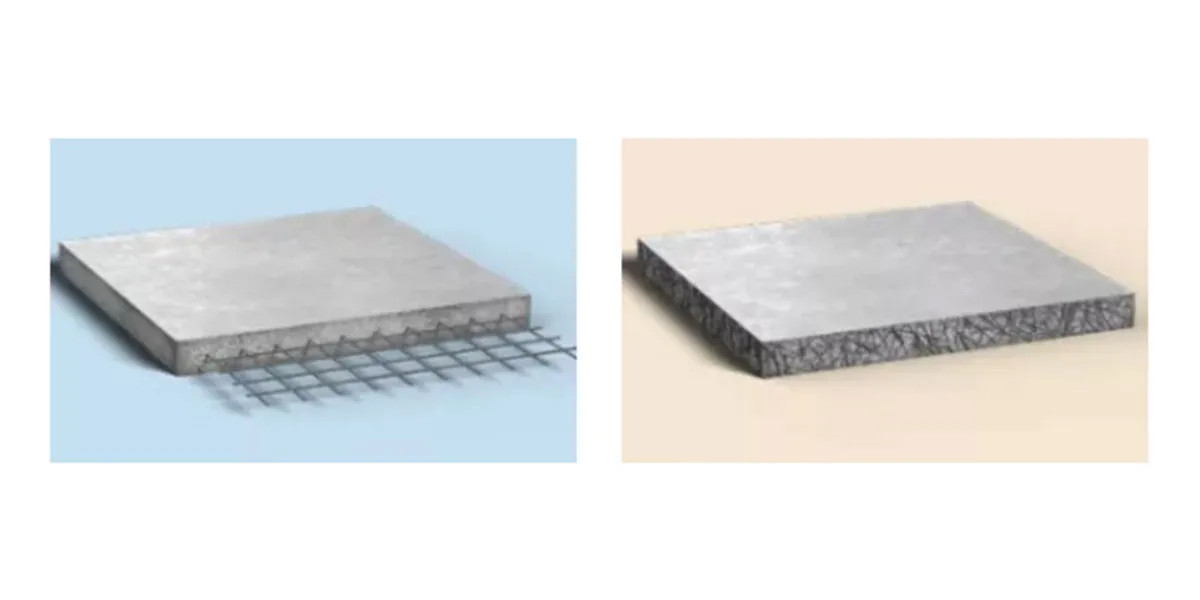
Concrete with green cement is a form of eco-friendly concrete that is manufactured using waste or residual materials from different industries, and requires less amount of energy for production. Compared to traditional concrete, it produces less carbon dioxide, and is considered environmentally friendly and more durable. Green concrete has a lower shrinkage rate and also becomes stronger
far more quickly than concrete made with traditional cement.
Promising changes in the formulation of cement have begun to emerge. For example, lowering the proportion of limestone in cement can result in fewer process and fuel emissions. Adding CO2 to concrete as it cures can strengthen the solid material, reduce the amount of cement needed, and sequester captured CO2. And improving carbon-capture technology would make it more economical to keep process emissions from entering the atmosphere.
In addition to these, there are also a number of new technologies that are being developed and implemented in modern cement manufacturing. These include advanced materials for cement production, such as nanomaterials and superabsorbent polymers, which can improve the performance and durability of cement. There are also new technologies for producing low-carbon cements, such as carbon capture and utilisation (CCU) technologies, which capture and reuse carbon dioxide emissions from cement plants.
Modern cement manufacturing uses advanced process control systems. These systems use sensors, control algorithms and other technologies to optimise the cement production process, improving efficiency and reducing waste. For example, advanced process control systems can help to optimise the mixing and grinding of raw materials, the burning of fuel, and the clinkering of cement, resulting in significant energy savings and reduced greenhouse gas emissions.
Another important technology in modern cement manufacturing is the use of waste heat recovery systems. These systems capture and reuse the heat generated during the cement production process, which can be used to generate electricity or for other purposes. This not only helps to reduce the energy consumption of cement plants, but also reduces their carbon footprint. Waste heat recovery is one of the most critical parameters to be controlled in cement plants because doing so helps to minimise energy conservation and safeguard the environment.
The modern trends and technologies in cement manufacturing are helping to improve the efficiency, sustainability and performance of this critical industry. As the demand for cement continues to grow, it is likely that these trends and technologies will continue to evolve, further improving the environmental and economic impact of cement production.
ABOUT THE AUTHOR:
Pankal Kejriwal, Executive Director, Star Cement holds over 30 years of experience including a 22-year stint in the cement Industry. He is responsible for conceptualising, engineering, implementation and commissioning of all cement projects to achieve higher outputs, energy conservation, cost optimisation, environmental sustainability, and statutory compliances.