Tushar Kulkarni, Business Head – Minerals, Cement & Mining, Siemens Large Drivers India, discusses the role of Artificial Intelligence (AI) and premium efficiency standard products in making cement plant operations more sustainable.
By FY27, cement consumption in India is expected to reach 450.78 million tonnes, driven majorly by expanding demand from housing, commercial construction, national infrastructure projects and industrial construction*. To meet the growing demand, many cement companies are planning or are undertaking capacity expansions. Despite market growth, challenges such as fluctuating raw material prices, energy costs, transportation costs, skill shortages and regulatory complexities continue to persist for cement plants.
Cement plants constantly strive to improve productivity and cost efficiency through sustainable manufacturing and operations. It is imperative for them to maintain continuous and reliable machine operations for producing high-quality cement that comply with industry standards, while also adhering to the environmental emission norms and regulations.
Over the last two decades, various technologies for advanced process control (APC) have been developed for the cement industry, viz fuzzy logic, expert systems and rudimentary approaches of artificial intelligence – these being the most widespread form of technology applied to process control. However, with the changes in technology and increasing use of alternate fuel residual (AFR) and alternative raw materials, the current optimisation systems (APC) have limited performance over process control and require excessive retuning.
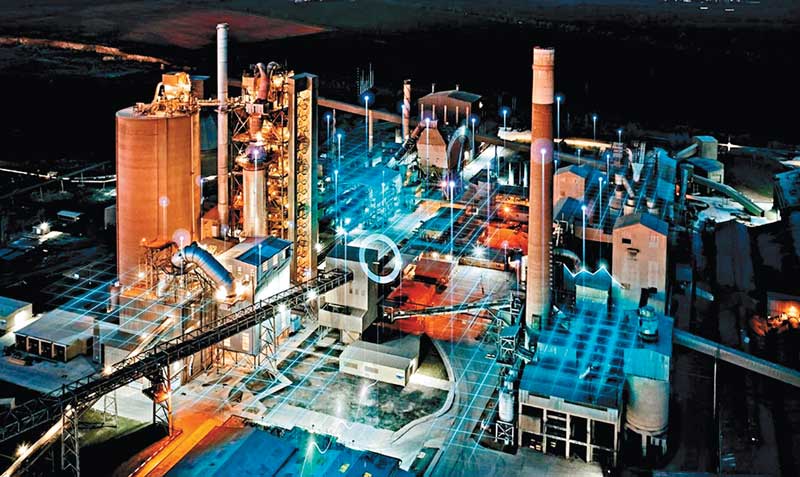
In this context, adoption of latest technologies viz digitalisation solutions and use of Artificial Intelligence (AI) will significantly help cement plants in their efforts towards innovation, efficiency and sustainability goals through improved process optimization and increased productivity. Our SICEMENT® Operations Digital solutions portfolio (AI based) is well-positioned to support the cement industry in this endeavor.
*Source: IBEF Aug 23
Transforming Data into Insights
Digitalisation involves the integration of digital technologies, automation and data exchange, which creates large volumes of diverse and continuous data. To leverage such a wealth of data, data science is the catalyst that transforms data into actionable intelligence. Data science involves leveraging advanced techniques and technologies to extract meaningful insights, patterns and knowledge from a large volume of data.
Data science being the backbone of digitalisation process, plays a pivotal role to harness the power of data for strategic decision making, efficiency gains and innovation, such as:
Data-driven decision making: Extracting valuable insights from large datasets for insights driven informed decision making.
Predictive analytics: Forecasting future trends and enhancing operational efficiency.
Process optimisation: Identifying areas of optimisation, which can lead to more efficient production and reduced energy consumption.
Smart maintenance: Predictive maintenance models can forecast potential failures, allowing for proactive interventions and minimising downtime.
Integration of AI in data science increases the capabilities of extracting valuable insights, making predictions and automating various tasks. It empowers data scientists to manage complex problems and extract meaningful information from diverse datasets.
To understand more on applying AI in cement production, let us look at an example of the rotary kiln in cement production. It is known that the different parameters of the kiln react differently to changes in the control parameters – some are sensitive, others do not react at all. In addition, some parameters have linear characteristics, while others behave nonlinearly. These significant differences require a differentiated approach to improve the control strategy. AI technology is designed to manage linear and nonlinear behaviour in a complex environment where numerous dependencies determine the engineering process.
The main difference between a data-centric solution and traditional expert systems is the development of a dedicated machine learning-based kiln model that provides more accurate insights into future kiln process trends than traditional approaches. The latter typically provides insights that are based on a generic mathematical toolbox and a simple aggregation of recent historical data. Advanced Process Control (APC) is widely used to improve kiln and mill control. However, in practice, the limitations of the current APC approach are apparent. For instance, a typical fuzzy logic is not able to cover all operating scenarios and is sensitive to operational changes. A typical Model Predictive Control (MPC) uses linear models in most cases and any change in equipment leads to a completely new setting of the model.
In contrast, by incorporating long-term data sets for AI training, the trained AI models can learn from the past and establish correlations between parameters and time and between actions and outcomes. This knowledge, accumulated in the models, forms the basis for better control performance.
The advantage of the AI-based solution over the previously described APC / MPC solutions is the development of a dedicated machine learning based kiln model that leads to more accurate insights into the future trends of the burning process than conventional approaches, which are usually based on a generic mathematical toolbox and a simple aggregation of recent historical data.
Driving Sustainability through Efficient Products
Industry has to adapt to products that have the highest possible efficiency standards. There is a huge drive by regulatory bodies as well as the manufacturers to scale up efficiencies of products used in process. Let us take an example of Low Voltage Motors. Currently the Minimum Efficiency Performance Standard (MEPS) in India is IE2 efficiency. Motors in IE3 and IE4 efficiency class also are available in the market. Due to the very lucrative ROI and also a concern on carbon emission, the penetration of motors with efficiency standard > IE2 is rapidly increasing and as per the estimation, > 30 per cent by kW of LV Motors produced are with efficiency class > IE2. With this encouraging voluntary shift to motors in efficiency class > IE2, industry is expecting the regulatory body to make IE3 as MEPS soon. Sectors such as the cement industries have already started moving towards IE4 in recent years.
The standards allow tolerance in efficiency declared by manufacturers for the purpose of accommodating manufacturing inconsistencies. However, many motors sold to users are by-design, utilising the negative side tolerances meant for manufacturing inconsistencies. Bearing this in mind, IEC has revised the criteria for CE Compliance w.e.f. 1st July 2022 which are stringent and so users are now assured of minimal utilisation of tolerance on the negative side. This will ensure IE3 and IE4 motors with enhanced operational efficiencies. Further, condition monitoring of motors with the help of cloud-based platforms can enhance the operational efficiencies.
Stringent standards, responded positively by manufacturers and aware users will pave a
path of higher level of sustainability in the cement industry.
ABOUT THE AUTHOR:
Tushar Kulkarni, Business Head – Minerals, Cement & Mining, Siemens Large Drivers India, leads the business verticals of Minerals – Cement & Mining within Innomotics India Pvt Ltd. With over 20 years of experience, he has held positions across business development, customer relationship management and project management amongst others.
Case Study: Retrofitting of lower efficient DC Motor by compact and highly efficient SIMOTICS H-Compact AC motor for Kiln Main Drive at one of India’s largest cement manufacturers. An Innomotics engineer was invited by a customer with an existing motor based on Direct Current Technology and was installed approx. 30 years ago. Based on the customer’s request, the Innomotics engineer visited the site to replace this old motor with a high efficiency AC Motor for Kiln Main Drive application. The customer’s priority was to have a tailor-made solution without disturbing existing mechanical and foundation set-up. After a detailed study during the site visit, the solution was a H-Compact 1PQ4 motor with high efficiency (97.7 per cent @ 75 per cent load) which enabled a reduction in annual energy consumption by 682,000 kWh. This helped in CO2 emission reduction by 440 Tons per annum which approximately would require 17,600 full grown trees to offset. Rating: 1000kW/6P/690V/50Hz/60°C, Application: Kiln Main Drive; Frame: H-Compact, 1PQ4 500 frame.



















 Concrete1 month ago
 Concrete4 weeks ago
 Concrete1 month ago
 Concrete3 weeks ago