Concrete
Sustainability as a Culture


Tarun Mishra, Co-founder, Covacsis Technologies, explores the role of technology in driving the cement sector towards a sustainable future.
The industrial era of the 20th century had more sustainable business practices than the 21st century. However, the global community has realised the need to bring sustainable practices back into the manufacturing process. Thus, the idea of sustainability as a culture, not just a metric to comply with, has evolved. Right impetus on innovating and developing effective manufacturing technologies coupled with making sustainability a boardroom agenda are important steps.
Making the world sustainable by minimising all kinds of waste produced in manufacturing processes and by minimising consumption of natural resources are essential parts of sustainability.
The core idea of sustainability is to drive towards:
- 1. Zero impact on the environment due to operations
- 2. Zero impact on the society
Manufacturing industry worldwide ought to play a greater role in this endeavour. Cement industry must rise to take larger responsibility, and become a role model for other industries in developing this culture as part of business practices by employing design thinking and digital interventions.
Mineral processing and cement production are extremely energy intensive activities. Reaching net zero and decarbonising cement requires lengthy changes throughout the value chain.
Cement-based materials, such as concrete and mortars, are used in extremely large amounts. Cement plays an important role in terms of economic and social relevance since it is fundamental to build and improve infrastructure. On the other hand, this industry is also a heavy polluter. Cement production releases 5-6 per cent of the entire CO2 generated due to human activities, accounting for about 4 per cent of global warming. It can release huge amounts of persistent organic pollutants, such as dioxins and heavy metals and particles. Energy consumption is also considerable. Cement production uses approximately 0.6 per cent of all energy produced in the US.
A huge innovation and solution is underway to make cement greener and sustainable, such as the use of alternative materials that can be used to minimise CO2 production and reduce energy consumption, such as calcium sulphoaluminate and ß-Ca2SiO4-rich cements.
Also sustainability of the cement industry can be significantly improved by using residues from other industrial sectors. Under adequate conditions, waste materials such as tyres, oils, municipal solid waste and solvents can be used as supplementary fuel in cement plants.
While the role of research and development is necessary to improve cement industry sustainability over a long run, with intelligent systems it is possible to get immediate results by optimising complex cement plant’s energy use while maintaining high equipment availability. All this must start with measuring various sustainability metrics and dimensions within the organisation.
Measurement metrics
An effective measurement requires:
- What to measure?
The sustainability metrics defined across the value chain becomes extremely important in the overall scheme of things. What is not measured never improves, therefore, a thorough study to map every value element and to identify sustainability metrics is imperative.
For example, cement manufacturers can think ways and means to measure:
a. Carbon neutrality at every stage such as kiln, cement mills, etc.
b. Waste produced or treated
c. Net health hazard in every process and job function
d. Net safety hazard in the process and job function - How to measure? What method to use for measuring?
Current manual mode of recording and logging information is limiting, ineffective and non-actionable. Furthermore, the current method is based on sample data collection once a shift or once a day. It does not fulfill beyond meeting compliance needs.
A new generation method using IIOT will eliminate manual methods and provide comprehensive, error free and valuable data along with the root cause analysis to improve further. - When do they get measured?
A comprehensive set of metrics getting measured using elaborate and error free methods is great but still not sufficient. Measuring these metrics in real time delivers unthinkable opportunities to the organisation to arrest performance compromises immediately and set things right without losing anything. Intelligent technologies like Covacsis’ Intelligent Plant Framework uses extensive data science to track all sorts of irregularities instantaneously and provides comprehensive root cause analysis with recommendations.
For example, C3S percentage change in kiln operation may affect the coal consumption per ton of clinker. Real time discovery and understanding of the right relation between C3S and other process parameters will allow the shop floor team to optimise coal costs. Some of these are not part of conventional distributed control systems (DCS), supervisory control and data acquisition (SCADA) and Historians.
An Organisational Practice
Platforms, tools or solutions like Intelligent Plant Framework provide easy, automatic and autonomous real time understanding with complete visibility about every anomaly.
A large part of assistance is provided through autonomous alerts and notifications mechanisms to users outlining those activities which are potentially compromising on sustainability metrics along with a detailed root cause analysis.
Sustainability is a cross functional agenda in every organisation. Production, quality, engineering, planning, utility, cost, human resource and other departments are required to form a cross functional committee to drive the agenda of sustainability.
Every process in the value stream must have a sustainability index. This index is to be computed in real time and published on a live screen and dashboard along with detailed analytics. Likewise, every department must have sustainability rating done automatically and autonomously on a daily basis to enforce the culture of sustainability.
Every individual must have a sustainability score in the organisation as part of their performance. This will help the human resource department in organising the right training for the right people in the organisation. Digital boot camp on sustainability is a great way to make the agenda pervasive across the organisation.
ABOUT THE AUTHOR:
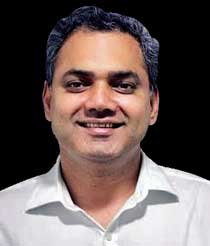
Tarun Mishra, Co-founder, Covacsis, is a proponent of industrial IOT since 2009. He helps companies built a profitable business by redefining manufacturing operations and its performance.






Concrete
Ultra Concrete Age
Prof. A. S. Khanna (Retd., IIT Bombay) on how Ultra-high performance concrete (UHPC) improves strength, durability and lifecycle performance.
Concrete
NCB Signs MoU With Cement Manufacturer To Boost Construction Skills
Partnership to deliver nationwide training and certification

Concrete
JSW Cement Commissions Nagaur Plant, Enters North India
New Rajasthan unit boosts capacity to 24.1 MTPA and expands reach


Ultra Concrete Age

NCB Signs MoU With Cement Manufacturer To Boost Construction Skills

JSW Cement Commissions Nagaur Plant, Enters North India

Cement Prices Likely To Rise As Petcoke Costs Increase

IIT Guwahati Develops Radiation-Resistant Cement Mortar
Ultra Concrete Age
NCB Signs MoU With Cement Manufacturer To Boost Construction Skills
JSW Cement Commissions Nagaur Plant, Enters North India
Cement Prices Likely To Rise As Petcoke Costs Increase