Sameer Bharadwaj, Head – Manufacturing Excellence, JK Cement, discusses how the strategic utilisation of SCMs leads to enhanced profitability, reduced carbon footprint, and aligns with global efforts toward decarbonisation in the cement industry.
Tell us about the supplementary cementitious materials (SCMs) used by your organisation in manufacturing of cement.
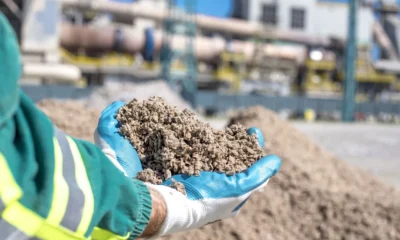
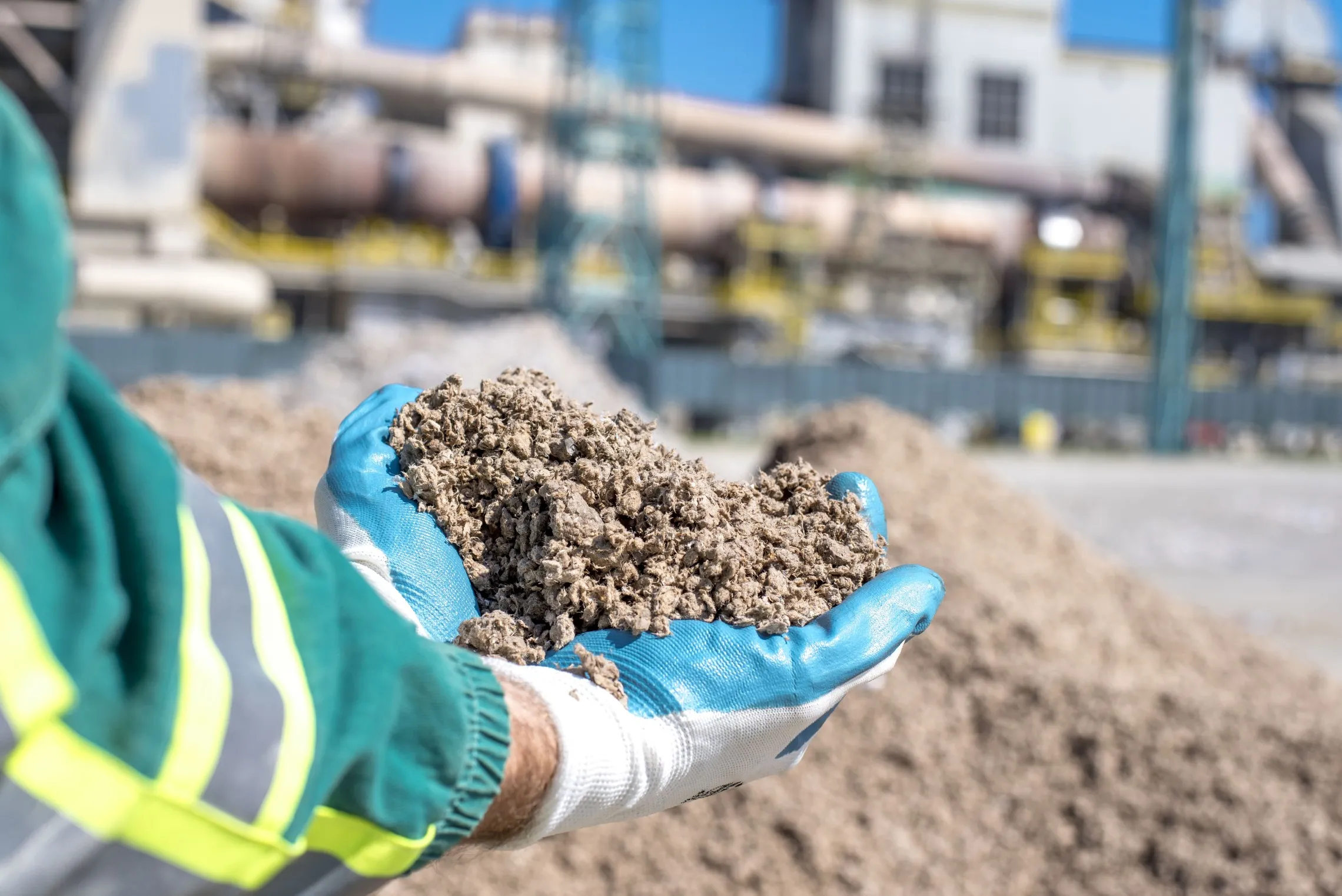
The key feature of SCMs is their Pozzolanic properties, which refers to its capability to react with Calcium Hydroxide (CH) to form Calcium Silicate Hydrate (C-S-H). Likewise, with the increased conventional fuel prices, adopting green energy utilisation is now become a necessity in order to bring down the cement manufacturing cost, in a similar manner adoption of SCM’s to a larger extent is a must requirement in order to bring down the clinker factor because clinker manufacturing will anyhow emit carbon emissions for calcination of limestone, but what we as a sustainable oriented manufacturer can contribute toward less carbon emissions is to produce more blended cement with less requirement of clinker.
At JK Cement, we manufacture various types of blended cements in which the contribution of SCM is well within the BIS norms. Major SCM’s are fly ash and slag which are procured from nearby thermal power plants and steel industries. We produce PPC (fly ash based) at all our manufacturing units in which 35 per cent (maximum) fly ash is being utilised. Also, to promote the more usage of blended cement, we are producing premium category PPC Cement which has a compressive strength equivalent to OPC. In our Muddapur plant in the South of India, we are also producing Portland Slag Cement (PSC).
How does the use of supplementary cementitious materials impact the process of cement manufacturing?
SCMs play a dual impact (both positive and negative) in the process of cement manufacturing. With the more usage of SCMs in blended cements, availability of them is a biggest challenge that too with cheaper cost.
Another negative impact is receipt of these materials with high moisture, for which proper feeding arrangement as well as extra energy is required to evaporate the moisture, which is an additional load to the manufacturing cost. SCMs such as pond ash, slag etc. are abrasive in nature, which wear out the cement mill internals at a faster pace, thereby resulting in more repair and maintenance cost. To mitigate all these challenges, regular resource mapping, new sources identification, various technological measures likewise installation of dryers, feeding systems are adopted for maximum supplementary cementitious materials’ utilisation. Looking into the positive aspects, the use of SCMs reduces the clinker factor, which not only reduces carbon emissions but also conserves our natural resources i.e., limestone.
- What are the key benefits of using SCMs in the cement manufacturing process?
- Reduce clinker factor, thereby reducing CO2 emissions
- Reduce thermal and electrical energy
- Enhance mines life
- Reduce fossil fuels
- Reduce water consumption
How does the use of supplementary materials increase the profitability of cement manufacturing for your organization?
SCMs contribute a lot in terms of increasing the profitability of cement manufacturing. It enhances the cement production capacity with a similar clinker factor of OPC (i.e., more cement will be produced against a given clinker composition percentage in OPC).
Our strategic planning to invest in new plants is in the direction of the available locations where both the availability as well as cost of supplementary cementitious materials are minimum. Usage of SCMs also improves the throughput of cement mills, due to which more cement can be produced for every hour of mill’s operation. Also, the inter-grinding of SCMs inside the mill consumes less electrical energy as compared to OPC production.
Tell us about the quality standards and checks implemented for the final product made using supplementary materials.
Standards released by Bureau of Indian Standards (BIS) are in place for adopting the quality standards for the final products. At JK Cement, we have our own Internal Quality Norms (IQN), which are far beyond BIS norms. BIS has released standards for each individual grade of cement in which maximum limits for dosage of each individual supplementary cementitious materials are defined with compressive strength targets on day basis (1D, 3D, 28D etc.).
The following are the measures which we are taking care of, while using SCMs in our cement manufacturing process:
Sourcing of SCMs from vendors with defined quality parameters
Proper storage of SCMs inside our plant premises to avoid any contamination
Defined checklist for quality check at each process with regular intervals
Frequent calibration of SCMs Dosing systems, to get a qualitative final product.
Proactive approach as well as instant actions towards any variation in quality parameters at any intermediate step of the process
What are the major challenges you face while using supplementary materials for cement manufacturing?
Quality as well as quantity are major challenges in case of SCMs usage in blended cements. In case of fly ash, its quality varies from plant-to-plant form which it is generating, as different plants are using different grades of coal, due to which colour, fineness and other quality parameters of fly ash varies and thereby directly affect the cement quality.
Availability of good quality slag is limited, too, with economically viable cost, restricting more usage of it in blended cement. Except for fly ash and slag, availability of other SCMs is very less and not too economical.
How does the use of cement made of supplementary materials impact its
carbon footprint?
SCMs offer sustainability and performance advantages for the construction industry. Their use as a partial replacement for portland cement not only results in more durable, high-performance concrete but also lowers energy consumption and greenhouse gas emissions. For every ton of clinker replaced by SCMs, CO2 emissions are reduced by approximately 0.8 tonnes.
Cementitious blends have many properties that contribute to sustainable construction. Their use results in stronger, longer-lasting concrete and reduced emission of greenhouse gases. They also beneficially reuse by-products from other industries that might otherwise be disposed of in landfills. With the strategic use of SCM, cement industries are conserving natural resources for a longer time which enables them to produce a sustainable construction material in terms of low embodied carbon at a competitive cost. SCMs contribute to manufacturing of low clinker factor cement without compromising the quality of
the product.
How do you foresee the future of the global cement industry in terms of using alternative materials for cement manufacturing and running the race of decarbonisation?
With the continuous and drastic reduction of Ordinary Portland Slag production and consequently increase in production of blended cement likewise PPC, PSC, composite cement etc. the usage of Supplementary Cementitious Materials is increasing day by day.
This strategic change reduces the clinker factor utilisation, and thereby contributing reduction in CO2 emissions in clinker manufacturing and also comparatively less utilisation of specific electrical energy consumption (OPC demands more grinding power as compared to blended cements).
In the current scenario, a lot of research and development are in process to produce eco-friendly cements, in which calcined clay based cement is one of the major breakthroughs. In terms of decarbonisation, various studies are carried out on Carbon Capturing Units (CCU) and its storage, electrification of cement rotary kilns, zero emission mining, improving the portfolio of green energy utilisation etc. will be a stepping stone as well as contribution to drastic reduction of CO2 emissions, aiming to achieve Net Zero by 2050.

















 Concrete1 month ago
 Concrete4 weeks ago
 Concrete3 weeks ago
 Concrete1 month ago