ICR analyses how the integration of supplementary cementitious materials (SCM) and the strategies thereof has catalysed the cement industry’s economic landscape, fostering streamlined processes and enhanced resource utilisation, ultimately shaping a more resilient and profitable sector within India’s economy.
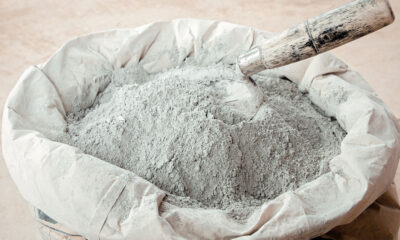
The way to look at any cementitious material in modern times would be to look at the carbon intensity inherent in it in terms of CO2 emissions, such as clinker, which forms the basis for making cement. After grinding the clinker (95 per cent) with gypsum and some correctives (together at 5 per cent), its emission intensity is 849-868 kg per tonne of output. Thus, when you produce ordinary Portland cement (OPC), which contains only clinker as the base cementitious material, the emission intensity is the highest at 750-860 kg of cement output. The lower end of the band is reserved for those who use the best technology that improves thermal efficiency and electrical efficiency.
Now, OPC could be the best suited for giving the early strength of cement measured by the compressive strength in MPa. Whether you take a 3-day or 7-day or 28-day strength, OPC would remain at the highest when you compare with any other form of cement that supplements clinker in the OPC with other cementitious materials like fly ash, slag, silica fume, natural pozzolans – such as calcined clays, shale and metakaolin, sugarcane bagass ash (SCBA) or rice husk ash (RHA).
The purpose of using supplementary cementitious material is two-fold:
- Economic
- Environmental
The way to deal with this subject would be to look at the life cycle assessment of each of these and compute the impact. To make matters simple one may first look at the carbon intensity in each in terms of emissions and attach an appropriate environmental cost to it. Let us look at some of these numbers:
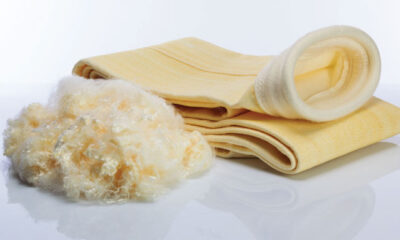
Portland Pozzolana Cement (PPC) uses a mix of 60-65 per cent clinker, 5 per cent gypsum and 25-30 per cent fly ash thus taking the overall emission to an average 700 kg per tonne of cement. Efforts have been always to look at ways of maximising fly ash and PPC specifications allow for even 35 per cent fly ash to meet the compressive strength guidelines. However, we must note that compressive strength will be lower for 3 days, 7 days and 28 days for PPC when compared with OPC by at least 8-10 per cent. If one considers the cost of fly ash that is replacing clinker, the economic impact is huge as the cost of the former is a fraction of the latter.
Economic Implications
To compute the economic benefits of fly ash in PPC there are two important factors to be considered. The grinding units that are the final delivery points of cement units must be logistically located such that the cost of fly ash could be minimised. But this is a network optimisation question and the optimisation would entail outbound logistics cost of cement as well. Most advanced economies, India included, have looked at fly ash as an economic agent that not only turns waste into wealth but also reduces environmental impact of cement emissions (850 kg to 700 kg per tonne). The reduction in the landed cost of fly ash would further improve the economics through better logistics cost optimisation and mode-mix improvements. In recent times freight charges on rail in India for fly ash have been reduced to move fly ash over longer distances.
The environmental impact over long distance haulage of fly ash thus could be brought down
using rail as the mode, a crucial factor for the life cycle assessment.
The wider economic implication could be seen in the alternative deployment of a waste that was put to landfill is now an economic alternative to clinker. Some fly ash producers like NTPC or TATA Power or Adani Power, who together produce more than 100 million tonnes of fly ash per year, could be powerful actors to sway economic balance. Fly ash brick manufacturers who operate in the smaller concentrated networks, mostly SMEs, could be the next contenders in the value balance.
Slag based cement, uses 50 per cent clinker and 45 per cent slag and 5 per cent gypsum on an average. It is the next best example of SCM making a huge difference to the economic as well as environmental impact. By replacing a large amount of clinker, slag-based cement thus makes the emission intensity of cement come down to less than 500 kg per tonne of cement. This when looked at the back of the cost of slag vis-à-vis clinker, which it replaces in the cement, the economic implication is huge. The total production of blast furnace slag is growing, despite its environmental impact and it makes an economic case for GGBS.
However, blast furnace slag or the copper smelter slag, as inputs mixed together, is not free and must compete as commodities with clinker. But game theoretic approaches to price negotiations have fructified into either contracts that are short or medium term tenured (a sharp departure from the past) or pure spot contracts through auctions, that could be well mired in quasi-collusion dynamics of all kinds (in the past). Slag producers seeing an economic opportunity (as opposed to the environmental impact they face otherwise) have mostly experimented with a mix of spot and contracting strategy. The slag benefit in cement over clinker could be in the range of 30-40 per cent looking at the range of cost dynamics that would also include transportation cost by rail.
When one adds the CO2 emission impact benefit, fly ash and slag make a stunning case.
Exploring Other Options
The next most talked about SCMs are silica fumes and natural pozzolans, but their use has been limited in most parts of the world due to economic evaluations, including logistics cost. However, this economics could be lopsided in Europe where fly ash is hardly available and slag could be following suit. Natural pozzolans like calcined clay and metakaolin are therefore in news today, especially in Europe. In India, for example, they could be traded at cement cost, whereas in Europe they could well be lower than the clinker cost.
Utilisation of fly ash in cement has been improving in India but it is still far from the developed world numbers. The old wet fly ash lying in ponds and the dry lying in ash mounds could together be in excess of 100 million tonnes. While the vertical roller mills (VRM) technologies offer great benefits overall ball mills in grinding for absorption of wet fly ash, some innovative methods to use wet fly ash without adding to cost have been developed by some. Similarly, those having a logistics advantage towards a mix of fly ash and slag have settled for composite cement that could use a blend of fly ash and slag in their grinding mix. These could offer negotiating leverage while settling contracts in fly ash and slag.
At the end, to weigh the environmental impact in concrete, which uses a mix of sand, gravel, cement and water, one must see the equation differently: in a one cubic metre of concrete, using 14 per cent cement in the mix, the CO2 emission would be of the order of 410 kg/cubic metre compared to 290 kg per cubic using 30 per cent fly ash in PPC.