

Concrete
Future Potential Materials


Asok Kr. Dikshit, Richa Mazumder, Sanjeev Kr. Chaturvedi and Lok Pratap Singh, National Council for Cement and Building Materials (NCCBM), discuss the themes of sustainable development in India’s cement sector, as the second piece from a three-part series.
It has been established by several researchers that different types of wastes/by-products of other industries can be utilised as alternative fuels and raw materials for cement production. Moreover, the circular economy is also supported by the production of blended cements, composite cements and utilising performance improvers (PI) (Kukreja et al. 2020). Portland Pozzolana Cement (PPC) and Portland Slag Cement (PSC), which uses fly ash and granulated blast furnace slag (GBFS) in the production of blended cements are not only beneficial for conservation of natural resources but also in lowering clinker factor in cement and reduction of CO2 emissions along with environmental sustainability. Moreover, various clays and LD slag are also in the lab scale R&D interfacial stage for application in the cement sector as raw materials.
Fly-ash
Fly ash is a by-product of burning pulverised coal in a coal-fuelled power plant. In particular, it is the unburned residue collected by either mechanical or electrostatic separators that is carried away from the burning zone in the boiler by the flue gases. The heavier unburned material drops to the bottom of the furnace and is termed bottom ash. Fly ash is a pozzolanic material consisting of finely-divided amorphous alumino-silicate with varying amounts of calcium. This when mixed with portland cement and water, will react with the calcium hydroxide released by the hydration of portland cement to produce various calcium-silicate hydrates (C-S-H) and calcium-aluminate hydrates. Technical assessment of fly ash is determined by physical and chemical characteristics which meet certain requirements.
The mineralogy and composition of fly ash is not constant and depends upon rather parent coal source, operating parameters and temperature of TPPs, the extent of coal preparation and cleaning, furnace design, usual climate storage and handling. The crystalline phases of the fly ash are determined by the mineralogical properties. Generally, fly ash has silica 40-60 per cent, alumina 20-40 per cent and ferrous 5–15 per cent by weight fractions (Singh et al. 2018). It mostly consists of mullite, quartz, magnetite, hematite and calcite as the common crystalline minerals (Šešlija et al. 2016). Fly ash is categorised into two classes – class F and class C, based on mineral composition and sources of coal.
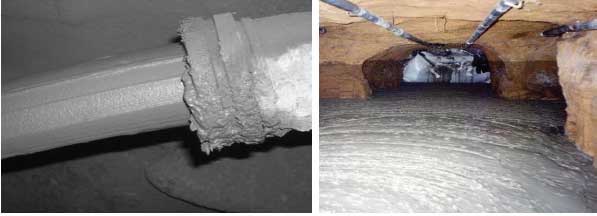
Backfilling in the zinc lead mines.
In a few cement plants, fly ash is used as a raw mix component but, in most cases, fly ash is added to cement to produce Portland Pozzolana cement (PPC). Fly ash utilisation in the cement and construction industries can lower GHG emissions because such use offsets the emissions that result from mining activities and CO2 generation during cement production. Fly ash can decrease a higher percentage of the consumption of cement during construction. Out of the total fly ash generation, around 25 per cent is being utilised for cement industry (http://www.cea.nic.in/reports/others/thermal/tcd/flyash_201617.pdf). 33 per cent around still remains unutilised due to Geographical imbalanced and limitation of maximum 35 per cent fly ash, in PPC, as per IS:1489 (Part-I) (http://www.cea.nic.in/reports/others/thermal/tcd/flyash_201617.pdf).
In NCB various R&D work has been done on fly ash, some of which has been discussed below:
Evaluation of high-volume fly ash cements
The Indian standard specification IS: 1489 (Pt.I)-2015 for Portland Pozzolana Cement (PPC) permits 35 per cent (max) fly ash addition in PPC. In view of enhancing the use of fly ash in PPC in order to achieve resource conservation and environmental sustainability, NCB has taken up studies on preparation and evaluation of high volume fly ash cements (HVFAC) in line with European standard EN-197-1. Different approaches have been adopted to achieve desired strength development and other physical characteristics of HVFAC using fly ash and clinker materials available in different parts of India. Investigations have been carried out on performance evaluation of High-Volume Fly Ash Cement (HVFAC) up to 50 percent fly ash prepared by inter-grinding as well as separate grinding and blending of all the constituents. A similar strength development pattern was observed in the cement samples prepared with increasing percentage of fly ash with clinkers of different alite contents and maintaining same fineness level by inter-grinding as well as separate grinding and blending (Fig 5.). The effect of fineness levels was found to be more pronounced of HVFAC prepared with the clinker having higher alite.
Development of PPC based on fly ash and limestone
In this study, Portland composite cement blends were prepared (140 nos) with four types of clinker from different regions of India along with the regional available fly ash (15-35 per cent) and limestone (5, 7 and 10 per cent). The results depicted that the clinker quality plays an important role on performance of limestone and fly ash based composite cements. The mortar studies indicated Portland composite cements based on limestone and fly ash with 35 per cent replacement of clinker by fly ash and limestone (keeping limestone content upto 7 per cent in it). Hydration studies showed Monocarboaluminate (Ca4Al2O6 • CO3 • 11H2O) was found in the samples containing FA and LS, and the intensity of these peaks tend to be stronger when the amount of limestone is increased. Draft code formulation for submission to BIS is underway.
Development cement backfills pastes (CBP) using ultra-fine fly-ash and its evaluation
NCB has taken up several projects with Hindustan Zinc Limited in cement-based backfilling material/paste development. The target is for an application of the CBP as a cost-effective alternative to existing backfilling industrial solutions. Assimilation of fly-ash-an industrial waste: generated from a thermal power station along with other wastes generated from mining industries to produce CBP having the desired requirement, as per standing regulation, not only yields financial benefits of reduced consumption of cement whereby reducing carbon footprint; also, it allows utilisation of industrial waste whereby reducing the portion of material channelled to landfills. In the title project, the utiliSation of the ultra-fine fly ash for the preparation of CBP was studied at NCB, Ballabgarh. Based on the studies, NCB made a recommendation to HZL and is under consideration by the company. The studies’ results have
effectively achieved the target and are subject to application mine backfilling at SKE mines,
Udaipur, Rajasthan, India.
Investigations on utilisation of coarse fly ash (200-250 m2/kg)
Generation of fly ash in India is about 226 mtpa, out of which 26 per cent is being utilised in the cement industry. BIS allows fly ash of fineness above 250 m2/kg to be utilised for cement manufacturing. This investigation was carried out in NCB to study utilisation of coarser fly ash (200-250) in cement manufacture and to establish its technical suitability Investigations were carried out with fly ashes having the fineness below the specified BIS limit (250 m2/kg). The studies depicted that the coarser fly ash samples are meeting the mandatory requirements of IS 3812:2013, after grinding to 320±10 m2/kg. Studies on field wise samples indicated that the fineness is lower than 250 m2/kg at initial fields. However, grinding of these samples to 320±10 m2/kg resulted in improved characteristics conforming to IS 3812:2013.
Improving the reactivity of fly ash
The study carried out in NCB investigates the effect of mineral matter doping in the coal before combustion on its chemico-mineralogical constituents of the resultant ash. Different types of sintering aids were mixed with coal of different percentages. The ash prepared of the designed coal and dopants mixes in laboratory furnace at around 950°C. The resultant ash with and without dopants were evaluated for their chemico-mineralogy and microstructure characterisation using state of art instruments such as XRD, SEM and Optical Microscopy The mineralogical or crystalline compositions and glass content of doped ash samples shows better characteristics than the un doped sample. The addition of sintering aids may convert the crystalline content of silicate minerals into amorphous content and enhance the total amorphous content in the doped ash samples. Lime reactivity, and cement reactivity of doped ash samples shows better performance than the control sample.
Improving the properties of fly ash at higher fineness through mechanical activation
Fly ash has been established as the most sought-after material in cement, construction, and related building materials Industry. Enhancing the fly ash utiliSation in the manufacture of cement is identified as one of the key areas to mitigate the GreenHouse Gas emissions from cement industry. Owing to the poor reactivity of Indian fly ash, the cement industry is generally using activation methods to improve the properties of fly ash for enhanced use as a blending component in cement manufacturing. Among different methods of activation, mechanical activation is the most economic and effective way for improving the fly ash properties. Grinding of fly ash alone or along with clinker to the required fineness is a common practice in cement industry. Though increasing the fly ash content in cement has economic and environmental benefits, it results in decrease in the compressive strength values particularly at early ages.

Ground granulated blast furnace slag (GGBS)
In NCB, investigations were carried out on the mechanical activation of fly ash to the very high fineness values to see the effect of use of high fine fly ash on the properties of resultant cement. Though the physical properties and glass content values of the fly ash were found to be improving with the fineness, after a certain fineness some properties of fly ash such as lime reactivity (L.R.) and comparative compressive strength (C.C.S.) were found to be decreasing. Change in the microstructure of fly ash with increasing the fineness of fly ash was identified as the primary reason that is affecting the L.R. and C.R. values. Besides, increasing the fineness of clinker was found to be more beneficial than increasing the fineness of fly ash to absorb more fly ash in the cement manufacturing.
Blast furnace Slag is formed when iron ore, coke, and limestone or dolomite are heated at high temperatures. During this process, the limestone/dolomite acts as a flux and is chemically combined with the silicates and aluminates present in ore. Coke ash and the above products are mixed and produce blast furnace slag. This molten product can be cooled in several ways to form various types of slag, including ground granulated blast furnace slag (GGBS), which is rapidly cooled with large quantities of water to produce granules. GGBS is mixed with Portland cement clinker to make a blended cement known as Portland slag cement. Various phases are present in the slag including glass (supercooled liquid silicates), semi-glass, quartz, Ca-rich silicates, aluminosilicates, the presence of modified C3S and C2S phases, and in melilite, gehlenite, akermanite, merwinite, rankinite, pseudo wollastonite, monticellite, anorthite, forsterite, perovskite, spinel, etc. in minor amounts (Yildirim and Prezzi 2011). Currently India produced approx. 25 million tonnes BFS out of which 22 million tonnes of BFS is granulated and being consumed entirely in cement industry (Agarwal et al. 2017).

Steel slag and Cu slags are also used in cement manufacturing. In these types of slags, the morphometric complexity in the glass is typical, and semi-glass grains may behave as mineralisers. There is a direct effect of this slag on the formation of belite grains. However, these slags reduce the size of grains of both C3S and C2S if the pyro-processing system is disturbed. Steel slag can potentially replace conventional raw materials for clinker production owing to its relatively high content of oxides, such as CaO and Fe2O3. Additionally using steel slag as the raw material helps in the conservation of natural resources. Copper slag has a high Fe content and has been used as an iron adjustment material during the cement clinker production. Since the main composition of copper slag is vitreous FeSiO3, it has low melting point and could reduce the calcination temperature for cement clinker. Thus, the use of copper slag to replace iron powder as iron adjusting materials facilitates cement production, reduces or eliminates the need of mineraliser.
Some of the studies carried out in NCB on steel slag has been discussed below:
Utilisation of Granulated LD Converter Slag
Investigations were carried out in NCB to study the utilisation of granulated LD slag in the manufacture of cement and replacement of natural sand in cement mortars. The investigations revealed that LD slag could be gainfully utilised up to 5 per cent as performance improver in cement manufacture. The results indicated that compressive strength at 28-days improved up to 3.5 per cent as compared to that of control OPC without affecting the other parameters such as water requirement, setting time and soundness. Further, LD slag up to 40 per cent by weight could be added during the clinker grinding stage to manufacture cement blends. The compressive strength was found comparable to control OPC and PSC containing granulated BF slag. The investigations on use of LD slag as raw materials up to 4.25 per cent by replacing iron bearing additives in the raw mix revealed that good quality clinker could be produced at 1400 °C. The investigations on use of LD slag as replacement of natural sand in cement mortar established that LD slag could be gainfully utilised up to 100 percent. The replacement of natural sand in cement mortar also showed improved performance characteristics.
Utilisation of ladle furnace slag as a raw mix component
Exploration studies of Ladle Furnace Slag (LDF slag), which was a waste product from the steel industry were carried out in NCB as a raw mix component in manufacture of clinker to replace the laterite/red mud. Chemical and mineralogical investigations of LDF slag showed the presence of Fe2O3 in the range of 3 to 34 per cent, Al2O3 in the range of 14 to 33 per cent, SiO2 in the range of 3 to 21 per cent and CaO in the range of 33-51 per cent and calcium silicate, calcium aluminate, iron containing minerals etc. Computed mix designs were performed to optimise the raw materials with the similar potential minerals percentage, liquid content, AM, SM in the resultant clinker. LDF slag designed optimum compositions with the replacement level of 0.5 to 1.5 of laterite/red mud showed similar characteristics in terms of burnability as well as setting time, compressive strength and other physical characteristics.
Utilisation of Pet Coke Gasification Slag
A by-product slag, provided by M/s Reliance Industries Ltd, generated during the process of gasification of pet coke was investigated in NCB for its utilisation in the manufacture of OPC. In addition to CaO, SiO2, Al2O3, Fe2O3 and MgO, the slag also contains about 4 per cent vanadium. Investigations were carried out on the use of this slag as raw mix component in manufacture of Portland clinker. The burnability of cement raw mixes designed using 1-5 per cent pet coke gasification slag showed its mineralising effect, which was manifested through better lime assimilation and development of clinker mineral phases along with microstructure. The slag sample was also investigated for its suitability as performance improver in manufacture of OPC. The glass content in the sample was found to be 54 per cent and thus did not meet the requirement of Indian standard IS: 12089-1987. The physical characteristics of resultant cement were found to be comparable to its counterpart prepared using 5 per cent BF slag at all the ages.
Red mud
It is a byproduct of the aluminium industry. It contains numerous in situ mineralisers, which help to enhance quick phase formation in the clinker. However, the phases’ forms are different in shape and size. Red mud also affects the morphology of phases, which is fragmentation of alite and belite, thereby increasing the granulometry of phases. Tsakiridis et al. (2004) by addition of red mud into the raw meals assessed the feasibility of producing Portland cement clinkers. They used raw mix composition having 3.5 per cent Bayer-process red mud blended with 74.8 per cent limestone, 11.4 per cent schist, 3 per cent bauxite and 7.3 per cent Milos sand to prepare Portland cement clinkers. This raw meal is sintered at 1450°C and the produced clinkers mixed with the gypsum (5 per cent) to form final cement. It was observed that the addition of red mud in the raw mix resulted in a well-burnt clinker with a free lime content of 1.94 per cent at 1450°C. The chemical composition of the produced clinker was close to that of OPC clinker, and the incorporation of red mud residue at 3.5 per cent did not affect the mineralogical composition of the Portland cement clinker.
Use of red mud in cement production produces significant environmental and economic benefits such as natural resource management, promoting circular economy, lowering contamination of soil and groundwater, reducing landfill volume, cutting waste disposal costs, and decreasing the production cost of cement (Liu and Zhang, 2011)
Lime Sludge
It is waste mainly produced from the paper industry, other sources are fertiliser, sugar, carbide and soda ash industries. Lime sludge (LS) is generated by a kraft process through the chemical recovery section in a paper mill. The chemical composition of LS samples contains major CaO (52-55) per cent, SiO2 (1-4) per cent, Al2O3 and Fe2O3 make up less than 1 per cent by weight. Minor alkalis of Na2O, K2O and SO3 content are less than 1 wt per cent which is permitted as per Indian standard. al. has undertaken a study in which the lime sludge addition improved the burning ability of clinker which in turn reduced the temperatures for calcium carbonate (CaCO3) decomposition and liquid phase formation (Wei et al. 2014). Raw mix designed to manufacture cement clinker by using lime sludge and other cementitious raw materials, which has C3S, C2S, C3A, C4AF as clinker phase composition (Dikshit and Sahoo 2022).
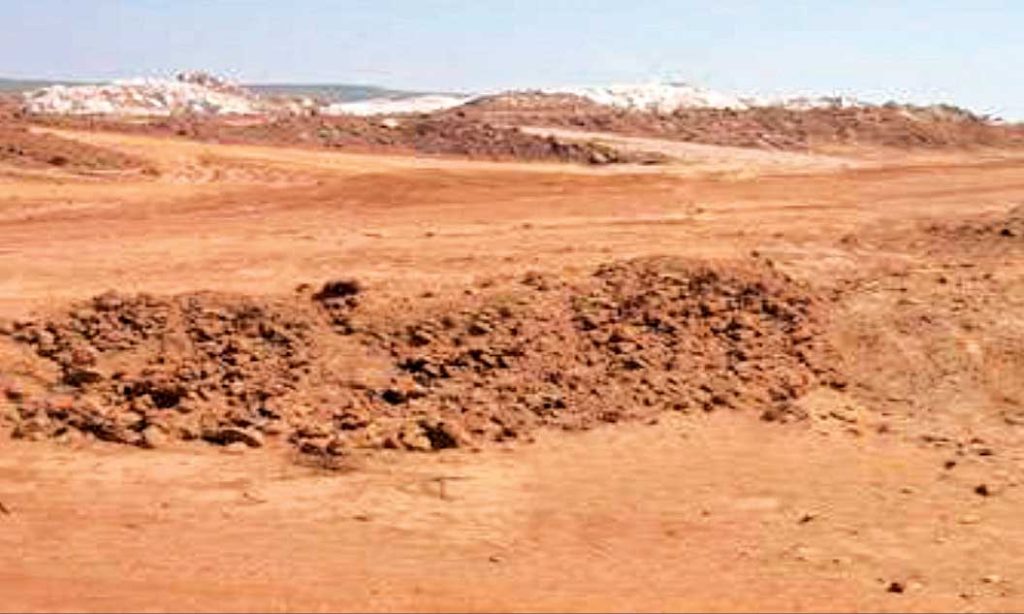
Red Mud
The industrial LS is having the potential to be utilised as feasible raw material for cement preparation by replacing the limestone. Lime sludge can be used in 30-40 per cent in place of limestone because free lime content is observed to be low in the clinkers. Mineralogically C3S and C2S content is lying in the desired range and alite belite grain size are 27-34 µm and 14-23 µm respectively. NCB has validated lime sludge waste from paper and pulp industry in the cement manufacture application, which can bring sustainable development towards the environment as well as circular economy.
Use of Jarosite
In NCB, a study on Jarosite, a residual by-product generated from zinc industry during hydrometallurgical process containing predominantly Fe2O3, SO3, alkalies with small amounts of ZnO has been carried out. The constituent oxides present are known to contribute significantly in formation of clinker mineral phases and therefore, the Jarosite could be an effective mineraliser and activator in the manufacture of OPC clinker. The present study highlights the effect of addition of 0.5-2.0 per cent of typical Jarosite in cement raw mixes prepared with different grade limestone samples along with other conventional raw materials. The clinker parameters such as LSF, SM and AM were maintained in the range of 0.92, 2.07-2.18 and 1.01-1.14 respectively. Burnability studies on raw mixes showed increase in the rate of lime assimilation and rapid formation of clinker mineral phases in presence of Jarosite. The mineral phase developments and micro-structures of laboratory clinkers fired at 1400±5°C were found to be adequate in presence of optimum dose of 1.5 per cent Jarosite and were comparable to control clinker (without Jarosite addition) prepared at 1450±5°C. The physical performance of Ordinary Portland Cement thus prepared from above mineralised clinker showed performance comparable to control cement. As the Jarosite contains heavy elements, a leaching study was carried out by immersing 28-days hardened neat cement cubes in 500 ml distilled water over a period of 24 months. The leachates such as barium, cadmium, cobalt, chromium, copper, manganese, zinc, lead and strontium were found to be in negligible amounts.
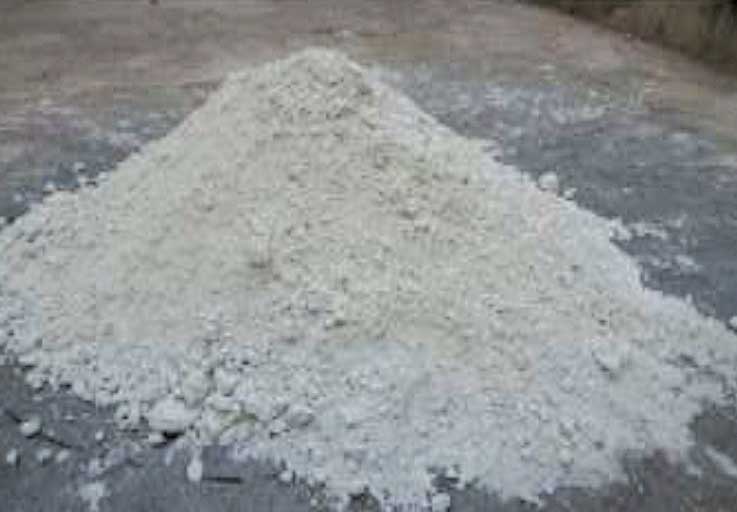
Dried Lime sludge
Use of Marble Waste
Studies were carried out in NCB on the suitability of marble dust/slurry for use in cement manufacture as raw mix, as performance improver in OPC and in making Portland Limestone Cement (PLC). Performance evaluation of Portland Limestone Cement (PLC) composites prepared by blending of 15-30 per cent marble dust/limestone with OPC showed comparable strength development. Similarly, Ordinary Portland Cement samples containing 5 per cent marble dust collected from different marble clusters of Rajasthan also showed performance comparable to OPC containing 5 per cent limestone and conforming to IS requirement of CaCO3 =75 per cent laid down for limestone to be used as performance improver in OPC.
Phosphogypsum
Phosphogypsum is generated as a by-product during the manufacture of phosphoric acid. Approximately 4.5-5.5 tonnes of phosphogypsum is generated per tonne of phosphoric acid produced using wet process. Apart from the yearly generation of phosphogypsum, there is an additional issue of legacy stock of unutilised phosphogypsum of about 64.65 mt at various fertiliser plants accumulated over the years. In the manufacturing process of cement, phosphogypsum could be used as a replacement of natural gypsum which plays the role of a set retarder. Therefore, a project was taken up in NCB on investigations on utilisation of phosphogypsum in cement manufacturing.
Phosphogypsum along with mineral gypsum and clinker from different sources were collected for this study and their chemical, mineralogical and thermal characterisations were carried out. OPC blends were prepared using phosphogypsum and evaluated for chemical and physical properties. Initial results were found to be very encouraging. Further investigation is underway.
Technical feasibility of using FGD gypsum
Globally, Flue Gas Desulfurisation (FGD) systems have been installed in many thermal power plants in developed countries and FGD plants have been in operation in the US for 40 years. In India also the standards set by the MoEFandCC for coal-based thermal power plants came into force by which FGD systems need to be installed in them. Accordingly, a R&D project on technical feasibility of using FGD gypsum in cement manufacture is taken up in NCB. In this project, FGD gypsum is obtained from thermal power plants and other raw materials from cement plants. The FGD is characterised for their chemico-mineralogical properties. Mineralogical characterisation has been done by XRD and DTA. It clearly shows the presence of the Gypsum. The differential thermal analysis (DTA) indicates two endothermic peaks at 140°C due to the conversion of dihydrate to hemihydrate and a small hump at around 167°C due to conversion of hemihydrate to anhydrite of gypsum. In addition, an exothermic peak was recorded at 481°C, corresponding to the phase transformation of a CaSO4 to ? CaSO4. Chemical properties of Cement with both mineral and FGD gypsum clearly shows identical properties as per Indian Standards. The physical properties of cement Cement with both mineral and FGD gypsum clearly show comparable properties for all the properties, including normal consistency, setting time, and soundness. Furthermore, the compressive strength (CS) at 1D, 3D, 7D and 28 days for all samples with FGD gypsum shows similar performance compared to the control sample with mineral gypsum.
*The Authors wish to acknowledge the Director General of National Council for Cement and Building Materials (NCB) for giving permission for publication and DPIIT, Ministry of Commerce and Industry, GOI, through various R&D projects support financial
for sustainable development of cement Industry. The Authors also acknowledge all scientific and technical staff of NCB for cooperation through R&D work for sustainability of cement industry related projects.
**List of references will be featured in the concluding part of the series.













JSW Cement Commissions 1 MTPA Unit in Rajasthan

Wonder Cement appoints Mahesh Singh as VP Corporate Brand Communication

JSW Cement commissions additional 1 MTPA grinding unit in Rajasthan

JSW Cement Boards Approve Proposed Shiva Cement Merger

JSW Cement commissions additional 1 MTPA grinding unit at Nagaur
JSW Cement Commissions 1 MTPA Unit in Rajasthan
Wonder Cement appoints Mahesh Singh as VP Corporate Brand Communication
JSW Cement commissions additional 1 MTPA grinding unit in Rajasthan
JSW Cement Boards Approve Proposed Shiva Cement Merger





