Connect with us

Concrete

Use of SCMs in Green Buildings

Published

on

Shares

Arun Shukla, President and Director, JK Lakshmi Cement, elucidates how supplementary cementitious materials (SCMs) are evolving as an indispensable route toward a sustainable future.

Construction activities and large-scale infrastructure development form the bedrock of economic progress. At present, growing population, rapid urbanisation, commercialisation and increasing residential needs are catapulting demand for commercial, residential and industrial buildings. However, the alarming rise in environmental concerns including climate change and pollution have made it critical for the construction sector to prioritise sustainability for a greener and better future. As per reports, the construction sector accounts for 23 per cent of air pollution, 40 per cent of drinking water pollutants, and 50 per cent of landfill wastes. At this juncture, it thus becomes crucial to find the right balance between development and sustainability, and innovative concepts like green buildings have emerged as a practical solution for it.
While green buildings carry tremendous potential to reduce environmental impact, they further bring additional advantages such as improving energy efficiency, promoting better air quality and healthier ecosystems, efficient resource utilisation and minimising wastage. According to data, green buildings can reduce energy consumption by 20-30 per cent, water usage by 30-50 per cent, and significantly reduce waste generation through extensive recycling. Considering the rise in construction activities to meet the current and future demands, development of green building is both beneficial and a necessity.
Since utilising sustainable materials is key to promote green construction practices, the use of supplementary cementitious materials (SCMs) can take the benefits of green buildings to another level. SCMs are not only environmentally friendly, but are a potent solution to inch closer to sustainable development and decarbonisation goals as well.

Understanding SCMs
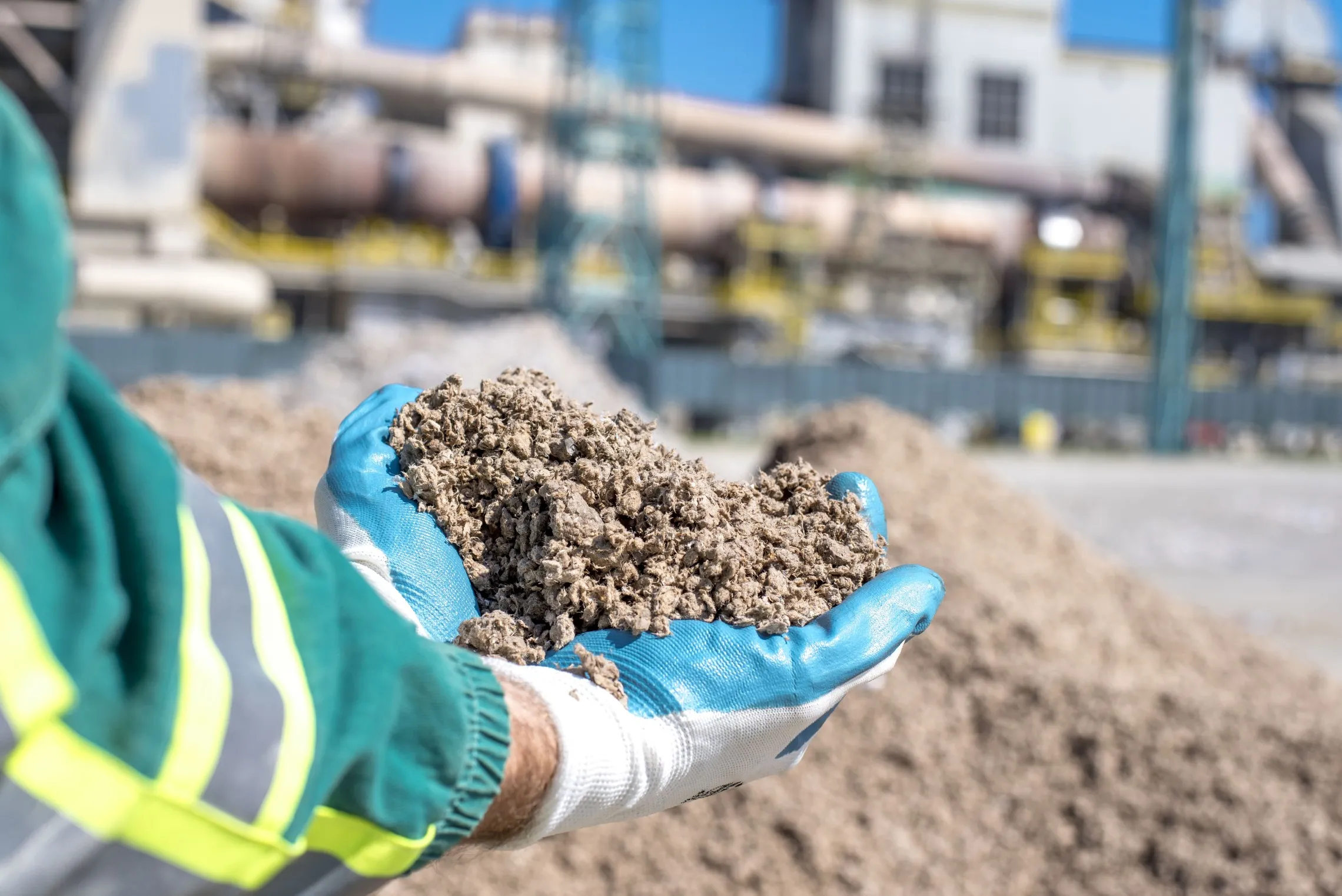
Simply put, SCMs are materials or substances which are added to concrete to make it more environmentally friendly, durable and enhance its performance. They not only improve the strength of concrete but bring huge sustainability-related benefits as they require lower energy for production and support in reducing greenhouse gas emissions. As per estimates, for every tonne of clinker replaced by SCMs, the carbon dioxide emissions are reduced by around 0.8 tonnes.
It is noteworthy that SCMs are mostly by-products coming out from various industries, which makes them highly beneficial in terms of utilising waste materials and promoting efficient resource utilisation for both environmental and economic gains. The various types of SCMs that are used to enhance concrete’s performance and properties include fly ash which is a by-product of coal combustion in power plants. Fly ash contains silica and alumina and improves concrete workability, reducing heat generation and increasing long-term strength.
Another SCM is silica fume, which is a fine material produced during silicon metal and alloy production. It effectively strengthens concrete and reduces permeability. Moreover, natural pozzolans like volcanic ash, calcined clay are great options to enhance concrete workability, durability, and strength. Metakaolin, a calcined clay, is also beneficial in improving concrete’s properties and durability, particularly reducing permeability and increasing chemical resistance. Similarly, natural zeolites, minerals with a porous structure, enhance concrete workability and durability. These various kinds of SCMs in addition to offering diverse benefits, allow the construction industry to utilise by-products and waste materials and reduce the need for high energy-intensive cement manufacturing, promoting sustainability.

Sustainability advantages
The demand for buildings is increasing rapidly and thus constructing green buildings is a solution to ensure this demand is met in an environmentally friendly manner. While green buildings definitely make it possible to create spaces which promote cleaner and healthier environments, the use of SCMs ensure their sustainability related advantages are multiplied, environmental impacts are reduced, resources are efficiently utilised, energy demand is lowered, and overall well-being is achieved.
For instance, use of SCMs in construction supports greenhouse gases reduction. The production of SCMs require less energy as compared to traditional cement and support in reducing carbon emission and use of fossil fuels to combat environmental challenges like depleting natural resources, climate change and air pollution.
The other advantage of using SCM is enhancing the durability of concrete. Mixing SCMs can make concrete long-lasting and efficient, promoting conservation of resources. By using durable concrete with SCMs during construction of green buildings, it becomes possible to reduce the need for frequent repairs, replacements, and extend the lifespan of buildings. For instance, materials such as fly ash and slag carry the potential to mitigate alkali-silica reactions which often lead to formation of cracks in buildings and impact concrete’s durability. By incorporating SCMs, it becomes possible to avoid the damaging effects and achieve stronger and structurally sound buildings with longer lifespans.
Most importantly, use of SCMs helps the construction industry to adopt responsible sourcing of materials, efficient utilisation of by-products and promote waste minimisation for sustainable development. Since most of these materials are by-products of various industries, integrating them
in construction not only supports efficient use of resources but further prevents them from ending up in landfills as waste, minimising their harmful environmental impact and potential health hazards to achieve healthier ecosystems for current and
coming generations.
In the current period where construction activities are growing constantly to satiate residential and commercial demands, green buildings developed using SCMs are a great way to promote sustainability. SCMs in green buildings are not only environmentally friendly but bring a host of advantages, which are essential to build a greener, healthier and better future for all.

Concrete

UltraTech Cement FY26 PAT Crosses Rs 80 bn

Company reports record sales, profit and 200 MTPA capacity milestone

Published

on

By

Shares


UltraTech Cement reported record financial performance for Q4 and FY26, supported by strong volumes, higher profitability and improved cost efficiency. Consolidated net sales for Q4 FY26 rose 12 per cent year-on-year to Rs 254.67 billion, while PBIDT increased 20 per cent to Rs 56.88 billion. PAT, excluding exceptional items, grew 21 per cent to Rs 30.11 billion.

For FY26, consolidated net sales stood at Rs 873.84 billion, up 17 per cent from Rs 749.36 billion in FY25. PBIDT rose 32 per cent to Rs 175.98 billion, while PAT increased 36 per cent to Rs 83.05 billion, crossing the Rs 80 billion mark for the first time.

India grey cement volumes reached 42.41 million tonnes in Q4 FY26, up 9.3 per cent year-on-year, with capacity utilisation at 89 per cent. Full-year India grey cement volumes stood at 145 million tonnes. Energy costs declined 3 per cent, aided by a higher green power mix of 43 per cent in Q4.

The company’s domestic grey cement capacity has crossed 200 MTPA, reaching 200.1 MTPA, while global capacity stands at 205.5 MTPA. UltraTech also recommended a special dividend of Rs 2.40 billion per share value basis equivalent to Rs 240.

Continue Reading

Concrete

Towards Mega Batching

Optimised batching can drive overall efficiencies in large projects.

Published

on

By

Shares


India’s pace of infrastructure development is pushing the construction sector to work at a significantly higher scale than previously. Tight deadlines necessitate eliminating concreting delays, especially in large and mega projects, which, in turn, imply installing the right batching plant and ensuring batching is efficient. CW explores these steps as well as the gaps in India’s batching plant market.

Choose well

Large-scale infrastructure and building projects typically involve concrete consumption exceeding 30,000-50,000 cum per annum or demand continuous, high-volume pours within compressed timelines, according to Rahul R Wadhai, DGM – Quality, Tata Projects.

Considering the daily need for concrete, “large-scale concreting involves pouring more than 1,000–2,000 cum per day while mega projects involve more than 3,000 cum per day,” says Satish R Vachhani, Advanced Concrete & Construction Consultant…

To read the full article Click Here

Continue Reading

Concrete

Andhra Offers Discom Licences To Private Firms Outside Power Sector

Policy allows firms over 300 MW to seek distribution licences

Published

on

By

Shares


The Andhra Pradesh government will allow private firms that require more than 300 megawatt (MW) of power to apply for distribution licences, making the state the first to extend such licences beyond the power sector. The policy targets information technology, pharmaceuticals, steel and data centres and aims to reduce reliance on state utilities as demand rises for artificial intelligence infrastructure.

Approved applicants will be able to procure electricity directly from generators through power purchase agreements, a change officials said will create more competitive tariffs and reduce supply risk. Licence holders will use the Andhra Pradesh Transmission Company (APTRANSCO) network on payment of charges and will not need a separate distribution network initially.

Licences will be granted under the Electricity Act, 2003 framework, with the Central and State electricity regulators retaining authority over terms and approvals. The recent Electricity (Amendment) Bill, 2025 sought to lower entry barriers, enable network sharing and encourage competition, while the state commission will set floor and ceiling tariffs where multiple discoms operate.

Industry players and original equipment manufacturers welcomed the policy, saying competitive supply is vital for large data centre investments. Major projects and partnerships such as those involving Adani and Google, Brookfield and Reliance, and Meta and Sify Technologies are expected to benefit as capacity expands in the state.

Analysts noted India’s data centre capacity is forecast to reach 10 gigawatts (GW) by 2030 and cited International Energy Agency estimates that global data centre electricity consumption could approach 945 terawatt hours by the same year. A one GW data centre needs an equivalent power allocation and one point five times the water, which authorities equated to 150 billion litres (150 bn litres).

Advisers warned that distribution licences will require close regulation and monitoring to prevent misuse and to ensure tariffs and supply obligations are met. Officials said the policy aims to balance investor requirements with regulatory oversight and could serve as a model for other states.

Continue Reading

Video Thumbnail

    SIGN-UP FOR OUR GENERAL NEWSLETTER


    Trending News