Connect with us

Concrete

Precast concrete allows for elaborate and customised designs

Published

on

Shares

Aayush Patel, Director, Atul Projects India, discusses how precast concrete, when combined with automation and technology, has the potential to help India achieve its affordable housing goals.

What kind of precast concrete shapes do you use for residential buildings and commercial buildings?
We use a variety of precast concrete shapes to enhance structures in both residential and commercial construction. These include mouldings, rounded or modular features, grills, fins and projected pergolas for residential structures, all of which add to an appealing façade. Similarly, in commercial buildings, these components provide a professional and welcoming appearance that is consistent with the company’s identity. These adaptable precast concrete shapes play an important role in influencing the future of buildings by offering architectural projects with both aesthetic originality and durability.

What are the advantages of using precast concrete shapes as compared to other alternatives?
Using precast concrete shapes has various advantages over alternatives. One noticeable advantage is quicker construction due to off-site production, which saves significant time when compared to on-site curing. This technology allows for concurrent site preparation and assembly, which reduces labour needs. Furthermore, precast concrete allows for elaborate and customised designs that would be impractical otherwise. Precast elements, as opposed to cast-in-place concrete, are cured consistently in controlled factory settings, ensuring uniform quality. They also outperform steel constructions in terms of fire resistance and longevity. Precast concrete outperforms wood in terms of adaptability and durability. It reduces the need for substantial formwork and scaffolding, reducing waste and construction interruption.

Tell us about the quality standards you adhere to in selecting precast concrete shapes.
Our selection of precast concrete shapes is driven by strict quality requirements, emphasising precision work and achieving micro-finishes. In all aspects of our precast work, we prioritise exquisite craftsmanship and painstaking attention to detail. Our dedication to quality extends beyond surpassing basic criteria to achieving beautifully smooth surfaces on all of our goods. We ensure that each precast shape not only meets but exceeds industry requirements through a thorough review procedure, demonstrating our unwavering dedication to delivering the best level of workmanship available.

How do precast shapes help in the profitability of a construction activity?
Precast shapes add great value to construction activities by increasing profitability through faster processes and enhanced quality. These shapes are manufactured off-site under regulated conditions, decreasing material waste as well as labour and construction time. Various complicated shapes adapted to the project’s specifications can be achieved using Tensile Rubble Mould with grout and minimum diameter-wired reinforcement. This customisation lowers on-site modifications, optimising resource usage and eliminating costly errors. Furthermore, because of regular production circumstances precast shapes frequently display greater structural integrity and endurance. These elements work together to improve project efficiency, lower overall costs, and increase profitability in building endeavours.

What are the challenges you face in using precast shapes?
The use of precast shapes for multi-story elevations provides precise and diverse solutions for a variety of design objectives. However, it comes with obstacles such as extensive design and technical needs, communication barriers among multiple teams, assuring quality control, managing complex scheduling and sequencing, and dealing with limited on-site space and transportation restrictions. Overcoming these issues is critical for fully utilising the benefits of precast detailing in multi-story projects.

How do you incorporate sustainability in your construction process? How can precast concrete contribute towards affordable housing in India?
Sustainability is integral to our construction process, achieved through local material sourcing, energy-efficient designs, and waste reduction. We prioritise green certifications and eco-friendly practices to minimise our ecological impact from inception to completion. In the context of India’s affordable housing initiatives like Pradhan Mantri Awas Yojana and MHADA, precast concrete holds immense potential. Its modular approach, based on factory-made components, ensures consistent quality and accelerates construction timelines. This aligns with the urgent need for rapid and cost-effective housing solutions. By minimising material wastage and labour costs, precast concrete offers an efficient way to deliver affordable housing projects on time. Its adaptability to various housing designs makes it suitable for large-scale housing ventures. As a result, precast concrete significantly contributes to India’s affordable housing goals by providing durable, affordable and quickly deployable housing units to address the housing needs of the population.

What kind of innovations do you hope to see in the future in the precast concrete shape industry?
In the realm of precast concrete shapes, we anticipate witnessing significant innovations that revolutionise the construction industry. We hope to see advancements in sustainable materials, leading to eco-friendly precast products that minimise environmental impact. Automation and robotics could streamline manufacturing processes, enhancing efficiency and precision. Integration of smart technologies might enable real-time monitoring and maintenance of precast structures, ensuring long-term durability. Additionally, developments in modular design and customisation could allow for more versatile and aesthetically pleasing architectural solutions. These innovations would not only contribute to rapid and high-quality construction in metropolitan areas but also promote sustainability and creativity in the field.

-Kanika Mathur

Concrete

Ultra Concrete Age

Prof. A. S. Khanna (Retd., IIT Bombay) on how Ultra-high performance concrete (UHPC) improves strength, durability and lifecycle performance.

Published

on

By

Shares


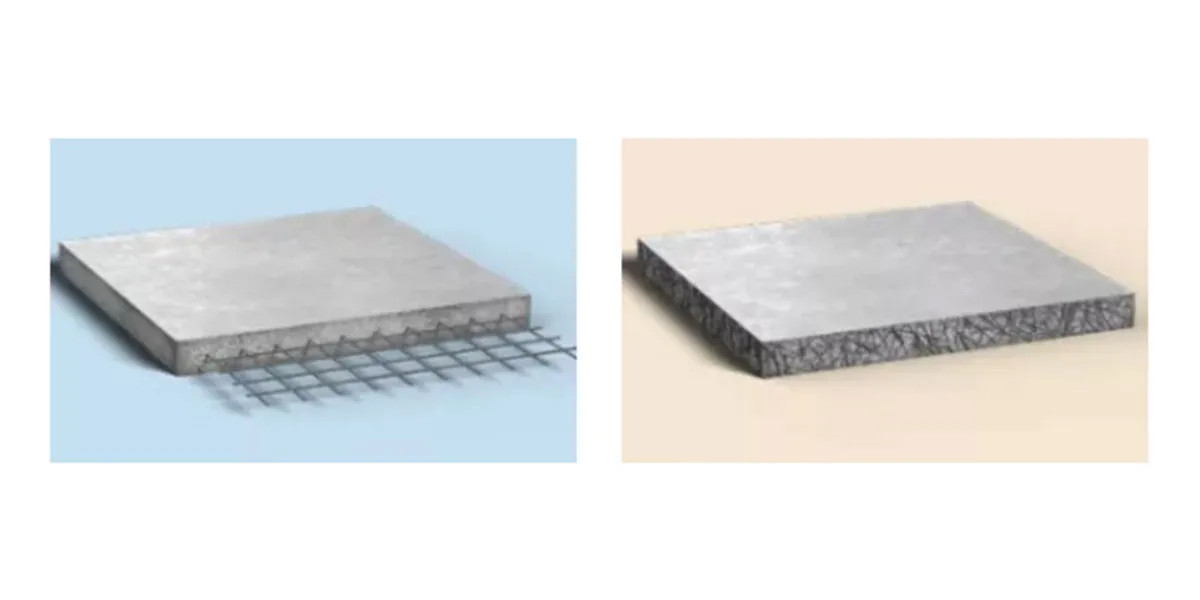
The need of present time is stronger buildings, industrial or common utility buildings, such as Malls, Railway stations, hospitals, offices, bridges etc. For this, there is need of long durable, tough and stable concrete, which could stand under normal and seismic conditions. Tough railway bridges are required for bullet trains to pass without any damage. Railway tunnels, sea-links, coastal roads, bridges and multistorey buildings, are the need of the hour. The question comes, is the normal cement called OPC is sufficient to take care of such requirements or better combination of cements and sand mixtures is required?
Introduction
A good stable building structure can be made with a good quality of cement+sand+water system. Its quality can be enhanced by keeping the density of admixture higher (varies from 30 in normal buildings to bridges etc to 80). Further enhancement in the properties of various cements admixtures is made by adding several additives which give additional strength, waterproofing, flexibility etc. These are called construction chemicals…

Continue Reading

Concrete

NCB Signs MoU With Cement Manufacturer To Boost Construction Skills

Partnership to deliver nationwide training and certification

Published

on

By

Shares


The National Council for Cement and Building Materials (NCB) has signed a memorandum of understanding with a leading cement manufacturer to strengthen skill development and capacity building in the construction sector. The agreement was formalised at NCB premises in Ballabgarh and was signed by the Director General of NCB, Dr L. P. Singh, and the head of technical services at UltraTech Cement Limited, Er Rahul Goel. The collaboration seeks to bring institutional resources and industry expertise into a structured national training effort.

The partnership will deliver structured training and certification programmes across the country aimed at enhancing the capabilities of civil engineers, ready?mix concrete (RMC) professionals, contractors, construction workers and masons. Programme curricula will cover material quality testing, concrete mix proportioning, durability assessment and sustainable construction practices to support improved construction outcomes. Emphasis is to be placed on standardised assessment and certification to raise practice levels across diverse construction roles.

Practical learning elements will include workshops, site demonstrations, technical seminars and exposure visits to plants and RMC facilities to strengthen applied skills and on?site decision making. The Director General indicated confidence that a large number of professionals and workers would be trained over the next three to five years under the initiative. The partnership is designed to complement flagship government schemes such as the Skill India Mission and to align training outputs with national infrastructure priorities.

By combining the council’s technical mandate with industry experience, the initiative aims to develop a more skilled and quality?conscious workforce capable of meeting rising demand in infrastructure and housing. NCB will continue to coordinate programme delivery and quality assurance while industry partners provide practical exposure and technical inputs. The collaboration is expected to support long?term capacity building and more sustainable construction practices nationwide.

Continue Reading

Concrete

JSW Cement Commissions Nagaur Plant, Enters North India

New Rajasthan unit boosts capacity to 24.1 MTPA and expands reach

Published

on

By

Shares


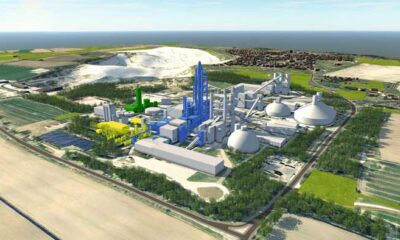
JSW Cement has strengthened its national presence by commencing production at its greenfield integrated cement plant in Nagaur, Rajasthan, marking its entry into the north Indian market.
With this commissioning, the company’s installed grinding capacity has increased to 24.1 MTPA, while total clinker capacity, including its joint venture operations, stands at 9.74 MTPA.
The Nagaur facility comprises a 3.30 MTPA clinkerisation unit and a 2.50 MTPA cement grinding unit, with an additional 1.00 MTPA grinding capacity currently under development. Strategically located, the plant is positioned to serve high-growth markets across Rajasthan, Haryana, Punjab and the NCR.
The project has been funded through a mix of equity and long-term debt, with Rs 800 crore allocated from IPO proceeds towards part-financing the unit.
Parth Jindal, Managing Director, JSW Cement, stated that the commissioning marks a key milestone in the company’s ambition to become a pan-India player. He added that the project was completed within 21 months and positions the company to achieve its targeted capacity of 41.85 MTPA by FY29.
Nilesh Narwekar, CEO, JSW Cement, highlighted that the expansion aligns with the company’s strategy to tap into rapidly growing northern markets driven by infrastructure development. He noted that the company remains focused on delivering high-quality, eco-friendly cement solutions while progressing towards its long-term capacity goal of 60 MTPA.
The Nagaur plant has been designed with sustainability features, including co-processing of alternative fuels and a 7 km overland belt conveyor for limestone transport to reduce road emissions. The facility will also incorporate a 16 MW Waste Heat Recovery System to improve energy efficiency and lower its carbon footprint.
JSW Cement, part of the JSW Group, operates across the building materials value chain and currently has eight plants across India, along with a clinker unit in the UAE through its joint venture.

Continue Reading

Video Thumbnail

    SIGN-UP FOR OUR GENERAL NEWSLETTER


    Trending News

    SUBSCRIBE TO THE NEWSLETTER


    Don't miss out on valuable insights and opportunities to connect with like minded professionals.


      This will close in 0 seconds