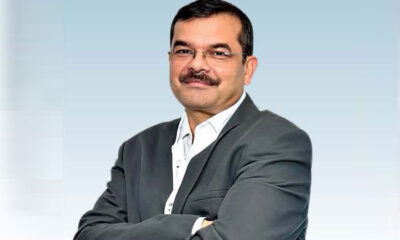
Milind Khangan, Marketing Head, Vertex Market Research, sheds light on Adani’s rapid cement consolidation under its ‘One Business, One Company’ strategy while positioning it to rival UltraTech, and thus, shaping a potential duopoly in India’s booming cement market.
India is the second-largest cement-producing country in the world, following China. This expansion is being driven by tremendous public investment in the housing and infrastructure sectors. The industry is accelerating, with a boost from schemes such as PM Gati Shakti, Bharatmala, and the Vande Bharat corridors. An upsurge in affordable housing under the Pradhan Mantri Awas Yojana (PMAY) further supports this expansion. In May 2025, local cement production increased about 9 per cent from last year to about 40 million metric tonnes for the month. The combined cement capacity in India was recorded at 670 million metric tonnes in the 2025 fiscal year, according to the Cement Manufacturers’ Association (CMA). For the financial year 2026, this is set to grow by another 9 per cent.
In spite of the growing demand, the Indian cement industry is highly competitive. UltraTech Cement (Aditya Birla Group) is still the market leader with domestic installed capacity of more than 186 MTPA as on 2025. It is targeted to achieve 200 MTPA. Adani Cement recently became a major player and is now India’s second-largest cement company. It did this through aggressive consolidation, operational synergies, and scale efficiencies. Indian players in the cement industry are increasingly valuing operational efficiency and sustainability. Some of the strategies with high impact are alternative fuels and materials (AFR) adoption, green cement expansion, and digital technology investments to offset changing regulatory pressure and increasing energy prices.
Building Adani Cement brand
Vertex Market Research explains that the Adani Group is executing a comprehensive reorganisation and consolidation of its cement business under the ‘One Business, One Company’ strategy. The plan is to integrate its diversified holdings into one consolidated corporate entity named Adani Cement. The focus is on operating integration, governance streamlining, and cost reduction in its expanding cement business.
Integration roadmap and key milestones:
- September 2022: The consolidation process started with the $6.4 billion buyout of Holcim’s majority stakes in Ambuja Cements and ACC, with Ambuja becoming the focal point of the consolidation.
- December 2023: Bought Sanghi Industries to strengthen the firm’s presence in western India.
- August 2024: Added Penna Cement to the portfolio, improving penetration of the southern market of India.
- April 2025: Further holding addition in Orient Cement to 46.66 per cent by purchasing the same from CK Birla Group, becoming the promoter with control.
- Ambuja Cements amalgamated with Adani Cement: This was sanctioned by the NCLT on 18th July 2025 with effect from April 1, 2024. This amalgamation brings in limestone reserves and fresh assets into Ambuja.
- Subject to Sanghi and Penna merger with Ambuja: Board approvals in December 2024 with the aim to finish between September to December 2025.
- Ambuja-ACC future integration: The latter is being contemplated as the final step towards consolidation.
- Orient Cement: It would serve as a principal manufacturing facility following the merger.
Scale, capacity expansion and market position
In financial year-2025, Adani Cement, including Ambuja, surpassed 100 MTPA. This makes it one of the world’s top ten cement companies. Along with ACC’s operations, it is now firmly placed as India’s second-largest cement company. In FY25, the Adani group’s sales volume per annum clocked 65 million metric tonnes. Adani Group claims that it now supplies close to 30 per cent of the cement consumed in India’s homes and infrastructure as of June 2025.
The organisation is pursuing aggressive brownfield expansion:
- By FY 2026: Reach 118 MTPA
- By FY 2028: Target 140 MTPA
These goals will be driven by commissioning new clinker and grinding units at key sites, with civil and mechanical works underway.
As of 2024, Adani Cement had its market share pegged at around 14 to 15 per cent, with an ambition to scale this up to 20 per cent by FY?2028, emerging as a potent competitor to UltraTech’s 192?MTPA capacity (186 domestic and overseas).
Strategic advantages and competitive benefits
The consolidation simplifies decision-making by reducing legal entities, centralising oversight, and removing redundant functions. This drives compliance efficiency and transparent reporting. Using procurement power for raw materials and energy lowers costs per ton. Integrated logistics with Adani Ports and freight infrastructure has resulted in an estimated 6 per cent savings in logistics. The group aims for additional savings of INR 500 to 550 per tonne by FY 2028 by integrating green energy, using alternative fuel resources, and improving sourcing methods.
Market coverage and brand consistency
Brand integration under one strategy will provide uniform product quality and easier distribution networks. Integration with Orient Cement’s dealer base, 60 per cent of which already distributes Ambuja/ACC products, enhances outreach and responsiveness.
By having captive limestone reserves at Lakhpat (approximately 275 million tonnes) and proposed new manufacturing facilities in Raigad, Maharashtra, Adani Cement derives cost advantage, raw material security, and long-term operational robustness.
Strategic implications and risks
Consolidation at Adani Cement makes it not just a capacity leader but also an operationally agile competitor with the ability to reap digital and sustainability benefits. Its vertically integrated platform enables cost leadership, market responsiveness, and scalability.
Challenges potentially include:
- Integration challenges across systems, corporate cultures, and plant operations
- Regulatory sanctions for pending mergers and new capacity additions
- Environmental clearances in environmentally sensitive areas and debt management with input price volatility
When materialised, this revolution would create a formidable Adani–UltraTech duopoly, redefining Indian cement on the basis of scale, innovation, and sustainability. India’s leading four cement players such as Adani (ACC and Ambuja), Dalmia Cement, Shree Cement, and UltraTech are expected to dominate the cement market.
Conclusion
Adani’s aggressive consolidation under the ‘One Business, One Company’ strategy signals a decisive shift in the Indian cement industry, positioning the group as a formidable challenger to UltraTech and setting the stage for a potential duopoly that could dominate the sector for years to come. By unifying operations, leveraging economies of scale, and securing vertical integration—from raw material reserves to distribution networks—Adani Cement is building both capacity and resilience, with clear advantages in cost efficiency, market reach, and sustainability. While integration complexities, regulatory hurdles, and environmental approvals remain key challenges, the scale and strategic alignment of this consolidation promise to redefine competition, pricing dynamics, and operational benchmarks in one of the world’s fastest-growing cement markets.
About the author:
Milind Khangan is the Marketing Head at Vertex Market Research and comes with over five years of experience in market research, lead generation and team management.



















 Concrete1 month ago
 Concrete4 weeks ago
 Concrete1 month ago
 Concrete3 weeks ago