Connect with us

Concrete

JSW Cement Subsidiaries Achieves Milestones

Published

on

Shares

Setting the Stage for Rapid Growth

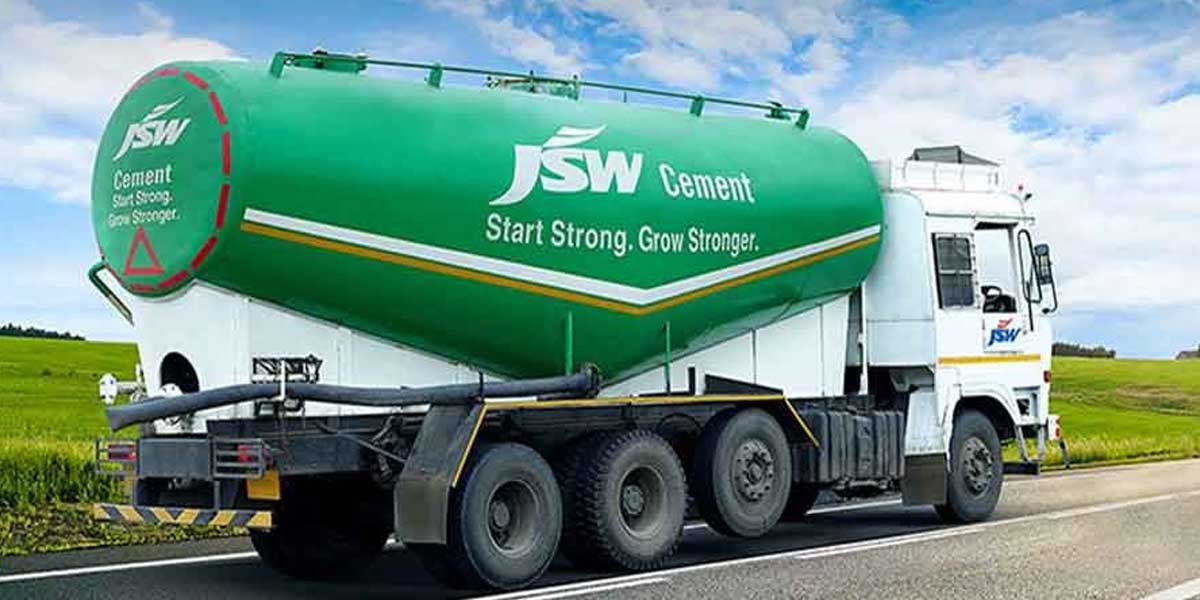
In a significant stride towards cementing its position as a leading player in the industry, JSW Cement, a subsidiary of JSW Group, has achieved several milestones that underscore its commitment to innovation, sustainability, and expansion. The recent announcement by Parth Jindal, Managing Director of JSW Cement, through his Twitter account has brought to light the company’s remarkable achievements and its strategic roadmap for the future.

Parth Jindal, Managing Director of JSW Cement, shared these exciting developments on his official Twitter account:

1. WHRS Commissioning at Shiva Cement: A Step towards Sustainability
Shiva Cement, a subsidiary of JSW Cement, has achieved a notable milestone with the successful commissioning of its waste heat recovery systems. These systems not only enhance operational efficiency but also contribute significantly to the reduction of carbon emissions. The utilization of waste heat to generate energy aligns with the company’s commitment to sustainability and minimizing its environmental footprint.

2. Record Clinker Production by Shiva Cement
In a noteworthy development, Shiva Cement is set to achieve its highest-ever clinker production this month. This accomplishment is a testament to the company’s dedication to optimizing production processes and increasing capacity. The increase in clinker production signifies not only enhanced operational efficiency but also the capability to meet growing market demand.

3. JSW Dolvi Expansion Success: Boosting Overall Capacity
JSW Dolvi, another subsidiary of JSW Cement, has successfully completed its expansion, increasing its capacity to 4.5 million tonnes per annum (MTPA). This expansion contributes to JSW Cement’s overall capacity, which now stands at an impressive 19 MTPA. The expansion of JSW Dolvi demonstrates the company’s strategic approach to cater to the growing infrastructure and construction needs of the nation.

4. Ongoing Projects: Fueling Future Growth
JSW Cement’s expansion plans are not limited to the present achievements. The company is actively engaged in further expansion projects that will significantly boost its production capacity. Work is progressing at a rapid pace at the grinding unit in Vijayanagar and the new clinker line in the UAE. These projects, scheduled to be completed by December 2023, are poised to elevate JSW Cement’s capacity to an impressive 21 MTPA.

5. Ambitious Vision: Aiming for 60 MTPA in Five Years
JSW Cement’s remarkable achievements and strategic expansions reflect its ambitious vision for the future. The company aims to become India’s greenest cement company while positioning itself as a major player on the global stage. With the ongoing projects and their successful completion, JSW Cement is on track to achieve a capacity of 21 MTPA, and its ambitious goal is to further increase this capacity to a staggering 60 MTPA within the next five years.

Conclusion
The successful commissioning of WHRS, the record clinker production at Shiva Cement, the expansion of JSW Dolvi, and the ongoing projects all contribute to the company’s overarching vision.

Concrete

Indian Railways Plans Green Fly Ash Transport Network

Published

on

By

Shares

Specialised rail logistics will move fly ash from power plants to infrastructure industries.

New Delhi

Indian Railways is planning a large-scale green logistics initiative to transport fly ash from thermal power plants to industries where it can be reused in infrastructure and construction activities.

The initiative was discussed during a review meeting chaired by Union Minister for Railways Ashwini Vaishnaw. Union Ministers of State for Railways V Somanna and Ravneet Singh Bittu were also present.

India generates nearly 340 million tonnes of fly ash every year from thermal power plants. The proposed initiative aims to create an efficient rail-based transport system using specialised containers and dedicated logistics arrangements to move fly ash safely from power plants to end-use industries.

Fly ash is widely used in road construction, cement manufacturing, brick production, concrete, blocks and boards. By improving its movement through the railway network, the initiative is expected to support better utilisation of this industrial by-product while reducing environmental concerns linked to storage and disposal.

The move also aligns with India’s circular economy goals by converting waste from thermal power generation into a useful raw material for the construction and infrastructure sectors. Wider availability of fly ash can help reduce material costs in areas such as bricks and cement, supporting more affordable infrastructure and housing development.

Through this initiative, Indian Railways aims to provide a cleaner, safer and more organised transport solution for fly ash, turning an environmental challenge into an infrastructure resource.

Continue Reading

Concrete

ACC To Expand Cement Capacity Amid Strong Infrastructure Demand

Chairman signals calibrated growth and sustainability focus

Published

on

By

Shares


ACC will continue to expand its cement capacity in a calibrated manner, deepen its ready-mix concrete (RMC) footprint and accelerate the adoption of low-carbon technologies, the company chairman conveyed in the latest annual report. The note emphasised a balanced and disciplined approach as the business pursues growth while maintaining environmental safeguards.

He argued that the long-term growth outlook for the Indian economy remains strong but that demand conditions in the near term were likely to stay moderate, necessitating cautious expansion. He pointed to India’s relatively low per capita cement consumption compared with global averages as an indicator of significant long-term potential and highlighted the rise in public capital expenditure to Rs 12 trillion (Rs 12 tn), which he said accounted for about four point four per cent of the GDP.

Against this backdrop, ACC and the wider Adani Cement business are positioning themselves as integrated building materials solution providers rather than traditional commodity suppliers, prioritising capability creation over consolidation. The chairman framed cement as the ingredient and concrete as the performance and said that infrastructure and real estate development increasingly demand engineered solutions delivered at site.

He described how deeper integration across energy, logistics and digital systems is intended to improve responsiveness and efficiency across manufacturing, transport and market operations. The company intends to strengthen technical engagement, mix optimisation and application support to improve project timelines, reduce wastage and enhance structural durability while embedding data analytics and predictive systems.

On sustainability, ACC affirmed its commitment to reducing its environmental footprint through greater use of blended cement, renewable energy, alternative fuels and improved thermal efficiency, presenting industrial growth and environmental responsibility as parallel objectives. The message positioned the group to supply engineered concrete solutions at the point of application as it scales capacity and service offerings.

Continue Reading

Concrete

Ambuja Sees Cement Demand Easing To Around Five Per Cent In FY27

Company Cites Housing, Infrastructure And Government Capex

Published

on

By

Shares


Ambuja Cements has said in its latest annual report that cement demand in India is likely to moderate to around five per cent in fiscal year twenty seven, marking a slowdown from the estimated six point five to seven point five per cent growth anticipated for fiscal year twenty six. The company described this as a transition to a more measured pace of expansion after several years of strong momentum in the sector.

It said that underlying demand drivers such as housing, infrastructure development, urbanisation and government capital expenditure remain intact and are expected to sustain cement consumption across regions. The report noted that global geopolitical uncertainties and weather risks, including forecasts of a below normal monsoon, could influence near term demand, while emphasising that the longer term infrastructure story for India continues to provide a solid foundation for the sector.

Industry observers have said that the sector may move towards mid single digit growth rates in fiscal year twenty seven after stronger performances in recent years. The company outlined a calibrated expansion strategy with capacity additions phased to match project pipelines, regional demand patterns and market absorption, seeking to avoid oversupply and pressure on pricing.

Ambuja has crossed the 100 million tonnes per annum capacity milestone (100 mn t per annum) following acquisitions and organic expansion, strengthening its position in the competitive market. The outlook in the report broadly aligns with other market assessments that placed demand at around five per cent in fiscal year twenty five, a recovery to six point five to seven point five per cent in fiscal year twenty six and an easing in fiscal year twenty seven as capacity increases. Executives remain focused on long term demand fundamentals driven by infrastructure and housing.

Continue Reading

Video Thumbnail
â–

    SIGN-UP FOR OUR GENERAL NEWSLETTER


    Trending News

    SUBSCRIBE TO THE NEWSLETTER


    Don't miss out on valuable insights and opportunities to connect with like minded professionals.


      This will close in 0 seconds