While Ready-Mix Concrete and Manufactured Sand offer many benefits, there are also challenges associated with their use, especially ones related to sustainable practices. ICR analyses the different aspects of using these two products for construction and their environmental impact.
Concrete is one of the most commonly used building materials in the construction industry. There are different types of concrete, and they are chosen based on their specific properties and intended use.
Some of the common types of concrete used in construction include:
- Normal concrete: This is the most commonly used type of concrete and is made by mixing cement, water, sand, and aggregates. It has a compressive strength of about 20-25 MPa and is suitable for general construction purposes.
- High-strength concrete: This type of concrete has a compressive strength of over 40 MPa and is used in structures that require high strength, such as tall buildings, bridges, and dams.
- Self-compacting concrete: This type of concrete is highly fluid and can flow and fill the formwork without the need for vibration. It is commonly used in congested areas where the vibration of concrete is difficult.
- Lightweight concrete: This concrete is made by replacing the coarse aggregates with lightweight aggregates such as pumice, scoria, or expanded shale. It is used in structures where the weight of the building needs to be minimised, such as in high-rise buildings.
- Ready-mix concrete: This type of concrete is delivered to the construction site in a ready-to-use state. It is used in projects where large quantities of concrete are required, and the time for mixing on-site is limited.
In India, the most commonly used type of concrete is normal concrete, followed by high-strength concrete. However, in recent years, there has been an increase in the use of self-compacting concrete and lightweight concrete, especially in the construction of high-rise buildings. Ready-mix concrete is gaining popularity in India due to its convenience and time-saving benefits.
READY MIX CONCRETE
Ready-Mix Concrete (RMC) is a type of concrete that is prepared in a batching plant according to a set recipe or mix design and delivered to the construction site in a ready-to-use form. RMC is a popular choice in the construction industry as it offers several advantages such as better quality control, consistency, and time-saving benefits.
The constituents of RMC are the same as that of traditional concrete, which includes:
- Cement: The primary binding agent that gives the concrete its strength and durability.
- Aggregates: These are the materials that form the bulk of the concrete mix and include coarse aggregates such as gravel or crushed stone, and fine aggregates such as sand.
- Water: This is required to activate the cement and create a workable mix. The amount of water used in the mix is carefully controlled to achieve the desired strength and workability.
- Admixtures: These are chemicals that are added to the concrete mix to improve its properties. Some common admixtures include plasticisers, accelerators, retarders, and air-entraining agents.
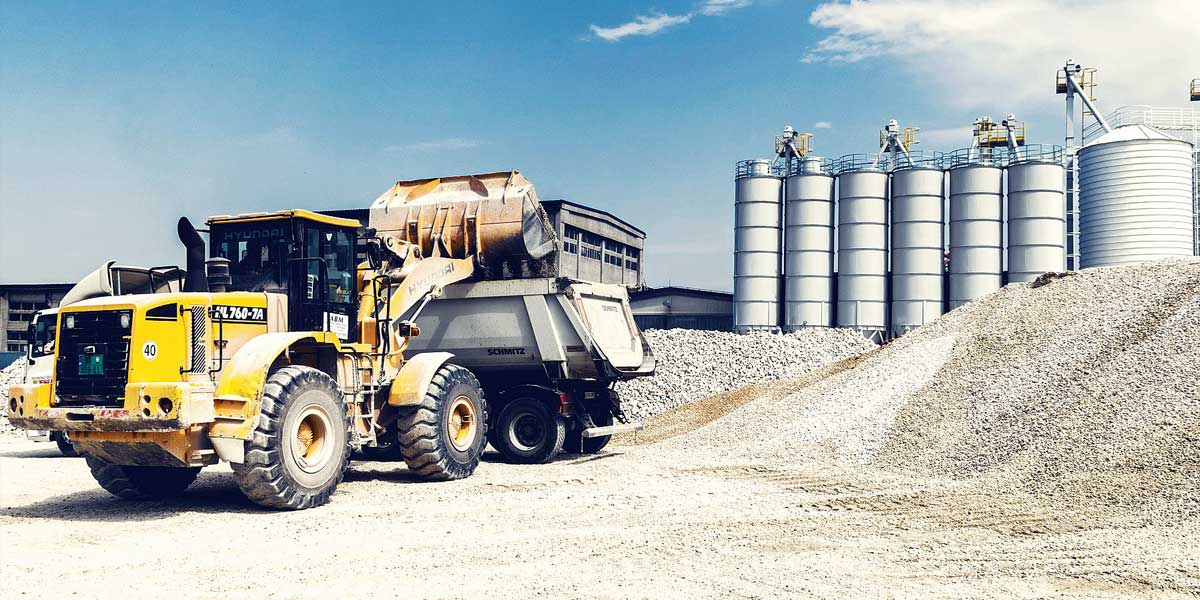
The process of preparing RMC involves carefully measuring and mixing the various ingredients in a batching plant according to a predetermined mix design. The mix design takes into account the desired strength, workability, and durability of the concrete, as well as the specific requirements of the construction project. Once the mix is prepared, it is transported to the construction site in special trucks with rotating drums, commonly known as transit mixers.
“Our company places great emphasis on efficient fleet management through effective use of technology. By implementing seamless ordering solutions and delivery and tracking systems, we provide a hassle-free experience for our customers, resulting in high levels of satisfaction. We place great importance on fuel management to operate in an environmentally responsible manner, reducing carbon emissions and maximising efficiency, which leads to significant cost savings,” says Pralhad Mujumdar, President,RMC, Aggregates and Construction Chemicals, Infra.Market.
“With our commitment to efficient fleet management and technology, we provide exceptional service to our customers while minimising our environmental impact” he adds.
At the construction site, the RMC is discharged from the transit mixer directly into the formwork or onto the ground, ready for use. This eliminates the need for on-site mixing, which saves time and reduces the amount of equipment and labour required for the project
TYPES OF RMC
There are several types of RMC used in the Indian construction industry. Some of the most common types of RMC used in India include:
- Ordinary Concrete (OC): This is the most basic type of concrete used in construction projects. It has a compressive strength of around 20-25 MPa and is suitable for non-structural applications like pavements, footpaths, and landscaping.
- Standard Concrete (SC): This type of concrete has a compressive strength of around 30-35 MPa and is used for structural applications like beams, columns, and slabs.
- High Strength Concrete (HSC): This type of concrete has a compressive strength of around 50-70 MPa and is used for high-rise buildings, bridges, and other structures that require
- higher strength.
- Self-Compacting Concrete (SCC): This is a specialised type of concrete that can flow and fill in the formwork without the need for vibration. SCC is used in structures with congested reinforcement and difficult-to-reach areas.
- Fibre Reinforced Concrete (FRC): This type of concrete contains fibres – usually steel or synthetic – that improve its toughness and tensile strength. FRC is used in pavements, industrial floors, and precast concrete products.
- Ready-Mix Concrete with Fly Ash (RMC-FA): Fly ash, a by-product of coal-fired power plants, is used as a supplementary cementitious material in RMC-FA. This type of RMC has a lower carbon footprint and improved durability compared to conventional RMC.
- Ready-Mix Concrete with GGBS (RMC-GGBS): Ground Granulated Blast Furnace Slag (GGBS) is a by-product of the steel industry and is used as a supplementary cementitious material in RMC-GGBS. This type of RMC has lower carbon emissions and improved durability compared to conventional RMC.
These different types of RMC are used in the Indian construction industry depending on the specific requirements of the project, such as strength, durability, and environmental considerations.
CEMENT – A KEY COMPONENT OF RMC
Cement is a key component of ready-mix concrete (RMC) and plays a crucial role in making RMC stable and durable. Cement is the binding agent that holds the other components of RMC – aggregates, water, and admixtures – together, forming a hard, strong, and long-lasting material that can withstand the stresses of construction and the environment.
However, cement production is also responsible for a significant amount of carbon emissions, primarily due to the energy-intensive process of producing clinker – the main ingredient in cement – from limestone and other raw materials. As a result, reducing the carbon footprint of cement production is essential to making RMC sustainable and green.
Several measures can be taken to reduce the carbon footprint of cement production. One approach is to use alternative materials in cement production, such as industrial by-products like fly ash, slag, and silica fume, which can replace some of the clinker content in cement without compromising its strength and durability. This approach reduces the carbon footprint of cement production by using waste materials that would otherwise be disposed of in landfills, and it also conserves natural resources like limestone and reduces the demand for energy-intensive processes.
Another approach is to use energy-efficient technologies in cement production, such as preheating and pre-calcining raw materials before they enter the kiln, using alternative fuels like biomass, and recovering waste heat from the process. These measures can significantly reduce the energy consumption and carbon emissions associated with cement production, making it more sustainable and green.
Vishal Kanodia, Managing Director, Kanodia Cement, says, “The use of alternative sustainable building materials is one way to make the industry more sustainable. Technologies such as modular building design and precast construction can help in the faster construction of buildings while reducing the wastage of materials. The use of renewable energy, such as solar panels, can reduce the dependence on non-renewable sources of energy.”
Carbon credits, waste water treatment and reuse of water and material reuse are some other sustainability initiatives that can be taken up by the building material industry.
SUSTAINABILITY IN RMC
RMC is a widely used building material in the construction industry, but its production can have a significant impact on the environment due to the large amounts of energy required for cement production and the transportation of raw materials.
According to a report by ResearchAndMarkets, the RMC market in India was valued at $7.5 billion in 2020 and is expected to grow at a compound annual growth rate (CAGR) of 10.5 per cent from 2021 to 2026. The report cites the growing demand for residential and commercial infrastructure, coupled with the government’s focus on developing smart cities, as the key drivers of the growth of the RMC market in India.
To make RMC sustainable and good for the environment, several measures can be taken. One way is to use alternative binding agents such as fly ash, blast furnace slag, and other industrial by-products in the mix design. These materials not only reduce the carbon emissions but also improve the durability and strength of the concrete. Another way is to recycle waste materials such as crushed concrete, glass, and ceramic waste as aggregates, reducing the demand for virgin materials and the amount of waste sent to landfills.
Additionally, batching plants can be designed to use energy-efficient equipment, and the production process can be optimised to reduce waste and energy consumption. Transportation can also be optimised to reduce carbon emissions by locating batching plants closer to construction sites and optimising trucks to reduce empty runs.
Lastly, certification by independent organisations such as the Indian Green Building Council (IGBC) and the Indian Concrete Institute (ICI) can ensure that RMC is produced using sustainable methods and meets the required environmental standards. By implementing these measures, RMC can be made more sustainable and good for the environment
while still providing the same benefits to the construction industry.
“We ensure having updated equipment and processes to reduce the energy consumed during production, which in turn helps to lower our carbon emissions. We are also committed to recycling and waste reduction, seeking ways to minimise waste generated during our production process and recycle any waste materials. We have replaced diesel trucks with CNG trucks in some markets to reduce carbon footprint. We also have a practice whereby we provide E scooters to eligible staff with transferred ownership at zero cost to employees after a period of two years. Similarly, for managers and above, an attractive scheme has been launched to help them shift from petrol/diesel cars to electric ones,” says Anil Banchhor, MD and CEO, RDC Concrete.
MANUFACTURED SAND
Manufactured sand, also known as M-sand, is a type of artificial sand that is produced by crushing rocks, quarry stones or larger aggregates into small size particles. It is a substitute for natural sand that is traditionally used in construction activities, particularly in concrete production. Manufactured sand has several advantages over natural sand, including:
- Consistency: Manufactured sand has a uniform particle size distribution and can be produced to meet specific grading requirements. This makes it more consistent than natural sand, which can vary in size and shape depending on the source.
- Availability: The availability of natural sand is limited, particularly in urban areas where demand is high. Manufactured sand can be produced locally, reducing the need for transportation and ensuring a steady supply.
- Quality: Manufactured sand is free of impurities such as clay, silt and organic materials, which can affect the quality of concrete.
- Environmental benefits: The production of manufactured sand requires less water and
- energy compared to the extraction of natural sand from riverbeds or oceans, reducing the environmental impact.
Manufactured sand is widely used in the construction industry for various applications, including:
- Concrete production: Manufactured sand is a key ingredient in the production of concrete, reducing the need for natural sand, which is becoming scarce in many areas.
- Mortar production: Manufactured sand can also be used in mortar production for masonry work.
- Asphalt production: Manufactured sand can be used as a substitute for natural sand in asphalt production.
- Landscaping: Manufactured sand can also be used for landscaping and as a base material for paving blocks, bricks and other building materials.
Overall, the use of manufactured sand can help to reduce the demand for natural sand and contribute to more sustainable construction practices.
The use of RMC and M-Sand in construction has several advantages, including improved quality, reduced construction time and cost, and environmental sustainability. RMC is a highly versatile and convenient building material that offers consistent quality and durability, while M-Sand is a cost-effective and eco-friendly alternative to natural river sand. Together, RMC and M-Sand can provide an efficient and sustainable solution for construction projects, meeting the growing demand for infrastructure development in India. As the construction industry continues to grow, the adoption of RMC and M-Sand is essential to ensure sustainable and responsible development, while also meeting the evolving needs of the modern built environment.
–Kanika Mathur