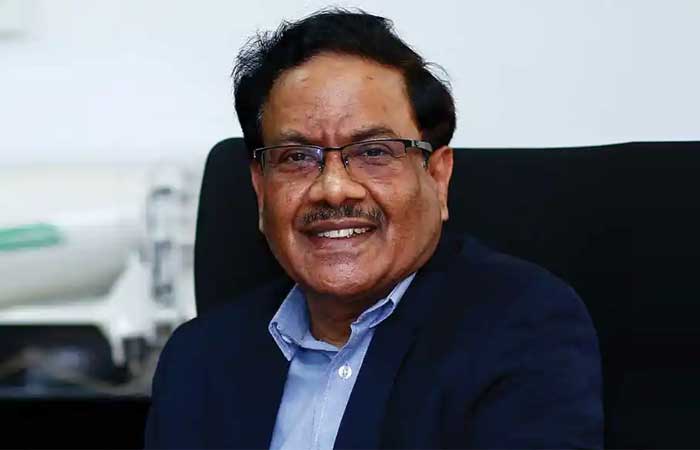
Anil Banchhor, MD and CEO, RDC Concrete, speaks about the advantages of using Ready-Mix Concrete (RMC) for the sustainable growth of the construction sector.
Tell us about the manufacturing capacity of your plants and their regional diversity.
Our manufacturing capacity is one of the largest in the country, with a total capacity of over 6 million cubic metres per annum with annual production of 4.5 million cubic metres of concrete. Our plants are equipped with state-of-the-art machinery and equipment, including automated batching plants, transit mixers, Boom pumps, bulkers and stationary concrete pumps, to ensure the highest level of quality and efficiency in our manufacturing process.
The regional diversity of our plants allows us to cater to the needs of customers across different regions of India, including both urban and rural areas. Our plants are designed to meet the specific requirements of each type of customer, taking into account factors like high early strength, longer retention, high durability, ultrathin white topping, self-compacting concrete and special concrete required for construction and regulatory requirements.
Tell us more about the concrete mix of various grades that are produced by RDC Concrete.
The Indian construction industry is steadily embracing high-end Ready-Mix Concrete (RMC) products with specialised applications, although the market for such products is still relatively small compared to standard RMC. The demand for various RMC grades varies depending on their specific use, with M20-M50 grades used for roads, residential and commercial projects, M35-M60 grades used for infrastructure construction projects and precast girders and segments, and M70-M100 grades used for special applications like high-rise towers, metro, flyovers, High speed rail projects, coastal road projects, etc. The demand for high-end RMC products with niche applications such as self-compacting concrete, fibre-reinforced concrete, and high-performance concrete is increasing in India, as these products offer superior performance and durability compared to standard RMC, making them ideal for specialised applications such as bridges and precast concrete products.
What is the ratio of M-Sand used in your concrete mix?
M-Sand is a type of sand that is manufactured by crushing hard granite rocks into fine particles. It is an eco-friendly alternative to river sand, which is extracted from river beds and causes environmental damage. The ratio of M-Sand used in our concrete mix is carefully controlled to achieve the desired properties of the concrete mix. Our concrete mix varies depending on several factors, including the grade of the mix and the specific needs of our customers. However, we always ensure that our products meet the required quality standards by using scientifically proportional M-Sand based on the grade of the concrete. Additionally, the specific requirements of our customers also play a role in determining the ratio of M-Sand used in our concrete mix.
What are the quality standards and control practices established by your organisation?
At RDC Concrete, we have a strong commitment to maintaining high-quality standards in all aspects of our operations. To achieve this, we follow strict quality control practices and guidelines to ensure that our products consistently meet the highest standards of quality.
We invest in state-of-the-art equipment and
employ advanced testing methods to monitor
and control the quality of our raw materials, manufacturing processes, and finished products.
Our manufacturing facilities are ISO 9001:2015 certified, which is a testament to our rigorous quality management practices.
We adhere to all relevant Indian and international standards for quality and safety, including the Bureau of Indian Standards (BIS). Our commitment to quality extends to our employees as well, as we provide regular training and upskilling opportunities to ensure that our team is equipped with the latest knowledge and skills to maintain our high-quality standards.
Tell us about the role of automation and technology in your ready-mix concrete making process.
Our commitment to customer satisfaction and operational excellence drives everything we do at RDC Concrete.
We’re already taking concrete production to the next level with our state-of-the-art automated production process. With this, we’re able to ensure standardisation, consistency, efficiency, and quality control.
We have a mobile application, RDC Customer Connect, which helps our customers to place, manage, and track their orders, acknowledge invoices, and make payments, all with ease and convenience. In addition to providing our customers with user-friendly tools, we also prioritise accuracy and efficiency in our operations.
Our concrete plants use automated weighbridges to ensure that raw material trucks are weighed accurately and real time update of inventory in ERP. We have an online diesel management system with fuel sensors with ERP connectivity in the diesel tanks to monitor real-time data on the available diesel quantity. A centralised monitoring system has been established to detect any discrepancies between the physical stock and the ERP, allowing for easy identification of stock variations.
At RDC Concrete, we equip all of our fleets with online GPS devices to synchronise live GPS data to our portal – RDC TRAK, which allows us to view tracking information and analyse fleet efficiency. It also gives the distance travelled data and unloading time of concrete for all transit mixers on contract. This data serves as the base for the contractor to generate invoices.
Paperless office is implemented through an online document management system (DMS) to store and process documents like invoices, raw material stock registers, monthly plant performance data, etc. This portal also helps to process approval workflows for employee expense claim reimbursement and online approval and repository for work orders of fleets.
How do you incorporate sustainability in the concrete mixes? What initiatives have been taken up by RDC Concrete?
The increasing awareness of customers regarding the environmental impact of construction has led to a rise in the demand for green technologies. As a result, we constantly keep investing in new technologies to produce ready-mix concrete in a more sustainable way by utilising alternative raw materials such as fly ash and slag, thereby reducing the use of cement and its environmental impact.
Another area of focus for us is to enhance the energy efficiency of our production process. We ensure having updated equipment and processes to reduce the energy consumed during production, which in turn helps to lower our carbon emissions. We are also committed to recycling and waste reduction, seeking ways to minimise waste generated during our production process and recycle any waste materials. We have replaced diesel trucks with CNG trucks in some markets to reduce carbon footprint. We also have a practice whereby we provide E-scooters to eligible staff with transferred ownership at zero cost to employees after a period of two years. Similarly, for managers and above, an attractive scheme has been launched to help them shift from petrol/diesel cars to electric ones.
Overall, we are dedicated to meeting the demand for sustainable construction solutions, and we strive to find innovative ways to contribute to a more sustainable future.
What are the major challenges faced by your organisation in manufacturing and delivering concrete mixes?
The availability of land in metro cities is a significant challenge as plants need to be situated near consumption centres. Additionally, demand for RMC is not uniform throughout the day, with peak demand in the afternoon and very little demand at night. This can result in under utilisation of assets like trucks and pumps. Traffic restrictions for delivery trucks in certain hours of the day and night pose another challenge in supplying major pours and for that reason, we are moving towards larger capacity trucks of 9-12m3 capacity from 6m3 trucks.
In tier III cities, many people are not yet aware of the advantages of using RMC over traditional on-site concrete mixing. This has led to a lower demand for RMC; however, the trend is now changing and awareness is rapidly increasing.
How does the use of ready mix concrete make construction a cost efficient operation?
RMC offers a cost-effective solution for construction projects in the long term. Although the initial cost of using RMC may be higher than traditional on-site mixed concrete, the utilisation of standardised mix designs and quality control measures in RMC production ensures that the resulting concrete is stronger and more durable. This significantly reduces the need for repairs and maintenance in the future, which ultimately saves costs compared to traditional concrete, which may require more frequent upkeep.
Moreover, RMC delivery to the construction site in a ready-to-use state allows for faster project completion, which can benefit builders in several ways. It helps to minimise labour costs, reduce waste, and improve construction speed. As the mix is prepared to exact specifications, it eliminates the need for on-site mixing and reduces the likelihood of errors. Overall, these time-saving benefits enable builders to take on more projects, potentially increasing profits over time.
What is your customer portfolio?
Who amongst those have purchased the largest volume?
Our customer portfolio includes a wide range of prominent customers, including construction companies, builders and infrastructure developers like L&T, Shapoorji Pallonji, Afcons, Tata Projects, HCC, DLF, Hiranandani, Brigade, Sobha, Capacite, ITD, KEC and JMC, to name a few.
What does the near future hold for RDC Concrete and concrete mixes?
The near future for RDC Concrete looks promising as we continue to expand into every state and Union territory in India with a goal to launch 100 plants by the end of 2023. As the construction industry shifts towards sustainability, digitalisation, and modular construction, we are committed to staying at the forefront of these changes. We are focused on attracting and training skilled workers who are familiar with digital technologies and sustainable practices to ensure we meet the demands of our customers. With these changes, we aim to improve efficiency, reduce costs, and meet the growing demand for sustainable practices in the construction industry. The future of the industry looks bright, with new opportunities for growth and innovation that will result in faster, safe, and more sustainable construction practices. We are excited to be a part of this transformation and look forward to playing a significant role in shaping the future of the industry.
– Kanika Mathur

















 Concrete3 weeks ago
 Concrete3 weeks ago
 Concrete4 weeks ago
 Concrete3 weeks ago