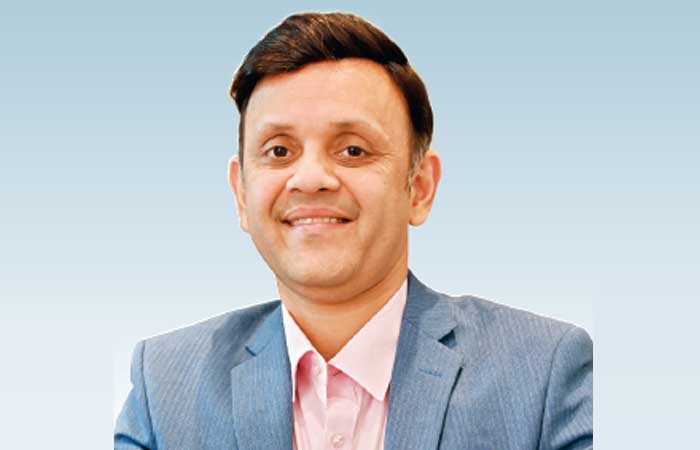
Shrivats Singhania, Deputy Managing Director, JK Lakshmi Cement, believes that companies leading India’s next decade of growth will be those that have invested earliest in low-carbon formulations, digital manufacturing and customer-driven product innovation.
JK Lakshmi Cement’s launch of Green PRO LC3 was not a marketing move. It was a signal of where the company’s innovation pipeline is pointed. In this exclusive interaction, Shrivats Singhania, Deputy Managing Director, JK Lakshmi Cement, talks about innovations in cement that goes well beyond incremental efficiency gains. He maps the technologies reshaping cement manufacturing today, explaining why customer requirements are as important as laboratory research in defining an innovation roadmap.
What are the most significant innovations currently transforming cement manufacturing and product development?
The cement industry is witnessing a shift from conventional manufacturing towards a more sustainable, technology-enabled, and performance-driven future. Among the most significant innovations are low-carbon cement technologies, alternative fuels and raw materials, advanced process automation, renewable energy integration and digital manufacturing systems.
One of the most promising developments is Limestone Calcined Clay Cement (LC3), which has the potential to significantly reduce the carbon footprint of cement production while maintaining high standards of strength and durability. Earlier this year, JK Lakshmi Cement introduced Green PRO LC3, one of India’s first commercially available LC3 cements. By partially replacing clinker with calcined clay and limestone, LC3 can reduce CO2 emissions by up to 40 per cent while offering enhanced durability, improved resistance to chloride and sulphate attack, and lower heat of hydration qualities particularly valuable for large infrastructure and high-exposure environments.
Alongside material innovation, digital technologies such as AI-enabled process optimisation, predictive maintenance, IoT-based monitoring systems, and advanced analytics are helping manufacturers improve operational efficiency and product consistency. Together, these innovations are reshaping industry by enabling growth that is both economically and environmentally sustainable.
How is innovation helping the industry improve efficiency while reducing environmental impact?
Innovation is enabling the cement industry to address one of its most important challenges producing more with fewer resources and lower emissions. Across the value chain, manufacturers are deploying technologies that simultaneously improve operational efficiency and advance sustainability goals. For example, greater adoption of alternative fuels, waste heat recovery systems, renewable energy, and digital process controls is helping reduce energy consumption and optimise resource utilisation. Data-driven manufacturing allows plants to monitor operations in real time, improve equipment reliability, minimise downtime, and reduce wastage, resulting in both environmental and economic benefits.
Meaningful progress is also being achieved through material innovation. The growing use of blended cements and next-generation products such as LC3 reduces dependence on clinker, the most carbon-intensive component of cement production, thereby lowering embodied carbon without compromising performance.
Within our operations, initiatives such as increasing thermal substitution rates through alternative fuels, expanding waste heat recovery capacity and accelerating renewable energy adoption have demonstrated how sustainability and operational excellence can reinforce each other. The industry’s future will increasingly be defined by innovations that improve efficiency while supporting long-term decarbonisation.
What role does R&D play in driving your company’s innovation strategy?
Research and development (R&D) form the backbone of our innovation strategy. Our R&D efforts focus on enhancing product performance, improving resource efficiency, reducing clinker factor, and exploring low-carbon cement solutions. We continuously evaluate new raw materials, alternative fuels, supplementary cementitious materials, and process improvements that can enhance product quality while reducing environmental impact. R&D also helps us develop customer-centric solutions that address evolving construction requirements related to durability, strength, and sustainability.
As infrastructure projects become increasingly sophisticated, innovation supported by strong R&D capabilities will remain essential in delivering next-generation cement solutions.
How are alternative materials and blended cements reshaping the market?
Alternative materials and blended cements are becoming central to the industry’s decarbonisation journey. By incorporating materials such as fly ash and slag, blended cements significantly reduce clinker consumption, thereby lowering carbon emissions while maintaining or enhancing performance characteristics. The market today is increasingly focused on sustainability without compromising quality. Customers are becoming more aware of lifecycle performance and environmental impact, which is accelerating the adoption of blended cement products. For manufacturers, this shift presents an opportunity to create products that deliver superior durability, improved workability, and lower embodied carbon, supporting both infrastructure development and sustainability goals.
In what ways is digitalisation improving production quality, consistency, and operational performance?
Digitalisation has become a critical differentiator in modern cement manufacturing. Technologies such as IoT, artificial intelligence, machine learning, and advanced analytics provide real-time visibility into plant operations and enable data-driven decision-making. At JK Lakshmi Cement, digital initiatives support predictive maintenance, process optimisation, quality control, and logistics management. Real-time monitoring helps maintain product consistency while reducing downtime and operational inefficiencies. Automation and analytics also enable faster response to process variations, ensuring higher reliability, improved productivity and better resource utilisation across the value chain.
How do customer requirements influence your innovation roadmap?
Customer expectations today extend beyond basic product performance. They seek solutions that offer durability, ease of application, sustainability and long-term value.
Our innovation roadmap is therefore strongly influenced by market feedback and evolving construction practices. We regularly engage with engineers, contractors, architects, channel partners and end consumers to understand emerging requirements. These insights guide our product development efforts and help us create specialised cement solutions that address specific applications while maintaining the highest standards of quality and reliability.
What challenges do companies face when scaling and commercialising new cement technologies?
One of the biggest challenges is balancing innovation with commercial viability. New technologies often require substantial capital investments, extensive testing, regulatory approvals and ecosystem readiness before they can be deployed at scale. In addition, technologies such as carbon capture, alternative clinker systems and advanced decarbonisation solutions are still evolving and require collaboration across industry, government, technology providers, and academia. Another challenge is ensuring that innovations remain cost-effective and deliver tangible value to customers while supporting sustainability objectives.
Which emerging innovations do you believe will have the greatest impact on the industry in the coming decade?
Over the next decade, I believe three innovation areas will fundamentally reshape the cement industry.
First, carbon capture, utilisation and storage technologies will play a crucial role in achieving net-zero ambitions. Second, alternative clinker technologies and low-carbon cement formulations will significantly reduce the industry’s carbon footprint. Third, digitalisation powered by AI, machine learning, and advanced automation will create highly efficient and intelligent manufacturing ecosystems.
Alongside these developments, greater adoption of renewable energy, circular economy practices and alternative fuels will accelerate the industry’s transition toward sustainable growth while supporting India’s infrastructure ambitions.



















 Concrete4 weeks ago
 Concrete3 weeks ago
 Concrete2 weeks ago
 Concrete4 weeks ago