Connect with us

Concrete

Innovation is about efficiency and reliability

Published

on

Shares

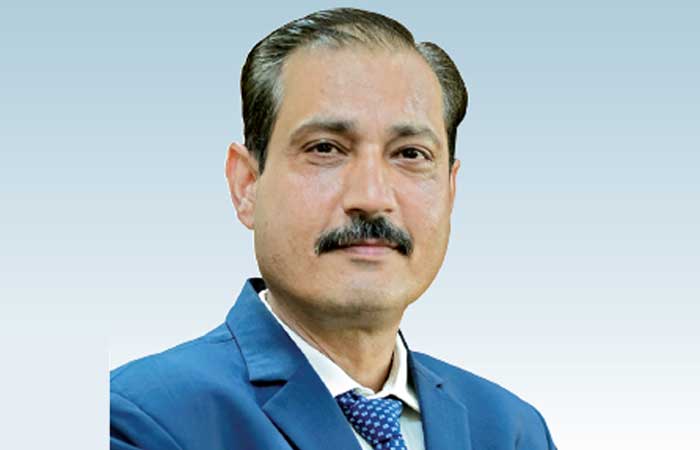
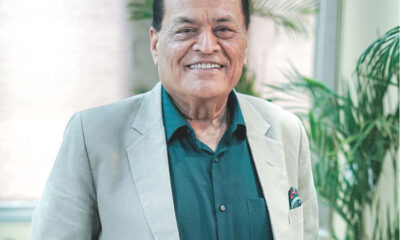
Ashutosh Pandita, Director – Head, Cement Business, TKIL Industries, discusses India’s capacity expansion imperative and its decarbonisation ambition.

India is adding cement capacity at a pace that few industries anywhere in the world are matching. In this interview, Ashutosh Pandita, Director – Head, Cement Business, TKIL Industries, brings a whole-plant perspective to the conversation about innovation in cement.

How is innovation reshaping the way cement plants are designed, built and operated in India today?
Innovation today is driven by two parallel imperatives – rapid capacity addition to support India’s infrastructure growth and the need to reduce carbon footprint. Cement plants are evolving from conventional production units into high-performance, flexible and sustainable systems.
Design philosophy has shifted towards energy optimisation, lower clinker factor and adaptability to alternative fuels and raw materials. At TKIL, backed by thyssenkrupp Polysius technology and decades of Indian execution expertise, we are delivering solutions that combine speed, performance and sustainability. Operationally, innovation is about efficiency and reliability – reducing fuel consumption, optimising power usage, and ensuring consistent output quality, which are critical in today’s competitive environment.

Which technologies do you believe will have the biggest impact on cement manufacturing over the next decade?
The next decade will be defined by technologies that directly contribute to decarbonisation and efficiency:
Advanced alternative fuel feeding systems enabling higher AFR substitution
Calcined clay and low-clinker technologies to reduce emissions
Oxyfuel combustion and carbon capture as emerging solutions
Digitalisation for process optimisation and predictive control
In our view, calcined clay and low clinker technologies will have the biggest impact over the next decade as it will directly help to reduce clinker content in cement manufacturing.

How is TKIL leveraging digitalisation, AI and automation to improve plant efficiency and performance?
Digitalisation at TKIL is focused on improving operational efficiency and ensuring process stability, rather than just adopting technology for its own sake.
We are working on:
Process optimisation tools to reduce fuel and power consumption
Automation systems that enhance reliability and throughput
Integration of advanced monitoring and control systems
Our approach is practical – leveraging digital tools to deliver measurable improvements in productivity, energy efficiency and plant up time, in line with industry expectations.

What role do alternative fuels, alternative raw materials and low-carbon technologies play in your innovation roadmap?
They are at the core of our ‘Grey to Green’ transition roadmap.
Alternative fuels (AFR): Critical for reducing fossil fuel dependency
Alternative raw materials and calcined clay: Help lower clinker factor
Low-carbon technologies: Key for long-term decarbonisation
We have already introduced advanced AFR systems and are actively exploring next-generation solutions. These innovations are essential for supporting the industry’s net-zero journey.

How can equipment suppliers and cement manufacturers collaborate more effectively to accelerate innovation adoption?
As I have emphasised earlier, collaboration among stakeholders is critical to drive meaningful progress.
To accelerate innovation:
Technology providers must engage early in project lifecycle
There must be greater transparency and data sharing
Solutions should be co-created and customised
Industry-wide alignment of sustainability goals is essential
Achieving net-zero is not a single-company effort, it requires collective commitment across manufacturers, suppliers and regulators.

What are the biggest barriers to implementing new technologies in the cement industry, and how can they be overcome?
The transition is complex due to:
High capital intensity of green technologies
Operational challenges in adopting new processes
Need for skill development and training
However, the industry is moving forward with strong intent and urgency toward net zero, which is encouraging.
Overcoming barriers will require:
Demonstrating clear efficiency and sustainability benefits
Building technical capabilities within organisations
Encouraging policy and regulatory support

How is innovation helping the industry balance capacity expansion with sustainability and decarbonisation goals?
India is adding significant cement capacity annually due to infrastructure growth, which presents both opportunity and challenge.
Innovation enables us to address this by:
Improving energy efficiency per tonne of cement
Increasing AFR utilisation and reducing emissions
Adopting low-clinker and blended cement technologies
This ensures that growth is sustainable and aligned with national decarbonisation goals, especially India’s long-term net-zero ambitions.

What will define a truly future-ready cement plant in terms of technology, efficiency and environmental performance?
A future-ready plant will be:
Low-carbon by design, with high AFR capability and reduced clinker factor
Energy-efficient, optimised for minimum fuel and power consumption
Technologically advanced, integrating automation and digital monitoring
Flexible, capable of handling diverse fuels and raw materials
Most importantly, it will contribute meaningfully to the industry’s transition toward net-zero emissions, which is the defining goal for the future.


  • Kanika Mathur

Concrete

UltraTech to Deploy 600+ Electric Trucks by Dec 2026

Cement major expands green logistics to cut emissions across supply chain

Published

on

By

Shares


UltraTech Cement Limited, an Aditya Birla Group company, plans to expand its electric vehicle fleet in logistics operations to more than 600 EV trucks by December 2026, strengthening its green transport initiatives.
The company has signed service agreements with leading EV prime mover manufacturers, including Tata Motors, Ashok Leyland, IPLTech, Energy in Motion and Sany, along with their subsidiaries and logistics partners, for deploying electric trucks.
The expanded fleet will transport around five million MT of clinker and other key materials annually across Gujarat, Uttar Pradesh, Madhya Pradesh, Rajasthan, Chhattisgarh, Maharashtra and Odisha. Once operational, the fleet is expected to reduce annual CO₂ emissions by over 1,17,000 tonnes and replace nearly 39 million litres of diesel consumption.
K C Jhanwar, Managing Director, UltraTech Cement Limited, said the company is extending sustainability beyond its manufacturing plants by adopting greener logistics solutions and decarbonising its value chain.
UltraTech has been among the early adopters of sustainable transport in the cement sector, introducing CNG trucks in 2021 and electric trucks in 2024. The company currently operates more than 850 trucks under its green logistics programme, including CNG and electric vehicles.
With a grey cement capacity exceeding 200 MTPA in India, UltraTech is integrating electrification across its logistics network, covering mine-to-plant movement and inter-plant transportation of clinker and other materials.

Continue Reading

Concrete

UltraTech Cement expands green logistics with 600+ electric truck fleet

Published

on

By

Shares

The e-truck fleet will be used to transport five million MT of clinker and other key materials with potential of over 1,17,000 tonnes of net annual CO₂ reduction, displacing the equivalent of 39 million litres of diesel per year.

Mumbai

UltraTech Cement Limited, an Aditya Birla Group company and the world’s largest cement company by sales volume and capacity outside China, has announced that it will scale up its electric vehicle fleet in its logistics operations to 600+ EV trucks by December 2026.

UltraTech has signed service contracts with leading EV prime mover manufacturers including Tata Motors, Ashok Leyland, IPLTech, Energy in Motion and Sany, along with their subsidiaries and other third-party logistics providers, to deploy EV trucks.

The total fleet of 600+ EV trucks will transport about five million MT of clinker and other key materials per annum across Gujarat, Uttar Pradesh, Madhya Pradesh, Rajasthan, Chhattisgarh, Maharashtra and Odisha. Once fully operational, this fleet of over 600 EV trucks will enable a net annual CO₂ reduction of more than 1,17,000 tonnes, displacing the equivalent of 39 million litres of diesel per year.

K C Jhanwar, Managing Director, UltraTech Cement Limited, said, “UltraTech is expanding sustainability beyond its plants by adopting greener logistics solutions. This large-scale transition to green logistics underscores our focus on decarbonising every link of our value chain and supports our commitment to achieving Net Zero.”

UltraTech has been a pioneer in advancing sustainable transport in the cement sector, being the first cement company to deploy heavy-duty electric trucks for long-haul transport of clinker and other materials at scale. The company was among the first in India to introduce green logistics, deploying CNG trucks in 2021 and electric trucks in 2024. UltraTech currently operates 850+ trucks as part of its green logistics operations, including CNG and electric trucks.

UltraTech, with a grey cement capacity of over 200 MTPA in India, operates one of the country’s most complex logistics networks. Its electrification strategy covers the entire supply chain—from mine-to-plant movement to inter-plant transport of clinker and other key materials.

The $ 10 billion UltraTech, the cement flagship company of the Aditya Birla Group, has a total Grey Cement capacity of 205.5 MTPA and White Cement/Putty capacity of 3.2 MTPA. It is a signatory to the GCCA Climate Ambition 2050 and has committed to the Net Zero Concrete roadmap announced by GCCA.

Continue Reading

Concrete

CarbonStrong Raises Rs 125 Million To Scale Low Carbon Cement Tech

To build capacity of 100,000 tonnes a year

Published

on

By

Shares


CarbonStrong has raised Rs 125 million (125 mn) to scale a low carbon cement technology and build commercial production capacity. The startup was founded in 2022 by Harsh Jain and Vikramaditya Singh and has moved from customer trials to plans for industrial supply. The company said its material replaces up to 50 per cent of cement in concrete while reducing costs and improving durability.

CarbonStrong states the product is around 30 per cent cheaper than cement and compatible with existing concrete plants, reducing the need for new equipment and operational disruption. Trials and paid pilots have been conducted in Bengaluru, Hyderabad and Chennai with demonstration projects involving ready-mix firms and precast manufacturers. Compatibility with current workflows forms a central part of the commercial strategy, aiming to ease adoption by builders and contractors.

The funding will support construction of a facility with capacity of up to 100,000 tonnes (100,000 t) a year over the next two years to supply early customers commercially. The firm is also developing materials from steel slag, copper slag and mine tailings to expand its feedstock base, while noting the technical challenge of homogenising different waste streams. Recognition by HCL ClimaForce in 2026 and by the Avaana-Startup India-NITI Aayog AIM Grand Challenge in 2025 has underscored progress.

Industry adoption remains the principal test and will require consistent material performance, supply reliability and competitive economics. CarbonStrong projects the Indian market for cement substitutes could reach Rs 250 billion (250 bn) by 2030 and has set an ambition to produce 10 million tonnes a year by 2035 (10 mn t), a target far above its near term capacity. Moving from pilots to production demands capital, manufacturing discipline and customers willing to specify the material beyond demonstrations. The recent Rs 125 million raise is intended to fund the next phase of scale and to demonstrate that industrial waste can become a dependable input for lower carbon construction.

Continue Reading

Video Thumbnail

    SIGN-UP FOR OUR GENERAL NEWSLETTER


    Trending News