Connect with us

Concrete

Ignore at Your Own Peril

Published

on

Shares

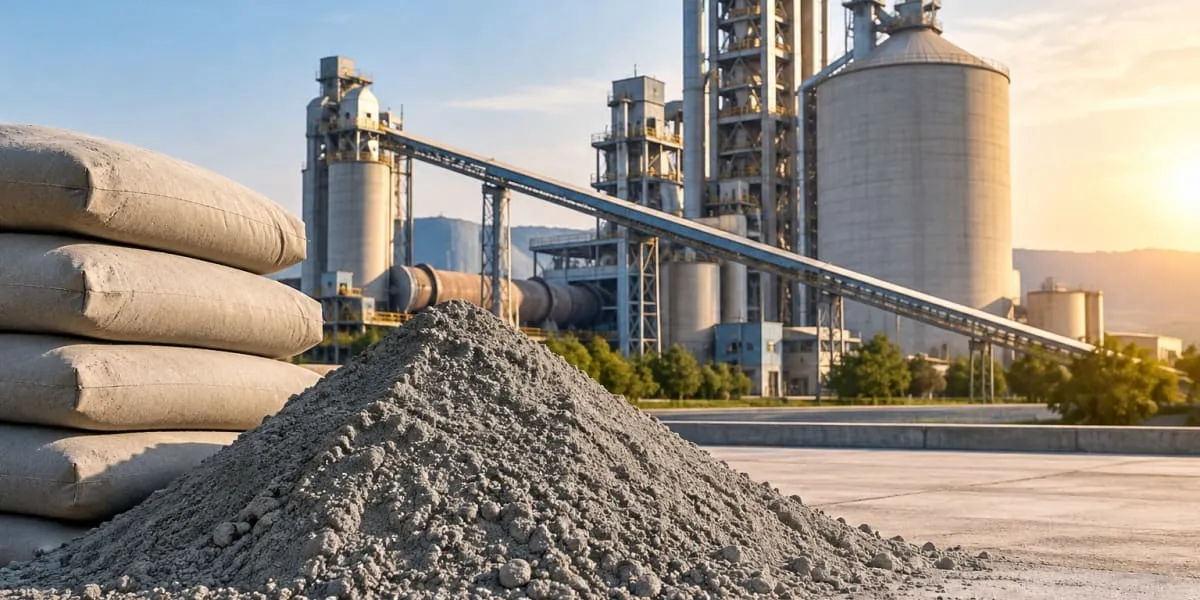
ICR looks at the impact of various methods such as use of alternative fuel and raw materials, tackling the emissions issue and encouraging carbon capture in a bid to make green cement and progress towards Net Zero goals.

The analytical journey is long past its prime when it comes to diagnosing the emission problem pertaining to cement and concrete. There is no denying the fact that the problem is too big.
If concrete was a country, it would be the biggest production centre as all other commodities put together will not even come close to the 30 billion tonnes of concrete that the world produces every year. If cement was a country, it would be the third highest emitter of CO2 in the world. But the efforts have been to find an approach that would force corporations to either limit and progressively reduce over time the impact on the environment through a slew of measures directed at reducing the carbon footprint of cement.
The chart attached shows the distribution of the CO2 emission based on the processing steps for making cement from limestone.

United efforts
The last five years has seen acceleration in the efforts towards finding significant pathways for reducing carbon footprint in cement production around the world. The progress on substantial reduction has been positive with concentration in the following areas:

  • Focus on Calcination Emission: Reducing clinkering by adding alternative materials that can replace clinker
  • Focus on Fossil Fuel Emission: Efficiency improvement in a number of areas that reduce the use of fossil fuels per unit of cement output, together with the use of alternative fuel.
    Under the first category, we see a rise in the use of fly ash from the coal-based power plants that replace clinker during grinding and the percentage increase in the last five years on this count would be around 2 per cent (31 per cent moving to 33 per cent with the balance being clinker). Alternatively, the use of blast furnace slag has seen a rise of 5 per cent (50 per cent moving to 55 per cent with the balance being clinker). Both of these actions have taken the total CO2 emission to 860 kg per tonne for some of the best operating plants of the world.
    The challenges for the future in this regard is that fly ash will remain a constantly depleting resource as all fresh investments into coal fired power plants are scrutinised and it is most likely that the current generation of fly ash will not move up in the coming years. This poses some challenges for the future as the emission pathways that consider use of fly ash as a potential lever for replacing clinker would have to find new pathways as a countermeasure. The use of blast furnace slag also has the same problem brewing at large as steel production is slated for overall sustainability improvement measures, which ordains reduced output of blast furnace slag as a definitive measure.

Tackling the emissions issue
This leaves the focus on alternative use of other non-fossil fuels for producing cement, where the actual progress is almost entirely hinged on renewable sources producing electricity that would be used for clinkerisation as well as for grinding. While the latter has progressed well, the former is still at a stage where a handful of cement units have signed up for the alternative technology in kilns.
Most of the technologies so far have progressed little towards solving the real issue of emission stemming from the clinkerisation process itself, as the molecular structure change from limestone to clinker involves generation of CO2 quite inevitably. The solutions therefore looked at ways of capturing carbon from the emission process, somewhat similar to the photo-synthesis process in plants as Professor Dr Aldo Seinfeld from ETH Zürich has shown. However, the progress is still at a laboratory scale and to find an economic solution will still take some time. For example, most cement kilns today produce close to 2.5 million tonnes of clinker and the sizing is only moving up, which means the amount of CO2 generation from these kilns per year would be close to 2 million tonnes. To get CO2 capturing systems to scale up to these levels would need many years.

Putting carbon to good use
The question is how can we help to scale up the capacity to sequester and store carbon from the emissions from cement kilns? The problem needs to be approached scientifically to make the process economical, which is where the current focus is. But more than the laboratories where this progress is well grounded, we need the cement corporations to set aside funds for investments that need to be made for all future kilns that have the provisions for carbon capture.
The next question is to look at how the stored carbon can be put to use in production of concrete? This requires more than the usual scientific research, as the supply chain of concrete making must factor in ways and means of finding pathways for using stored carbon in the concrete making. The Economist reports that companies like CarbonCure, a Canadian firm, are doing this. They have fitted equipment, which injects CO2 into ready-mixed concrete to more than 400 plants around the world. Its system has been used to construct buildings that include a new campus in Arlington, Virginia, for Amazon, an online retailer (and also a shareholder in CarbonCure), and an assembly plant for electric vehicles, for General Motors in Spring Hill, Tennessee.

Piloting new technologies
One of the other areas of focus has been to find an alternative route to clinkerisation that is based on electricity.
Calix, based in Sydney, Australia, is working on an electrically powered system, which heats the limestone indirectly, from the outside of the kiln rather than the inside. That enables pure CO2 to be captured without having to clean up combustion gases from fuel burnt inside the kiln—so, if the electricity itself came from green sources, the resulting cement would be completely green.
A pilot plant using this technology has run successfully as part of a European Union research project on a site in Belgium operated by Heidelberg Cement, a German firm that is one of the world’s biggest cement-makers. A larger demonstration plant is due to open in 2023, in Hanover, to help scale up the technology.
Almost all of this would need sacrifice from many stakeholders, as the cost of making cement and concrete will rise as investments have to be made in new technology. Bill Gates’ book, ‘How to Avoid a Climate Disaster,’ projected an increase of the cement making cost from the current $125 per tonne to a range of $219 to $300 if the CO2 emissions have to be taken care of for achieving Net Zero. However, the price of cement is already much above $125 per tonne even without factoring any of the carbon capture and sequestration measures, so the real rise could be much more.
A community of stakeholders, starting with the corporation making cement, the community near the cement kilns, the customers, the suppliers and the government, all have a role to play to find a solution how this increase in costs would have to be borne and distributed. Carbon taxes have always been the time-tested path to decarbonisation. Stringent use of taxes as a potent tool has seen better progress, especially in Europe, where some serious progress has happened. Recycling of cement from the demolition waste is one great example.
The best example of coordination and collaboration is captured in the initiatives of the world’s largest kiln near Wuhan, where one would witness how the city municipality came forward to proactively recycle the entire city municipal waste into the kiln of the cement unit situated on the Yangtze river. The waste is transported by barges and through a pipeline taken directly into the cement kiln. Such collaboration could replace the hard stand of putting penalties, which after all could be regressive at times.

-Procyon Mukherjee

Concrete

UltraTech Cement FY26 PAT Crosses Rs 80 bn

Company reports record sales, profit and 200 MTPA capacity milestone

Published

on

By

Shares


UltraTech Cement reported record financial performance for Q4 and FY26, supported by strong volumes, higher profitability and improved cost efficiency. Consolidated net sales for Q4 FY26 rose 12 per cent year-on-year to Rs 254.67 billion, while PBIDT increased 20 per cent to Rs 56.88 billion. PAT, excluding exceptional items, grew 21 per cent to Rs 30.11 billion.

For FY26, consolidated net sales stood at Rs 873.84 billion, up 17 per cent from Rs 749.36 billion in FY25. PBIDT rose 32 per cent to Rs 175.98 billion, while PAT increased 36 per cent to Rs 83.05 billion, crossing the Rs 80 billion mark for the first time.

India grey cement volumes reached 42.41 million tonnes in Q4 FY26, up 9.3 per cent year-on-year, with capacity utilisation at 89 per cent. Full-year India grey cement volumes stood at 145 million tonnes. Energy costs declined 3 per cent, aided by a higher green power mix of 43 per cent in Q4.

The company’s domestic grey cement capacity has crossed 200 MTPA, reaching 200.1 MTPA, while global capacity stands at 205.5 MTPA. UltraTech also recommended a special dividend of Rs 2.40 billion per share value basis equivalent to Rs 240.

Continue Reading

Concrete

Towards Mega Batching

Optimised batching can drive overall efficiencies in large projects.

Published

on

By

Shares


India’s pace of infrastructure development is pushing the construction sector to work at a significantly higher scale than previously. Tight deadlines necessitate eliminating concreting delays, especially in large and mega projects, which, in turn, imply installing the right batching plant and ensuring batching is efficient. CW explores these steps as well as the gaps in India’s batching plant market.

Choose well

Large-scale infrastructure and building projects typically involve concrete consumption exceeding 30,000-50,000 cum per annum or demand continuous, high-volume pours within compressed timelines, according to Rahul R Wadhai, DGM – Quality, Tata Projects.

Considering the daily need for concrete, “large-scale concreting involves pouring more than 1,000–2,000 cum per day while mega projects involve more than 3,000 cum per day,” says Satish R Vachhani, Advanced Concrete & Construction Consultant…

To read the full article Click Here

Continue Reading

Concrete

Andhra Offers Discom Licences To Private Firms Outside Power Sector

Policy allows firms over 300 MW to seek distribution licences

Published

on

By

Shares


The Andhra Pradesh government will allow private firms that require more than 300 megawatt (MW) of power to apply for distribution licences, making the state the first to extend such licences beyond the power sector. The policy targets information technology, pharmaceuticals, steel and data centres and aims to reduce reliance on state utilities as demand rises for artificial intelligence infrastructure.

Approved applicants will be able to procure electricity directly from generators through power purchase agreements, a change officials said will create more competitive tariffs and reduce supply risk. Licence holders will use the Andhra Pradesh Transmission Company (APTRANSCO) network on payment of charges and will not need a separate distribution network initially.

Licences will be granted under the Electricity Act, 2003 framework, with the Central and State electricity regulators retaining authority over terms and approvals. The recent Electricity (Amendment) Bill, 2025 sought to lower entry barriers, enable network sharing and encourage competition, while the state commission will set floor and ceiling tariffs where multiple discoms operate.

Industry players and original equipment manufacturers welcomed the policy, saying competitive supply is vital for large data centre investments. Major projects and partnerships such as those involving Adani and Google, Brookfield and Reliance, and Meta and Sify Technologies are expected to benefit as capacity expands in the state.

Analysts noted India’s data centre capacity is forecast to reach 10 gigawatts (GW) by 2030 and cited International Energy Agency estimates that global data centre electricity consumption could approach 945 terawatt hours by the same year. A one GW data centre needs an equivalent power allocation and one point five times the water, which authorities equated to 150 billion litres (150 bn litres).

Advisers warned that distribution licences will require close regulation and monitoring to prevent misuse and to ensure tariffs and supply obligations are met. Officials said the policy aims to balance investor requirements with regulatory oversight and could serve as a model for other states.

Continue Reading

Video Thumbnail

    SIGN-UP FOR OUR GENERAL NEWSLETTER


    Trending News

    SUBSCRIBE TO THE NEWSLETTER


    Don't miss out on valuable insights and opportunities to connect with like minded professionals.


      This will close in 0 seconds