Focusing on the holistic vision to enhance overall operations.
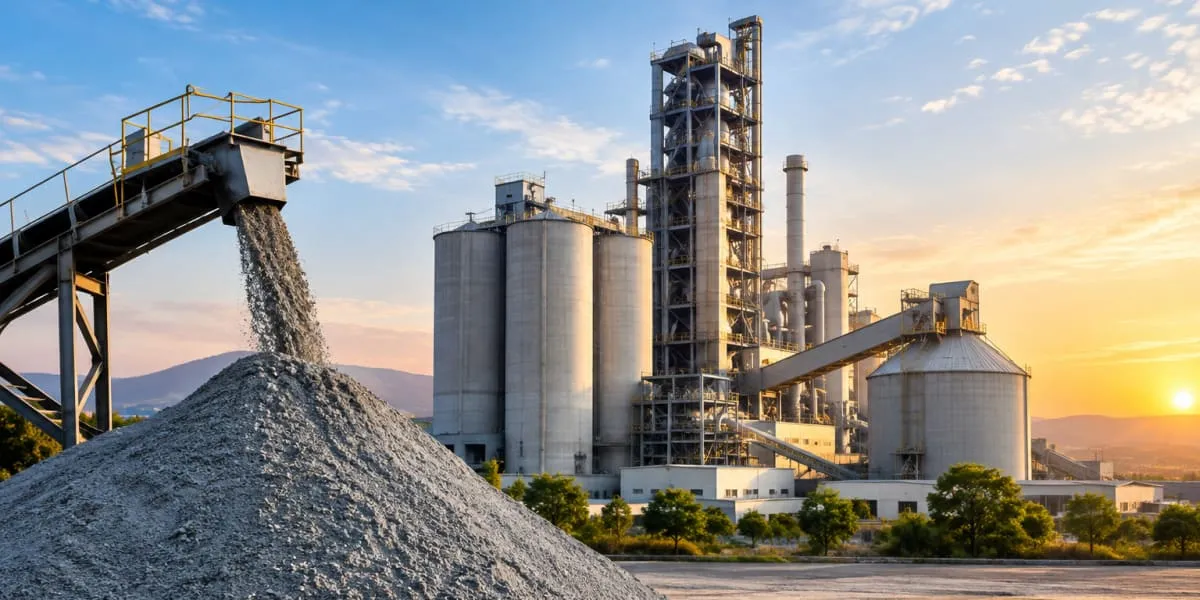
As a fast-developing economy, India is currently witnessing enhanced demand across sectors including commercial and industrial construction, housing, core infrastructure, etc. Along with rising consumer demand, there is a parallel growth in demand for industrial raw materials. Here, India is doing well to capacitate its industries towards fulfilling evolving market demand and as the second-largest producer of cement in the world, the Indian cement industry’s production capacity is expected to reach 550 MMT by 2025. As the cement industry grows, businesses here are drawing their attention on adopting methods that can aid energy-efficiency in operations while ensuring productivity and profitability. The cement industry encounters a common problem in bearing and industrial gearbox failures due to inadequate lubrication. Most cement plant applications, therefore, require adequate and superior-quality lubrication to increase reliability as well as to improve the total cost of ownership through high-performance and high-pressure lubricants.
Addressing this challenge with a holistic vision to enhance overall operations, MobilTM is providing exceptional performance gear and bearing oils which have been designed to provide outstanding results in equipment protection, oil life, and problem-free operations – aiding increased productivity
and efficiency.
Providing solutions through premium lubrication
Recently, Mobil became associated with one of India’s largest cement manufacturing companies based out of Tamil Nadu that covers operations across five integrated cement units and has 6 grinding units spread across several states. Operations at the company require the use of a variety of in-house processes and machinery, demanding specialised and advanced quality hydraulic fluids and gear oils for smooth functioning. They approached Mobil with challenges in short oil drain intervals (ODIs), hindered productivity, and increased maintenance cost from existing lubricant usage. They sought Mobil’s assistance in developing condition-based monitoring for their crucial applications, and to enhance technical knowledge of their equipment to help overcome troubleshooting activities.
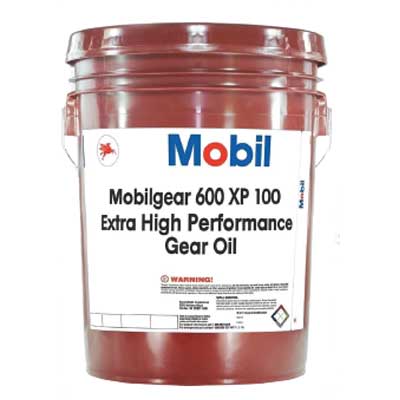
After a careful review of the situation, Mobil recommended the use of MobilgearTM 600 XP 320, a part of the MobilgearTM 600 XP Series. The premium gear oils under this series provide high performance, have outstanding tolerance to extreme pressure, and come with superior load-carrying properties. Mobil advised the usage of these advanced gear oils for the organisation’s raw miller roller lubrication, kiln main drive gear box, and cement mil VRM gearbox. The advanced gear oils are equipped for evolving needs of high technology gear boxes and have enabled the cement firm to increase its ODI by 4.5-times in raw mill roller lubrication, 2.25-times in kiln main drive gearbox, and 2.5-times in its cement mill VRM gearbox. Mobil also recommended the MobilgearTM 600 XP 220 which helped them to increase the ODI by 2.5-times in their coal mill main drive gearbox, resulting in net savings of INR 1,14,750.
To boost the ODI for their cement mill roller hydraulics, the cement manufacturers adopted the Mobil DTETM 24 Ultra high-performance anti-wear hydraulic oil with extended oil life capabilities. This helped them increase ODI by 4-times. These product upgrades along with a thorough root cause analysis to resolve the chromium alert issue in their roller lubrication application and the sodium alert issue in the main drive gearbox that hindered their productivity made them document a total savings of INR 3,031,400 in the year 2021.
Advanced technology to cater to evolving needs
To improve reliability and productivity of the organisation’s critical equipment and ensure profitability at the same time, the company also utilised the Mobil ServSM suite of services. They deployed the Mobil ServSM Lubricant Analysis (MSLA) program for receiving regular updates and reports on operations to aid them in planning periodic maintenance and reducing machine downtime. The company faced difficulty in monitoring equipment remotely for real-time oil conditioning and reducing man-machine interaction – an imperative in today’s era of digitalisation. To tackle this issue, Mobil assisted with its advanced IIOT sensors which provides customised solutions and in-depth analysis to the cement company.
Mobil also organised technical lube training every year to enhance knowledge on specific applications, products and their maintenance, which enabled them to handle troubleshooting efficiently. Additionally, MSLA helped the cement giant to continuously track lubricant and equipment trends. This helped enforce proactive maintenance for important applications, which resulted in longer ODIs and, thus, improved productivity and profitability.
Mobil also utilised the Planned Engineering Service (PES) process to provide the best possible solutions. These solutions have enabled them to improve performance through a planned “best practice” approach to lubrication maintenance. PES is a robust and consistent methodology that enables Mobil to deliver services that add value. It has four steps – mutual planning, objective execution, benefit documentation, and annual business review. Moving ahead, the PES process will continue to unleash productivity of equipment and help the organisation achieve maximum potential of its assets.
Overall, a combination of superior product solutions along with servicing that guarantees productivity and profitability has enabled the cement firm to unlock greater levels of performance.
For more details, please visit mobil.co.in/business
(Exxon Mobil Corporation has numerous affiliates, many with names that include ExxonMobil, Exxon, Esso and Mobil. For convenience and simplicity, those terms and references to ‘corporation’, ‘company’, ‘ExxonMobil’, ‘EM’, and other similar terms are used for convenience and may refer to one or more specific affiliates or affiliate groups.)



















 Concrete4 weeks ago
 Concrete2 weeks ago
 Concrete2 weeks ago
 Concrete4 weeks ago