Sanjay Joshi, Chief Manufacturing Officer, Nuvoco Vista, highlights the various supplementary cementitious materials that are used to make cement production more cost-effective and environmentally sustainable.
What are supplementary cementitious materials? Tell us more about their nature
of origin.
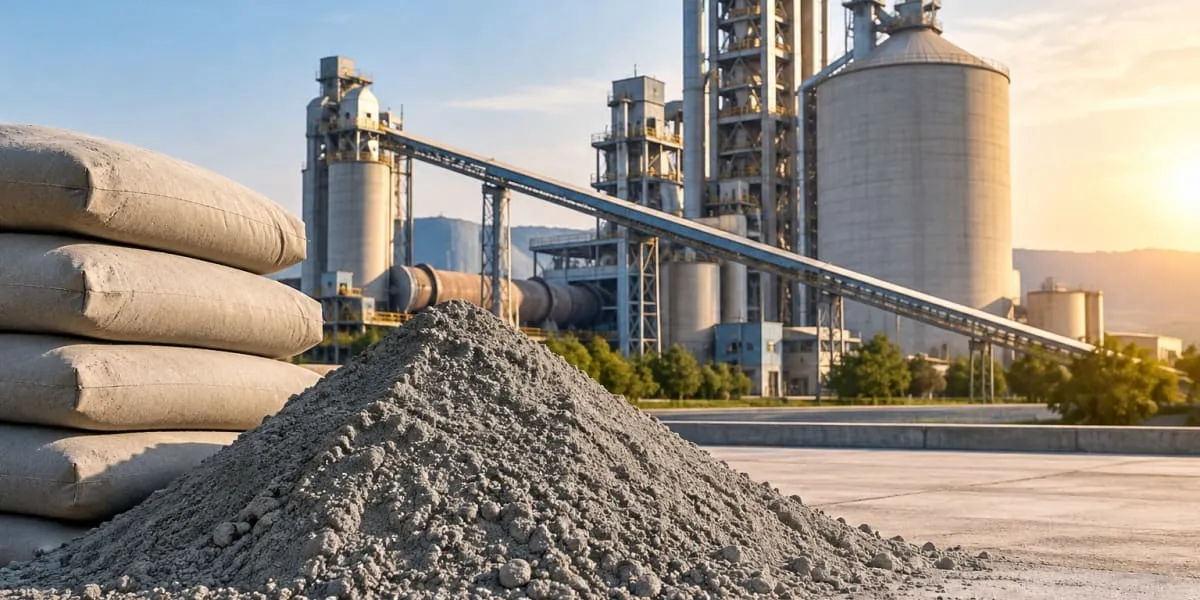
Cement products often have other materials incorporated that help increase the product’s strength and durability, reduce permeability, as well as help reduce the impact on the environment. These materials are known as supplementary cementitious materials.
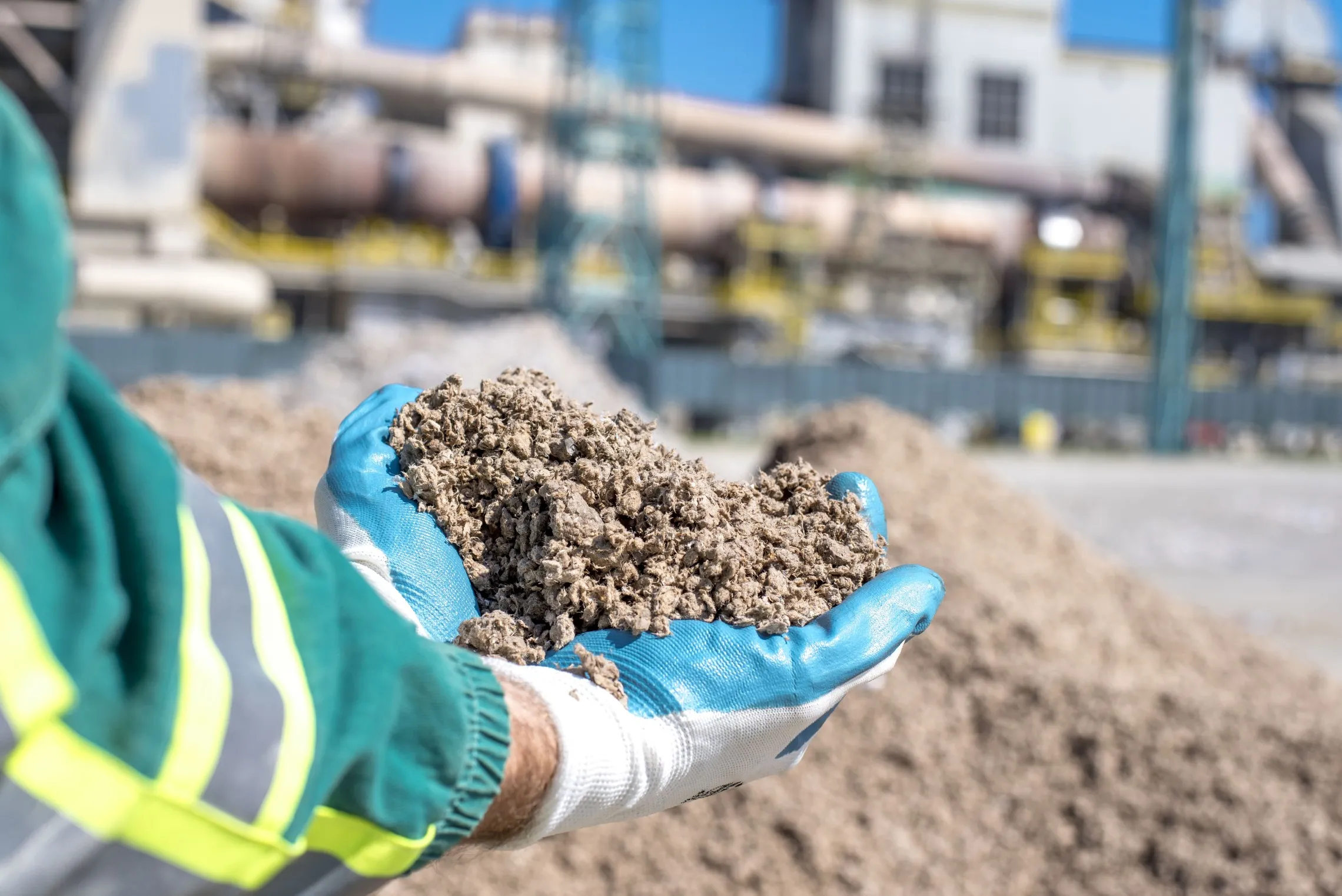
The most used supplementary cementitious materials are fly ash or blast furnace slag. While fly ash is a by-product of thermal power generating stations, slag is a glassy, granular material formed during the smelting process of iron ore; it is quenched mostly by water sprays or immersion in water and then subsequently ground to cement fineness.
Gypsum is another cementitious material that is added to the cement. It is found naturally and as a by-product of chemical industries. Chemically, it is a sulphate of calcium (CaSO4.2H2O), which helps in delaying the setting time of cement and makes it workable.
Tell us about the supplementary cementitious materials and their composition used by your organisation.
We are using all the above-listed cementitious material as it is prevalent in the industry. The
C/K ratio (cement to clinker ratio) indicates the composition of cementitious materials used. We are operating at a level of ~1.8., which means we are producing ~1.8 tonnes of cement for every tonne of clinker consumed. It makes us the leading player in the industry, manufacturing products with high cementitious addition. We operate close to the 34-34.5 per cent fly ash addition in fly ash based cement. In slag-based cement, we are operating in the range of 55-65 per cent slag, based on the product requirement. Gypsum usage ranges from 3-5 per cent in all cement types, and it varies based on the requirement of
setting time.
Does the use of supplementary cementitious materials impact the process of cement manufacturing?
Yes, cementitious materials impact the energy consumption of cement manufacturing. These materials are easy to grind when compared to clinker which is the major constituent of cement. Thus, higher usage of cementitious materials helps in reducing energy consumption.
Also, clinker usage directly involves limestone consumption as a raw material. Therefore, by using higher cementitious materials in the cement-making process, we are preserving the limestone available naturally.
Another aspect of adding cementitious material is the change in equipment required. Slag and fly ash are abrasive in nature thus the equipment being used in cement manufacturing will wear out faster in the case of PPC and PSC making. This lower clinker consumption ultimately lowers CO2 emission/tonne of cement production.
What are the key advantages of using supplementary cementitious materials in the cement manufacturing process?
Cement manufacturing is a closed loop wherein all raw materials from limestone mining to clinker production remain fully under controlled process parameters. The company focuses on reducing clinker consumption by increasing the blended cement ratio. Using these SCM, Nuvoco is also aiming to save fossil fuel, along with the obvious reduction in carbon emissions. Additionally, SCM increase the strength and durability of the product and reduce permeability.
How does the use of supplementary materials increase the profitability of cement manufacturing for your organisation?
Clinker manufacturing is the main cost-intensive step of the cement manufacturing process. Thus, a higher percentage of clinker in cement leads to a higher cost of manufacturing. By using SCM to the maximum extent possible, we can make cement at a lower cost without impacting its key properties.
Tell us about the quality standards and checks implemented for the final product made using supplementary materials.
Nuvoco has a dedicated NABL-accredited Construction Development and Innovation Centre (CDIC) located in Mumbai. It serves as the incubation centre for innovative products and can conduct over 100 mechanical tests. Apart from that, it also offers third-party external testing services, offering products and solutions that have passed the highest standards and holds global validation.
Additionally, Nuvoco also exceeds/meets BIS standards for cement quality. We also have a robust internal quality check procedure for continuous monitoring and course correction if any.
What are the major challenges you face while using supplementary materials for cement manufacturing?
The major challenge would be ‘Procurement, Distribution, Quality and Cost’. If any of this gets compromised, it will result in increased cement costs. Cost plays an important role and is majorly affected by the lead distances and availability of cementitious material quality determines the level up to which we can optimise the addition of the cementitious material in consideration.
How does the use of cement made of supplementary materials impact its carbon footprint?
Taking care of our environment and being sustainable have always been our focus. The use of such SCM lowers the energy in the concrete and counterbalances almost a ton of carbon emissions for every ton of cement that is replaced.
The addition of cementitious material (fly ash and slag) in cement helps to reduce the carbon footprint in cement as waste from a different industry is utilised in products in the market. The second benefit is the reduction of clinker consumption which in itself is a carbon-intensive product as it requires the usage of fossil fuels and also consumes limestone which in turn requires mining and other processing activities.
How do you foresee the future of the global cement industry in terms of using alternative materials for cement manufacturing and running the race of decarbonisation?
With our sustainability initiatives, we are looking to create value for all our stakeholders.
Our outlook remains optimistic, both in the short-term and in the long-term, concerning India, the cement industry and Nuvoco, in particular. There are substantial opportunities for growth and impact.
The consistent goal in the cement industry is to use fewer natural resources. Limestone, the primary natural resource used in cement production, is reduced as blended cement production rises. This benefits not only the company but also the businesses that produce trash, such as the steel and power industries.
–Kanika Mathur

















 Concrete1 month ago
 Concrete4 weeks ago
 Concrete3 weeks ago
 Concrete1 month ago