Concrete
Grinding: Smarter Solutions


Grinding might be an individual step in the cement production line but it is a crucial one, given the energy consumption and impact on the quality of output that it gives. ICR explores how grinding methods have evolved with the help of technology and with the use of modern-age grinding aids.
Grinding in the cement manufacturing process takes place at three stages: raw meal grinding, cement grinding, and raw coal grinding. The process mainly includes the mixed materials crushing, material batching, pre-grinding, fine grinding, powder classification, dust collecting, automatic control, and other technologies, making cement production high yield and high quality, in line with the requirements of energy-saving and emission reduction.
According to an article published in Journal of Materials Research and Technology, Volume 9, Issue 4, 2020, Grinding is a central process in mineral processing to achieve particle size reduction and mineral liberation, and is highly energy-intensive. It accounts for 50 per cent of power consumption in a concentrator. In general, grinding has poor energy efficiency and accounts for about 2 per cent to 3 per cent of the world’s generated electricity. Due to the depleting resources, the processing of refractory ores is becoming common. Such processes require fine grinding or ultrafine grinding to liberate the valuable minerals from gangue material; thus, energy-efficient technologies and strategies are required.

Post clinkerisation of raw material, the clinker is extracted from the tank and transported to the cement mill hopper by belt conveyors. A measured quantity of clinker and gypsum is fed into our closed-circuit ball mill which incorporates a high-efficiency separator. At this stage, the type of cement can be differentiated. For example, OPC is produced by the inter-grinding and blending of 95 per cent clinker with 5 per cent gypsum to a fineness of 280 sq m per kg. PPC is produced by the inter-grinding and blending of 65 per cent clinker with 30 per cent fly ash and 5 per cent gypsum to a fineness of 320 sq m per kg. Where, fineness is a controlled parameter for cement to ensure better hydration and strength development. Ground cement is then stored in a water-proof concrete silo for packing.
The cement grinding station is an individual step in the cement production line. The new-age cement grinding units adopt pre-grinding technology. It not only reduces the particles of feeding materials, but also helps to produce cracks and flaws inside the particles, which largely increase the production capacity of cement mill, reduce the energy consumption. Cement grinding station can greatly digest the slag, fly ash, slag, coal gangue and other industrial waste residues near the city, is a green industry.
Evolution of cement grinding technology
A cement mill is the equipment used to grind the hard, nodular clinker from the cement kiln into the fine grey powder that is cement. Historically, the hydraulic cements were known to be relatively soft and could be readily ground with the primitive technology of the day, using flat millstones. The emergence of Portland cement in the 1840s made grinding considerably more difficult, because the clinker produced by the kiln is often as hard as the millstone material. Because of this, cement continued to be ground very coarsely (typically 20 per cent over 100 μm particle diameter) until better grinding technology became available.
The year 1885 saw the development of specialised steel that led to the development of new forms of grinding equipment. With this the cement grinding became finer with time and advancement of technology and equipment. The progressive reduction in the proportion of larger, un-reactive cement particles has been partially responsible for the fourfold
increase in the strength of Portland cement during the twentieth century.
The principle of Grate Discharge grinding is nearly universally adapted in the cement grinding industry. Grate Discharge Ball Mills are the rule rather than the exception. Rod Mills for raw and finished grinding began to enter the picture. Larger and larger diameter mills have become common. Lengths tend to shorten.
Raw Cement Grinding: This phase may be a wet or dry grinding phase, the end product of it goes to the kiln. Typically, the materials ground includes limestone cement rock, marl or marine shells along with secondary materials like shale or clay. A typical raw mix consists of 75 per cent to 85 per cent limestone, 12 per cent to 25 per cent shale, and the balance materials in this mix consist of silica or quartzite and iron oxide. Exact proportioning of the same depends upon their chemical properties before and after calcining to cement clinker.
During the wet grinding of raw materials, a thorough mixing takes place during comminution, making the process more efficient and permitting a balanced feed direct to the grinding mill. Another pro of this process is the elimination of the dust hazard and cleaner plants. Theories suggest that where low cost fuel is available, the extra heat required during calcining, to drive off water in the process, is actually less costly than resorting to less efficient dry grinding. Improvements in air separators and more efficient dust collecting systems have minimised some of these problems to a point where present day costs become closely parallel.
Anirudh Dani, Grinding Unit Head, JK Cement Works, says, “Major key technical functionalities are production capacity, cement grade, special energy consumption, maintenance cost, construction cost etc., for the installation of the grinding unit. Further, major key strategic deciding factors are land availability, market demand, logistics optimisation, geographical analysis, raw material availability etc., for the finalisation of the cement grinding location.”

“Cement grinding cost is 40 to 45 per cent of variable cost of cement production. By effective control measures and minuscule innovations, we can achieve a significant impact on profit maximisation with environmental sustainability,” he adds.
Cement Grinding Machines
Equipment required for the cement grinding plant include cement roller press, cement silos, belt conveyors, cement mills, classifiers, bucket elevators, packing machines, etc. The grinding mill and cement roller press are the core equipment of the cement grinding units. These grinding mills directly decide the quality and cost of whole cement grinding unknit. There are three common solutions for cement grinding plants: cement roller press and ball mill, closed-circuit cement mill, and cement crusher and ball mill.
In the cement roller press and ball mill system, the ground materials from the roller press are first processed by the separator and divided into two parts: the coarse part and the fine part. The fine part is sent to the ball mill and ground to produce cement, the coarse part is returned to the roller press to be ground again. The finished product cement from this system also has wide particle size distribution and stable performance. With the invention of the V-type separator, the combined grinding system composed of roller press and ball mill has been developed to further reduce the energy consumption of the cement grinding process. This system is considered efficient and productive for the cement manufacturing process.
Cement grinding is a flexible and generally intermittent operation. With mills that have sufficient capacity to grind the clinker considerably faster than kilns produce, this allows them to meet the maximum demands when necessary: at other times, they can be run at a capacity less than full or they can be stopped completely.
Considering the consumption of energy, mills are known to have a capacity greater than that of clinker production, thus grinding can be done during periods that offer the most favourable energy rates. The power supply and charges vary from plant to plant and also the arrangements for programming the grinding.
Grinding can be either ‘open circuit’ or ‘closed circuit’. In an open-circuit system, the feed of incoming clinker is adjusted in such a way that it achieves the desired fineness of the product. In the present day, open circuits have become obsolete. However, in a closed-circuit system, coarse particles are separated from the finer product in a separator and then brought back to a mill for further grinding. Energy consumption, during grinding operation, whether raw material or finished products, is of paramount importance. Therefore, any innovation to reduce energy consumption is always watched closely not only in India but across the globe. Power generation, distribution and consumption are focused areas to many current world issues, controlling the industry’s energy usage is a matter of interest to different federal governments across the globe.
Grinding Aids for Cement
Cement grinding aids are added to the clinker during the grinding process for the prime reason of eliminating the coating effect of the clinker on grinding mill walls and to increase the production rate of cement keeping the surface area constant. They also allow cement to be transported in delivery trucks and storage in silos without lump formation. However, cement grinding aids also determine and improve the clinker grinding efficiency, power flowability, and strength development of binders. They also impact the mechanical properties of cement in a positive manner, such as, setting time, compressive strength, surface area, and mortar workability. The principal application of cement grinding aids concerns with the mill output and dry cement handling.
The demand for cement in the current day and age of urbanisation and industrialisation is growing steadily. Selection of cement for these purposes is mainly dependent on efficiency and low cost. Cement grinding aids are used to improve the efficiency of cement production and reduce energy consumption and current consumers of cement are making their choices of buying cement on these factors and grinding aids play a key role in determining the same.
Looking Ahead
According to a report by IMARC, the global cement grinding aid and performance enhancers market is expected to exhibit a CAGR of 3.68 per cent during 2022-2027.
Over the last few decades, in order to address the high energy consumption and scarcity of potable water for mineral processing, chemical additives or grinding aids have become a promising alternative in the cement manufacturing process. Also, studying the effect of grinding aids on size reduction units is crucial for the beneficiation value chain of minerals and the impact on downstream processes.
Grinding aids range from organic to inorganic chemicals. For example, organic chemicals include, polyols, alcohols, esters, amines, while, inorganic chemicals include, calcium oxide, sodium silicate, sodium carbonate, sodium chloride etc. The process of grinding cement is required to be efficient and productive. Grinding aids are added to support the same. Grinding efficiency is mainly evaluated based on energy consumed per given mass of material as a function of time. A study on these materials shows reduction in the energy consumption increases by increasing grinding aid dosage to a maximum, after which further addition gives no effect.
Vimal Jain, Director – Technical, Heidelberg Cement India Ltd., says, “Approximately 60 per cent of the consumed power of the whole process is absorbed in the grinding process. To be competitive in the market it is mandatory for any organisation to have a minimum power consumption. This would mean accordingly minimising our input cost.”
“Some of the older technology and older design of the mills used upto 45 units of energy per tonne of cement, but with the advancement of technology, the energy consumption is significantly reduced, thus reducing the cost for the same. This energy saving or reduction in use directly contributes to the profitability of the process,” he adds.
Energy conservation and reducing carbon emission are the primary motives of every cement making organisation. Grinding units are energy intensive sections of the manufacturing process, thus, need to be looked at with advanced technological support as well as material support with grinding aids. Continuous research and development is the solution to find newer materials that will help make the grinding process more productive and efficient, while simplifying the application and functionality for all those involved.
-Kanika Mathur











Concrete
Ultra Concrete Age
Prof. A. S. Khanna (Retd., IIT Bombay) on how Ultra-high performance concrete (UHPC) improves strength, durability and lifecycle performance.
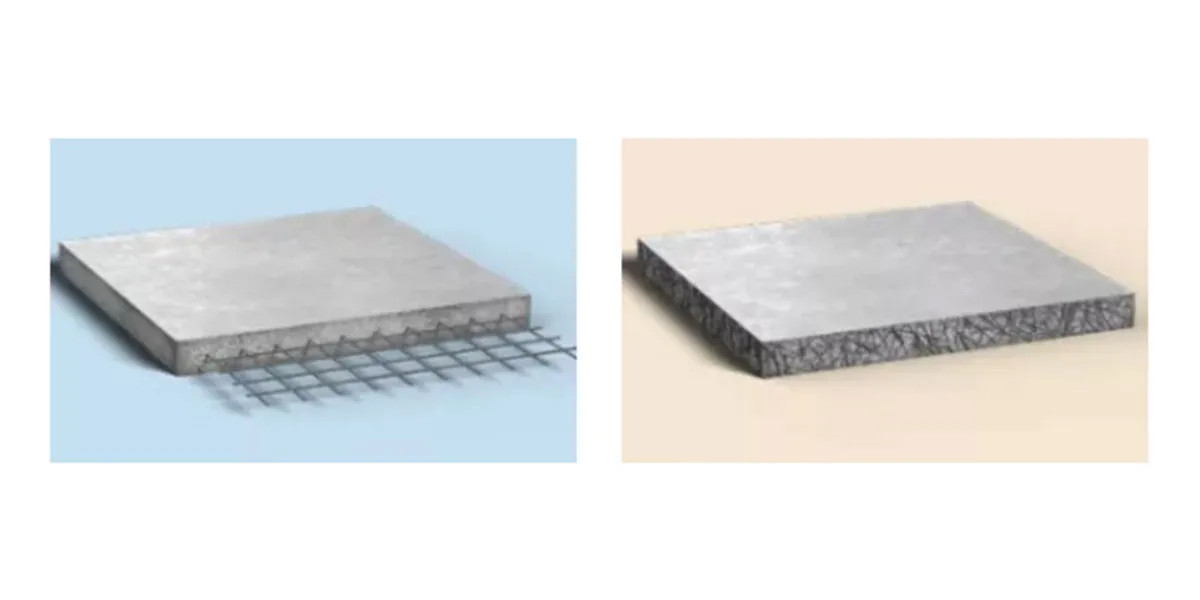
Concrete
NCB Signs MoU With Cement Manufacturer To Boost Construction Skills
Partnership to deliver nationwide training and certification
Concrete
JSW Cement Commissions Nagaur Plant, Enters North India
New Rajasthan unit boosts capacity to 24.1 MTPA and expands reach


Ultra Concrete Age

NCB Signs MoU With Cement Manufacturer To Boost Construction Skills

JSW Cement Commissions Nagaur Plant, Enters North India

Cement Prices Likely To Rise As Petcoke Costs Increase

IIT Guwahati Develops Radiation-Resistant Cement Mortar
Ultra Concrete Age
NCB Signs MoU With Cement Manufacturer To Boost Construction Skills
JSW Cement Commissions Nagaur Plant, Enters North India
Cement Prices Likely To Rise As Petcoke Costs Increase