Connect with us

Concrete

Shift Towards Sustainable Construction

Published

on

Shares

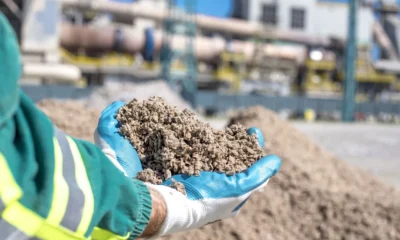
Neeraj Akhoury, CEO India Holcim and Managing Director and CEO, Ambuja Cements, draws a clear path for sustainable shift towards blended cement, which would lead to lesser use of clinker, thereby enabling the industry to reach its decarbonisation targets.

In today’s world, cement stands shoulder to shoulder with core sectors like steel, energy and others as one of the key building blocks to nation building. With the current market size of $325 billion, the cement industry (in GDP terms) would rank among the top 50 industrialised nations in the world today. By 2028, this market is expected to grow to $460 billion. And when that happens, the global cement industry would have raced past another dozen or more countries in GDP terms.
Leaders in the cement sector across the world are not only aware of the opportunity this represents, but the weight of the responsibility that comes with it. Almost all major cement producers have committed themselves to a Net Zero future, an important decarbonisation movement that has also taken the larger industrial world by storm.

Planning Ahead
In the cement sector, we have identified every stage in the value chain as a potential target for decarbonisation. The execution of this change is happening within the bigger framework of ‘Circular Economy’. In simple terms, the principles of circular economy pushes manufacturers to treat every material (natural and processed) to be used in perpetuity. A key element in this system is the ability to cut down or reduce as one of the three Rs, along with reuse and recycling to achieve long term sustainability.
For the cement sector, one of the focus areas has been reduction of the use of clinkers in the manufacturing process, or what in industry parlance is called ‘clinker factor’. Clinker is an intermediary material used in the production of cement.
The reduction of clinker factor is achieved by replacing it with alternative blending materials like pozzolana, slag or fly ash (industrial waste) to produce blended cements. This reduces the carbon intensity of the cement—a primary lever for reduction of carbon emissions.
So, the more we shift towards blended cement, the lesser will be the use of clinker and thus move the cement industry closer to its ultimate decarbonisation targets.
The growing demand for blended cement in a country like India is particularly very effective in combating climate change. India is today the second-largest cement producer and consumer, with the share of blended cement of around 75 per cent of our total production mix. However, India’s per capita cement consumption at around 235 kg is less than half of the global average (520 kg).

Surging Demand
The economic growth we are foreseeing over the next few years and decades including the target of becoming a $5 trillion GDP will push the demand for cement to much higher levels. The surge in demand for cement can be environmentally sustained only by our efforts to push for wider use of blended and green cement. From the manufacturers point of view such a shift is already gaining a lot of momentum through more investment in R&D-led innovation to improve products and processes and in no small measure a strong and consistent consumer-focussed advocacy.
As one of the leading markets for cement in the world, this is an historic opportunity for India to establish its leadership in the true sense of the word.

About the author:
Neeraj Akhoury, CEO, Holcim India, and Managing Director and CEO of Ambuja Cements
comes with over 28 years of experience in steel and cement industries. He has a degree in Economics and MBA from the University of Liverpool, and General Management from XLRI, Jamshedpur. He is also an alumnus of Harvard Business School. He is on the board of governors at National Council for Cement and Building Materials (NCCBM), and he also serves as Vice President of the Cement Manufacturers Association of India.

Concrete

UltraTech Cement FY26 PAT Crosses Rs 80 bn

Company reports record sales, profit and 200 MTPA capacity milestone

Published

on

By

Shares


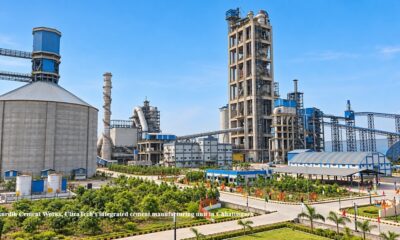
UltraTech Cement reported record financial performance for Q4 and FY26, supported by strong volumes, higher profitability and improved cost efficiency. Consolidated net sales for Q4 FY26 rose 12 per cent year-on-year to Rs 254.67 billion, while PBIDT increased 20 per cent to Rs 56.88 billion. PAT, excluding exceptional items, grew 21 per cent to Rs 30.11 billion.

For FY26, consolidated net sales stood at Rs 873.84 billion, up 17 per cent from Rs 749.36 billion in FY25. PBIDT rose 32 per cent to Rs 175.98 billion, while PAT increased 36 per cent to Rs 83.05 billion, crossing the Rs 80 billion mark for the first time.

India grey cement volumes reached 42.41 million tonnes in Q4 FY26, up 9.3 per cent year-on-year, with capacity utilisation at 89 per cent. Full-year India grey cement volumes stood at 145 million tonnes. Energy costs declined 3 per cent, aided by a higher green power mix of 43 per cent in Q4.

The company’s domestic grey cement capacity has crossed 200 MTPA, reaching 200.1 MTPA, while global capacity stands at 205.5 MTPA. UltraTech also recommended a special dividend of Rs 2.40 billion per share value basis equivalent to Rs 240.

Continue Reading

Concrete

Towards Mega Batching

Optimised batching can drive overall efficiencies in large projects.

Published

on

By

Shares


India’s pace of infrastructure development is pushing the construction sector to work at a significantly higher scale than previously. Tight deadlines necessitate eliminating concreting delays, especially in large and mega projects, which, in turn, imply installing the right batching plant and ensuring batching is efficient. CW explores these steps as well as the gaps in India’s batching plant market.

Choose well

Large-scale infrastructure and building projects typically involve concrete consumption exceeding 30,000-50,000 cum per annum or demand continuous, high-volume pours within compressed timelines, according to Rahul R Wadhai, DGM – Quality, Tata Projects.

Considering the daily need for concrete, “large-scale concreting involves pouring more than 1,000–2,000 cum per day while mega projects involve more than 3,000 cum per day,” says Satish R Vachhani, Advanced Concrete & Construction Consultant…

To read the full article Click Here

Continue Reading

Concrete

Andhra Offers Discom Licences To Private Firms Outside Power Sector

Policy allows firms over 300 MW to seek distribution licences

Published

on

By

Shares


The Andhra Pradesh government will allow private firms that require more than 300 megawatt (MW) of power to apply for distribution licences, making the state the first to extend such licences beyond the power sector. The policy targets information technology, pharmaceuticals, steel and data centres and aims to reduce reliance on state utilities as demand rises for artificial intelligence infrastructure.

Approved applicants will be able to procure electricity directly from generators through power purchase agreements, a change officials said will create more competitive tariffs and reduce supply risk. Licence holders will use the Andhra Pradesh Transmission Company (APTRANSCO) network on payment of charges and will not need a separate distribution network initially.

Licences will be granted under the Electricity Act, 2003 framework, with the Central and State electricity regulators retaining authority over terms and approvals. The recent Electricity (Amendment) Bill, 2025 sought to lower entry barriers, enable network sharing and encourage competition, while the state commission will set floor and ceiling tariffs where multiple discoms operate.

Industry players and original equipment manufacturers welcomed the policy, saying competitive supply is vital for large data centre investments. Major projects and partnerships such as those involving Adani and Google, Brookfield and Reliance, and Meta and Sify Technologies are expected to benefit as capacity expands in the state.

Analysts noted India’s data centre capacity is forecast to reach 10 gigawatts (GW) by 2030 and cited International Energy Agency estimates that global data centre electricity consumption could approach 945 terawatt hours by the same year. A one GW data centre needs an equivalent power allocation and one point five times the water, which authorities equated to 150 billion litres (150 bn litres).

Advisers warned that distribution licences will require close regulation and monitoring to prevent misuse and to ensure tariffs and supply obligations are met. Officials said the policy aims to balance investor requirements with regulatory oversight and could serve as a model for other states.

Continue Reading

Video Thumbnail

    SIGN-UP FOR OUR GENERAL NEWSLETTER


    Trending News

    SUBSCRIBE TO THE NEWSLETTER


    Don't miss out on valuable insights and opportunities to connect with like minded professionals.


      This will close in 0 seconds