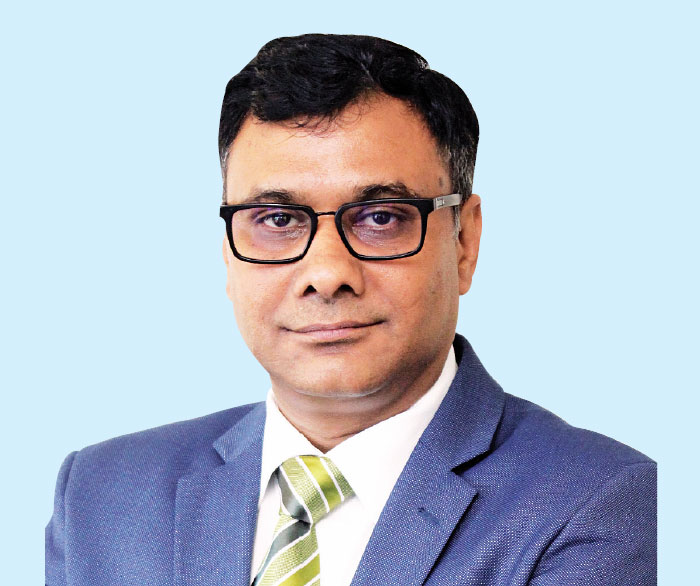
Anil Sharma, Chief Financial Officer (CFO), HeidelbergCement India, shares his views on managing finances, investments and costs, in the face of inevitable changes in the cement sector.
Cement industry is capital intensive.
How does HeidelbergCement deal with its capex requirement?
Cement is one of the most highly consumed materials amongst all materials. The Government of India also looks at the growth of the industry but it requires a large capital to establish and set up the plant, maintain and adhere to all the compliances set for the industry.
At HeidelbergCement, we have a systematic way of assessing the capex requirement. We work in advance with a plan of three years in hand. During our planning, we split the capex requirement into various categories. Starting environmental, safety and legal capex requirements as they are mandatory and cannot be deferred. Then we plan for replacement capex, by lapse of time we need to complete for the maintenance of plants etc. Thereafter, we look for improvement in capex. With passing time and advancement of technology, we have to look for upgrades in the plants, which could be in the process, efficiency or productivity area. The improvement capex is used here. The last category of capex is the expansion or strategy capex, which is used for new product development, for entering new markets, etc.
When we do the assessment of capex for our organisation, we split the requirement into own versus hire. Example, if we need a bus to transport our employees, we need not buy it, the same can be hired. In HeidelbergCement, this is a very systematic way of assessing our asset capex requirement. We analyse the use, evaluate risk, profitability and payback and if the result is in favour of the organisation, then an authorisation is created for the capex to own a certain asset with all details of its requirement, wear and tear etc. Only upon approval of the same, the process is taken further and procurement is done. As a thumb rule in HeidelbergCement, we maintain 40 per cent of our annual depreciation as a sustainable capex.
This is not the end of the story – capex is a big thing at our organisation. We always go in for a post investment review. One part is to complete the capex cycle and the next is to assess if that decision was correct. This assessment is done a year after the project commenced and another assessment is done by the corporate finance department. They check if the assumptions taken into account were correct and projected results have been achieved. During the post investment reviews, we come across insights, which are shared with other departments and plants. It helps fine tune their workings on the same.
What are the major cost elements for producing cement and how have these cost dynamics changed in the recent past?
Cement manufacturing is a simple process. But the cement production costs are very dynamic. It changes with various changes in elements of the cost and it is also advisable to be flexible while taking cost decisions for the product.
India is a very competitive market for cement and to be relevant for the same, the cost should be competitive and brands should also be cost efficient. To decide the cost of the end product, the method is not a simple straight line, it needs to be broken down into different cost elements. In our organisation, we have the process of splitting cost in two parts, i.e., variable cost and fixed cost.
The variable costs are further split into the cost of various elements starting with limestone, the key raw material for cement manufacturing. It is acquired from our own mines and sometimes additives have to be purchased to bring it to a certain quality. Once the limestone is obtained, crushed and sent to the plant, the second cost element utilised is the power and fuel. This is the biggest cost element for the manufacturing of cement and currently with increase in fuel and energy cost, it accounts for approximately 30 to 40 per cent of the total cost. Power is either taken from the grid or purchased from the third party. In recent times, we have started using renewable power by setting up our own plants or by using power from wastage recovery power. The third element to cost are other cementitious materials like fly ash, slag and other packing materials that also play a big role in the manufacturing of cement.
Another category that accounts for variable cost is logistics. Materials in bulk are brought into the plant and end products are taken out of there. The outward transportation contributes to approximately 20 per cent of the total cost and is the second largest category of variable cost.
Fixed costs are also divided into three categories i.e., fixed production cost, sales and marketing costs and other administrative costs.
Fixed production costs include tax, duty, etc. that are an essential in the cement manufacturing process. The sales and marketing costs include the budgeted amounts for promotion, cost of sales offices, warehouses, etc. Administrative costs include travel of personnel, office rent etc. Fixed cost account to approximately 15 per cent of the total cement cost.
What initiatives has the company taken to optimise its cost?
In cement, we always say that there is room for improvement. Although the process is set and manufacturing is done for about 150 years, experience tells us that there are always methods to optimise costs for the industry. In our organisation, we have a continuous improvement programme, where we allow our people to look into various elements of processes and costs, give suggestions and with that we improve processes, efficiency and productivity.
HeidelbergCement has taken multiple measures to optimise cost. First it has taken into account the fuel cost. We have brought flexibility in fuels that we use for clinker manufacturing depending upon their cost. The fuel that is lesser in cost, we use that for the production process. We have also implemented an alternative fuel plant in the manufacturing process and use many kinds of alternative fuels like biomass, municipal waste, pharma waste etc. that helps us optmise our costs and reduce carbon footprint.
Another cost optimisation effort has been taken into the power category where we use power from renewable sources. We have set up our own solar power plants and have also entered into a long term agreement with a power developer who supplies power around the clock from renewable sources. Of our total power consumption currently, we are using 25 per cent green power for our plants. We are also working towards reducing our dependence on grid power which will help us optimise our costs.
In the recent past, we have taken up some debottlenecking projects to optimise logistics cost. We have made despatch flexibile between road and rail depending upon which costs less at the time of despatch. This helps us bring more quantity of material in and out of the plant.
Internal production processes need to be simplified to create an environment of efficiency and productivity that will also help us optimise our costs.
What are the various types of direct / indirect tax, cement industry undergoes?
The cement industry is a highly tax levied industry. GST is the highest and known to the people tax at 28 per cent. But there are other taxes like royalty on limestone or other minerals, district mineral funds, electricity duties, import duty, custom duties etc. All taxes combined amount to approximately 40 per cent of net sales of the total production.
Share your experience on the transformation of indirect taxes under the GST regime? Are there any challenges due to GST implementation? What initiatives are taken to overcome them?
GST has been one of the biggest tax reforms in India. Earlier there were many taxes, which were different in different states, but with GST it has become one nation, one tax system which is a welcome decision for the industry. It has brought an ease to doing business when we deal with many states for materials etc. When the taxes were different, the processes were also different and paperwork was cumbersome. GST implementation has made processes smoother and transparent, thus, easing logistics and procurement for the industry. Calculation methodology of GST is simple. The organisation may deal with one state or multiple, all information is available on government portals making work flow smooth and transparent.
The change from state wise tax to one nation tax, GST, came with its own set of challenges. This meant changing of calculation, different invoicing, and a lot of rework of methods like stock transfer from state to state. The initial transition with GST was full of challenges especially with the MSME sector who were not digitised and informed enough. The hiccups that our smaller vendors were experiencing in the shift to GST was coming back to us and causing a delay in the entire chain of processes.
We educated our employees and vendors about the new taxation system with the help of consultants who were experts in this field, to help them understand and transition smoothly. We created points of contacts for these vendors that helped them file their taxes.
In nutshell, GST became a catalyst for smooth business function in India.
How has digitalisation and automation played a game-changing role in the finance sector for the cement industry?
Our business is volume driven and all transactional activities are in large numbers and quantities.
Raising invoices, debit notes, credit notes etc. is done everyday, multiple times a day. These jobs require a lot of labour and can also lead to a lot of errors when done manually at such a large scale. Digitalisation has been a game changer for the industry. For optimising costs, for removing errors and a lot more. The concept of bringing technology to the business was a costly proposition, but now people are understanding that it is for the betterment of the business.
In HeidelbergCement, digital transformation is changing the landscape of the business, not only in the finance department but also in the manufacturing activity. We have made this a project on a global level and have identified three pillars for digitalisation for the business.
H-Connect: The real time, end to end experience for our customers. Through this portal customers can know about the statement of account, dispatch of material, track it, place order etc.
H-Produce: This portal is related to our manufacturing system. We have moved to the next mile with respect to digitalisation where we are bringing technology to our production, be it maintenance of equipment, track all KPIs of production parameters reducing maintenance cost and increasing productivity of man and machine.
H-Service: All the service related processes are digitised through this portal. We have implemented Robotic Process Automation (RPA), which is also gaining momentum in our manufacturing side where mundane human tasks are done by robots.
What are the risks / concerns for the cement industry in the short to medium term?
Cement industry is going through a difficult time. The biggest short term risk is the increase in the input cost of the cement, which has increased significantly. Similarly, the energy and fuel price have increased in the recent past and all of the increased cost burden cannot be passed on to the market. The demand in recent times has also been moderate, and not increased as expected. One of the major reasons for this increase in cost and lack of demand is inflation. This can be a further risk as our Indian rupee weakens in comparison to the dollar, which would still increase the input costs.
Another risk is the liquidity crunch in the market. Not only in business, but with a higher fiscal deficit of the central government, it leaves less room for them to bring rapid development in infrastructure growth as planned in the short to medium term which can make the growth of cement industry slower. This will also lead to unemployment which will also impact GDP growth. If this is not timely controlled, the cycle of inflation to purchasing capacity will remain imbalanced and it shall impact the top line and bottom line of companies and business due to lack of consumption. This will also defer new investments in the business. These challenges have to be overcome in the short term, otherwise its impact shall stay on the industry for a longer duration than expected.
In the cement industry, the input cost increase and liquidity will impact other impacts and services, but the risk that I foresee is the availability of cementitious materials. One of the biggest materials is fly ash, and the availability is not the same as it was 10 years ago. Sometimes, it needs to be procured from farther areas. Similarly, slag which is the by-product of steel companies, is also getting scarce. These being contributors to decarbonising of cement will be much in demand and lower in supply. These materials can be a risk medium to long term. The industry must invest in research and development in identifying newer alternative raw materials and supporting the environment.
What are the key priorities for the next two-three years? What recommendations do you have for the Indian business ecosystem?
The foremost priority for us at the moment is to reduce our carbon footprint. The process of calcination of the limestone, emits carbon. We need to reduce this emission from the entire cement manufacturing process.
There are two ways to reduce carbon emission from the cement manufacturing process. First would be to increase the use of cementitious materials and make more blended cements, and the other would be to use alternative fuels for the process of clinker making.
We have already started the process and our current alternative fuel consumption is in the range of 8 to 10 per cent of thermal substitution rate of total fuel and target to increase it to 20 per cent. There are many constraints in the availability and quality of alternative fuels, obtaining municipal waste of the required standard, logistic cost of acquiring the same etc. We have to do a cost analysis of alternative fuel to fossil based fuel to understand, which is beneficial to the business.
These are the key priorities for the business to reduce carbon footprint.
Another focus we have is to increase the use of renewable power. We purchase power and if that purchased power is thermal power, then it contributes to the carbon footprint. Thus, we want to increase the percentage of renewable power consumption in our total power consumption. capex is set aside in that direction and steps are being taken to bring this in action.
The third focus is automation and technology which is the need of the hour. If the business needs to reach a certain level of maturity, customer satisfaction and adapt to newer methods of business that are quick and real time, the solution is to integrate systems and processes to the automation and digital tools. This would also include integrating vendors, third parties and customers in this process.
In my experience, the recommendation I can give to any business especially in the post pandemic era is to always be ready with a plan B. There are a lot of uncertainties in business and plans should be made in a manner to accommodate change and keep it flexible. Change is inevitable and businesses must be ready to adapt to these changes that are coming in the dynamic world.
Another recommendation to any business should be to evaluate their risks. They must take all kinds of steps to understand and mitigate risks that are to come to any task. They should always do a risk-benefit analysis and not put all their resources in a single project, rather allocate the same in the one that stands out in your analysis.
In our organisation, we split our risk evaluation matrix into four baskets called risk atlas. Market risk would include competition, new product launch, change in customer behaviour. Second would be legal and compliances risk, which would include risks arising from new policies, new regulations, compliances etc. Third risk would be operational risk that are related to production, availability of raw material, dependency on vendors, etc. Lastly, financial risk, which would include bad debts, working capital requirements, tax risk, etc. We always have the processes and policies in place where we deliberate and prioritise tasks and decide where the funds and resources should be allocated.
A very important recommendation is the cash reserve. Any business must focus on their cash resources and availability. They must prioritise spending to support their growth. They must focus on cash inflow and optimise their cash conversion cycle. It is important to keep inventory moving and not blocking their funds.
Last recommendation for the entire business ecosystem would be to allow the next generations to come on this planet to live with all the resources we have and in a safe environment. That is called sustainability. It could be a cost centre by businesses but it actually is an investment towards the future of any business. If businesses are not woke today and don’t bring down the carbon footprint or give back to the society there will not be any real growth in the business environment and it is not justified for the same.
-Kanika Mathur