Concrete
Mukutban plant incorporates state-of-the-art technology
Published
4 years agoon
By
admin
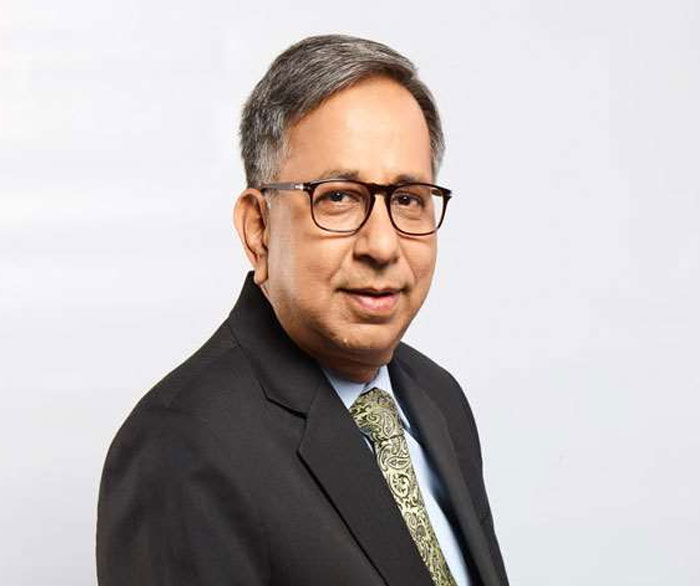
Arvind Pathak, MD & CEO, Birla Corp, shares more on the Mukutban plant, its technological advancements and why the plant was planned in Maharashtra.
Birla Corporation had signed a deal with Reliance Infrastructure whereby it took over its cement production unit (RCCPL) for Rs 4,800 crore at a valuation of $140 a tonne in 2016. RCCPL had three cement units — an integrated cement plant at Maihar (Madhya Pradesh) and grinding units at Kundanganj (Uttar Pradesh) and Butibori (Maharashtra) — with an aggregated capacity of 5.58 MTPA (million tonne per annum) of cement and 3.30 MTPA of clinker. With the Mukutban plant and debottlenecking, the total capacity under the RCCPL units comes to 9.81 MT against its operational capacity of 10.19 MT in its holding company, which includes plants in Satna, Chanderia, Durgapur and Raebareli.
At Rs 2,744 crore, the Mukutban plant is the Company’s largest greenfield investment in its history. In terms of operational capacity of 3.9 mt, it is second to your Chanderia plant in Rajasthan, which has 4 mt. How would you distinguish its technical prowess?
I would compare the Mukutban plant to the Maihar plant in Madhya Pradesh. Maybe, the cement grinding capacity in Chanderia could be higher because it does not have any attached grinding unit. Whereas in Maihar, if you look at it clinker-wise, it is a 10,000-ton per day unit. Also, Maihar so far has the distinction of being our most efficient plant. But the Mukutban plant would be a step ahead as it is supported by all the latest technological changes.
In terms of parameters of technology and efficiency, what makes this plant one of the most advanced cement factories in the country?
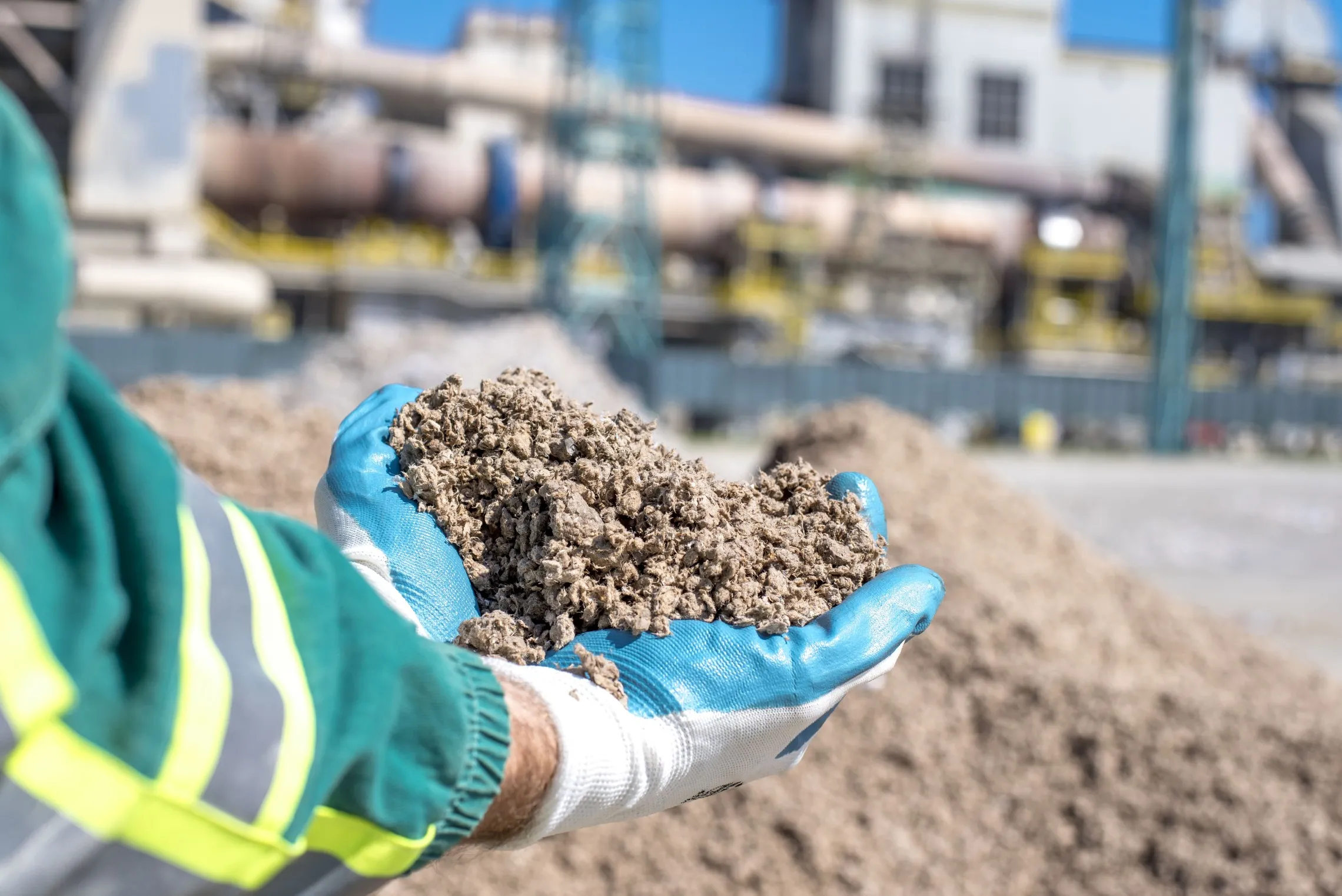
The plant incorporates state-of-the-art technology. It is 100 per cent operated on captive power, which will give us a cost advantage over time. We have also opted for an air-cooled condenser wherein we are trying to conserve the water required for cooling fuel gases within the plant. The entire conveying system is done through belts. We do not have any mobile equipment in place and the gamma metrics control helps us make the stockpile. We have opted for a roller press, which is the most efficient mode for this type of raw material. Every equipment we have used is the most efficient in the country or maybe in the industry across the world.
Also, tell us about the plant’s efforts towards minimising water consumption and the technology used to achieve the same.
The highest water consumption takes place in a power plant. The hot flue gases need to be condensed and the water recirculated. Instead of water cooled, we have gone in for an air cool condenser. Although it is slightly more power consuming, it saves a lot of water. Also, normally in cement plants, they use vertical mills, which also do not require much water. For the cooler for the clinker, after it comes out, companies generally economise on the length, saving on the capex, and only to control the exit temperature of the clinker, water is sprayed on it. However, we have opted for the full length of the cooler and are trying to cool it with the air from cooler fans. We have the permission to utilise ground water but we do not intend to use it. When it comes to full capacity, this plant will be water-positive.
Further, you have used fly ash – a waste product of thermal power plants – to build the plant….
Most infrastructure companies and companies developing multi-storied sites would prefer OPC cement. This is not because of any difference in quality, performance or durability but for speed of construction. The industry is aware of the positive attributes of blended cement. With inhouse research and development, we tried to see if the setting time required with the fly-ash-based cement could more or less match that of OPC. Once we cracked this, we wanted to use it as a demonstration both for the construction industry as well as from the point of view of sustainability. We wanted to walk the talk and show the world that a big plant of this
nature could also be constructed in time using fly ash-based cement. We wanted to demonstrate that this product can be as efficiently used for speedy construction as OPC.
With regard to cement production in this plant, will the consumption of slag and fly ash be scaled up?
Going forward, our endeavour would be to have 100 per cent blended cement, be it with the use of slag or fly ash. Delivery is key. We need to educate the market and our customers and, if we can offer the benefit of speed of construction, we could expect to see demand.
The pandemic’s impact on the world economy, the cement industry in India and major disruptions on account on COVID-19 must have led to several challenges, such as logistics, labour shortages and stoppage of work. How did you build this plant in these tough circumstances?
We did two things that helped. In hindsight, the infrastructure facilities created for the contractor’s workmen were far superior to what is normally found on construction sites. This resulted in hygiene, and good health and comfort of all employees working with us. Along with excellent facilities, we provided an online mechanism or toll-free lines where their family members could reach out for help. With this, they were individually satisfied with the infrastructure they had and, relatively, had some comfort that their families were being attended to. With these efforts, though we could not mitigate the challenges 100 per cent, the impact was reduced to a large extent, enabling us to complete this project without huge delay despite three waves of COVID.
Also, achieving 10 million man hours of construction with zero accidents and the completion of the entire project without a single major accident or fatality is a unique achievement in the cement industry. How was this achieved?
It was a concentrated effort. We hired and took the help of an external agency. This ensured that all systems and processes were followed and no deviations permitted. We also ensured extensive training for everybody who entered the project site. This training was reinforced time and again to ensure everyone was always up to the mark. Some refresher courses were also extended. Last, our protocols for every typical job – having a hazard review and then taking appropriate measures under the expert guidance of our consultants – yielded significant results.
How do you see this plant further supporting your footprint in western India?
At Birla Corporation, we normally prefer expanding the market adjoining the unit where we operate. If we are operating in Madhya Pradesh, in some parts of Rajasthan, it does make logical sense to us to move in a continuous direction till we go pan India. Maharashtra being an important State, we felt we should move our footprint in this direction. From the Maharashtra plant, we will be selling cement to Telangana. So, tomorrow, if we have to make an entry into Telangana, there will be some base that will always exist there. Such is our approach.
The geopolitical scenario has had its share of impact on cement and steel prices. How has the company been addressing this situation?
While production has not been affected much, the cost of production has certainly been impacted. Amid this scenario, we have been innovating some ways of working. And if you can keep ahead of your competitors, it does not hit us that badly. In absolute terms, yes; but in relative terms, it may not. Ultimately, if this is going to be the scenario going forward, or some amount of this increases, we will mitigate it through some innovative measures.
A significant portion of the cost is especially because of fuel and power. Power is also nothing but coal. With the rise in coal prices, the Ukraine war, the quantum of coal we require and the
power crises in our country, the only silver lining we see is that we already have one coal mine. We are expecting to start one more before year-end.
This is a testing time for us for the next six to seven months. Once these two coal mines are in operation, we will be covering 40 to 50 per cent of our fuel requirement.
Please tell us about your products.
We have one of the largest product bouquets in the industry. As we have been selling in Maharashtra for quite some time, we know the requirements of the state. What we are offering today is superior to other products within the same bracket available in the market. What we bring to the customer is value for money.
-Shriyal Sethumadhavan
Concrete
Cement Makers Reaffirm Commitment to Sustainable Growth
Published
11 hours agoon
June 5, 2026By
admin
World Environment Day spotlight on innovation and circularity
On World Environment Day, the Indian cement industry reiterated its commitment to supporting India’s climate ambitions through sustainable manufacturing, resource efficiency and the adoption of cleaner technologies.
The Cement Manufacturers’ Association (CMA) said the sector remains aligned with the Government of India’s Net Zero commitments and is accelerating efforts to reduce its environmental footprint while supporting the country’s infrastructure and development agenda.

Parth Jindal, President, CMA and Managing Director, JSW Cement, said the industry is increasingly adopting cleaner technologies, improving energy efficiency and expanding the use of alternative fuels and raw materials. He also highlighted the growing importance of circular economy practices, where industrial by-products and waste streams from one sector are utilised as resources in another.
“The Indian Cement Industry is aligned to the Government’s commitments on carbon mitigation and is accelerating the adoption of cleaner technologies, resource efficiency and circular economy practices while actively exploring the potential of Carbon Capture, Utilisation and Storage (CCUS) as a critical pathway for deep decarbonisation,” said Jindal.
He added that coprocessing industrial waste and by-products helps conserve natural resources, reduce disposal requirements and lower the environmental footprint across multiple sectors.
According to Jindal, sustainability is no longer limited to manufacturing processes but is increasingly influencing investment decisions, innovation strategies and long-term growth plans within the industry.
Echoing similar views, Dr Raghavpat Singhania, Vice President, CMA and Managing Director, JK Cement, said sustainable development extends beyond emissions reduction and must also focus on responsible resource utilisation and waste minimisation.

“Sustainability in the built environment cannot be measured by emissions alone. It is equally about how efficiently we use resources, how effectively we minimise waste and how responsibly we create the infrastructure that will serve future generations,” said Singhania.
He noted that the cement industry is advancing its sustainability agenda through greater resource efficiency, increased circularity, technological innovation and continuous improvements in manufacturing practices. As a key contributor to India’s infrastructure development, the sector has a critical role to play in balancing economic growth with environmental responsibility.
On the occasion of World Environment Day, industry leaders reaffirmed their commitment to supporting India’s climate goals while delivering the materials required for resilient, durable and sustainable infrastructure.
Environmental sustainability requires immediate action, not just long-term commitments and discussions. Recycling, circular economy practices, and technology-driven waste management can help industries reduce environmental impact while supporting sustainable growth.
Author: Jignesh Kundaria, Director and CEO, Fornnax Technology
World Environment Day serves as an important reminder that environmental sustainability can no longer remain confined to discussions, reports, or long-term commitments. The environmental challenges facing the world today demand immediate, measurable, and collective action. Across industries and communities, waste generation continues to outpace our ability to process it responsibly, placing increasing pressure on ecosystems, natural resources, public health, and the well-being of future generations.
One of the most significant shifts required today is a change in how society perceives waste. Rather than being viewed as a material to be discarded, waste must be recognised as a valuable resource that can contribute to both economic growth and environmental protection when managed through the right technologies and systems. This mindset forms the foundation of the circular economy model that countries across the world are increasingly adopting to reduce landfill dependence, recover valuable materials, and create more sustainable industrial ecosystems.
India has made meaningful progress in strengthening awareness around sustainability, recycling, and environmental responsibility over the past decade. Significant efforts are being made to formalise the recycling sector through improved infrastructure, technology adoption, policy implementation, and broader stakeholder participation. These developments are creating a stronger foundation for responsible waste management and resource recovery across the country.
However, achieving long-term environmental impact requires collaboration from all stakeholders. Industries, policymakers, technology providers, and communities must work together with greater accountability to strengthen recycling ecosystems, encourage responsible waste management practices, and create sustainable outcomes through consistent execution rather than temporary interventions.
As someone closely associated with the recycling industry, I firmly believe that technology will play a decisive role in addressing future environmental challenges. Advanced recycling systems have the potential to recover valuable resources, reduce pollution, minimise landfill burdens, and conserve energy, creating a more sustainable future for generations to come. This belief is deeply reflected in Fornnax’s motto, “Committed to Create a Green Future,” which embodies our commitment to building long-term environmental value through innovation and responsible action.
At the same time, technology alone cannot deliver meaningful change. Real progress requires intent, awareness, participation, and a shared sense of responsibility. Sustainable development can only be achieved when innovation is supported by collective action and a genuine commitment to environmental stewardship.
On this World Environment Day, let us move beyond conversations and take meaningful steps towards creating a cleaner, greener, and more sustainable planet. By embracing innovation, strengthening recycling ecosystems, and acting responsibly today, we can create lasting environmental impact and secure a better future for generations to come.
Concrete
JK Lakshmi Advances LC3 Cement Expansion
Company highlights commercial production and research partnerships
Published
4 days agoon
June 1, 2026By
admin
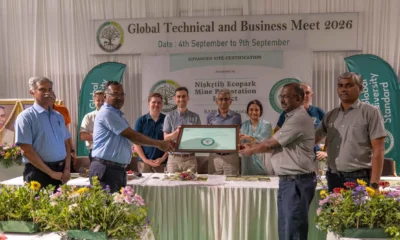
The meeting reviewed progress in limestone calcined clay cement (LC3) technology and its commercial adoption in India’s cement sector, focusing on low-carbon alternatives to conventional binders. JK Lakshmi Cement noted that limestone calcined clay cement can reduce carbon dioxide emissions by up to 40 per cent compared with conventional cement and said this reduction supports industry decarbonisation. The company highlighted that it was among the first two cement manufacturers in India to move LC3 into commercial production after the Bureau of Indian Standards approved the technology as a cement standard.
Vinita Singhania said the transition of LC3 from research to commercial production reflected collaboration between industry, academia and international institutions. Maya Tissafi acknowledged JK Lakshmi Cement’s role in advancing LC3 adoption in India and its contribution in taking the technology from laboratory trials to commercial implementation. Both representatives underlined the growing relevance of sustainable construction materials as India expands infrastructure and urban development.
The meeting explored continued collaboration with Swiss research institutions such as EPFL, EMPA and ETH Zurich alongside Indian academic partners and development organisations. JK Lakshmi Cement has been associated with the LC3 initiative since 2014 and worked with EPFL, IIT Delhi, IIT Madras, Development Alternatives and Technology and Action for Rural Advancement. The company conducted one of the earliest industrial trials of LC3 and recently announced commercial production of Green Pro LC3 cement from its Jaykaypuram plant in Rajasthan.
India remains the world’s second-largest cement producer and expansion of infrastructure, urbanisation and housing demand continue to support long-term sector growth, increasing interest in low-carbon technologies. The company reported an annual turnover of more than Rupees (Rs) 60 bn and current cement capacity of about 18 million (mn) tonnes (t) per annum, with a target of reaching 30 million (mn) tonnes (t) by 2030. Apart from grey cement, the company also makes ready-mix concrete, gypsum plaster, wall putty, primers, adhesives and fly ash blocks, and both sides concluded on the need for continued collaboration to develop sustainable construction solutions.
Cement Makers Reaffirm Commitment to Sustainable Growth
Building a Greener Future Together
JK Lakshmi Advances LC3 Cement Expansion
Burnpur Cement Reports Standalone Net Loss Of Rs 207.4 Million
Ramco Cements Campaign Wins Six Kyoorius Honours
Cement Makers Reaffirm Commitment to Sustainable Growth
Building a Greener Future Together
JK Lakshmi Advances LC3 Cement Expansion
Burnpur Cement Reports Standalone Net Loss Of Rs 207.4 Million