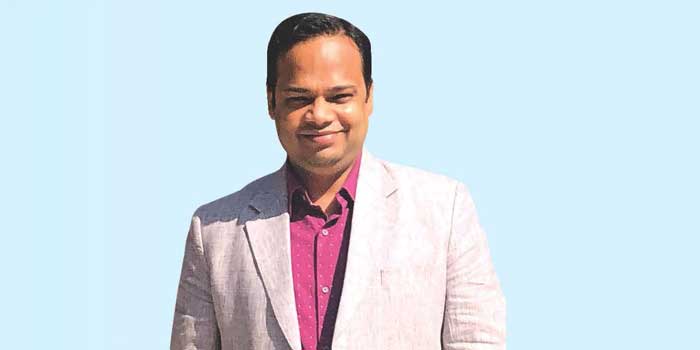
Shashikant Kumar, General Manager (HR & IR), Udaipur Cement Works (a subsidiary of JK Lakshmi Cement), speaks about initiates taken and challenges faced in implementing corporate social responsibility programmes.
What is the vision of your organisation in terms of CSR?
To strengthen community relationships and to bring sustainable change in the quality of life of neighbourhood communities through innovative solutions in education, health, livelihood and community development. We define Corporate Social Responsibility (CSR) as the way a company balances its economic, social and environmental objectives, while addressing stakeholder expectations and enhancing shareholder value.
In continuation of the philosophy followed by JK Lakshmi Cement of giving back to the society much before the term corporate social responsibility was coined, Udaipur Cement Works, too, is actively involved towards social causes since its inception by working towards enriching the community living around the plants and mines, especially where the weaker sections of rural and tribal population have limited access to even the basic amenities. The community sustainable development programmes aim at the integrated development of such villages.
How does your organisation zero down on the projects it decides to take up for CSR activities?
CSR action plan is based on the survey reports, consultations with stakeholders and need identification. Based on this mapping, UCWL works closely with the communities to help prioritise their needs in three categories i.e., immediate plan, short term plan and long-term plan, so that the initiatives have effective and positive outcomes for the benefit of the community at large.
Tell us about the budgets allocated for CSR in the current and next financial year.
The procedure for budget allocation is based on priorities and need based analysis of the community. We do ensure that the allotted budget is utilised for the purpose and in the manner for which it is approved and expected to spend within that financial year. Our main verticals for CSR fund are health, water facility, education, learning and skill development. These verticals are covered under different projects such as UCWL Aryogya, UCWL Vidya Project, UCWL Kaushal Prashikshan Project, UCWL Swajal and Swachata Project and UCWL Gramin Vikas Project.
What social responsibilities and community building programmes are your organisations currently working on?
The major focus areas of intervention are education, healthcare, livelihood and community development and commitment towards the social cause which is positively contributing towards human development index.
What significant changes have your CSR activities brought in communities you support?
We believe that every small step makes a significant impact under social responsibility and community development. We created a real life changing story by supporting the community. During the Covid-19 period, we helped them out by distribution of masks, sanitiser and food kits. We are trying to cover all relevant subjects for community support such as skill development, education on sanitation, literacy, eye care, oral hygiene
Few examples are:
For Livelihood:
- Selection of 75 Micro/ Small farmers
- Six Workshops on ‘Agriculture Input for Rabi Crop’ participated by 125 beneficiaries
- Soil testing at State Government Laboratory of all 75 Micro- Small farmers beneficiaries
- Developed 75 Individual Farmer Development Plan
- Pesticides support to 16 farmers
- Door-to-door Veterinary Programme wherein 1711 cattle treated for free, and which
benefited 454 cattle owners
- Veterinary Camp treated over 50 cattle
- 25 girls were trained in the 6-month training programme and 14 placed in BPO sector
- 26 Women beneficiaries trained in stitching
Community Infra:
- Electrification of six Aanganwadi around the mines’ periphery
- Toilet facility at Government Senior Secondary School, Mandesar
- Repair and maintenance of Government Primary School, Talai, Mandesar
Medical
- Organised 15 Medical Camps,which benefited 602 patients
- Organised 2 Eye Camps, wherein 249 patients underwent eye check-up and 53 patients were provided with spectacles
- Cotton masks, oximeter and PPE kits were provided to four Gram Panchayats, three hospitals and one government school
Tell us about the steps taken by your organisation to achieve net zero. How far have you achieved your targets?
Serving the society towards improving the quality of life of the community at large has always been a priority of the company. The concept of socially responsible business is deeply ingrained into our corporate DNA right from the initial years and till date we have pioneered and delivered several CSR projects for needy and vulnerable communities and families. The company works towards overall development and welfare of the society by focusing on areas such as health, sanitation, water, education, skill development and livelihood interventions. As the beginning of the financial year saw the outbreak of Covid-19 pandemic, the company responded to this unprecedented crisis by taking several initiatives in collaboration with local panchayats and district administration. Number of food kits, sanitisers, cotton masks and hand wash were distributed to the needy families as well as sessions and meetings were organised to create awareness on Covid-19. The company also undertook multiple CSR activities like medical camps, skills training for the women and girls and supporting them for income earning under its flagship project ‘Swavalamban’, among others. Projects like farmers’ training, exposure visits and veterinary camps were organised to improve agricultural and cattle rearing practices to strengthen livelihoods of the marginalised families. These CSR projects have positively impacted the lives of the beneficiaries around the plant.
What is the expertise you employ to implement your CSR plans?
Currently we have recruited CSR professionals having more than 10 years of experience in
the development sector and two project experts as consultants.
How has the pandemic impacted your community building activities?
We stood up strongly with our stakeholders and nearby community. Although activities were stuck for a small period during complete lock down when movement was restricted. However, it was momentary. That time was crucial for everyone from an individual to an industry, everyone. Overall, the pandemic was a lesson for all of us and an opportunity for awareness among people about the importance of hygiene and sanitisation. We met with the local panchayat and district administration. We conducted awareness sessions, distributed a number of food kits, sanitisers and cotton masks for safety towards Covid-19 pandemic.
Tell us about the awards and accolades won by your organisation for CSR.
- UCWL recognised with ‘National Award for Excellence under CSR in Best Community Action Category’
- UCWL was awarded ‘Winner for 8th CSR India Award 2021’
- UCWL received an Appreciation Certificate for contribution in ‘Ghar Ghar Aushadhi Vitran
Yojna’ of the Department of Forest; Government of Rajasthan. This scheme was designed for distribution of medicinal plants to state citizens.
What are the future plans for building communities and giving back to society?
Currently we are working in 6 villages only and planning to increase the number of villages to 27, with an integrated approach of socio-economic development for the community. Some major proposed projects are as mentioned below:
Project 1
Name of CSR Projects Project Planned Activities Frequency of activity Total number of units
UCWL Aarogya Project,
Purpose Statement: To deliver affordable/quality health care services & door stapes MMU MMU modal in partnership with H2H foundation 2 Camps per day (Monthly 25*2 camps) 600
Project 2
Name of CSR Projects Project Planned Activities Frequency of activity Total number of units
UCWL Vidya Project,
Purpose Statement: To support around 300 needy students with a school kits simultaneously support Govt schools in primarily mines area with teachers support to bridge the shortfalls of teachers
Education School kit support – in 3 Govt primary Schools One time 300
Teacher support – 5 Govt Sr Secondary Schools Monthly 2
Repair & maintenance of Govt up-primary school, Bajajnagar – Plant area One time 1
PCC work @ Govt Primary school, Talai One time 1
Project 3
Name of CSR Projects Project Planned Activities Frequency of activity Total number of units
UCWL Aajivika Project,
Purpose Statement: Promoting Farm & Allied livelihoods through institution building, capacity building, skill development training, support services & other related initiatives. Animal Husbandry Door to door vet service Monthly 2500
Artificial insemination for cattle Monthly 1428
Vet Camp (Daroli, Toos, Ghupadi & Majawada) Qtr 16
Project 4
Name of CSR Projects Project Planned Activities Frequency of activity Total number of units
UCWL Aajivika Project,
Purpose Statement: Promoting Farm & Allied livelihoods through institution building, capacity building, skill development training, support services & other related initiatives. Agriculture Development Agriculture Development Setting up Vermi Bed (Soil Improvement) One time 50
Capacity Building & Training of Farmers Monthly 24
Seed & pest support Twice in a Year 30
Exposure visit – Other district / State One time 50
Exposure visit – Inter district One time 50
Spray Pump with motor One time 4
Repair & maintenance cost of spray pumps One time 4
Spray Pump manual One time 4
Repair & maintenance cost of spray pumps One time 4
Plantation (SA) One time 1000
Access to Govt scheme One time 35
Training on Agri-allied activity to promote small business like Goatry/ Poultry/ Rabbit Keeping / Beekeeping / Mushroom Farming / Dairy Development – AI One time 60
Support to trained beneficiaries of agri-alied activity to promote small business – Goatry/ Poultry/ Rabbit Keeping / Beekeeping / Mushroom Farming / AI One time 30
Project 5
Name of CSR Projects Project Planned Activities Frequency of activity Total number of units
UCWL Kaushal Parshikshan Project,
Purpose Statement: Provide Skill training & coaching support to 350 youths in various trades. Skill Development RSCIT – Rajasthan State Course In Information Technology Diploma to increase the IT education level for Job Readiness.
Three months training, Examination & certification Qtr 120
Skill training for women (Beautician & Tailoring) Qtr 120
Salary of teacher Competitive / coaching classes & other running exp Monthly 50
Projector One time 1
Computer for teacher One time 1
Training in Technical trades Qtr 10
-Kanika Mathur