On 01 February 2022, the Finance Minister of India, Smt Nirmala Sitharaman presented the eagerly anticipated Union Budget 2022. It comes at a time when the economy is still recovering from the devastating impact of the COVID-19 restrictions that had been imposed in the interest of the public, and as such, it was expected to make certain provisions for various industries in the country that would allow them to recover. Let’s take a look at some provisions that are expected to make an impact on the cement industry in India.
India is the second-largest producer of cement on a global scale with more than 7 per cent of the global installed capacity. Cement production reached 329 million tonnes (MT) in FY20 and is projected to reach 381 MT by FY22, driven by rural housing demand and the government’s strong focus on infrastructure development.[1]
Vimal Kejriwal, MD & CEO, KEC International Ltd., says, “I welcome the forward-looking, Capex-led Budget 2022, with a sharp 35 per cent increase in outlay. A strong focus on improving the safety of Indian Railways, faster implementation of metro rail systems, infrastructure status for data centers, along with an emphasis on PM GatiShakti with significant allocation towards Jal Jeevan Mission, Affordable Housing, BharatNet, and building 100 Cargo Terminals for multimodal logistics facilities augur well for KEC International Ltd. and our well-diversified businesses.”
It should be noted that India is still a developing country with tremendous improvements in infrastructure planned as of now. Infrastructural developments require cement as one of the primary raw materials, along with steel, coal, and other allied industries; and any expenditure or incentives for expenditure from the government in the infrastructural development sector is a very welcome sign which indicates a significant amount of growth in the cement industry, in addition to growth in these allied sectors such as coal, steel, aluminium, and mining. From this perspective, the Union Budget 2022 has been a blessing as it has made provisions for the following expenditures in infrastructural development [2]:
Government Scheme
Budget Estimates 2022-2023(INR crore)
National Highways Authority of India
1,34,015
Road Works
64,568
PM Awas Yojana
48,000
Metro Projects
19,130
PM Gram Sadak Yojana
18,000
Urban Rejuvenation Mission: AMRUT and Smart Cities Mission
14,100
Compensation to Service Providers for creation and augmentation of telecom infrastructure
9,000
National Investment and Infrastructure Fund (NIIF)
5,003
National Capital Region TransportCorporation
4,710
Member of Parliament Local Area Development Scheme (MPLAD)
3,965
Police Infrastructure
3,919
Border Infrastructure and Management
2,745
National Industrial Corridor Development and Implementation Trust (NICDIT)
1,500
North East Special Infrastructure Development Scheme (NESIDS)
1,419
Infrastructure facilities for Judiciary
858
Infrastructure Development and Capacity Building
588
Border Area Development Programme
566
Other Programmes including Railway Infrastructure
96,314
Total
4,28,400
As can be seen from the above table, a massive Rs 4,28,400 crore is expected to be spent for the purpose of infrastructural development in the upcoming financial year. A majority of these developments are concerning roads and transportation facilities in the country, however, schemes like the PM Awas Yojana, AMRUT[3], and Smart Cities Mission also incentivise residential infrastructural developments and give a boost to the real estate market. With the introduction of programmes such as the PM Gati Shakti, which aims to bring together Ministries related to transport (roads, railways, etc), we can expect a much more efficient planning system that may further increase the demand in the industries related to infrastructure, leading to even more growth.
One essential part of the Indian economy is the railway network. The railways present a special income and expenditure profile in the budget[4]. In 2022-23, the total expenditure on the Indian Railways is expected to be Rs 4,73,440 crore. While a lot of this amount goes towards the operating expenses of the railways, a significant percentage of it also goes towards infrastructural development which is undoubtedly a blessing for the cement industry.
Driving India ahead
Budget 2022 also makes provisions for improving the ease of doing business in India. Kejriwal further adds, “Initiatives such as the use of Surety Bonds as a substitute for bank guarantee, a cap on Surcharge of AOPs consortiums at 15 per cent as against 37 per cent earlier and an end-to-end online e-Bill System to enhance transparency are steps in the right direction for EPC contractors.”
While expenditure in the infrastructure, transport, and real estate sector from the government is sure to cause these sectors to grow, expenditure from individuals is also a key driving factor in the real estate sector. Individual customers would have greatly appreciated some form of tax benefits on home loans, which could have led to growth in the residential real estate sector, which also benefits the cement industry in addition to industries such as steel, home electronics and appliances, and many more. The middle class has also not received any reduction in the income tax, meaning that these individuals will be hesitant to make large investments such as real estate at the moment as well.
In conclusion, the new budget seems to be very beneficial for the cement industry, along with various other allied industries which play a role in construction and infrastructure. Budget 2022 promises tremendous developments in the public infrastructure and transportation in India, and development in these sectors is expected to lead to further development throughout the economy in the foreseeable future. Additionally, ease of doing business is also expected to improve with provisions such as the end-to-end online e-bill system. However, it is not only the government and large companies that form the market but also the individuals, and it would be very helpful for the industry if the government makes provisions for them.
Singh brings 20+ years of brand and marketing experience, and will lead integrated corporate brand communication initiatives at Wonder Cement
New Delhi
Wonder Cement, a leading cement manufacturer, has appointed Mahesh Singh as Vice President – Corporate Brand Communication. In his new role, he will oversee corporate brand strategy and communication, including digital and performance marketing, public relations, trade, events, exhibitions, sports and experiential marketing.
Singh brings over two decades of experience across marketing and communications, with roles spanning the automotive industry, agencies and entrepreneurship. He spent more than a decade with Honda Motorcycle & Scooter India, working across integrated communication, media, digital, retail and consumer engagement. His stint also included helping build the company’s digital marketing capabilities.
He moved to dentsu X India as Vice President – Strategy & Planning, working across categories such as automotive, auto components, electric vehicles, FMCG, consumer electronics, BFSI, apparel and brand consulting. His responsibilities included media and marketing strategy, product launches, content, performance marketing and consumer activations.
Singh subsequently took an entrepreneurial route with Radiant Brands before joining Shriram Ltd (SPR Autotech) as Head – Marketing & Communications. There, his remit included brand and corporate strategy, communications, PR and ORM, retail identity, loyalty programmes and events.
At Wonder Cement, Singh will be responsible for bringing together the company’s corporate brand communication initiatives across digital, performance marketing, PR, trade, sports and experiential platforms. The role will focus on creating an integrated approach to communication across consumers, trade partners and other key stakeholders.
The appointment brings to Wonder Cement a marketer whose career has spanned the brand, agency and entrepreneurial sides of the communications ecosystem.
Wonder Cement, part of the RK Group, is a cement manufacturer with roots in Rajasthan and a focus on quality, trust and transparency. The company has grown to six manufacturing plants, and a cement capacity of 21.5 MTPA. With more than 2,000 employees and a network of over 5,000 dealers, its operations span manufacturing, distribution and customer engagement, with a focus on consistent product quality and efficient execution.
With this commissioning, JSW Cement’s total cement grinding capacity has increased to 25.10 MTPA, Mumbai
JSW Cement, one of India’s leading green cement producers and part of the diversified JSW Group, today announced the successful commissioning of an additional 1.00 MTPA cement grinding unit at Nagaur, Rajasthan. The commissioning marks another significant milestone in the Company’s growth strategy.
With this commissioning, JSW Cement’s total cement grinding capacity has increased to 25.10 MTPA, while its total clinker manufacturing capacity, including clinker capacity at its joint venture, JSW Cement FZC, stands at 9.74 MTPA.
JSW Cement had commenced operations in North India in March 2026 with the Nagaur Integrated Plant, comprising a 3.30 MTPA clinkerisation unit and 2.50 MTPA cement grinding unit. With the commissioning of the additional 1.00 MTPA cement grinding unit, the plant’s total cement grinding capacity has increased to 3.50 MTPA, enhancing the company’s ability to cater to the growing cement demand across Rajasthan, Haryana, Punjab and the National Capital Region (NCR). The expansion has been funded through a strategic mix of equity and long-term debt.
During the quarter ended 30th September 2026, JSW Cement has also commissioned the Alternate Fuel Handling System and the Waste Heat Recovery system (WHRS) at the Nagaur Integrated Plant.
Nilesh Narwekar, CEO, JSW Cement, said: “The commissioning of additional 1.00 MTPA grinding capacity at Nagaur is a key strategic priority for us and will accelerate JSW Cement’s expansion into North India. We look forward to servicing the growing needs of the region and contributing to the economic growth of Rajasthan, Haryana, Punjab and the NCR area. I am delighted to share that the company has commissioned this grinding unit within the expected timeline, showcasing our project execution capabilities. Further, the Alternate Fuel Handling System and the Waste Heat Recovery system (WHRS) are expected to substantially reduce our production costs going forward.”
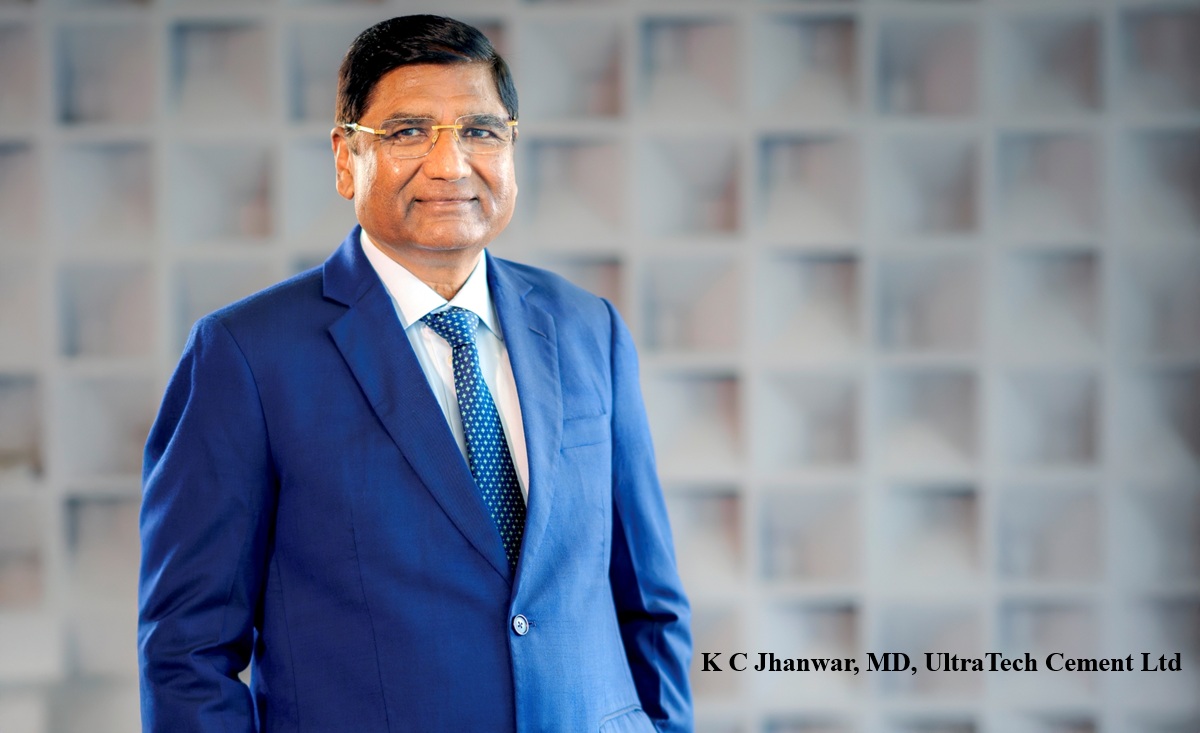
UltraTech Cement has crossed 2 GW of captive green energy capacity, with renewables and waste heat recovery meeting 48 per cent of its power needs.
Mumbai
UltraTech Cement Limited has surpassed 2 GW of installed green energy capacity for captive use, becoming the first cement company in India to achieve the milestone. The Aditya Birla Group company commissioned 116.55 MW of wind capacity at its Inter-State Transmission System-connected wind-solar hybrid project in Barmer, Rajasthan, along with 10 MW of Waste Heat Recovery System capacity at Sarlanagar Cement Works in Karnataka.
With these additions, UltraTech’s cumulative installed green energy capacity has reached 2,024 MW. This includes 1,580 MW of renewable energy capacity and 444 MW of waste heat recovery capacity, together meeting around 48 per cent of the company’s current power requirements.
The company said the milestone reflects the progress of its long-term energy transition strategy. In FY27 so far, nearly one-third of UltraTech’s 76 manufacturing units in India have maintained green energy utilisation above 50 per cent of their electricity requirements, while five units have crossed 95 per cent.
K C Jhanwar, Managing Director, UltraTech Cement Limited, said, “Crossing the 2 GW green energy milestone is the result of a strategy we have pursued consistently over the past decade. Cement is an energy-intensive, hard-to-abate sector, and showing that reliability and growth can go hand in hand with a rapid shift to green energy sets a benchmark for the industry. With nearly half of our power needs now met through green energy, we are significantly less exposed to fossil fuel supply constraints and power price volatility. As we scale up renewables, waste heat recovery and battery storage across our operations, we are building an energy foundation for stable, long-term growth.”
UltraTech commissioned 430 MW of green energy capacity in FY26 and continues to expand its renewable energy and waste heat recovery portfolio.
The company is also progressively integrating Battery Energy Storage Systems across its operations to improve renewable energy utilisation and supply reliability.
In 2025, UltraTech operationalised what it described as India’s first on-site hybrid round-the-clock renewable energy project at Sewagram Cement Works in Gujarat. The project combines solar, wind and battery storage.
As part of its decarbonisation strategy, UltraTech said it has not invested in new captive thermal power capacity for either greenfield projects or brownfield expansions at its integrated units for more than a decade.
The company said its expanding green energy portfolio is helping reduce dependence on conventional grid electricity and fossil fuel-based power, while lowering exposure to fluctuations in coal and electricity prices.
UltraTech aims to increase green energy’s share in its total power mix to 85 per cent by 2030. As a member of RE100, it has also committed to meeting 100 per cent of its electricity requirement through renewable sources by 2050.
UltraTech Cement, the cement flagship of the Aditya Birla Group, has a total grey cement capacity of 210.1 MTPA and white cement and putty capacity of 3.5 MTPA. The company is also a signatory to the GCCA Climate Ambition 2050 and has committed to the GCCA Net Zero Concrete roadmap.



















 Concrete4 weeks ago
 Concrete2 weeks ago
 Concrete2 weeks ago
 Concrete4 weeks ago