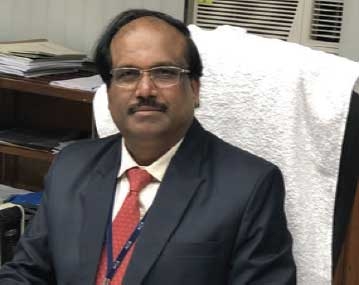
Indian cement plants are at par with global cement industry in adoption of latest energy efficient technologies such as VRM, roller press in semi-finish and finish mode, believes Dr Bibekananda Mohapatra, Director General- National Council for Cement and Building Materials (NCCBM).
Indian cement plants are at par with global cement industry in adoption of latest energy efficient technologies such as VRM, roller press in semi-finish and finish mode, believes Dr Bibekananda Mohapatra, Director General- National Council for Cement and Building Materials (NCCBM).
Today, the requirement for the cement industry is to reduce power consumption and make the grinding process more energy efficient. Please share your views on how this can be achieved.
Material grinding is the largest electrical energy consumer in cement manufacture. For raw material grinding, the most preferred energy efficient technologies are Vertical Roller Mill (VRM), roller press with ball mill and roller press in finish mode. For coal grinding, VRM is the most energy efficiency technology. VRM is most preferred for using different type of fuels like coal, petcoke etc.
The introduction of an external re-circulation system for material, adjustable louvre ring, latest generation classifier, vortex rectifier, thin liners for ball mill, use of Computational Fluid Dynamics (CFD) to improve classification efficiency, multi-drive systems, secondary classification in the grid cone, installation of high-efficiency fans, the use of slide gates instead of dampers for major fans with Variable Frequency Drives (VFD) and modification of mill body in VRM to improve the air and material trajectories are examples of such changes which increase throughput and improve energy efficiency.
What are the latest energy efficient grinding/technologies/solutions that could benefit Indian cement companies in achieving energy efficiencies?
There are several energy-efficient grinding technologies/solutions available in grinding. Some of them are ceramic grinding media for mono-chamber ball mills, thin liners for ball mills and online particle size distribution analyser for cement mills. In (VRM) grit cone water injection concept can reduce the water consumption by up to 50 per cent and stabilise the grinding bed with less vibrations. Moreover, feeding solutions like rotary feeder, sandwich sealing system for clinker/slag mills results in less wear rate. Comparing different grinding systems, high pressure grinding rolls are at par in energy efficiency as compared to VRMs for grinding purpose. In VRMs, recent development in support rollers is also providing grinding force enabling high energy efficiency. Advancements in VRM main drive gear box is leading to lower cooling requirement and reduction in energy loss. Reduction in mills pressure drop, optimisation of grinding media in ball mills, separator fan volume loading, addition of grinding aids are some of the optimisation measures adopted by cement plants as seen in recent PAT cycles. Some high energy efficient plants have already achieved overall specific electrical energy consumption of 63-65 kWh/t cement. It is anticipated that with the improvements in motor efficiencies, fan efficiencies, implementation of above mentioned technologies and innovations, there is a scope for further electrical energy savings in grinding section.
How is the adoption level of the latest grinding techniques in India as compared to the global cement industry?
Indian cement plants are at par with global cement industry in adoption of latest energy efficient technologies such as VRM, roller press in semi-finish and finish mode. The specific power consumption of grinding section of a cement plant depends on various factors such as type of grinding technology adopted, type of cement produced, fineness requirement, clinker/additives characteristics etc. While it is not possible to trace reduction in specific energy consumption of grinding section over the decades, however, for the Indian cement industry as a whole, the average specific electrical energy consumption for complete plant was around 122 kWh/t of cement in 1960 and started decreasing in late 80’s due to technology change in large cement plants to present level of average of 82.5 kWh/t of cement. The best achieved specific energy consumption for integrated cement plant in India is 63 kWh/t of cement when compared to global best achieved specific energy consumption of 65 kWh/t of cement in Japan.
How have we evolved in terms of innovation in grinding mills at cement plants? What are the latest developments observed in this area?
Innovation is the need of the hour. Grinding technology suppliers are also working consistently in this direction. Some of the innovative grinding technologies are:
Beta-mill: This mill works on the pressure grinding principle. By having defined feeding velocity, material height and width, a defined layer of material is fed to the pressure transaction zone (grinding zone). Energy savings of up to 30 per cent for mill motor as compared to Roller Press and up to 70 per cent as compared to ball mills is possible.
Ultrasonic comminution: Latest development in comminution is based on the application of ultrasonic energy. Ultrasonic comminution efficiently transfers the energy needed for crushing to the raw material, by means of acoustic ultrasonic pulses that are generated by two counter-rotating disks with special aerodynamic surfaces. The small-pulse durations exert pressure waves that pulverize the particles.
Microwave comminution: Grinding is very energy intensive process. Typically, only 1 per cent of the energy input is used to create new surfaces, the rest is turned into noise and heat. Now, prior to mechanically grinding the material, microwaves can be used to selectively heat parts of the rock, causing them to fracture along grain boundaries. This significantly reduces grinding power when the microwave treated material enters into the mill.
Applying ultrasonic field in a roller -press mill: The required energy consumption for grinding is significantly reduced by careful application of an ultrasonic field in the grinding zone. It is also expected to prolong the life of mechanical components. A lower stress on the shafts and a reduction of the required torque can be observed. The lower mechanical stress should also cause less abrasive wear on the rolls. Experimental results obtained by using ultrasound to enhance the performance of a roller-press mill are very encouraging. An experiment was carried out for coal grinding in which the energy consumption was as low as 3 kWh/t of material when compared to 20 kWh/t of material in hammer mills.
Further investigations are required for possible implementation of the above technologies in the cement industry.