

Concrete
Collaboration is key to driving the sustainability agenda

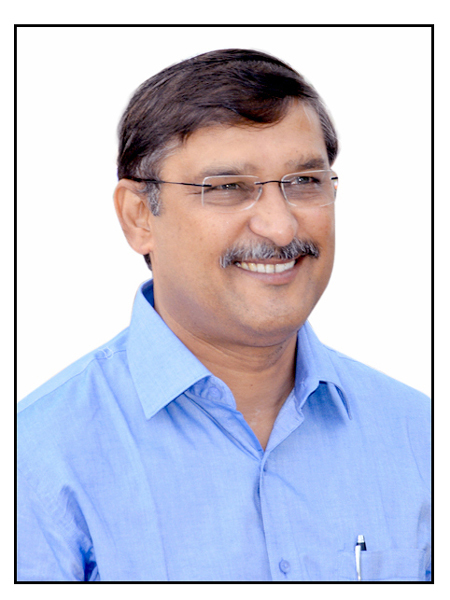
CSR initiative increases marketplace respect for a company, resulting in enhanced ability to attract qualified personnel, greater employee engagement and increased sales and profitability, believes Sanjay Mehta, President (Commercial), Shree Cement.
How have CSR activities evolved in recent years and what is its impact on a cement business?
CSR in the current context is more of sustainability and being self-aware of its obligations. CSR as a concept has evolved from being a charitable or social cause to an intrinsic business objective and goal. As per United Nations, CSR is a management concept whereby companies integrate social and environmental concerns in their business operations and interactions with their stakeholders. In India, the enactment of Companies Act, 2013 has given CSR legal backing and the much-needed thrust to involve more and more corporates therein.
Being a responsible corporate, Shree Cement, way before the enactment of the Companies Act, 2013 has tried its best to contribute to the local need to fill up the social and economic gap. Incubating sense of responsibility and ownership is considered while planning and implementing development projects under CSR. Aligning these core philosophies, Shree Cement?? CSR activities are planned and executed. Generating employment through the main business, giving a direct and indirect economic boost to the peripheral area would have to remain half-filled if the CSR activities were not planned for various important sectors like education, health, sanitation, and livelihood.
We have been and continue to be involved in meaningful, welfare-driven initiatives that distinctly impact the quality of life of the weaker sections of the society, surrounding hundreds of villages in proximity to our plants.
CSR integrates the business objectives of the company with the social and economic goals of the local society and in the process, the local community also embraces the long-term business goals of the company. Accordingly, it transforms into a two-way process whereby both constitutes work in tandem to achieve a common objective.
Due to growing importance and awareness, CSR has become a matter of public scrutiny and impacts the image of the corporate. Thus, impactful CSR initiatives leading and bringing about a positive change in the lives of nearby communities help the company to build a positive image leading to increase customer engagement, employee engagement and offers an advantage over competitors.
Does it give your business a competitive edge and build customer loyalty? How? What are business areas where CSR helps?
At Shree, it is our constant endeavour to give back to society through our various CSR initiatives. Having a defined and active CSR initiative increases marketplace respect for a company, potentially resulting in:
-
Enhanced ability to attract qualified personnel
-
Greater employee engagement
-
Increased sales and profitability
SCL contributes to the area of education, skill development of people in the local communities, healthcare services for local communities, women empowerment, and infrastructure development in local communities. We regularly engage with the community through formal and informal interactions to identify their key issues and concerns and based on these need-based assessments, CSR programmes are customised and implemented while partnering with government agencies, NGOs, local Panchayats for implementation.
Education and skill development are key areas in indirectly impact the business of the Company. It leads to skilled and trained contractual manpower to the Company leading to operational efficiency and productivity.
What was your CSR spending for FY20-21? Could you brief us on what kind of CSR activities were undertaken? Also, please share about partnerships/ committee associations, if any, you are involved in CSR projects?
During FY 2020-21, the Company incurred an amount of Rs 45.73 crore in terms of requirement of Section 135 of the Companies Act, 2013. The same is in excess of Rs 0.89 crore against the statutory requirement of Rs 44.84 crore. The majority of the CSR activities are undertaken by the company through its CSR arm ??hree Foundation Trust??specifically created for the focused implementation of the CSR initiatives of the Company. At the plant level, a dedicated team to oversee the CSR interventions has been appointed. This apart, Company has collaborated with other external implementing agencies viz. Rajasthan Foundation, The Bengal, Prabha Khaitan Foundation, Ess Bee Consultants, etc. to undertake the required CSR activities.
CSR activities during Covid-19 pandemic
-
Contributed Rs 4.78 crore to the PM CARES Fund and CM Relief Funds
-
Provided around 18,000 refilled oxygen cylinders to the administration from our cement plants in FY 2020-21. Also procured oxygen cylinders from market to supply to local administration
-
Provided COVID testing machines and advanced medical equipment to nearby Govt. Hospitals for COVID-19 screening assistance. Also contributed to construction of beds for COVID patients in nearby hospitals
-
Provided sanitisers, spray bottles, dry ration, immunity booster medicine, hand gloves, masks, and other PPE?? to local administration/panchayat, health workers
-
Awareness generation at village level in surroundings of our operating units
-
We are also preparing double-layered cloth face masks (re-usable) through specially trained women of nearby villages. Near about 50,000 masks were stitched and distributed
What CSR framework or strategy do you have in place? What best practices do you follow to make it successful?
Shree Cement has been implementing projects which contribute to the empowerment of the community which advances social and environmental sustainability. Consistent with that, we map, trace, and analyse the socio-environmental effects that our projects have in each and every context of their implementation. We have developed projects and design them in partnership with our stakeholders using a bottom-up approach, making use of different stakeholder involvement techniques according to specific purposes, topics, and targets.
Efforts are made for ensuring the participation of all relevant stakeholders in identifying social development interventions which include consultation with the relevant stakeholders and understanding their requirements and needs. We engage in awareness building and motivating the rural masses for the acceptance and their involvement in the project right from planning to implementation and monitoring of the project and work in collaboration with local/State Governments and their agencies, district authorities, village panchayats, NGOs, and other likeminded agencies to widen its reach and leverage upon the collective expertise and experience of these agencies.
CSR activities are also planned with various social tools like Participatory Rural Appraisal, Rapid Rural Appraisal, Focused Group Discussion with the involvement of villagers and opinion-makers along with line departments. While formulating any project, we begin with an informal interaction with local communities and Panchayat members. This is followed by focused discussions as well as formal interactions with the Government, NGOs, and other agencies once the preliminary need is established. Thereafter depending upon the size of the project and planned methodology, we may enter into a formal agreement with the concerned Government Department or NGO while consultations with local communities and Panchayats is a regular day to day activity, there is need based consultation with the NGOs and govt. bodies.
For identification of issues and needs of communities, we have undertaken various processes such as:
-
Household Survey
-
School Level survey
-
Village level meetings
-
Focused Group Discussions
-
Need Assessment by NGO/Other institutes
How important is it to evaluate and monitor CSR activities? How is it done?
Social impact assessment exercises are conducted to evaluate the effectiveness of our engagement programs. Consultants are engaged to conduct the assessment covering nearby villages around plant operations. Based on the results and recommendations of the impact assessment, we identify specific objectives with integrated plans to effectively benefit the wider community and work towards the same in the reporting period. Broadly following monitoring and reporting system are employed to evaluate and monitoring CSR interventions of the company:









Concrete
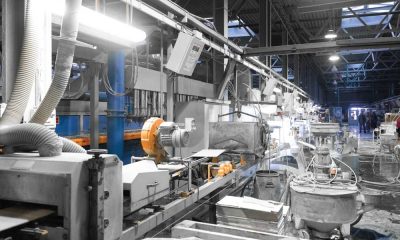
Nuvoco Marks 10 Years, Targets 35 MMTPA Capacity by FY28
Nuvoco celebrates a decade of growth, targeting 35 MMTPA cement capacity by FY28.
Concrete
J&K Government Notifies City Gas Distribution Policy
Policy targets PNG and CNG expansion across all 20 districts

Concrete
JSW Cement Commissions 1 MTPA Grinding Unit at Nagaur
Nagaur unit lifts JSW Cement’s grinding capacity to 25.10 MTPA



Nuvoco Marks 10 Years, Targets 35 MMTPA Capacity by FY28

J&K Government Notifies City Gas Distribution Policy

JSW Cement Commissions 1 MTPA Grinding Unit at Nagaur

JSW Cement Commissions 1 MTPA Unit in Rajasthan

Wonder Cement appoints Mahesh Singh as VP Corporate Brand Communication
Nuvoco Marks 10 Years, Targets 35 MMTPA Capacity by FY28
J&K Government Notifies City Gas Distribution Policy
JSW Cement Commissions 1 MTPA Grinding Unit at Nagaur
JSW Cement Commissions 1 MTPA Unit in Rajasthan
Wonder Cement appoints Mahesh Singh as VP Corporate Brand Communication
-

 Concrete4 weeks ago
Telangana to Supply Subsidised Cement for Indiramma Houses
-

 Concrete2 weeks ago
Andhra Pradesh Clears Rs. 30 bn My Home Cement Plant
-

 Concrete2 weeks ago
JSW Cement Receives Rs. 2.3 bn GST Demand Notice
-

 Concrete4 weeks ago
Centre Defers Clearance for Limestone Mine Near Bustard Habitat