Branding matters. From a product’s characteristic-specific branding to concepts like ‘enduring relations,’ ‘trust’ and ‘reliability’; from the so- called dry commercials to humorous TVCs, from stagnant frames to animated 3D frames; and from general concepts to niche concepts like green and sustainable development, branding in cement industry has come a long way. Indian Cement Review trains its thought on the current trends in branding, with a specific focus on whether major players are more into the greening of branding.
MAYBE the brand war started in the late 1990s or the early 2000s, a period where the cement industry was split into two groups, one vociferously supporting the use of mineral additives such as fly ash, slag, rice husk, etc, and the other determined to block the inevitable change. The latter lot harped on the OPC brand and strength as the only criteria of determining the quality of cement. And there was even a period when branding just based on these concepts and was witness to branding campaigns such as `zero per cent ash,` which ultimately had to be recalled.
Of course, it all happened for the good. Today, when we talk about branding, even a commodity like cement has followed the major trends; be it celebrity endorsement, aligning with sports, introducing a streak of humour, animation technology, and choreography, the trend is towards branding it green.
As the competition space has drastically changed with the entry of global players into the cement industry, innovative branding and marketing exercises have become imperatives. It is no wonder that many major cement companies have started aligning their selling strategies with branding campaigns and celebrity endorsements with the clear- cut objective of not only differentiating the product but creating different sets of values. They too have realised that in order to retain customer loyalty, they need to create a distinct brand identity.
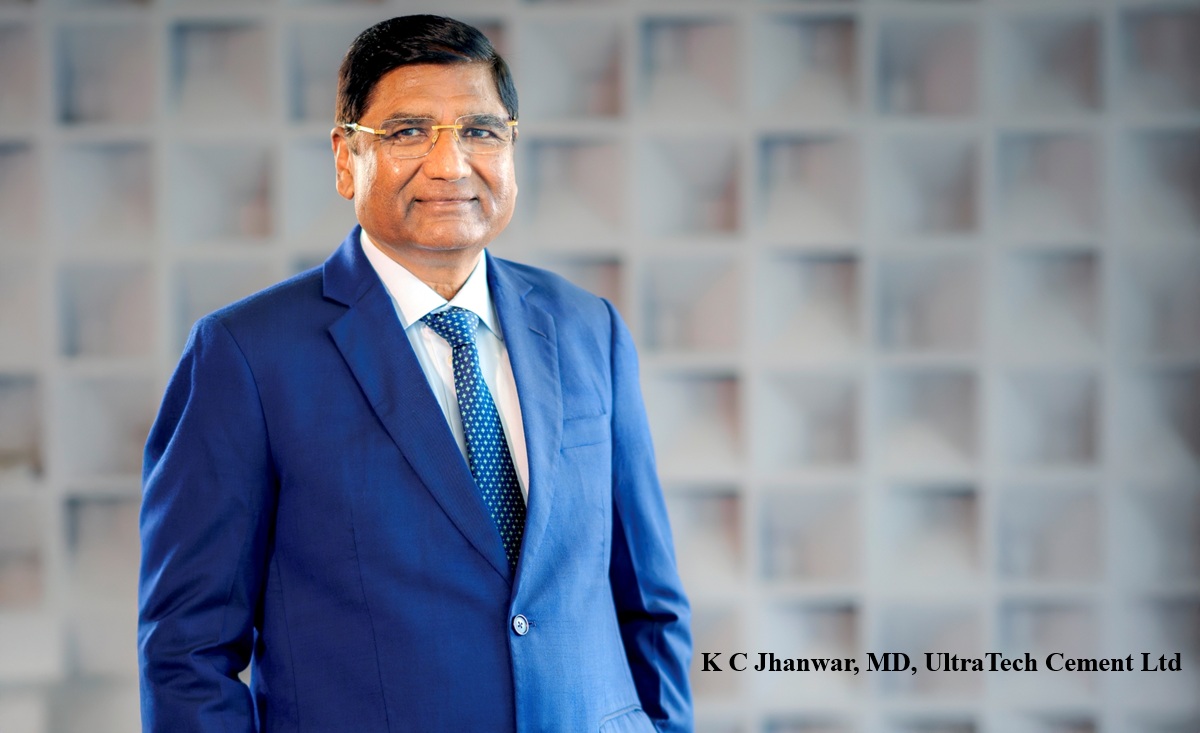
According to Kumar Pillay, Vice-President, Head-Marketing Services, UltraTech, brand is a key differentiator for cement. The success lies in creating a proper connect with the customer to increase brand recall supported by good visibility and to create brand recognition at the outlets. He says, "A powerful brand reinforces trust and instills confidence in the buyer, increasing his willingness to pay a premium for the product. A good brand has a strong consumer pull and gains the acceptance of the trade as he needs to put in less effort in selling the same. More and more people are then willing to stock the brand and it becomes the most stocked brand. A powerful brand increases customer loyalty and also gets recommended to others. The brand becomes the preferred brand, resulting in increase in sales volume. This combined with the premium, helps in an increase in turnover."
Brand it green
Today, there is greater focus not only on optimising fuel/energy efficiency during various processes of cement manufacturing, storage and its distribution, there is also a renewed focus on making the cement industry greener and more sustainable. The Indian cement industry is probably one of the most energy efficient ones in the world today. Some of the plants have thermal and electrical specific energy consumption (SECs) comparable to the best cement plants in the world, resulting in low emission intensities. The industry which is on the top in the Certified Emission Reductions Projects list registered with the Clean Development Mechanism (CDM) of the Kyoto Protocol, has contributed significantly to the eco-friendly use of industrial wastes and thereby has succeeded in reducing its carbon footprint. But has this concept of green and sustainable ever got due recognition in branding exercises?
Kumar Pillay had this to say: "Environmental sustainability is a global phenomenon and there is a major concern for the depleting natural resources. The Indian construction industry has realised the importance of green buildings and is wholeheartedly supporting the revolution. The ratings provided by IGBC in India for LEED certification has become popular and more builders are aiming for a higher rating. This has led to an increase in demand for green products. The industry has taken upon itself the onus of providing healthy living conditions. Manufacturers on their part are also chipping in by producing environment- friendly products. They have realised that green is a powerful platform to gain a heartshare amongst consumers. Hence, more and more brands are taking steps to make their products environment- friendly and also initiating campaigns to popularise their products as green products."
According to BK Singh, Senior Executive Director – Group Marketing & Corporate Communication, Dalmia Bharat, sustainability is one of biggest agendas discussed at world fora, governments, scientists, industry, and people at large. The responsibility of addressing this mega challenge lies both with the government and industries to a large extent. It will need both mitigation and adaptation routes. In the near future, adoption of sustainability initiatives will become the license to operate. Increasingly funds and technology will become costlier for those who fail to adopt credible sustainability programmes, rendering their products uncompetitive and face extinction. Many products have started carrying green declarations (Environment Product Declarations: EPDs) and people are ready to pay a premium for such products. A simple example is organic foods. Then why not cement?"
The entry of global brands has really added new facets to the brand war. Branding here is no more characteristic, specific of a product such as strength of cement or durability of a structure, nor concepts like ‘enduring relation’, or ‘trust’ or ‘ever-dependant’ that we hitherto have been accustomed to. The context is rather holistic, propelled by two major trends – one, an intensely competitive space that made the cement manufactures think out of the box and come out with an array of product solutions, other than just offering simple solutions. So branding here happens on a higher plane. For example, Lafarge India’s new baseline reads – ‘Building Better Cities.’ Lafarge India recently unveiled the Group’s new positioning to build better cities marking company’s current presence in the Indian market. The new brand baseline ‘Building Better Cities’ demonstrates Lafarge’s position as a company offering innovative products and construction solutions to all its customers and stakeholders.
Says Martin Kriegner, Country Chief Executive Officer, Lafarge India, "Our commitment towards building better cities encompasses our overall ambition. Although our work in this area isn’t new, we believe that by explicitly stating our purpose, we will be in a stronger position to work even more closely with our customers and stakeholders to the benefit of the living environments that surround us all. And it will further differentiate us from our competitors." Kriegner further adds, "We want to play a part in the improvement of towns and cities, helping people access better quality housing at a cost they can afford and better quality infrastructure, with a lesser impact on nature, thanks to innovative products and solutions to support our customer needs."
Jacques Van Niekerk, Head-Supply Chain, Ambuja Cement, says, "What customers in the future will be demanding from the industry, will be increasingly complicated products, more complicated solutions to cater to their specific needs and requirements. Cement manufacturers need to come out with tailor-made solutions pertaining to the specific needs of the customer that calls for more capital and a shift in the thinking.”
The second school of thought is on the green and sustainability factor. Here, branding per se does not talk about a product, nor about the company’s credentials. Rather, it projects a concept that is nobler and more inclusive and sustainable, a potent tool trying to change the current faceless development agenda into a more inclusive development. Again, Lafarge scores there with its baseline of ‘building bettercities.’
Holcim is another major brand that is hell-bent on creating a different set of values through its SustainableForum. Mind you, it`s another powerful tool of brand positioning. An example is the recent three-day symposium at the Indian Institute of Technology (IIT Bombay) in Mumbai, organised by Hoclim. Experts from all continents met in Mumbai at the 4th International Holcim Forum for Sustainable Construction in April 2013. The conference for academics and professionals from architecture, civil engineering, urban planning, natural and social sciences and deliberated on the paradigm shift associated with growing awareness of the considerable economic potential of sustainable development. Taking an array of disciplines into consideration, the focus of the Holcim Forum was on knowledge mining and dissemination, material and product life-cycle assessment, CO2 emissions and energy efficiency, considered deployment of means and economic resources, as well as social welfare and equity. And that way, branding happens on a totally different plane.
Film branding
We had our hearts in our mouths when Vidya Sharma, the skipper of the Indian hockey team positioned her hockey stick in the movie ‘Chak De India’ The moment the skipper played her stroke, the ball landed in the net, which led the Indian team to win the Hockey World Cup. These scenes can never be forgotten as they have a special place in the archives of our memory. Also with this started the tale of cement companies, opting for in-film advertising; the trend was started by UltraTech. The company had demonstrated the power of subtle, seamless and integrated in-film brand placement with Yashraj Films’ blockbuster hit, ‘Chak De India’ starring Bollywood superstar, Shah Rukh Khan. UltraTech’s in-film brand placement with ‘Chak De India’ is a first-of-its-kind pure branding initiative in the history of the cement industry. Talking about the strategy of associating the brand with sports like cricket and hockey, Kumar Pillay, Vice- President, Head – Marketing Services, UltraTech, says, "Cricket is next to religion in India. Forget the youth, the elders are also glued to cricket and hockey. Our presence in cricket gives us enough brand exposure which is important, especially in the case of house builders as their purchase is guided by brand familiarity. Our presence in cricket also acts as a motivator for the trade and they take pride in associating themselves with a company which is connected with popular sports like cricket." He further explains that UltraTech is a corporate brand which is proud to play a part in nation- building and creating long lasting relationships. "As a corporate brand, we have always been proud of the part we play in nation- building and creating lasting relationships. This pride is reflected in our corporate TVCs, as well as our sponsorship of cricket, the pride of India’s sporting activities."
Celebrity endorsements
The cement companies as a part of the marketing strategy, have roped in various celebrities as brand ambassadors. It makes sense for a celebrity to endorse a cement brand when it is new in a particular market and needs a credible vehicle to build confidence in the minds of consumers and channel partners. Anjani Cement has the Big B as the brand ambassador, JK cements roped in Virender Sehwag; Jaypee Cement has the cricketing god, Sachin Tendulkar, Bharathi Cement roped in south Indian film star Surya, and the latest to join the bandwagon is Dalmia Cement who took an unusual or rather a bold step by roping in a female brand ambassador for a commodity like cement. The move from Dalmia to rope in Mary Kom has jelled well, with the company acquiring two cement companies, Adhunik and Calcom Cement in the north-east. Elaborating on this move, BK Singh, says, "As a brand with a national presence, we wanted our brand to be symbolised as national and yet local. Mary Kom fitted the slot perfectly and the timing was just right, after her Olympic win. Both the Dalmia brand and Mary Kom stand for the core values of perseverance, breaking of tradition and above all, of commitment. Our entry into this region is a serious step; we are committed to the people of the north- east. Hence, for us the right personality mattered."
Logos and taglines
A logo is no more a mere graphic image, it reflects the identity of the company and helps the consumer with the brand. The colours and the design chosen as for the logo, speak volumes about the company. Emphasising the importance of the logo, Pillay says, "The logo is a strong graphical representation of the company. It is the face of the company/brand for the customer. The goal is to create brand recognition. The cement industry is dotted with several players. Your logo must inspire trust, admiration, and loyalty and should be memorable, timeless, versatile and appropriate. It should be distinct. The tagline defines the company. It sums up what you do or offer or how do you want a customer to perceive your product. The tagline should be a strong, short description of your product or company. The tagline should be memorable and should be the guiding force to create interest in your company, product or service." The logo of Dalmia Cement gives an impression of continuous flow. Explaining the core concept conveyed through the logo, Singh says, "The identity and logo of the Dalmia brand is a very thoughtprovoking representation of the various facets of this organisation, like expertise built over 70 years, its Indian core, traditional yet modern. It is a response to the new India, the young India. The colourful windmill represents the tricolour of our nation, a fresh and progressive spirit. The italics fonts depict dynamism." Similarly the tagline, ‘New think’, the tagline of Dalmia Bharat, signifies new hope, new ideas, and new direction.
There have been a few examples where the company tries to highlight a person’s name in the logo for the masses to identify with the brand. One such example is KJS Cement, a company based in Madhya Pradesh. Explaining the core concept conveyed through the logo, Pawan Ahluwalia, Managing Director, KJS Cement says, "We wanted to project Kamal Jeet Singh Ahluwalia, our Chairman’s, name in the logo. Since he is one of the highest tax payers in India and a tycoon in the steel industry, we decided to put his initials in the logo, due to which people could connect to it."
The logo is also be designed keeping in mind the target audiences. The focus of NCL Industries has been on the rural areas as the company has registered its presence in the five major districts of Andhra Pradesh. Highlighting the importance of the logo in the rural areas, Gopal Verma, VP Marketing, NCL Industries, says, "We have engaged an agency called IPD which does all our campaigns. If you see our logo, we have a mason standing tall. If you need to build a house in a rural area, you do not have sophisticated engineers and architects; all you have is a mason, who is the most reliable person. Thus, our product is recommended by the most reliable people in rural areas. The tagline is ‘Nagarjuna Cement monagadu cement. ‘Monagadu means the person with cementing strength."
Kumar Pillai sums it up: With more and more players entering the fray and regional players becoming national, branding will play a crucial role. Branding speaks volumes about the quality of a product. It builds credibility for a product. India is witnessing a glut of brands in the cement industry and it is important to be a recognised brand and have a fair voice. There will be a dearth of shelf space at counters and you need to be a truly big brand to gain better and more space. With a sizeable increase in multi- brand outlets, branding will emerge as a powerful tool to be recognised at outlets. At the technocrat level, more brands will make decisions difficult. A brand with top- of- mind recall will have a competitive edge. The digital media will also play a key role in branding especially in B2B businesses."











 Concrete1 month ago
 Concrete4 weeks ago
 Concrete1 month ago
 Concrete3 weeks ago