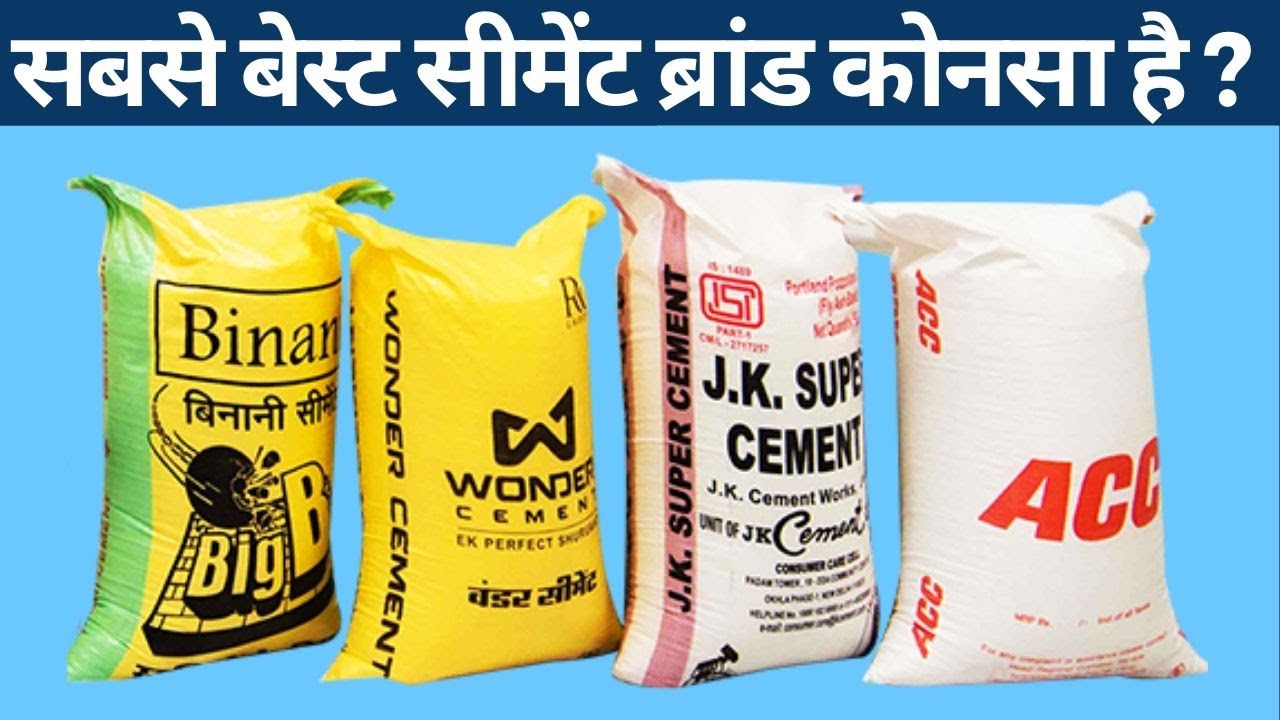
We are witnessing the journey of cement from commodity to brand, and there have been several facets of this journey. One important aspect is packaging. The primary objective of packaging is to contain, protect and preserve a product as well as support its handling and final presentation. It is an integral part of product planning and promotion. Packaging refers to the process and design, evaluation and production of packages.
Functions of Packaging
-
Promotion and selling of the product: To create a brand identity the packaging needs to be attractive, colourful, and visually appealing packages have promotional value. A well designed package is a powerful selling device because it helps the product stand out from the competitors.
-
Defining product identity: It is sometimes used to promote an image such as prestige, convenience or status. Can be a crucial part of marketing strategy particularly in advertising.
-
Providing information: Packages give directions for product use, information about guarantees, production related information like week of manufacturing, BIS Specification number, dos and don??s, etc. It also provides place and address of the manufacturer. Few of the marketing professionals are of the view that the bag not only should be attractive in looks but also should communicate with the customer. The colour and design should be disruptive, yet should reflect positivity.
-
Protecting the product: For cement it is important that the packaging should be durable and strong enough so that there is no tampering or spoiling during shipping and delivery of the packages. Being a hygroscopic material, it can easily attract moisture.
It is interesting to see the cement bag?? journey from plant to the end user; it reveals some areas of stress. Like oozing bags, due to iron hooks used by loaders, it has been a chronic problem in handling a cement bag consignment. At majority of places in our country like railway yards, truck loading bays and unloading in ware houses, at the consumption points, iron hooks are rampantly used by the labourers doing the job manually. Due to political interference in the job, the practice is continuing unabated. The quality of bags is another issue for bag bursting. The problem can be eased only by automating the process.
Cement packaging is conventionally done in bags and sacks. These bags and sacks can be made out of paper or plastic, jute. In India for long time we were using jute bag in spite the consumer disliked it but in order to support the jute industry a decision was taken to use jute bags. Then came the age of HDPE and PP bags. Paper as a packaging material was too expensive for us. But paper as a packaging material is favoured in European countries. In few micro markets of our country, paper bags are preferred. Paper bags are usually heavy-duty bags and sacks that are manufactured using multiple layers of paper and can be coated with layers of plastic films to provide a barrier against moisture. Paper bags did not get popular in our country mainly due to the methodology used in handling of paper bags.
The bag handlers always charge more rates for paper bags. However, woven and nonwoven plastic bags can also be employed for cement packaging. These bags can hold up to 50 kg of cement without damage. Bags and sacks used for cement packaging also offer printing area on its surface for branding and promotion of the product. Cement producers never thought of producing bags for their use until the recent past because it has been very convenient to source such a low cost material from outside as and when required. Normal PP bag costs around Rs 9 to 11 per piece and a laminated PP bag costs nearly Rs 15 per piece.
For cement companies, it is backward integration to produce bags for captive use. We suggest our readers to go through the interview of M Ravinder Reddy, Head of Marketing ??Vicat Group (India) and Director Marketing of Bharathi Cement, in the same issue for more information.
Starlinger from Austria in Europe is one of the notable companies in production of machinery for sacks, packaging fabrics and technical textiles woven from plastic tapes. The company has a strong presence in India. Its product AD*STAR cement packaging is a well-known sack concept which has been adopted across the world. The main advantage of using AD*STAR cement sacks is reduction in the bag breakage/ bursting.
What is AD*STAR?
??D*STAR ??is a trademark that can be used as a packaging solution only for the bags manufactured by Starlinger’s end-to-end machinery. Off late many cement manufacturers in India have been using AD*STAR packaging solutions for packing of premium cements in order to differentiate from normal cement.
Since it involves use of technology few cement companies thought that it would be advisable to produce the bags rather than to source these from outside. Considering the quantum of usage it has been felt necessary to produce the bags close to the cement manufacturing unit. Some ingredients of the bags are occasionally imported if not locally available. Various studies show that the use of high-grade virgin polypropylene for fabric production and the tight sealing of the sack bottom and top ensure low breakage even during rough handling, dropping, or after contact with water.
The studies in terms of global warming in use of bags show different results in different countries. E.g. the production phase of AD*STAR sacks have less impact on global warming than paper bags in Saudi Arabia because transportation contributes more to the global warming since the raw materials for the paper sacks have to be shipped which is not the case with AD*STAR bags. In short AD*STAR sacks show that it is environmentally friendlier packaging in terms of acidification potential (acid rain), ozone depletion potential, photochemical ozone creation potential (causes summer smog), as well as energy and fresh water consumption.
Regional preference
The geographical analysis of the cement packaging market has revealed that demand for cement packaging solutions is likely to be fueled by developing countries of the Asia Pacific and the Middle East & Africa. In countries such as India and China, polypropylene cement packaging is used most prominently. The material used for making cement bags is usually recycled, and bags are sewn by hand operated machines at large factories. Furthermore, China is one of the leading manufacturers of cement and has a high impact on the dynamics of the cement packaging industry.
Also, the Middle East region has witnessed the establishment of several new cement plants and revamped the existing ones, to cater to the growing demand for construction material. Hence, the sales of cement packaging solutions are growing at present. The market in the Middle East is turning to PP laminated bags from paper.
Paper v/s plastic
For years, there has been a debate on whether paper packaging is better for the environment than plastic. While the general belief is that paper products are more environmentally friendly because they are made from a renewable source, but the argument that paper is more sustainable than plastic is not so straight forward. Some of these misconceptions are due to not considering the entire life cycle of the bag. It is not a simple case of looking at how bags are being disposed of or how long they take to degrade; other aspects also have an impact on the environment.
While plastic packaging can have a bad reputation, banning them and moving solely to paper products could have other adverse effects. In the end, we need to remember the way we use these products to make the greatest difference, not just the bag itself! The most important decision we can make is to choose packaging that doesn?? end in landfills when it doesn?? have to and to select biodegradable options when recyclable options don?? exist.
HDPE and PP
HDPE stands for high-density polyethylene, is a versatile plastic known for its unique benefits. It is commonly used to create containers like milk and water jugs, water tanks etc. However, HDPE can remain flexible as well. For example, plastic bags. Long-lasting, weather resistant, and capable of carrying weight ??whether rigid or flexible.
PP, which stands for polypropylene plastic, is a type of plastic that is specifically known for its semi-crystalline nature. Additionally, PP is a lighter material compared to other types of plastic like HDPE. This makes it an ideal alternative across a variety of commercial applications. Polypropylene plastic is found in everything from ropes to carpets and clothing. It?? relatively affordable commercial material. Presently cement industry uses PP bags.
Additionally, PP is a lighter material compared to other types of plastic. This makes it an ideal alternative across a variety of commercial applications.
Cement packaging market: Key players
Apart from Starlinger from Austria the other key players operating in the global cement packaging market are Mondi Plc, LC Packaging International BV, Gascogne SA, Bischof + Klein SE & Co. KG, Uflex, Taurus Packaging, Unisun packaging, Gempack, Volgopromtrans LLC, ToolAsian Polysacks, Edna Group, and Rosenflex UK.