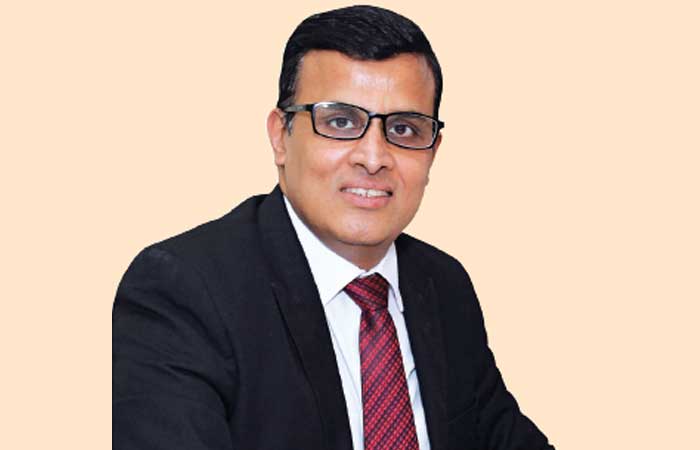
R Parthasarathy, Chief Marketing Officer, India Cements, talks about the importance of a comprehensive marketing and branding strategy to create awareness about cement and its USPs.
How important do you think branding is for a cement manufacturer in today’s competitive market?
Branding for any product category is important and more demand is getting generated day by day. Earlier, if you see the way, the behaviour of how a person buys a house would determine the demand. Around 30, 40 or 50 years back, one would just go and buy one product, without giving any importance to the kind of a steel, cement, etc. People would buy whatever was available closer to their homes and was the most cost effective.
Over a period of time, people started getting aware because their liquidity started increasing, they started earning more and got more exposure by travelling abroad and even within the country. This led them to come across and experience different kinds of products and thus, the need and curiosity to use them also got generated.
This is when the marketers chanced upon the opportunity of making their products into brands and creating a distinct branding, which would make their product stand apart from the others. The idea is to get their product or brand as a preference amongst the consumers and bring it to their top of the mind recall.
As far as cement is concerned, the product is in the commodity segment unlike tiles or sanitary ware, where people see a brand and say that they need a Kohler or an American Standard product. That kind of a preference is still not happening in cement. However, the requirement of branding and product differentiation has started picking up. Consumers are looking for a product connected to a brand. Their thought being that the house they construct should be strong and that strength is provided by a certain brand.
What specific strategies or initiatives do you undertake to differentiate your cement brand from competitors in terms of branding?
Brand differentiation happens at every touch point.
Firstly, it’s about the communication done by the brand to their customers. Secondly, it is about the communication and if the brand is holding up to their communication. Next is the grooming of the representatives of the brand, their dressing, the shop experience, the exchange of information and the overall consumer experience at every touch point. It could be a builder, a mason or a sub dealer, they all collectively make up the brand.
We do not say this while we sit in a room at the headquarters. We make an effort to make our product excellent by differentiating our brand from competitors at every level. From the team grooming, to signboards to the colours used for communicating information about the brand i.e., a combination of blue and yellow, we do not allow anyone to dilute wherever, whoever it may be across India. The idea is that the moment consumers see this combination, they realise it is India Cements. This also translates to the style of writing, the font and every branding aspect that helps us differentiate our brand from the competition. This being from the visual and experiential point of view.
We also differentiate ourselves from the competition from the product stand point in terms of quality and features offered. We try to provide features of the product that are a notch higher. To maintain the same, we regularly get samples from the market and see where we stand and where our competition stands. Our aim is to get customers to choose our brand.
How do you ensure consistency in branding across different product lines and markets?
We have a central marketing team and state marketing teams. But all approvals happen from the central team at the headquarters. We have a marketing and branding book that must be followed by all stakeholders across regions. For example, it would not be the case that Tamil Nadu has a different branding than Karnataka.
From the font, colour, statements we make and even the locations where branding is done, we are very particular about the same. The banners at particular spots are also decided and thought of by the central marketing team. We ensure that the brand image and positioning is not diluted and there is control from the headquarters. We have a designated person overseeing the marketing operations pan India.
Have you conducted any market research or surveys to gauge the effectiveness of your cement brand? If so, what were the key findings and how did you respond to them?
We do market research from time to time, but not frequently. One time in our research we found out that we had been promoting our sub brand to a greater extent than the parent brand.
We have three sub brands at India Cements – Coramandel King Cement, Sankar Superpower (SSP) and Raasi Gold. We have been spending a lot of time, energy and money on these sub brands. This made us realise that there was disconnect in the consumer’s mind about these brands from the parent brand – India Cements.
For example, on the ground, if the consumers asked for Coramandel King, our sellers would ask them if they would like to buy India Cements, and their response would be ‘Yes’. This made us understand they were not aware of us being the parent organisation and that the communication was also directed more towards the sub brands than the main brand. To make amendments, we started bringing the mention of India Cements in all our collaterals and in all our marketing tools as well be it magazine ads, wall paintings or shop paintings. Thus, marketing research gave us this insight and we have taken correcting actions for the same.
What role does sustainability play in your cement branding? How do you communicate your sustainability efforts to customers?
In terms of sustainability for marketing, we try to push PPC as it has 40 per cent to 45 per cent fly ash, which is basically a waste product of thermal power plants or steel plants used in the making of cement. Thus, we emphasise more a push towards PPC than OPC.
We are also working with a team of PhD students and researchers at IIT Chennai in developing a very low carbon footprint cement. The work right now is at a nascent stage. We know that there is a high need to reduce the carbon footprint on the plant and we are developing this cement with a low carbon footprint with this goal in mind. A few years down the line, we will take up the project and manufacture that cement.
How do you leverage digital platforms and social media to enhance the visibility and reach of your cement brand?
I must admit that we must do a lot more on the digital front. We haven’t done much, but digital platforms are picking up and India Cements should also be present there. We have recently started a few things on YouTube, Instagram, etc., on our handle. We depend quite a lot on Chennai Super Kings (CSK) social media handles as we are their sponsors. Their followers are quite high and we leverage their platform to bring forward our brand. But yes, we do realise that we need a more concrete effort to consistently build our digital platforms.
What is the marketing budget that you usually keep aside per year?
We normally keep about Rs 50 crores as our marketing budget for a financial year. While this may not be a great number for a brand, that is where we stand right now. As our sales will pick up and stabilise, we plan on expanding our markets, and subsequently increasing our marketing budgets as well.
Can you share any examples of successful marketing campaigns that have significantly boosted your cement brand’s recognition and sales?
We have done a couple of marketing initiatives that have really helped us. We launched a cricket tournament India Cements Pro League (ICPL) inspired by the IPL and Tamil Nadu Premier League.
With ICPL, we targeted approximately 8000 to 9000 practicing civil engineers. Our goal was to connect with them and make them recommend our brand for construction activities. Usually, in smaller towns, it is the end consumer who makes the engineer make the final decision since they believe that the engineers have an in-depth knowledge of construction and all its related activities. So, we started this tournament spread across 45 days with civil engineers from various cities and districts playing in teams against each other and it turned out to be a super success. The result of this tournament was that approximately 1200 civil engineers started recommending our brand. We plan to continue doing so, and to organise more such tournaments. Based on available cash flow and budgets, we plan to extend this tournament to other states as well.
Our other initiative is with the Chennai Super Kings. IPL is like a 45-day festival in India and in that duration, we ran a consumer promo which said, buy 25 bags of cement and get a lucky draw coupon to get a chance to watch CSK matches at the Chepauk Stadium, Chennai. CSK played 7 matches in Chennai out of the 14 matches during the IPL. During every match we did a lucky draw and gave out about 120 tickets to our end consumers. So, this was another campaign that helped promote our brand and increase sales as well.
How do you handle any negative brand perception or reputation challenges that may arise?
We have 10 factories across India. Eight integrated plants and two grinding plants. One of the mantras we keep promoting is back-to-back consistency. We say one can pick a bag of cement of our brand from Rajasthan or Tamil Nadu, they will find the quality to be consistent and similar to one another. That is something we propagate in our communication as well. However, complaints do arise due to the negligence of or human errors of distributors or masons. We have a call centre where if someone has an issue with the quality of the products from our brands, they can register their complaint. Our technical team, spread across the country, resolves or addresses the problem within 24 hours.
How do you measure the success of your cement brand’s marketing efforts?
It is very difficult to measure every marketing activity. Many things done in a marketing campaign are based on perception and may not be quantified. For example, if we advertise on television, we still cannot guarantee how many people will accept India Cements. It is not quantifiable.
Whenever we do an event, we set certain parameters. For example, we get data on how many sub dealers already have our product. Post the event we analyse how many more sub dealers have our product and basis that we measure the success of the event. It also helps us understand if our scheme is working or not. If it is not working, we fine tune our scheme and relaunch it in the market at a later date.
-Kanika Mathur

















 Concrete3 weeks ago
 Concrete3 weeks ago
 Concrete4 weeks ago
 Concrete3 weeks ago