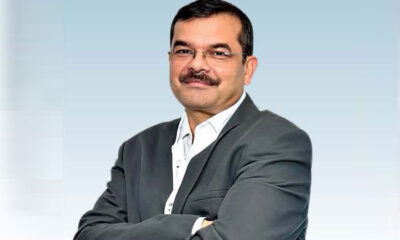
Love Raghav, Head – Branding & Loyalty, JK Cement, speaks about the multi-pronged approach to brand building activities that are aligned with the marketing goals of the company.
How important is branding for a cement manufacturer in today’s competitive market?
Effective branding has always played a crucial role in the success of any product. However, in the case of cement, branding becomes even more essential due to the uniform nature of the commodity and its usage. It is therefore vital to build and highlight the Unique Selling Proposition (USP) of the product and its service offerings in order to make a lasting impression on potential buyers.
Branding goes beyond merely showcasing product attributes; it also establishes an emotional connection. Traditionally, brand managers in this industry have relied on concepts like strength, bond, and emotional attachment to shape their brand image. However, consumer mindsets have evolved, leading to different expectations and requirements. Consequently, branding strategies need to be redefined in a more practical and relatable manner to capture consumers’ attention.
Thus, branding is not only important but also requires a fresh approach to become the top choice in consumers’ minds when they plan to construct their homes. This necessitates presenting the brand in a way that resonates with their values and considerations, positioning it as people’s brand in terms of both value and suitability.
What specific strategies or initiatives do you undertake to differentiate your cement brand from competitors in terms of branding?
In today’s era of easy internet connectivity, customers are highly informed and research-oriented when it comes to their preferred products or brands. As a result, their expectations and attitudes towards brands are based on relatability, differentiation, and trustworthiness. To effectively comprehend and adapt to this constantly evolving customer behavior, certain practices should be followed:
- Conduct regular market research to understand customer behaviour and stay updated on marketing trends.
- Differentiate our brand positioning in the market to carve out our unique space.
- Establish strong brand communication that clearly conveys what our brand stands for.
- Engage with customers and enhance their journey at every touchpoint
- Emphasise value-added services to deliver exceptional customer experiences.
- By adhering to these practices, we can effectively navigate the changing customer landscape and build meaningful connections with our target audience.
How do you ensure consistency in branding across different product lines and markets?
Consistency in branding, encompassing elements like logo, brand communication and brand colours, plays a vital role in creating brand recognition.
This consistency extends beyond the product itself. Here are a few approaches we adopt to ensure such consistency:
- Develop comprehensive brand guidelines with visual references
- Maintain uniformity across platforms, including brand message, colour schemes and logos, even when the brand offerings may vary
- Create high-quality content, especially on social media platforms
- Maintain consistent personality and messaging
- Implement a well-planned content calendar
- Strive to be relatable and approachable to customers
By following these practices, we establish a strong and recognisable brand identity that resonates with our target audience.
Have you conducted any market research or surveys to gauge the effectiveness of your cement brand? If so, what were the key findings and how did you respond to them?
Of course, we regularly undertake initiatives to gauge our brand awareness and consideration, and recently we concluded a comprehensive study across multiple cities. The findings indicate that our intensive below-the-line (BTL) branding efforts have successfully raised consumer awareness, positioning us
among the top five cement manufacturers. However, to enhance brand consideration, we need to further strengthen our efforts.
To address this, we have implemented the following initiatives
Brand representation: Recognising that customers prefer concise and engaging advertisements, we have shifted our approach to include quirky, humorous messages that directly convey our offerings. We understand that customers are already familiar with cement, so our campaigns focus on highlighting what sets us apart.
Social Media: With the widespread availability of smartphones and internet access, media preferences have shifted from television to digital platforms, particularly social media. In the post-COVID era, social media has become the new above-the-line (ATL) advertising medium, yet very much targeted to the right set of audience. By maintaining a strong presence across various social media platforms, we can increase brand visibility and deliver personalised content that resonates with individuals, thereby establishing a deeper connection with our customers.
We aim to boost brand visibility with strategic actions, penetrate customers’ minds and ultimately strengthen brand consideration among our
target audience.
What role does sustainability play in your cement branding? How do you communicate your sustainability efforts to customers?
The progress of a nation is closely linked to its infrastructure, and cement plays a vital role in constructing that infrastructure. However, it is crucial to recognise that cement production significantly contributes to climate change, accounting for approximately 8 per cent of global CO2 emissions. To align with the objectives of the 2016 Paris Agreement, which aims to limit global temperature rise to below 2°C, there is an urgent need to reduce CO2 emissions by 80 per cent to 90 per cent by 2050. The cement industry is under increasing pressure to address this challenge and proactive measures have already been taken.
At JK Cement, we are fully committed to leading the way on our sustainability journey. To meet our clean energy targets, we have integrated various alternative renewable energy sources into our operations, such as solar plants, wind energy, hydropower, biomass, and waste heat recovery (WHR) systems. Additionally, we have started incorporating alternative fuels to replace fossil fuels, along with other major steps we have been taking to reduce CO2 emission. We regularly communicate our initiatives taken in this direction through
social media.
How do you leverage digital platforms and social media to enhance the visibility and reach of your cement brand?
Digital platforms offer more than just reaching specific audience segments; they allow for targeted and personalised content to enhance relatability. Our approach includes the following key strategies:
• Wide platform presence: Ensuring a strong presence across relevant digital platforms to maximise reach.
• Vernacular content: Creating content in local languages to improve understanding and connect with diverse audiences.
• Influencer content: Collaborating with influencers to create relatable content that resonates with the target audience.
• Service-focused content: Developing content that highlights our value-added services to clearly communicate our offerings.
• Targeted marketing: Utilising digital analysis and surveys to target prospective customers effectively.
• Enhanced digital content: Continuously improving the quality and relevance of our digital content to engage and captivate users.
• Strong Customer Relationship Management (CRM) system: Actively addressing customer concerns and grievances to ensure a positive digital experience.
Through these strategies, we leverage digital platforms to establish a strong presence, deliver personalised content, and foster meaningful connections with our target audience.
Can you share any examples of successful marketing campaigns or initiatives that have significantly boosted your cement brand’s recognition and sales?
‘Yeh Pucca Hai’ campaign started by JK Cement in 2019 has been an instrumental change driver for our brand reputation and trade influencer engagement which eventually resulted in business growth too. It led us to build a brand with a purpose through regular social media social cause campaigns initiated over years doing something worthy by brand JK Super for daily wage labour, truck drivers, covid survivors, traffic cops, specially-abled school children, plasma donors and general public. These initiatives were built on brands core values of strength and safety and strengthening the society with the goodness of society with the real world activations by walk the talk campaigns to improve lives of people at large.
We are now kick starting our first product campaign for 2023. The ‘Naam Se toh kaee, Kaam se ek hi No. 1” campaign under which we will launch four digital films for the brand and products in July. Soon we will be taking the brand to a new high with our new set of DVC and TVC, giving a very strong RTB to the users in our existing and newer markets.
How do you handle any negative brand perception or reputation challenges that may arise, such as product quality concerns or environmental impact controversies?
At JKCement, customer satisfaction is our top priority, and we strive to deliver the highest quality products and services. As a result, the likelihood of receiving complaints is minimal. However, in the event that a complaint does arise, we prioritise prompt resolution within 48 hours, depending on the complexity of the issue.
We have a robust Customer Relationship Management (CRM) function and advanced tools in place to address all types of queries and complaints. Customers can easily reach us through our toll-free helpline number, WhatsApp, and query form on our website. Additionally, we offer a dedicated app called BuildXpert, designed specifically to address any service-related inquiries. Through these accessible channels and our commitment to swift resolution, we ensure that our customers’ concerns are promptly addressed, reinforcing our consumer-centric approach.
How do you measure the success of your cement brand’s marketing efforts? What metrics or key performance indicators (KPIs) do you track?
Evaluating the success of online brand campaigns is relatively straightforward, as we utilise specific metrics tailored to each campaign type. For instance, reach and frequency campaigns are measured using KPIs such as CPM, CTR, CPV, unique users, and engagement rate. Similarly, performance marketing campaigns are assessed using KPIs like CPL and CPA.
In contrast, quantifying the impact of offline brand campaigns is more challenging. However, we can estimate the level of penetration and reach achieved through offline channels, primarily through above-the-line (ATL) and outdoor campaigns.
To assess the effectiveness of brand campaigns, we conduct pre and post-brand lift studies. These studies provide valuable insights into customers’ perception of the brand, including top-of-mind brand recall, spontaneous recall, aided awareness, consideration, recommendation and more.
Additionally, we gather feedback from our channel partners and influencers who are directly or indirectly associated with our brand. Their perspectives serve as valuable inputs, as they represent an important audience segment for a cement brand.
-Kanika Mathur