

Concrete
Plastic waste during pandemic

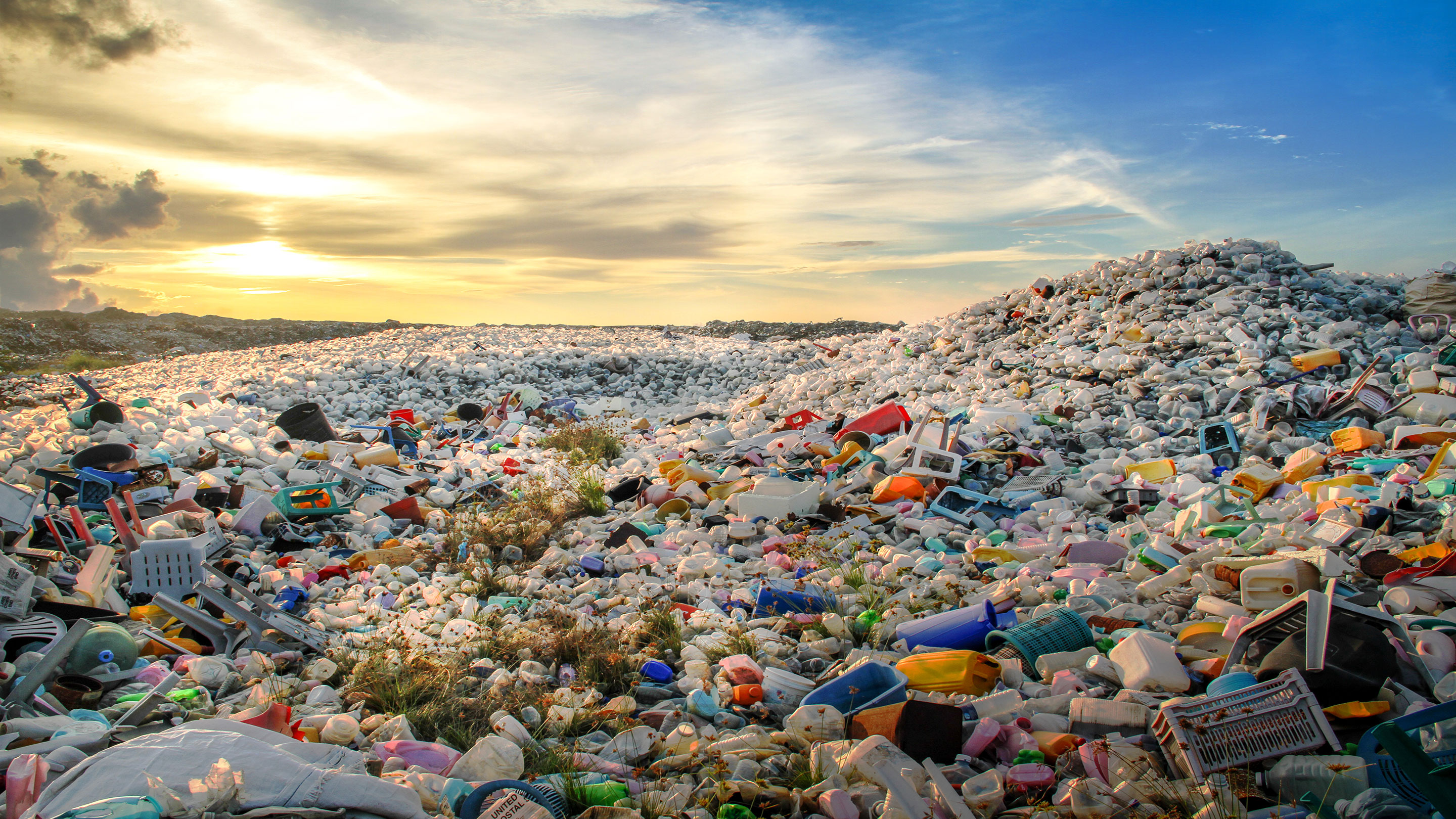
The Covid-19 pandemic has reemphasised the indispensable role of plastics in our daily life. Plastics in terms of personal protective equipment (PPEs) and other single-use medical equipment along with packaging solutions owing to their inherent properties have emerged as a life-savior for protecting the health and safety of the frontline health workers and the common citizens during the pandemic. However, plastics have been deemed as evil polluter due to their indiscriminate littering and mismanagement amid increased plastic usage and waste generation during this unprecedented crisis.
Plastic can be a protector if managed properly and complemented by the circular economy strategies in terms of reduction, recycle and recovery, and thereby preventing leakage into the environment. To safeguard the supply chain of PPEs, several decontamination techniques have been adopted worldwide ensuring their effective reprocessing to prioritise the circular economy within the system. Policy guidelines encouraging adopting safer practices and sustainable technical solutions along with consumers’ education for awareness creation are the need of the hour for preventing plastic to turn from protector with high utility to polluter. The Covid-19 pandemic has resulted in skyrocket demand for essential PPE kits, which showed a tremendous increase in plastic manufacturing and distribution across the globe, India is no exception.
Various factors
Impact of takeaway services and e-commerce shopping on plastic usage during the pandemic. The dependency on e-commerce shopping and takeaway services for home delivery of essential items has resulted in the increased demand for SUP (single use plastic) carry bags and other types of plastic for packaging purposes. The consumers’ behavioral changes as dictated by hygienic concerns, panic buying, and stockpiling have led to a considerable surge in requirement for plastic-based packing materials. The estimated growth of plastic packaging is projected to surge with the annual growth rate of 5.5 per cent corresponding to the impact of the Covid-19 pandemic.
Amidst the concerns of cross-contamination by reusing the plastic bags and containers as propagated and supported by the plastic manufacturers, many countries like the US, the UK, Canada, Portugal have temporarily revoked or deferred the SUP bans in the time of the Covid-19 pandemic. India is working on a national policy aimed at completely phasing out single-use plastics by the second half of 2022, taking into account varied paces of compliance across states over the past five years.
Moreover, the drastic decrease in the cost of plastic manufacturing due to plummeting oil and petroleum prices. For example, a significant reduction in demand in the range of 30??0 percent for recycled plastics in the Southeast Asian countries has been reported. Revoking or postponement of bans on SUPs and unprecedented usage of PPEs have posed stiffer challenges in terms of effective waste management amid increased plastic waste generation during the pandemic.
About 14.5 tpd of plastic waste is generated from the testing alone in India. In addition to about 609 tpd of normal biomedical waste, a total of around 101 tpd of Covid-19 biomedical waste containing plastic waste is generated in India (CPCB, 2020b). The state-wise average daily generation of Covid-19 biomedical waste containing plastic waste in India is shown in Fig. A.

Global practices for plastic waste management
Though the usage and consumption of plastics have ensured the improved quality of life and public health protection during this unprecedented uncertainty, it is important to maintain a balance between public health protection and environmental sustainability. Considering the pros and cons of plastic in the time of the pandemic, an equitable appraisal suggests that the consumers??irresponsible behaviour, and attitude and poor awareness, and the stress on waste management infrastructure in terms of collection, operation, and financial constraints as the major factors, leading to mismanagement, turn plastic into an evil polluter of the environment. Plastic can be a protector if managed properly and complemented by the circular economy strategies in terms of reduction, recycle and recovery, and thereby preventing leakage into the environment.
Lack of efficient planning and important policy interventions exaggerated the leakage and mismanagement of plastic waste into the environment leading to another threat during the prevailing pandemic. Though the preliminary statistics on the amount of plastic waste generated during the Covid-19 is staggering, it will take time to understand how precisely such additional plastic waste is going to impact the environment. Advancements in the technological aspects along with sustainable approaches are required from corporate sectors, scientific community, and governments across the globe to address the sustainability challenges triggered during the pandemic.
Robust policies must be devised to encourage plastic packaging materials with uniform compositions rather than mixed or multi-layer materials for improved recyclability. Further, plastic packaging materials need to be resin coded to enhance the recyclability of SUPs. At the same time, research efforts are warranted to develop sustainable techniques like chemical recycling to manage mixed plastic waste into valuable products such as fuels and chemicals to ensure circularity.

Disinfection of common public places
Another health and environment hazard experienced during pandemic is indiscriminate use of disinfectants. As Covid-19 is transmitted by contaminated surfaces, several disinfection campaigns have been applied to several facilities such as hospitals, offices, clinics, universities, airports; and public places such streets, public gardens and even beaches. Yet, the choice of the chemical disinfectants and the places for disinfection have been highly questionable. For instance, the majority of products used to disinfect against Covid-19 that meets the Environmental Protection Agency (EPA) criteria contain quaternary ammonium and sodium hypochlorite. But other mixtures of hydrogen peroxide, isopropanol, among others, have also been applied.
According to several studies, the regular use of ammonium and bleach have been leading to a negative impact on human health. For instance, several studies report a link between the use of disinfectants and chronic obstructive pulmonary disease among healthcare workers, and between asthma and exposure to cleaning products and disinfectants in household settings. Furthermore, fetuses and very young children are sensitive to the effects of such toxic chemicals, which had been also related with childhood cancer and asthma. Moreover, most disinfectants used, such as quaternary ammonium and sodium hypochlorite, are rapidly exhausted in the presence of organic matter, reducing their activity and efficacy when simply sprayed over surfaces where organic matter can be found (e.g. streets).
Conclusion
The Covid-19 crisis has highlighted the essentiality of plastic as a protector in the healthcare sector and public health safety owing to its intrinsic properties. However, the general perception about plastic as an evil polluter has been further strengthened due to its mismanagement and underutilization of resource value considering the pandemic-induced surge in plastic usage and waste generation.
An equitable appraisal by comparing the functionalities and shortcomings of plastic suggests that the consumers’ attitude and behavioral aspect of poor social awareness and the inadequacies of the existing waste management system as the key drivers make plastic an environmental polluter. It is important to acknowledge that plastic could be a protector rather than a polluter if the circular economy approaches are properly integrated. To prioritise the circular economy, continued progress must be made in reprocessing and reusing the PPEs, especially FFRs by adopting efficient decontamination methods to keep the supply chain intact. Further, research and product innovation in developing eco-friendly and reusable PPE kits and carry bags made of bio-plastics with higher recyclability should be encouraged.
Existing waste management systems and infrastructures should be automated with the deployment of AI, ML, and IoTs for plastic waste segregation and recycling. Mechanical recycling following the sterilisation of infectious plastic waste must be incentivised with policy formulation to contribute towards the circular economy. Chemical recycling to manage mixed plastic waste into valuable products such as fuels and chemicals would certainly help in achieving circularity. Indian cement industry can see this as an opportunity and can emulate what Chinese cement industry is trying to do.
Source: Science of The Total Environment
Neha Parashar, Subrata Hait

Another dimension to Covid-19 waste processing
The China Cement Association issued a recommendation to all qualified cement manufacturers, approved by the government?? environmental authority, to scientifically use cement kilns to carry out coordinated disposal. Under the organisation of local governments, they should assist medical institutions in handling medical waste during Covid-19 epidemic period.
The co-processing technology of cement kiln has the advantages of large disposal capacity, safe disposal process, and environmental protection of disposal results. Up to now, there are 68 enterprises in China that have the qualification for co-processing of hazardous waste in cement kiln, covering 25 provinces and cities in China. After the Covid-19 epidemic occurred, Huaxin Cement, as a leading cement manufacturer in Hubei Province, used the dry-process cement rotary kiln production line to co-process medical waste.
In order to do a good job of resuming production and production of cement production enterprises, China Cement Association puts forward the following three suggestions:
To actively use cement kilns to coordinately treat medical waste during epidemic prevention and control. Member units of the China Cement Association and research institutions with co-processing technology for cement kilns should provide necessary technical support to enterprises that carry out treatment of medical waste in cement kilns so that co-processing technology for cement kilns can make new contributions to the country in the prevention and control of epidemics.
Wang Jiajun, manager of Huaxin cement company, said bags of medical waste would be disintegrated and gasified immediately in the precalciner with a temperature of about 1,150 degrees Celsius.
The remaining waste would continue to be burned in the rotary kiln at a temperature of about 1,400 degrees Celsius. All the waste would eventually be turned into cement after thorough burning. The high temperature, strong alkaline and high turbulent burning environment prevents the production of dioxins throughout the process.
Wang said the cement company has disposed of 55 tonnes of medical waste for Covid-19 designated hospitals in Hubei. The company also dispatched four container dump trucks that are fully enclosed, leak-proof and equipped with GPS positioning to transport the medical waste around the clock.










Concrete
Nuvoco Marks 10 Years, Targets 35 MMTPA Capacity by FY28
Nuvoco celebrates a decade of growth, targeting 35 MMTPA cement capacity by FY28.
Concrete
J&K Government Notifies City Gas Distribution Policy
Policy targets PNG and CNG expansion across all 20 districts
Concrete
JSW Cement Commissions 1 MTPA Grinding Unit at Nagaur
Nagaur unit lifts JSW Cement’s grinding capacity to 25.10 MTPA


Nuvoco Marks 10 Years, Targets 35 MMTPA Capacity by FY28

J&K Government Notifies City Gas Distribution Policy

JSW Cement Commissions 1 MTPA Grinding Unit at Nagaur

JSW Cement Commissions 1 MTPA Unit in Rajasthan

Wonder Cement appoints Mahesh Singh as VP Corporate Brand Communication
Nuvoco Marks 10 Years, Targets 35 MMTPA Capacity by FY28
J&K Government Notifies City Gas Distribution Policy
JSW Cement Commissions 1 MTPA Grinding Unit at Nagaur
JSW Cement Commissions 1 MTPA Unit in Rajasthan
Wonder Cement appoints Mahesh Singh as VP Corporate Brand Communication
-

 Concrete4 weeks ago
Telangana to Supply Subsidised Cement for Indiramma Houses
-

 Concrete2 weeks ago
Andhra Pradesh Clears Rs. 30 bn My Home Cement Plant
-

 Concrete2 weeks ago
JSW Cement Receives Rs. 2.3 bn GST Demand Notice
-

 Concrete4 weeks ago
Centre Defers Clearance for Limestone Mine Near Bustard Habitat