Concrete
All-Weather Tunnel


The Atal Tunnel in Himachal Pradesh was inaugurated by Prime Minister Narendra Modi last year on October 3. The 9.02 km tunnel is the world?? longest road tunnel at an altitude of 3,000 m (10,000 ft) above sea level. Passing under the Rohtang Pass in the eastern Pir Panjal range, it connects Manali with Lahaul and Spiti valley, and subsequently with Leh, throughout the year. It has reduced the distance by 46 km and travel time by five hours.
The Atal Tunnel was envisaged in 1983 by the Government of India to provide all-weather connectivity between Manali and Leh. In 2002, then Prime Minister Atal Bihari Vajpayee declared the construction of Rohtang Tunnel and laid the foundation of the approach road to the tunnel. The Border Roads Organisation (BRO) subsequently engaged RITES the same year to undertake studies. The contract was finally awarded to Strabag-Afcons JV (SAJV) in September 2009.
The Atal Tunnel is horseshoe shaped, with a single tube and two lanes. It boasts many firsts, including the deployment of the Rowa Conveyor System.
Working at inverted levels
The Rowa Conveyor System was deployed to facilitate working at inverted levels. This offered various advantages, as Sunil Tyagi, Project Manager, Atal Tunnel Project, lists:
-
Activities were carried out side by side without hampering other activities in the tunnel with due care to manpower safety.
-
Unnecessary transportation of muck for dumping was eliminated and generation of harmful gases in the tunnel reduced.
-
Shifting the muck on the conveyor belt from the inbuilt crusher to the outside of the tunnel helped reduce the number of machines, equipment and transport, lowering vehicle pollution. This provided clean and healthy conditions in the tunnel for workers.
-
The time cycle of all activities was reduced, so the workers spent less time inside the tunnel.
-
Precast members were placed using an EOT crane mounted on Rowa.
Point of escape
This is one of the few tunnels in the world, and the first in India, that has been built with an emergency escape below the pavement level. The clear dimensions of the escape tunnel are 3.6 m ? 2.2 m.
Having the emergency escape tunnel within the main tunnel eliminated the need to build an additional, parallel escape tunnel. ??n the Atal Tunnel, passages have been provided to access the escape tunnel at every 500 m, where a stairway leads to the escape route,??shares Tyagi. ??n times of any adversity in the main tunnel, this escape tunnel can be used by personnel to evacuate people.
Drill and blast
The New Austrian Tunnelling Method (NATM) was adopted during excavation. As Tyagi says, ??his method was useful in complex and diverse geological conditions, where forecasting of the rock mass was difficult owing to the rapidly changing geology.??He adds that in this method, the surrounding soil or rock mass of tunnel is integrated into the overall support structure, and the rock is activated to a load-bearing ring around the tunnel. Every deformation of the excavation is measured.
NATM requires the installation of sophisticated measurement instrumentation that is embedded in the excavated surface, such as optical targets, load cells and multipoint borehole extensometers. As NATM is based on monitoring measurements, changes in the support and construction method are possible during the execution phase.

The challenge
There were several challenges faced during the construction of the tunnel. Heading excavation through the Seri Nalla Zone was the biggest one. ??lthough the Nalla we encountered was of a mere length of 526 m, the excavation took around four years to complete,??reveals Tyagi. ??he project team put their energies into getting over this stretch during heading operations, as successful execution of the tunnel was totally dependent on its excavation.??/p>
Seri Nalla consisted of a sheared, weathered rock mass, mostly river-borne material with heavy water ingress, as high as 127 litre per sec. The face of the tunnel literally used to flow like a river of mud and boulders. Securing the face under these circumstances and excavating further was a huge task. ??he brave and skilled efforts of our workforce helped overcome this extremely challenging geology,??he adds.
Successful execution of the Seri Nalla heading boosted the morale of the execution team and ??hereafter, we were able to excavate the tunnel in the heading drive at a much accelerated speed,??says Tyagi. The maximum heading achieved in a month after completion of Seri Nalla was 217 m.
Surviving the pandemic
Construction commenced in 2010, and the Atal Tunnel was launched in 2020. The question remains: How did the project survive the pandemic months? One of the significant challenges faced during the pandemic was availability of raw materials at site. Cement and steel factories were closed in the lockdown, thus limiting supplies substantially. ??ontinuous discussions were held with the management of these factories to start the required production, so that our demands could be met,??says Tyagi. ??e are grateful for a favourable response from them, which certainly helped achieve project timelines as per schedule.??/p>
The tunnel has consumed 14,508 metric tonne (mt) of steel and 237,596 mt of cement. Almost 14 lakh cu m soil and rock was excavated during construction. As the project is of immense national importance, efforts were made by all stakeholders to restart work with minimal time loss. ??e were able to get a go ahead for the commencement of project-related activities from April 2, 2020, by the local district administration on the condition that the strict COVID protocols laid down by the government shall be adhered to,??confirms Tyagi. The work was started with minimum staff and workers, and only critical works for project completion were taken up initially.
Safety first!
The unique and marvellous tunnel is the outcome of over 1,000 workmen and 150 engineers working tirelessly and efficiently in extreme weather conditions. Safety was given primary importance, which led to the achievement of more than 28 million safe man hours till the end of the project. Prescheduled training programmes were conducted during the project period; these focused on each and every activity and aspect of construction. Training was conducted even during peak working periods.
Almost every month, safety motivational sessions were conducted for workers and awards and appreciation certificates presented to further motivate them to do their best while ensuring all safety protocols and practices were followed. Hazard identification and risk assessment were carried out regularly for all activities.
Secret to success
??eamwork and integrity among staff and workers made this project successful,??says Tyagi. Working under harsh conditions, countering extreme climatic challenges ranging from harsh winters, heavy snowfall and avalanches to cloudbursts, the team did not lose hope and remained focused on the ultimate goal.
Indeed, all the young engineers who got the opportunity to work on this project have gained enormous knowledge and have become national assets. Work in the project included open excavation, underground excavation, precast concreting, cast-in-situ concreting, building works in the form of portal buildings, structural steel fabrication, ground anchoring to the tune of 4,000 kN and PQC works inside the tunnel, providing extensive experience to one and all.
Project: Atal Tunnel, Rohtang, Himachal Pradesh
Project value (civil works): Rs 26 billion
Client: Border Roads Organisation (BRO)
Contractor: Strabag-Afcons Joint Venture (SAJV)
Highest altitude (north portal): 3,017 m
Lowest altitude (south portal): 3,060 m
Tunnel type: Single-tube, double-lane, horseshoe shaped
Tunnel length: 9.02 km
Finishes width of road level: 11.4 m
Overhead clearance: 5.525 m
Tunnels: 18
Egress tunnel dimensions: 3.6 m (W) x 2.25 m (H)

Precautions for avalanche emergencies
There was a constant avalanche threat with over 20 avalanche areas surrounding the tunnel portals.
-
A rescue team was deployed at site for constant monitoring of now conditions.
-
The team provided directions and instructions for safe movement of staff and worker vehicles from Solang Valley to the site location.
-
The rescue team took care of route planning for the movement of vehicles, ensuring safe movement.
-
RICCO chips were provided to all individuals, so that in case of an avalanche the trapped person could be rescued by the sensor tracking system.








Concrete
Ultra Concrete Age
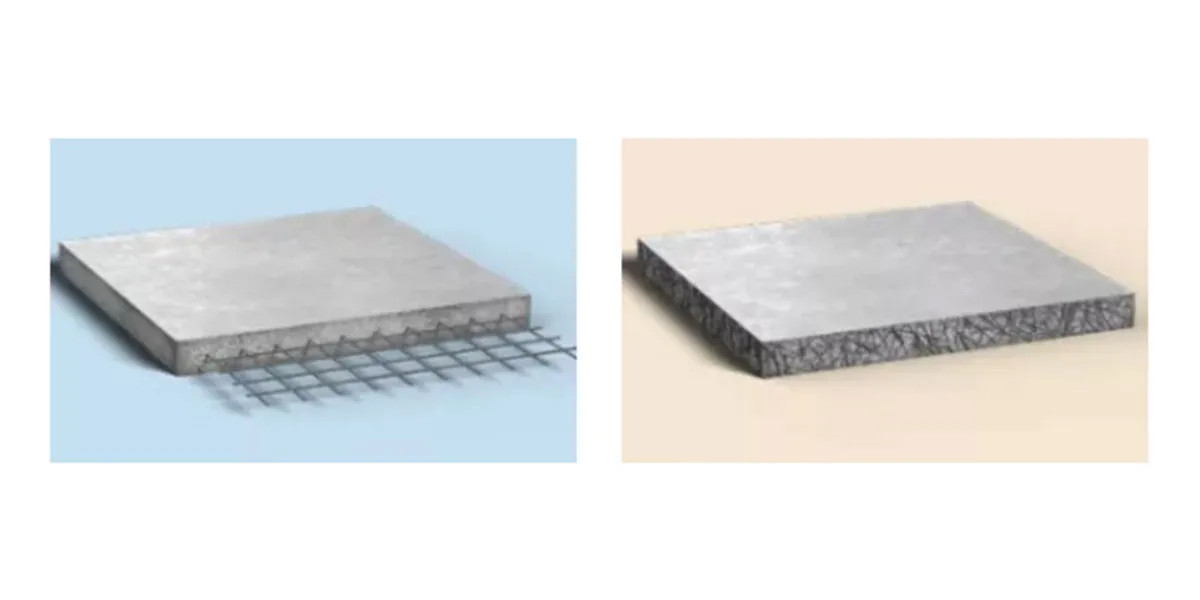
Prof. A. S. Khanna (Retd., IIT Bombay) on how Ultra-high performance concrete (UHPC) improves strength, durability and lifecycle performance.
Concrete
NCB Signs MoU With Cement Manufacturer To Boost Construction Skills
Partnership to deliver nationwide training and certification
Concrete
JSW Cement Commissions Nagaur Plant, Enters North India
New Rajasthan unit boosts capacity to 24.1 MTPA and expands reach


Ultra Concrete Age

NCB Signs MoU With Cement Manufacturer To Boost Construction Skills

JSW Cement Commissions Nagaur Plant, Enters North India

Cement Prices Likely To Rise As Petcoke Costs Increase

IIT Guwahati Develops Radiation-Resistant Cement Mortar
Ultra Concrete Age
NCB Signs MoU With Cement Manufacturer To Boost Construction Skills
JSW Cement Commissions Nagaur Plant, Enters North India
Cement Prices Likely To Rise As Petcoke Costs Increase