Connect with us

Process

Cement industry veering towards automation & digitalisation

Published

on

Shares

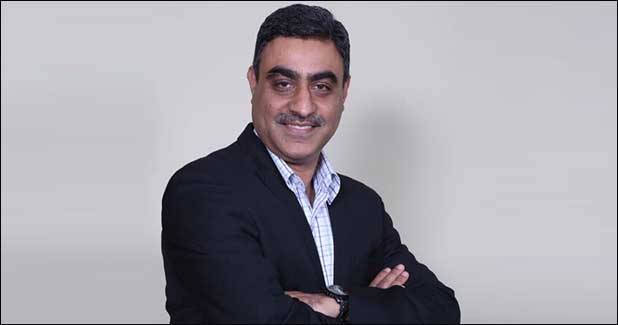
Rajat Kishore, Managing Director and Vice President – Process Automation India Hub, Schneider Electric India

Of late the cement industry is seeing a visible shift towards process control/automation, but it doesn’t match the scale as projected. Your comment, please!

Process control and automation, cement industry is moving towards automation, somehow the degree of adoption of automation may not be as expected. This industry is highly energy intense and has crucial environmental issues to tackle. Among the major challenges, one can say, the industry is focused on automation and digitalisation. However, there are a few more steps that the industry should take to concentrate on the journey:

  • Reducing energy consumption (currently, energy is almost 40 per cent of raw material costing)
  • Reducing carbon dioxide emission
  • Achieving operational efficiency and consistency
  • Shifting security of operations and maintenance
  • Empowering the workforce can take the company to the next level with better retention rates
  • All these five create a need for stronger automation solutions built into the system. It would help the company in improving power management, improving heat recovery as well as operation optimisation. The idea is to get environmentally sustainable operational controls.

    In Schneider Electric, we have a specific initiative called "eco structure" for the cement industry. This helps plants to achieve greater efficiency, which digitally-enabled solutions with monitoring and controlling of energy both in the production process and in identifying potential savings.

    What, in your opinion, are the major challenges in process control automation?
    For old plants, I would agree as their energy consumption is higher and mechanised. Older plants’ power consumption is almost 1.5 times greater as compared to the new-age cement plants. Power consumption is 80-100KW/ton cement produced whereas in the modern cement plants it is only 60-75KW/tonne. Older plants have tremendous opportunities to reduce energy consumption. When the focus is on energy reduction, the process gets optimised, greenhouse gases are reduced, and the plant gets more efficient.

    The best way to address this issue is automation. The company probably would spend about 13 per cent outlay of the capital investment on crushing or grinding unit or a mechanical part, but may be reluctant to spend 3 per cent similar outlay on automation. Automation comes at a much lower cost, but the problem is the mindset as physical equipment is what the cement owners are familiar with. Two things are changing the scenario today: One is the huge growth of infrastructure that is putting pressure on the cement industries to become more efficient, and explore collaborations with international cement industry players. Indian cement industry has no choice but to get more competitive. The other aspect that would be a driver for the segment is government regulations. Greenhouse gas emission reduction requirements, creation of sustainable environment conditions and carbon credits would trigger adaptation of automation and digital solutions.

    Where do you see the maximum traction coming from?
    There are so many things, yet there are a few things. First of all, the service provider, that is the equipment automation system provider. In the coming decade India will undergo rapid pace of development to become the world’s third-largest economy and possibly it will become the most populous nation. To realise 2030 vision, there should be substantial investment in new Greenfield capacity to embrace industry 4.0. Industry 4.0 is all about automation and digitalisation. It is also about increasing efficiency, reducing emissions, asset management and optimisation. So the industry will adopt more sustainability-driven technologies.

    Does Schneider offer up-skilling support to the companies during automation service?
    Yes, absolutely. With the technology the industry expects to train more next-gen industrial workforce and it will definitely be very different from what the current workforce is. Availability of suitably trained manpower in operation and maintenance of modern cement plants is a major challenge.

    What is next level of automation for factories?
    I would say augmented reality, virtual reality and digital print. In the cement industry the objective is to achieve operational asset management excellence by increasing the readiness to leverage the new age automation and deploying integrated distant solutions. The aim is to give end-to-end process planning, scheduling, and operation control with complete visibility of a plant on a business intelligence level and also operate, modify, schedule and control.

    What is Schneider’s roadmap for the next three years for process control?
    Our vision is to achieve end-to-end business intelligence and visibility as deployment of automation and new age automation. We believe Schneider is not just working towards giving better solutions but also making the industry and workforce better because the key solution also enables training. So, when you have training and upscaling solutions that are delivered to the plant optimisation, the whole application itself becomes more active.

    – LIZA V

    Continue Reading
    Click to comment

    Leave a Reply

    Your email address will not be published. Required fields are marked *

    Concrete

    Steel: Shielded or Strengthened?

    CW explores the impact of pro-steel policies on construction and infrastructure and identifies gaps that need to be addressed.

    Published

    on

    By

    Shares

    Going forward, domestic steel mills are targeting capacity expansion
    of nearly 40 per cent through till FY31, adding 80-85 mt, translating
    into an investment pipeline of $ 45-50 billion. So, Jhunjhunwala points
    out that continuing the safeguard duty will be vital to prevent a surge
    in imports and protect domestic prices from external shocks. While in
    FY26, the industry operating profit per tonne is expected to hold at
    around $ 108, similar to last year, the industry’s earnings must
    meaningfully improve from hereon to sustain large-scale investments.
    Else, domestic mills could experience a significant spike in industry
    leverage levels over the medium term, increasing their vulnerability to
    external macroeconomic shocks.(~$ 60/tonne) over the past one month,
    compressing the import parity discount to ~$ 23-25/tonne from previous
    highs of ~$ 70-90/tonne, adds Jhunjhunwala. With this, he says, “the
    industry can expect high resistance to further steel price increases.”

    Domestic HRC prices have increased by ~Rs 5,000/tonne
    “Aggressive
    capacity additions (~15 mt commissioned in FY25, with 5 mt more by
    FY26) have created a supply overhang, temporarily outpacing demand
    growth of ~11-12 mt,” he says…

    To read the full article Click Here

    Continue Reading

    Process

    Price hikes, drop in input costs help cement industry to post positive margins: Care Ratings

    Published

    on

    By

    Shares

    Region-wise,the southern region comprises 35% of the total cement capacity, followed by thenorthern, eastern, western and central region comprising 20%, 18%, 14% and 13%of the capacity, respectively.

    The cement industry is expected to post positive margins on decent price hikes over the months, falling raw material prices and marked drop in overall production costs, said an analysis of Care Ratings.

    Wholesale and retail prices of cement have increased 11.9% and 12.4%, respectively, in the current financial year. As whole prices have remained elevated in most of the markets in the months of FY20, against the corresponding period of the previous year.

    Similarly, electricity and fuel cost have declined 11.9% during 9M FY20 due to drop in crude oil prices. Logistics costs, the biggest cost for cement industry, has also dropped 7.7% (selling and distribution) as the Railways extended the benefit of exemption from busy season surcharge. Moreover, the cost of raw materials, too, declined 5.1% given the price of limestone had fallen 11.3% in the same aforementioned period, the analysis said.

    According to Care Ratings, though the overall sales revenue has increased only 1.3%, against 16% growth in the year-ago period, the overall expenditure has declined 3.2% which has benefited the industry largely given the moderation in sales.

    Even though FY20 has been subdued in terms of production and demand, the fall in cost of production has still supported the cement industry by clocking in positive margins, the rating agency said.

    Cement demand is closely linked to the overall economic growth, particularly the housing and infrastructure sector. The cement sector will be seeing a sharp growth in volumes mainly due to increasing demand from affordable housing and other government infrastructure projects like roads, metros, airports, irrigation.

    The government’s newly introduced National Infrastructure Pipeline (NIP), with its target of becoming a $5-trillion economy by 2025, is a detailed road map focused on economic revival through infrastructure development.

    The NIP covers a gamut of sectors; rural and urban infrastructure and entails investments of Rs.102 lakh crore to be undertaken by the central government, state governments and the private sector. Of the total projects of the NIP, 42% are under implementation while 19% are under development, 31% are at the conceptual stage and 8% are yet to be classified.

    The sectors that will be of focus will be roads, railways, power (renewable and conventional), irrigation and urban infrastructure. These sectors together account for 79% of the proposed investments in six years to 2025. Given the government’s thrust on infrastructure creation, it is likely to benefit the cement industry going forward.

    Similarly, the Pradhan Mantri Awaas Yojana, aimed at providing affordable housing, will be a strong driver to lift cement demand. Prices have started correcting Q4 FY20 onwards due to revival in demand of the commodity, the agency said in its analysis.

    Industry’s sales revenue has grown at a CAGR of 7.3% during FY15-19 but has grown only 1.3% in the current financial year. Tepid demand throughout the country in the first half of the year has led to the contraction of sales revenue. Fall in the total expenditure of cement firms had aided in improving the operating profit and net profit margins of the industry (OPM was 15.2 during 9M FY19 and NPM was 3.1 during 9M FY19). Interest coverage ratio, too, has improved on an overall basis (ICR was 3.3 during 9M FY19).

    According to Cement Manufacturers Association, India accounts for over 8% of the overall global installed capacity. Region-wise, the southern region comprises 35% of the total cement capacity, followed by the northern, eastern, western and central region comprising 20%, 18%, 14% and 13% of the capacity, respectively.

    Installed capacity of domestic cement makers has increased at a CAGR of 4.9% during FY16-20. Manufacturers have been able to maintain a capacity utilisation rate above 65% in the past quinquennium. In the current financial year due to the prolonged rains in many parts of the country, the capacity utilisation rate has fallen from 70% during FY19 to 66% currently (YTD).

    Source:moneycontrol.com

    Continue Reading

    Process

    Wonder Cement shows journey of cement with new campaign

    Published

    on

    By

    Shares

    The campaign also marks Wonder Cement being the first ever cement brand to enter the world of IGTV…

    ETBrandEquity

    Cement manufacturing company Wonder Cement, has announced the launch of a digital campaign ‘Har Raah Mein Wonder Hai’. The campaign has been designed specifically to run on platforms such as Instagram, Facebook and YouTube.

    #HarRaahMeinWonderHai is a one-minute video, designed and conceptualised by its digital media partner Triature Digital Marketing and Technologies Pvt Ltd. The entire journey of the cement brand from leaving the factory, going through various weather conditions and witnessing the beauty of nature and wonders through the way until it reaches the destination i.e., to the consumer is very intriguing and the brand has tried to showcase the same with the film.

    Sanjay Joshi, executive director, Wonder Cement, said, "Cement as a product poses a unique marketing challenge. Most consumers will build their homes once and therefore buy cement once in a lifetime. It is critical for a cement company to connect with their consumers emotionally. As a part of our communication strategy, it is our endeavor to reach out to a large audience of this country through digital. Wonder Cement always a pioneer in digital, with the launch of our IGTV campaign #HarRahMeinWonderHai, is the first brand in the cement category to venture into this space. Through this campaign, we have captured the emotional journey of a cement bag through its own perspective and depicted what it takes to lay the foundation of one’s dreams and turn them into reality."

    The story begins with a family performing the bhoomi poojan of their new plot. It is the place where they are investing their life-long earnings; and planning to build a dream house for the family and children. The family believes in the tradition of having a ‘perfect shuruaat’ (perfect beginning) for their future dream house. The video later highlights the process of construction and in sequence it is emphasising the value of ‘Perfect Shuruaat’ through the eyes of a cement bag.

    Tarun Singh Chauhan, management advisor and brand consultant, Wonder Cement, said, "Our objective with this campaign was to show that the cement produced at the Wonder Cement plant speaks for itself, its quality, trust and most of all perfection. The only way this was possible was to take the perspective of a cement bag and showing its journey of perfection from beginning till the end."

    According to the company, the campaign also marks Wonder Cement being the first ever cement brand to enter the world of IGTV. No other brand in this category has created content specific to the platform.

    Continue Reading

    Trending News

    SUBSCRIBE TO THE NEWSLETTER


    Don't miss out on valuable insights and opportunities to connect with like minded professionals.


      This will close in 0 seconds