Connect with us

Economy & Market

Friction-free conveyors are the way to go

Published

on

Shares

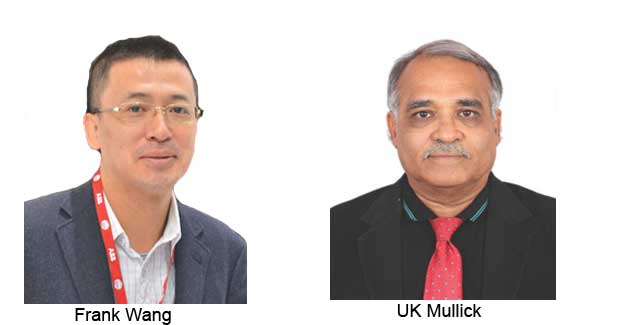
Sagta Engineering, a Shanghai, China, based engineering consulting company, is trying to introduce air cushion technology in conveyor systems in India. Frank Wang, General Manager, and U.K. Mullick, Chief Consultant of Sagta, say it is a maintenance free and environment friendly technology.

Material transportation equipment plays an important role cement plants. What are the innovative products you have?
Frank Wang (FW):
Roller and tubular conveyor systems are well known among user. But both of them require a lot of maintenance because of friction they generate. We are in the process of introducing air cushion conveyor in India. Air cushion lifts up the rubber belt, removing friction in air cushion conveyors (ACC). It brings in several advantages – energy saving, environment-friendly and requiring minimal maintenance. We have introduced air cushion technology to Tata Steel, NTPC and MECON, an engineering and consulting company, etc., in India.

What are the key differences between belt and air cushion conveyor systems?
UK Mullick (UKM): In a conventional belt conveyor, where belt is running on rollers, a number of rollers appear along it. Basically the concept of ACC is very much similar to that of conventional belt conveyor, but the difference is there are no rollers in the new technology. Instead of rollers there are certain modules and on the surface of the modules there are a number of small holes through which pressurised air comes and keeps the belt afloat, so that the material loaded onto the conveyor belt moves on the airfill. A very thin airfill is generated due to high pressure air jet that comes from the module.

What are the advantages an air cushion conveyor user can expect?
UKM:
The majority of power consumption of a conveyor is for overcoming the frictional resistance of number of rollers present in the system. If there are no rollers, then there is no friction due to which the power consumption will come down drastically. And this reduction is seen to be in the range of 20-70 per cent, which is really a great phenomenon- we are not only saving money, but also saving costly energy. Secondly, this 20-70 per cent saving depends on the length of the conveyor, longer the more.

FW: The lifespan of rubber belt in a conveyor is very important. Generally, due to friction the rubber belt lasts about three or four years and needs replacement. Sometimes it gets broken. There is a lot of downtime that goes into repairing the belt. Due to friction-free air cushion the lifetime of the rubber tends to be much longer. To our surprise, the rubber belt of our first project is still there even after 15 years, and no replacement needed anytime soon.

Is there any advantage in installation cost?
UKM:
Cost is generally based on length of the conveyor – if it is less than a kilometre, the cost of ACC is slightly more compared to the conventional one. In a long distance conveyor, say 10-20 km, the installation cost is more or less the same. Simple reason is, say for a 15-km conventional conveyor’s power installation needed is 4,200 kW, while for ACC technology the installed capacity required is 2,500 kW. That is a drastic difference due to absence of rollers. So, this is definitely an innovation so far not tried out in India and they are the way to go.

Are there any disadvantages or limitations for ACC when compared conventional conveyor…
UKM:
If you ask me, is it possible to convey big boulders? The answer is simply "no." The maximum weight that can be conveyed by ACC is approximately 50 milli meters (mm). As for angle of inclination, it can take a very good angle of inclination up to 35-40 degrees. But one should be conscious about a thing – it cannot take right or left turn, and it has to be straight. As such this is very good for long distance material handling. For that purpose we have already approached JSW and they are planning to implement long distance conveyor and this technology is under their active consideration, subject to their visiting China and seeing it physically.

So it cannot be implemented in all terrains…
UKM:
If the conveyor route has to pass through hills and mountains and have to take several twists and turns, you may need to install different types of conveyors ? conventional conveyor for a portion of it, pipe conveyors where twists and turns are there, and ACC where the route is straight. Since Sagta Engineering is capable of supplying any kind of conveyors or a combination of all the three, it can offer the best solution to any terrain.

In India, the government follows L1 (least capital cost) method for choosing suppliers, though the trend is changing of late. How do you propose to pitch your product to them?
UKM:
If you want to adopt any innovative technology, at that point of time one cannot compare the initial investment cost. If it can pay back the additional cost incurred in about three years, that is great.

Any more innovative products in pipeline…
UKM:
Another innovative technology is friction-free coupling. Generally we have fixed coupling that is rigid coupling where bolts and nuts are used. Suppose if there is a little misalignment in drive and driven end, and if it is allowed to run at a very high speed, in no time the bolt or nut will shear and break, bringing the whole process/system to a standstill. Now for power transmission or stop transfers for motors of more than 30 kV we are using fluid coupling for different applications in power, mining, or cement sectors.

FW: But Sagta has come out with a new magnetic coupling which uses permanent magnet on either side – driver shaft side and driven shaft side. Suppose if the blower is installed, and between motor and blower if you put a magnetic coupling, and due to installation problem if there is some small misalignment, since these two items are not touching each other, (as they are held only by magnetic force), this is not going to hamper the driven or driven side operations. These particular couplings are available from 30 kW to 4500 kW. Friction-free coupling is also maintenance free and has a lifetime of 30 years, we can say. This product has been welcomed by the Chinese heavy industry, including steel plants.

Another product that is in the final stages of development is magnetic speed adjusting device used in motors and blowers. These can be used in the cement industry as well. It is also long lasting and maintenance-free.

– BS SRINIVASALU REDDY

Continue Reading
Click to comment

Leave a Reply

Your email address will not be published. Required fields are marked *

Concrete

FORNNAX Appoints Dieter Jerschl as Sales Partner for Central Europe

Published

on

By

Shares

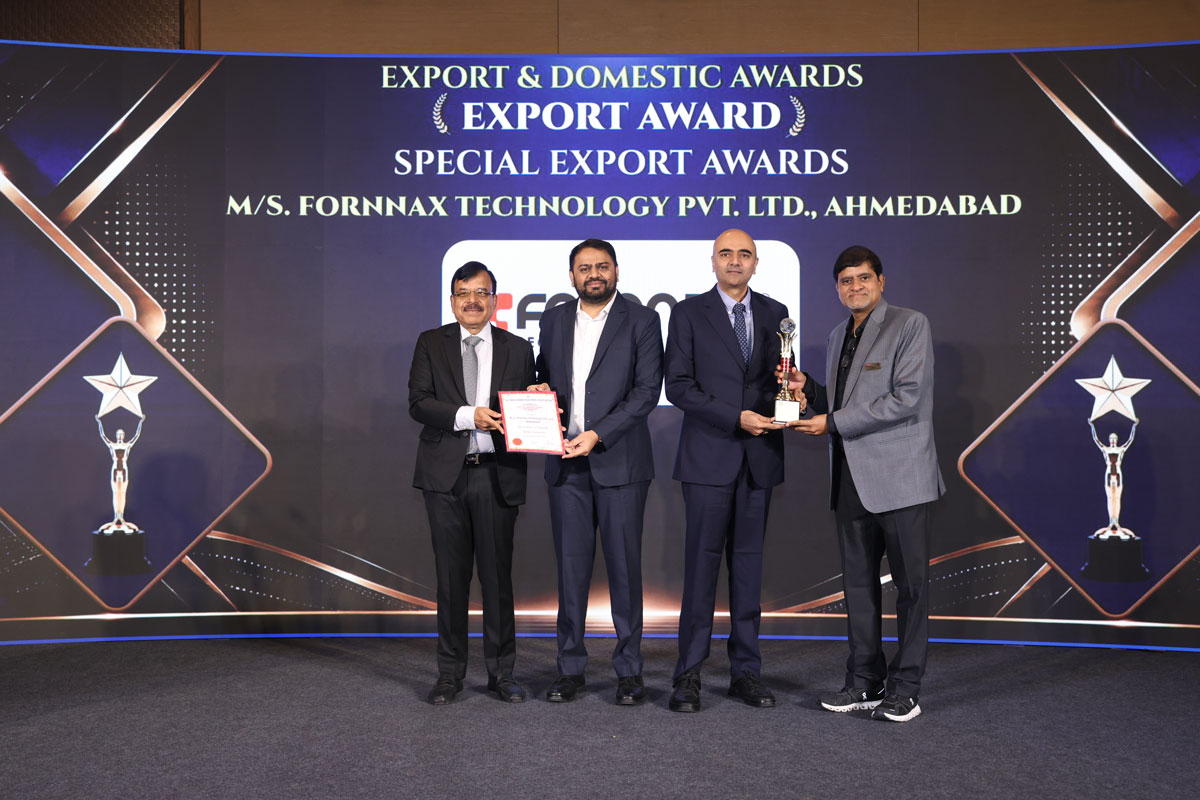
FORNNAX TECHNOLOGY has appointed industry veteran Dieter Jerschl as its new sales partner in Germany to strengthen its presence across Central Europe. The partnership aims to accelerate the adoption of FORNNAX’s high-capacity, sustainable recycling solutions while building long-term regional capabilities.

FORNNAX TECHNOLOGY, one of the leading advanced recycling equipment manufacturers, has announced the appointment of a new sales partner in Germany as part of its strategic expansion into Central Europe. The company has entered into a collaborative agreement with Mr. Dieter Jerschl, a seasoned industry professional with over 20 years of experience in the shredding and recycling sector, to represent and promote FORNNAX’s solutions across key European markets.

Mr. Jerschl brings extensive expertise from his work with renowned companies such as BHS, Eldan, Vecoplan, and others. Over the course of his career, he has successfully led the deployment of both single machines and complete turnkey installations for a wide range of applications, including tyre recycling, cable recycling, municipal solid waste, e-waste, and industrial waste processing.

Speaking about the partnership, Mr. Jerschl said,
“I’ve known FORNNAX for over a decade and have followed their growth closely. What attracted me to this collaboration is their state-of-the-art & high-capacity technology, it is powerful, sustainable, and economically viable. There is great potential to introduce FORNNAX’s innovative systems to more markets across Europe, and I am excited to be part of that journey.”

The partnership will primarily focus on Central Europe, including Germany, Austria, and neighbouring countries, with the flexibility to extend the geographical scope based on project requirements and mutual agreement. The collaboration is structured to evolve over time, with performance-driven expansion and ongoing strategic discussions with FORNNAX’s management. The immediate priority is to build a strong project pipeline and enhance FORNNAX’s brand presence across the region.

FORNNAX’s portfolio of high-performance shredding and pre-processing solutions is well aligned with Europe’s growing demand for sustainable and efficient waste treatment technologies. By partnering with Mr. Jerschl—who brings deep market insight and established industry relationships—FORNNAX aims to accelerate adoption of its solutions and participate in upcoming recycling projects across the region.

As part of the partnership, Mr. Jerschl will also deliver value-added services, including equipment installation, maintenance, and spare parts support through a dedicated technical team. This local service capability is expected to ensure faster project execution, minimise downtime, and enhance overall customer experience.

Commenting on the long-term vision, Mr. Jerschl added,
“We are committed to increasing market awareness and establishing new reference projects across the region. My goal is not only to generate business but to lay the foundation for long-term growth. Ideally, we aim to establish a dedicated FORNNAX legal entity or operational site in Germany over the next five to ten years.”

For FORNNAX, this partnership aligns closely with its global strategy of expanding into key markets through strong regional representation. The company believes that local partnerships are critical for navigating complex market dynamics and delivering solutions tailored to region-specific waste management challenges.

“We see tremendous potential in the Central European market,” said Mr. Jignesh Kundaria, Director and CEO of FORNNAX.
“Partnering with someone as experienced and well-established as Mr. Jerschl gives us a strong foothold and allows us to better serve our customers. This marks a major milestone in our efforts to promote reliable, efficient and future-ready recycling solutions globally,” he added.

This collaboration further strengthens FORNNAX’s commitment to environmental stewardship, innovation, and sustainable waste management, supporting the transition toward a greener and more circular future.


Continue Reading

Concrete

Budget 2026–27 infra thrust and CCUS outlay to lift cement sector outlook

Published

on

By

Shares

Higher capex, city-led growth and CCUS funding improve demand visibility and decarbonisation prospects for cement

Mumbai

Cement manufacturers have welcomed the Union Budget 2026–27’s strong infrastructure thrust, with public capital expenditure increased to Rs 12.2 trillion, saying it reinforces infrastructure as the central engine of economic growth and strengthens medium-term prospects for the cement sector. In a statement, the Cement Manufacturers’ Association (CMA) has welcomed the Union budget 2026-27 for reinforcing the ambitions for the nation’s growth balancing the aspirations of the people through inclusivity inspired by the vision of Narendra Modi, Prime Minister of India, for a Viksit Bharat by 2047 and Atmanirbharta.

The budget underscores India’s steady economic trajectory over the past 12 years, marked by fiscal discipline, sustained growth and moderate inflation, and offers strong demand visibility for infrastructure linked sectors such as cement.

The Budget’s strong infrastructure push, with public capital expenditure rising from Rs 11.2 trillion in fiscal year 2025–26 to Rs 12.2 trillion in fiscal year 2026–27, recognises infrastructure as the primary anchor for economic growth creating positive prospects for the Indian cement industry and improving long term visibility for the cement sector. The emphasis on Tier 2 and Tier 3 cities with populations above 5 lakh and the creation of City Economic Regions (CERs) with an allocation of Rs 50 billion per CER over five years, should accelerate construction activity across housing, transport and urban services, supporting broad based cement consumption.

Logistics and connectivity measures announced in the budget are particularly significant for the cement industry. The announcement of new dedicated freight corridors, the operationalisation of 20 additional National Waterways over the next five years, the launch of the Coastal Cargo Promotion Scheme to raise the modal share of waterways and coastal shipping from 6 per cent to 12 per cent by 2047, and the development of ship repair ecosystems should enhance multimodal freight efficiency, reduce logistics costs and improve the sector’s carbon footprint. The announcement of seven high speed rail corridors as growth corridors can be expected to further stimulate regional development and construction demand.

Commenting on the budget, Parth Jindal, President, Cement Manufacturers’ Association (CMA), said, “As India advances towards a Viksit Bharat, the three kartavya articulated in the Union Budget provide a clear context for the Nation’s growth and aspirations, combining economic momentum with capacity building and inclusive progress. The Cement Manufacturers’ Association (CMA) appreciates the Union Budget 2026-27 for the continued emphasis on manufacturing competitiveness, urban development and infrastructure modernisation, supported by over 350 reforms spanning GST simplification, labour codes, quality control rationalisation and coordinated deregulation with States. These reforms, alongside the Budget’s focus on Youth Power and domestic manufacturing capacity under Atmanirbharta, stand to strengthen the investment environment for capital intensive sectors such as Cement. The Union Budget 2026-27 reflects the Government’s focus on infrastructure led development emerging as a structural pillar of India’s growth strategy.”

He added, “The Rs 200 billion CCUS outlay for various sectors, including Cement, fundamentally alters the decarbonisation landscape for India’s emissions intensive industries. CCUS is a significant enabler for large scale decarbonisation of industries such as Cement and this intervention directly addresses the technology and cost requirements of the Cement sector in context. The Cement Industry, fully aligned with the Government of India’s Net Zero commitment by 2070, views this support as critical to enabling the adoption and scale up of CCUS technologies while continuing to meet the Country’s long term infrastructure needs.”

Dr Raghavpat Singhania, Vice President, CMA, said, “The government’s sustained infrastructure push supports employment, regional development and stronger local supply chains. Cement manufacturing clusters act as economic anchors across regions, generating livelihoods in construction, logistics and allied sectors. The budget’s focus on inclusive growth, execution and system level enablers creates a supportive environment for responsible and efficient expansion offering opportunities for economic growth and lending momentum to the cement sector. The increase in public capex to Rs 12.2 trillion, the focus on Tier 2 and Tier 3 cities, and the creation of City Economic Regions stand to strengthen the growth of the cement sector. We welcome the budget’s emphasis on tourism, cultural and social infrastructure, which should broaden construction activity across regions. Investments in tourism facilities, heritage and Buddhist circuits, regional connectivity in Purvodaya and North Eastern States, and the strengthening of emergency and trauma care infrastructure in district hospitals reinforce the cement sector’s role in enabling inclusive growth.”

CMA also noted the Government’s continued commitment to fiscal discipline, with the fiscal deficit estimated at 4.3 per cent of GDP in FY27, reinforcing macroeconomic stability and investor confidence.

Continue Reading

Concrete

JK Cement Crosses 31 MTPA Capacity with Commissioning of Buxar Plant in Bihar

Published

on

By

Shares

JK Cement has commissioned a 3 MTPA Grey Cement plant in Buxar, Bihar, taking its total capacity to 31.26 MTPA and placing it among India’s top five grey cement producers. The ₹500 crore investment strengthens the company’s national footprint while supporting Bihar’s infrastructure growth and local economic development.

JK Cement Ltd., one of India’s leading cement manufacturers, has announced the commissioning of its new state-of-the-art Grey Cement plant in Buxar, Bihar, marking a significant milestone in the company’s growth trajectory. With the commissioning of this facility, JK Cement’s total production capacity has increased to 31.26 million tonnes per annum (MTPA), enabling the company to cross the 30 MTPA threshold.

This expansion positions JK Cement among the top five Grey Cement manufacturers in India, strengthening its national footprint and reinforcing its long-term growth strategy.

Commenting on the strategic achievement, Dr Raghavpat Singhania, Managing Director, JK Cement, said, “Crossing 31 MTPA is a significant turning point in JK Cement’s expansion and demonstrates the scale, resilience, and aspirations of our company. In addition to making a significant contribution to Bihar’s development vision, the commissioning of our Buxar plant represents a strategic step towards expanding our national footprint. We are committed to developing top-notch manufacturing capabilities that boost India’s infrastructure development and generate long-term benefits for local communities.”

The Buxar plant has a capacity of 3 MTPA and is spread across 100 acres. Strategically located on the Patna–Buxar highway, the facility enables faster and more efficient distribution across Bihar and adjoining regions. While JK Cement entered the Bihar market last year through supplies from its Prayagraj plant, the Buxar facility will now allow the company to serve the state locally, with deliveries possible within 24 hours across Bihar.

Sharing his views on the expansion, Madhavkrishna Singhania, Joint Managing Director & CEO, JK Cement, said, “JK Cement is now among India’s top five producers of grey cement after the Buxar plant commissioning. Our capacity to serve Bihar locally, more effectively, and on a larger scale is strengthened by this facility. Although we had already entered the Bihar market last year using Prayagraj supplies, local manufacturing now enables us to be nearer to our clients and significantly raise service standards throughout the state. Buxar places us at the center of this chance to promote sustainable growth for both the company and the region in Bihar, a high-growth market with strong infrastructure momentum.”

The new facility represents a strategic step in supporting Bihar’s development vision by ensuring faster access to superior quality cement for infrastructure, housing, and commercial projects. JK Cement has invested approximately ₹500 crore in the project. Construction began in March 2025, and commercial production commenced on January 29, 2026.

In addition to strengthening JK Cement’s regional presence, the Buxar plant is expected to generate significant direct and indirect employment opportunities and attract ancillary industries, thereby contributing to the local economy and the broader industrial ecosystem.

Continue Reading

Trending News

SUBSCRIBE TO THE NEWSLETTER


Don't miss out on valuable insights and opportunities to connect with like minded professionals.


    This will close in 0 seconds