Connect with us

Concrete

Bendable Concrete: What is that?

Published

on

Shares

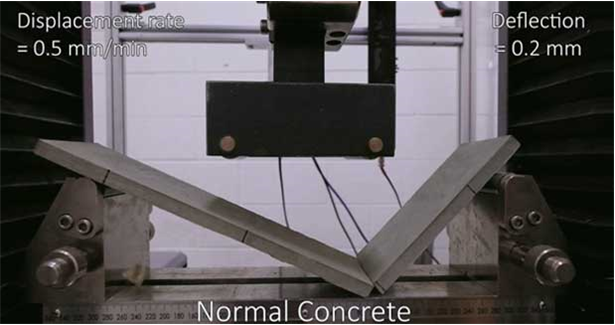
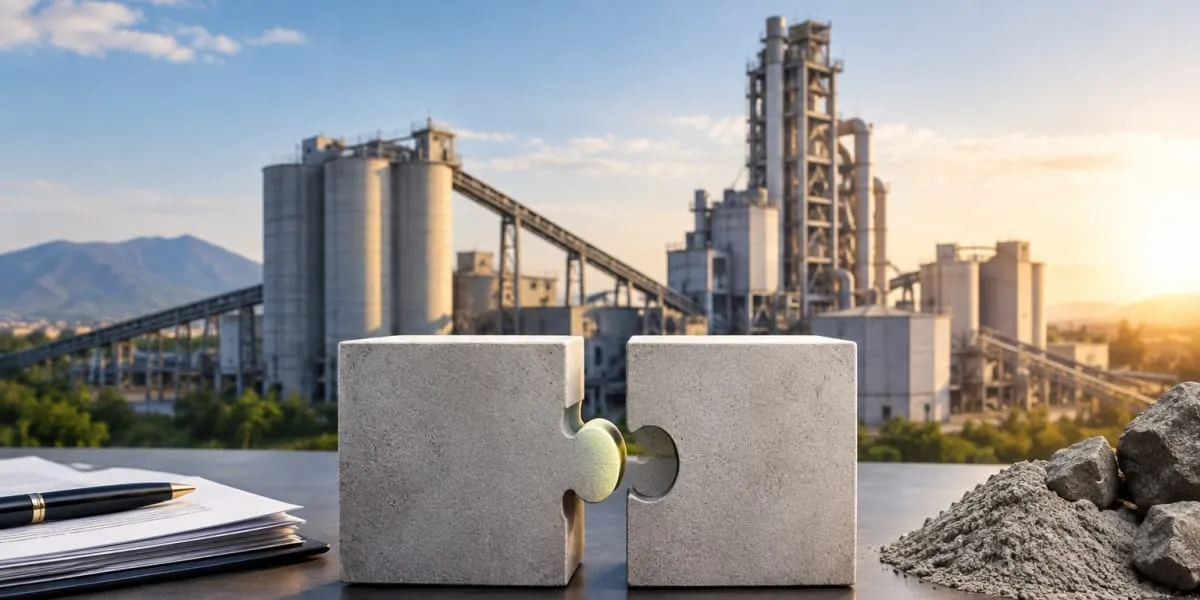
Scientists have recently created bendable concrete which is one step closer to hitting the market. The brand new concrete is composed of coal plant waste and synthetic fibres. The concrete itself is devoid of cement. With added features, it also helps reduce the environmental footprint. Bendable concrete is a mix of small fibres, generally polymer-derived, compiled into a microstructure. It helps give the material increased ductility in comparison to traditional concrete. Traditional concrete just cannot bend without breaking.

The researchers out of Swinburne University in Melbourne, Australia developed this new type of concrete. As mentioned before, this one is bendable and doesn’t require cement to compose it. In a test, the team put a gigantic weight on top of two pillars of concrete. The first traditional slab of concrete snapped under considerable pressure but the second one is where the wonder lies.

The second slab made use of synthetic fibres in the concrete mix. To manufacture it, they came up with a procedure which does not require heat to cure it. This radically reduces the impact on the environment. The heating of limestone is not required to make the cement component. It also emits a huge 76% less carbon dioxide which is definitely a better thing for the world. Behzad Nematollahi, a researcher involved in developing the material added that it is 400 times more bendable than regular concrete. It is ideal for environments around Earth that are prone to earthquakes.

Also known as Engineered Cementitious Composites (ECC), bendable concrete isn’t something new. Dr Victor Li, a civil and environmental engineering professor at the University of Michigan made it in the early 1990s. However, cost, supply chain concerns, and technical factors have prevented its widespread adaptation in the construction industry. As of 2019, it was 4 times more expensive to make than good old traditional concrete. Here’s hoping that this new bendable concrete can be produced cheaply on a mass scale.

Continue Reading
Click to comment

Leave a Reply

Your email address will not be published. Required fields are marked *

Concrete

JSW Cement commissions additional 1 MTPA grinding unit in Rajasthan

The Nagaur expansion takes JSW Cement’s total grinding capacity to 25.10 MTPA.

Published

on

By

Shares
JSW Cement has commissioned an additional 1 million tonne per annum (MTPA) cement grinding unit at its Nagaur Integrated Plant in Rajasthan. The commissioning takes the company’s total cement grinding capacity to 25.10 MTPA. 
JSW Cement’s total clinker manufacturing capacity, including its joint venture JSW Cement FZC, now stands at 9.74 MTPA.
The company began operations in North India in March 2026 with the Nagaur Integrated Plant, comprising a 3.30 MTPA clinkerisation unit and a 2.50 MTPA cement grinding unit. With the latest expansion, the plant’s total grinding capacity has increased to 3.50 MTPA.
The additional capacity will cater to cement demand across Rajasthan, Haryana, Punjab and the National Capital Region (NCR). The expansion has been funded through a combination of equity and long-term debt.
During the quarter ended September 30, 2026, JSW Cement also commissioned an Alternate Fuel Handling System and a Waste Heat Recovery System (WHRS) at the Nagaur plant.
Nilesh Narwekar, CEO, JSW Cement, said the additional grinding capacity was a strategic priority for the company’s expansion in North India. He added that the Alternate Fuel Handling System and WHRS were expected to reduce production costs.

Continue Reading

Concrete

JSW Cement Boards Approve Proposed Shiva Cement Merger

JSW Cement will issue five shares for every 41 Shiva Cement shares

Published

on

By

Shares

The Boards of Directors of JSW Cement and its listed subsidiary Shiva Cement have approved a scheme of arrangement for the amalgamation of Shiva Cement with and into JSW Cement. The proposed merger is intended to create a unified cement platform and generate operational, financial and management synergies.

The consolidation will pool the companies’ financial, managerial, technical, distribution and marketing resources. It will also support backward integration through Shiva Cement’s clinker facility, which is expected to reduce reliance on external procurement and improve supply chain efficiency.

The companies said the transaction would provide greater funding flexibility, reduce financing costs and eliminate inter-company guarantees. It is also expected to simplify the corporate structure by reducing administrative duplication, compliance requirements and consolidation efforts, while aligning the financial statements of both entities.

Under the approved share-exchange ratio, JSW Cement will issue five equity shares with a face value of Rs. 10 each for every 41 equity shares with a face value of Rs. 2 each held in Shiva Cement. The issuance will apply to Shiva Cement shareholders other than JSW Cement and will give the subsidiary’s public shareholders direct ownership in a larger listed company.

The scheme remains subject to approvals from the stock exchanges, the Securities and Exchange Board of India, the National Company Law Tribunal, the Odisha Industrial Infrastructure Development Corporation and other applicable statutory and regulatory authorities. Approval from the companies’ shareholders and creditors may also be required under applicable laws or directions from the tribunal. The transaction is expected to be completed within 12 to 14 months, subject to the timely receipt of these approvals.

Continue Reading

Concrete

JSW Cement commissions additional 1 MTPA grinding unit at Nagaur

Published

on

By

Shares

With this commissioning, JSW Cement’s total cement grinding capacity has increased to 25.10 MTPA, 
Mumbai

JSW Cement, one of India’s leading green cement producers and part of the diversified JSW Group, today announced the successful commissioning of an additional 1.00 MTPA cement grinding unit at Nagaur, Rajasthan. The commissioning marks another significant milestone in the Company’s growth strategy.

With this commissioning, JSW Cement’s total cement grinding capacity has increased to 25.10 MTPA, while its total clinker manufacturing capacity, including clinker capacity at its joint venture, JSW Cement FZC, stands at 9.74 MTPA.

JSW Cement had commenced operations in North India in March 2026 with the Nagaur Integrated Plant, comprising a 3.30 MTPA clinkerisation unit and 2.50 MTPA cement grinding unit. With the commissioning of the additional 1.00 MTPA cement grinding unit, the plant’s total cement grinding capacity has increased to 3.50 MTPA, enhancing the company’s ability to cater to the growing cement demand across Rajasthan, Haryana, Punjab and the National Capital Region (NCR). The expansion has been funded through a strategic mix of equity and long-term debt.

During the quarter ended 30th September 2026, JSW Cement has also commissioned the Alternate Fuel Handling System and the Waste Heat Recovery system (WHRS) at the Nagaur Integrated Plant.

Nilesh Narwekar, CEO, JSW Cement, said: “The commissioning of additional 1.00 MTPA grinding capacity at Nagaur is a key strategic priority for us and will accelerate JSW Cement’s expansion into North India. We look forward to servicing the growing needs of the region and contributing to the economic growth of Rajasthan, Haryana, Punjab and the NCR area. I am delighted to share that the company has commissioned this grinding unit within the expected timeline, showcasing our project execution capabilities. Further, the Alternate Fuel Handling System and the Waste Heat Recovery system (WHRS) are expected to substantially reduce our production costs going forward.”

Continue Reading

Video Thumbnail
▶

    SIGN-UP FOR OUR GENERAL NEWSLETTER

    Trending News

    SUBSCRIBE TO THE NEWSLETTER


    Don't miss out on valuable insights and opportunities to connect with like minded professionals.


      This will close in 0 seconds