Connect with us

Concrete

Magnesia-spinel bricks are raising the bar

Published

on

Shares

India’s cement sector is in the midst of a structural growth phase. Performance of every production asset carries greater commercial consequence than before.

Total installed capacity of cement reached approximately 690 million tonnes per year by early 2026, with production touching 453 million tonnes in 2025 — a 6.3% year-on-year increase. According to CRISIL Ratings, Indian cement producers are expected to invest nearly ?1.2 lakh crore in capacity expansion between 2026 and 2028, with 160–170 million tonnes of new grinding capacity forecast to come online. Demand is projected to rise from 445 MMT in 2024 to 670 MMT by 2030, underpinned by government infrastructure programmes, affordable housing schemes and rapid urbanisation.
Among the most critical assets of a cement plant is the refractory lining of the rotary kiln. In the burning zone, where temperatures regularly exceed 1,450°C, the right choice of brick can mean longer campaigns, reduced maintenance cycles, and more consistent output.

Rotary kiln: A demanding environment
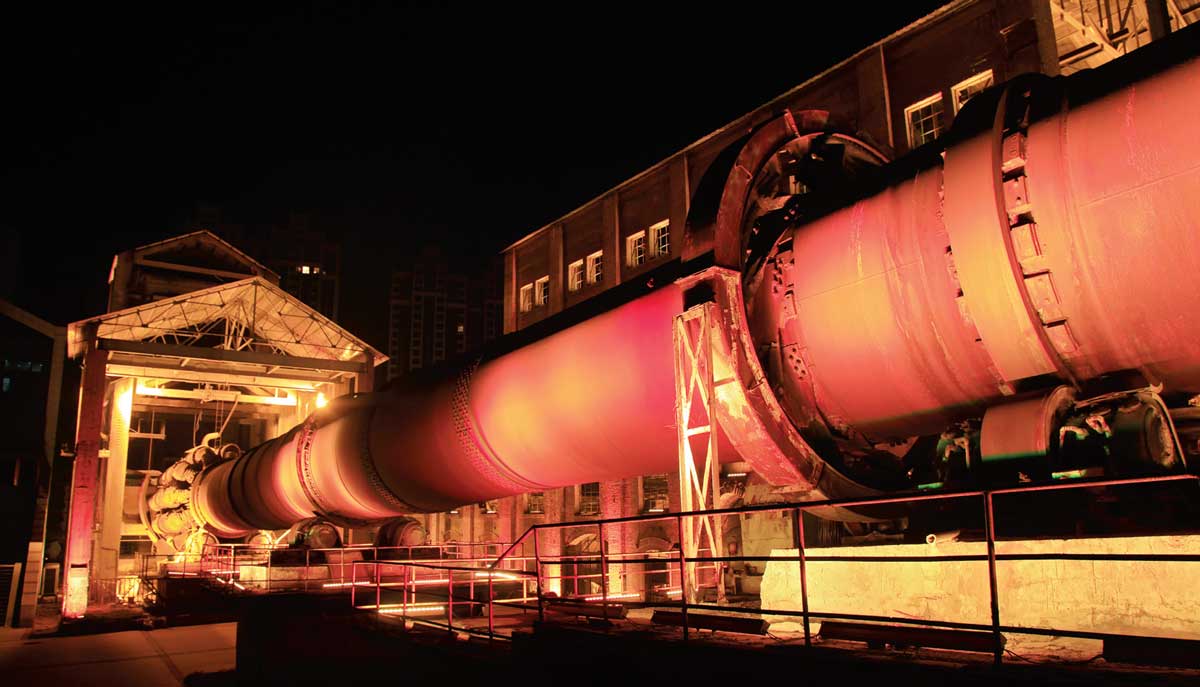
The rotary kiln is the core thermal unit in cement clinker production. Raw meal enters at one end at a few hundred degrees Celsius and is progressively heated to around 1,450°C at the burning zone, where clinker nodules form. The steel kiln shell must be continuously protected from this extreme environment, which is the job of the refractory lining.
Refractory bricks serve multiple simultaneous functions: insulating the shell from heat, resisting chemical erosion from clinker melt, alkali vapours, sulphur compounds and chlorine, and withstanding the mechanical stresses of a continuously
rotating system.

CALDE® MAG bricks: Engineered for critical zones
Calderys’ CALDE® MAG bricks range comprises a family of magnesia-spinel bricks engineered specifically for the transition and burning zones of cement and lime rotary kilns.
The bricks are made from a blend of high-purity magnesia (MgO) and active spinel, a crystalline compound formed from magnesia and alumina, which offers thermochemical stability, mechanical toughness, and controlled coating behaviour. The range features low thermal conductivity and controlled expansion.

Why brick quality matters commercially
The economic argument for high-quality refractory bricks is often underweighted when procurement decisions are driven by initial unit cost. For a cement plant operating at the scale typical of India’s major producers, an unplanned kiln outage carries significant costs: lost production, fuel to bring the kiln back to temperature, relining labour, and potential mechanical damage to the shell.
Many plants increasingly use alternative fuels and locally sourced raw materials, which can alter the alkali-sulphur balance within the kiln atmosphere and accelerate lining corrosion. Magnesia-spinel bricks of the hercynite type address this directly, with reduced alumina content limiting the formation of low-melting calcium aluminates that would otherwise compromise brick integrity.

Local manufacturing as a strategic advantage
A brick ordered from an overseas supplier may meet technical specifications on paper, but a six-to-eight-week lead time following an unplanned outage becomes part of the total cost of failure. Local manufacture provides shorter lead times, ready inventory of fast-moving grades, and faster emergency response.
Bricks manufactured and tested in India, against data from Indian kiln operations, can be more precisely calibrated to local raw material chemistry, fuel types, and operating practices. Looking ahead, Calderys is expanding its Indian footprint through the CAPES facility in Odisha — a new plant housing multiple production lines for both monolithic refractories and shaped bricks, strategically located within one of India’s most active industrial belts.

Sources: IBEF Cement Industry Report; Mordor Intelligence India Cement Market; CRISIL/S&P Global, November 2025; CemNet, November 2025; calderys.com

(Communication by the management of the company)

Concrete

Dalmia Bharat Begins Rs 31 Bn Green Cement Unit in Kadapa

New Andhra Pradesh plant to add 9.6 MTPA cement capacity by FY28

Published

on

By

Shares


Dalmia Bharat Limited recently laid the foundation stone for its second manufacturing unit at Kadapa in Andhra Pradesh. The company will invest Rs 31 billion in developing the next-generation integrated cement manufacturing facility.
The foundation-laying ceremony was attended by Nara Lokesh, Andhra Pradesh Minister for Information Technology, Electronics and Communications, Real-Time Governance and Human Resources Development, along with Puneet Dalmia, Managing Director and Chief Executive Officer, Dalmia Bharat, senior government officials and company representatives.
Scheduled to be commissioned by the third quarter of FY28, the Kadapa unit will become Dalmia Bharat’s largest integrated manufacturing facility in southern India. It will have a clinker production capacity of 6.1 million tonnes per annum and a cement manufacturing capacity of 9.6 million tonnes per annum.
The facility is designed to produce what the company describes as one of the world’s greenest cements. It is also expected to generate approximately 1,000 direct and indirect employment opportunities while supporting local MSMEs, transporters, contractors and service providers.
Lokesh said the investment reflected Dalmia Bharat’s confidence in Andhra Pradesh and aligned with the state’s objective of promoting sustainable industrialisation, job creation and technology-led economic growth.
Puneet Dalmia said the project represented the company’s long-term vision of developing low-carbon cement manufacturing assets. He added that the facility would establish new benchmarks in operational efficiency and sustainability while supporting India’s infrastructure and environmental goals.
Dalmia Bharat will also expand its regional community development programmes in education, healthcare, skill development and welfare through its DIKSHa and Gram Parivartan initiatives.
The company currently has an installed cement manufacturing capacity of 54.7 million tonnes across 19 manufacturing units in 12 states. It is also the first cement company globally to commit to the RE100, EP100 and EV100 initiatives.

Continue Reading

Concrete

Nuvoco Inaugurates Limla Cement Plant in Surat

Acquisition boosts Western India cement capacity

Published

on

By

Shares


Nuvoco Vistas Corporation Limited inaugurated the Limla Cement Plant in Surat, Gujarat, marking a key milestone in its acquisition and revival of Vadraj Cement Limited.

The company completed the acquisition of Vadraj, which had been undergoing a corporate insolvency resolution process, by discharging a consideration of Rs 18 billion (bn) in June 2025. Vadraj’s asset base includes a clinker unit at Kutch and a grinding unit at Limla, along with high quality captive limestone reserves and a captive jetty at Kutch that enhance logistics efficiency.

Since taking over the assets, Nuvoco has undertaken revival, refurbishment and expansion across both sites, culminating in the opening of the Limla facility. The grinding unit at Limla achieved project completion ahead of schedule with the commissioning of two million tonnes per annum (mn t per annum) grinding capacity, further expanding the company’s scale and market reach.

Upon full operationalisation of the Vadraj assets, nearly 40 per cent of Nuvoco’s total cement capacity will be accounted for by plants in the North and West regions, supporting improved access to high growth markets. The plant is expected to support a phased volume ramp up in Gujarat and to serve adjoining markets in western Maharashtra while releasing northern capacities for other markets.

It will produce a complete portfolio of cement products including Ordinary Portland Cement, Portland Slag Cement, Portland Pozzolana Cement and Portland Composite Cement, and will offer the Duraguard range including the premium Duraguard Microfibre. The transaction is set to create synergies with Nuvoco’s existing manufacturing facilities at Nimbol and Chittorgarh, strengthening logistics optimisation and market access across key regions.

Nuvoco reported total income of Rs 113.62 billion (bn) in FY 2025-26 and stated it is on track to consolidate total cement capacity to 35 million tonnes per annum (mn t per annum) by FY2028. The company operates across cement, ready-mix concrete and modern building materials segments and highlighted a pan-India ready-mix presence alongside contributions to major infrastructure projects. Corporate communications contact details were provided by the company.

Continue Reading

Concrete

Nuvoco commissions Surat grinding unit

Nuvoco posts 20 per cent rise in Q1 PAT

Published

on

By

Shares


Nuvoco Vistas Corp. has announced its financial results for the quarter ended June 30, 2026, reporting growth in volumes, earnings and profitability while advancing its expansion plans in western India.
The company inaugurated a 2-million-tonnes-per-annum (MTPA) grinding unit at its Limla Cement Plant in Surat on July 11, 2026, ahead of schedule. The facility, part of the Vadraj Cement assets, is expected to strengthen Nuvoco’s presence in western India while freeing up capacity at its Rajasthan plants to cater to demand in northern markets.
Progress at the Kutch project remains on track, with phased commissioning scheduled to begin in the third quarter of FY27. The company has also commenced work on a bulk cement terminal at Viramgam, Sachana, Gujarat, featuring a dedicated railway siding. The terminal is expected to become operational by the second quarter of FY28 and will support distribution across Gujarat. These projects form part of Nuvoco’s capacity expansion programme, which is expected to increase its total cement capacity to 35 MTPA by FY28.
During Q1 FY27, the company recorded cement sales volumes of 5.3 million tonnes, up 5 per cent year-on-year. Consolidated total income rose 9 per cent to Rs 31.29 billion, while EBITDA increased 7 per cent to Rs 5.72 billion, marking the company’s highest-ever first-quarter EBITDA. Profit after tax grew 20 per cent year-on-year to Rs 1.60 billion.
Commenting on the results, Jayakumar Krishnaswamy, Managing Director, Nuvoco Vistas Corp., said the company delivered improved business performance despite macroeconomic and geopolitical challenges. He attributed the results to disciplined execution, cost optimisation and operational efficiencies, while highlighting the early commissioning of the Surat grinding unit as a key milestone in the company’s expansion strategy.
He added that the company remains focused on prudent procurement, supply chain efficiency and cost discipline while monitoring geopolitical developments that could affect industry supply chains and input costs.

Continue Reading

Video Thumbnail

    SIGN-UP FOR OUR GENERAL NEWSLETTER


    Trending News

    SUBSCRIBE TO THE NEWSLETTER


    Don't miss out on valuable insights and opportunities to connect with like minded professionals.


      This will close in 0 seconds