Jigar Shah, Head – Application Engineering, ACM SBU, Henkel Adhesive Technologies India, looks at the smarter way to keep power flowing.
In cement manufacturing, where uptime is everything, captive power plants are the backbone of uninterrupted operations. But even the most robust systems can be brought to a halt by something as deceptively simple as ash.
Ash buildup—especially in high-humidity environments—is a recurring challenge for maintenance teams. It clings to the inner walls of hoppers and silos, chokes flow paths, and forces shutdowns that no one has time for. And when the monsoon rolls in, the problem only intensifies.
This is the story of how one thermal power plant in India tackled the issue—not with more manpower or heavier hammers, but with a surface engineering solution developed by Henkel’s Loctite team. The application of Loctite® PC 7337 Anti-Stick Coating helped the plant shift from reactive maintenance to preventive control, restoring flow and reliability where it mattered most.
The sticky truth
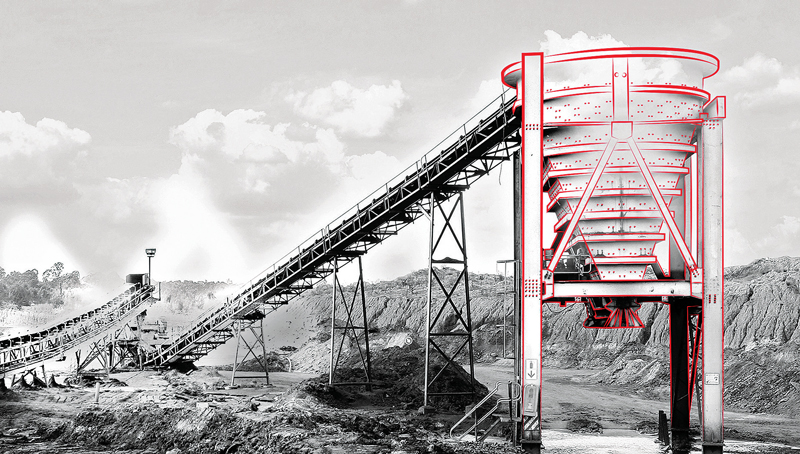
Ash is an inevitable by-product of coal combustion. In captive power plants, fly ash is collected in electrostatic precipitators (ESPs) and directed to ash hoppers. Bottom ash, meanwhile, is sluiced with water into Hydrobin tanks—large cylindrical silos where solids settle and water is drained off for further treatment.
In theory, it’s a straightforward process. In practice, it’s anything but.
Ash particles are fine, abrasive and hygroscopic. They absorb moisture from the air, especially during the rainy season, and form stubborn layers on metal surfaces. Over time, this buildup narrows flow paths, increases system pressure, and eventually brings operations to a standstill.
At the plant in question, maintenance teams were routinely forced to shut down operations to manually clear out ash deposits. Sometimes that meant hammering on hopper walls. Other times, it meant full system stoppages. Either way, the cost—in time, labour and lost production—was significant.
A new approach
Rather than redesign the system or increase maintenance frequency, the plant’s engineering team explored a different path: surface modification.
They partnered with Henkel’s Application Engineering team to trial Loctite® PC 7337—a polymer-based anti-stick coating designed specifically for abrasive, high-moisture environments. The goal was simple: prevent ash from sticking in the first place.
Loctite PC 7337 was applied to the internal surfaces of the Hydrobin tank and ash hopper. The coating offered a low-friction, hydrophobic barrier that repelled fine particles and resisted wear. But as with any industrial solution, success depended on proper preparation and execution.
Application in action
The coating process followed a meticulous five-step protocol:
1. Surface preparation: Initial cleaning involved the removal of oil, grease and other contaminants. Abrasive blasting followed, creating a surface profile of 40–60 microns to ensure strong mechanical bonding.
2. Dust removal: All residual dust was cleared to prevent contamination and ensure a clean substrate.
3. Coating application: Loctite PC 7337 was mixed and applied to a wet film thickness of 200–250 microns. No heat curing was required—ambient conditions were sufficient.
4. Curing: The coating was left to cure for 24 hours, forming a durable, glossy finish.
5. Inspection: Final checks included dry film thickness measurement, visual inspection and holiday detection to confirm coating integrity.
The result? A smooth, frictionless surface that ash simply couldn’t cling to.
Real-world results
Post-application, the plant saw immediate improvements. Ash no longer adhered to the coated surfaces, even during peak humidity. Flow paths remained clear, and the need for manual cleaning dropped dramatically.
Here’s what changed:
• Fewer shutdowns: With ash buildup under control, unplanned stoppages became a thing of the past.
• Improved flow efficiency: Material moved more freely through the system, reducing pressure fluctuations and wear.
• Regulatory compliance: The plant was able to meet its monthly ash disposal targets, aligning with environmental mandates from the National Green Tribunal (NGT).
• Cost savings: Reduced maintenance and downtime translated into measurable financial benefits.
Why it worked
The coating’s performance came down to two key properties: abrasion resistance and hydrophobicity.
In lab tests, Loctite PC 7337 showed excellent wear resistance, losing only 9 mg after 1000 cycles under a 1 kg load using CS-17 wheels (ASTM D4060). That’s critical when dealing with fine, abrasive particles like fly ash and clinker dust.
Equally important was its ability to repel moisture. The coating’s low surface energy and high contact angle created a hydrophobic barrier that prevented wet ash from bonding to the surface—a common failure point for traditional coatings.
It also proved effective across a wide range of particle sizes. From cement fines under 45 microns to pulverized coal (79–120 microns) and clinker dust (3–30 microns), Loctite PC 7337 maintained its anti-stick properties. Even particles up to 1 mm showed only moderate adhesion during internal trials.
Beyond power plants
While this case focused on a thermal power plant, the implications for cement manufacturing are clear. Many of the same challenges—fine particle buildup, moisture-induced sticking, and flow disruptions—occur throughout the plant.
Potential applications for Loctite PC 7337 include:
• ID fan coatings: To prevent dust accumulation and maintain airflow efficiency.
• Pump linings: To reduce wear and improve slurry flow in wet handling systems.
• Silo and hopper interiors: To prevent bridging and rat-holing in cement and fly ash storage.
• Chutes and ducts: To enhance flow and reduce maintenance in pneumatic conveying systems.
By proactively addressing surface behaviour, cement plants can reduce maintenance burdens, extend equipment life, and improve process reliability.
A shift in mindset
This project highlights a broader shift in industrial maintenance philosophy—from reactive fixes to preventive strategies. Instead of waiting for problems to arise, forward-thinking plants are investing in solutions that stop issues before they start.
Surface engineering, particularly with advanced coatings like Loctite PC 7337, is a powerful tool in this shift. It allows operators to tailor equipment surfaces to their specific material and environmental challenges, rather than relying on generic designs or brute-force maintenance.
And while the coating itself was a key enabler, the real success came from collaboration. The plant’s willingness to try a new approach, combined with the technical support of Henkel’s Loctite team, created a solution that was both practical and scalable.
Small change, big impact
Sometimes, the biggest operational wins come from the smallest changes. In this case, a 250-micron of Loctite PC 7337 made the difference between constant maintenance and consistent performance.
For cement plants navigating the complex demands of energy efficiency, environmental compliance, and cost control, solutions like these offer a compelling path forward. They’re not flashy. They don’t require massive capital investment. But they work—and they work where it counts.
Because when ash sticks, everything stops. And when it doesn’t, everything flows.
ABOUT THE AUTHOR:
Jigar Shah, Head – Application Engineering, ACM SBU, Henkel Adhesive Technologies India, has 20+ years of experience. He drives efficiency and sustainability through innovations.













 Concrete3 weeks ago
 Concrete3 weeks ago
 Concrete4 weeks ago
 Concrete3 weeks ago