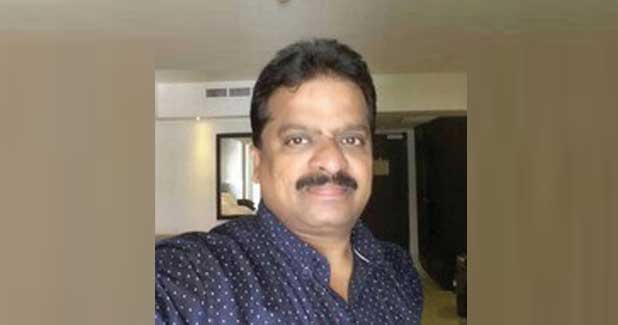
– TM Suresh Kumar, Assistant Vice President – Marketing, Bharathi Cement
What is the history of your brand and how it has transformed over the years? How do you think your brand impacted your top- and bottom-lines?
The brand "Bharathi" was founded in the year 2009. It was the first greenfield project to come up in Kadapa district of Andhra Pradesh. It was a 5 MMT project. We entered the cement industry at the time when either it was saturated or the industry production itself was quite high, and a lot of brands were there. Considering that timing of our entry was a strategic one, the company came out with a premium brand. Our strategy was quite clear; our offering had to be top class.
Some market samples were drawn for over six months from the important markets of Southern India. The samples were tested for physical and chemical properties, in three laboratories – NCCBM (Hyderabad), Civil-Aid Laboratories (Bengaluru), and our own laboratory. These samples were packed in such a way that coding was done properly. Afterwards, it was sent to the laboratory without a brand identification. For six months, on a month-on-month basis, we took out these samples.
We found out a pattern-properties and important aspects of cement and its chemistry-in these samples. We could set a benchmark above that. In fact, if you visit our plant, there is production line and then benchmark quality standards. That has been set based on this. Secondly, consistency plays a very important role in cement.
Each and every bag has to be of consistent quality. There is no compromise on any aspect – be it product, be it process, approach or the policy. We were the pioneer in certain aspects of the cement industry. To maintain the consistency of cement, we introduced robotic quality control. This checks quality at all the stages: raw materials, semi-finished products and finished products. At all the three stages, the samples are tested online at periodic intervals and the course correction happens.
Thirdly, it is laminated packing. When it was introduced, polypropylene laminated packing was the first-of-its-kind in the Indian cement industry. To prevent from loss and pilferage, it is also moisture resistant in humid conditions, and increases the shelf life, particularly in the retail segment, where cement bags are kept at the counters exposed to air. We have networked our plant with all the south Indian states and Maharashtra and all our warehouses (about 35 in each State) with SAP. So when our first bag of cement was invoiced, it was done online. This was another advantage ensuring accounting transparency in business. So, our dealer or customer will get all the statements online. The whole transaction is online. This was one of the biggest confidence booster as still many parts of the sector was unorganised. So, these things gave us an edge in the positioning of brand Bharathi cement in the market as a premium brand.
What are the most interesting brand messages you have conveyed for cement? How it has played out when compared to your competitors at that time?
"Three times better" was our tagline. This is the three aspects that I have highlighted now. South Indian actor, Suriya was our brand ambassador at the beginning, who was synonymous with south Indian film industry. The representation of the brand stood up to the standards. The brand was very well promoted with a mix of branding activities, outdoor, as also our strength was technical support service. For e.g. normally cement is sold and the companies/ people will forget about it. But in our case, a technical team will approach a mason or an engineer or a building contractor, and they will explain the best usage practices of cement. This awareness is very important.
Cement production is technologically a superior thing. But what about the usage?
There many standards are not followed. We imparted that awareness and education to the end users and influencers. We have created mobile technical advisers, equipped with all the basic testing facilities for cement at the site. Any customer opting for concreting and any important construction work could avail of this facility. It will be manned by our qualified technical engineer.
What factors played a strong role in your branding exercises – what worked and what not?
When the brand was launched, "three times better" was our underlying statement. In manufacturing, we had the best technology and machinery in the world. Our plants have the latest technology in the world. Our three aspects caught the attention of the customers. Our whole advertisement and brand promotion campaign has been on this. It was very well planned and well executed to date. Because in all the markets, it was led by a team of professionals.
What are your premium cement brands and how do they promise to deliver better value over and above normal cement? Can you cite examples of value creation for company through premium branding?
In cement, first is consistency. It plays a very important role in branding and we have always scored better over our competitor. Superior quality is guaranteed throughout the year and in every bag. This has given us the advantage. It is followed by technical services on the ground. They have created a value in the minds of customers.
How you have taken advantage of introduction of PPC and PSC in building your brand?
In all the Indian cement markets, the trend of usage of blended cement, namely PPC and PSC, is on an upward trend, and we gave the best quality of the blended cement. We sourced fly ash and also the slag from the best sources. Our blended cements are [in fact] more popular in the markets than the typical OPC of the competition. We have recently introduced one more superior product called Bharathi Ultrafast, which is again a blended cement. It is like the best of both the worlds. It gives you the strength of OPC, and durability of blended cement, with a fast setting ability. Our thrust has always been on blended cements, because they are environmental friendly. Technically-blended cement is far superior because of low heat of hydration. We can produce a dense concrete by using blended cements.
Brands are said to create value for the company owning it. How did your company handle brands of companies you had acquired or transition of brands?
This is a greenfield project and it is a new brand. We have taken care of the brand like how we nurture and take care of a baby. It is like planting a sapling and making it to grow into a tree. That has been the culture in this in growing this brand. The brand has grown well and we are entering 10-year soon.
How relevant will cement brands be in India after, say 20 years, particularly when bulk cement use is rapidly growing in urban centres?
I would like to address this point in two parts. Cement is sold in two segments – retail, and project and infrastructure segments. Talking about the projects segment, the popularity of ready-mix concrete is increasing due to various reasons.
For roads and other massive infrastructure projects, cement is used in bulk. So branding may not be a very important aspect at that point of time, because it becomes a B2B product. In Indian retail segment, branding will always prevail. Because the customer will value a superior product by its brand name.
Of course, you need to keep adding value additions to your products and services. We have come out with Bharathi Mitra app, which is basically for influencers like engineers, architects and masons. Today, life runs on mobiles. Login to the app and place one’s requirements, and there is a choice of products, features and benefits, and list of dealers and stockists available. A single contact point, offering reward points as well. We had added value in product with Bharathi Ultrafast. That will help keep the brand fresh in the minds of people, sustaining the brand. The retail segment is unlikely to diminish totally in terms of perception even if it does in terms of volumes.
To what extent branding is a priority for Indian cement companies, when cement is considered to be a commodity? Is ad spends a gauge or any others reflect it better?
Cement is a highly-technical product. By usage also, there is a lot of technology and standard procedure of usage; whereas when it comes to the market, it is considered to be a commodity. Unless we show the value to the products or services, it will be continued to be looked upon as a commodity and it will not enjoy any premium or preference. In fact, purchase itself is a premium. From this perspective also, it is even more important that the brand equity is sustained.
Value-added services like technical support on the ground will always add value. We have made it mandatory that each and every dealer that has been appointed has visited our cement plant. He is taken through the whole manufacturing process and quality control. I can say it is untouched by hand as it is a fully automated plant. So our customers, engineers, architects and masons have seen it. They already know how it is produced. That is an important point for the customer to have confidence in us.
The other thing is the policies and practices. As long as we keep it transparent, and highest accountability, I think it would sustain. This and SAP have helped sustaining this confidence. So, branding is definitely a priority in the retail segment. Even in the project segment, brand identity will help.











 Concrete4 weeks ago
 Concrete3 weeks ago
 Concrete4 weeks ago
 Concrete3 weeks ago