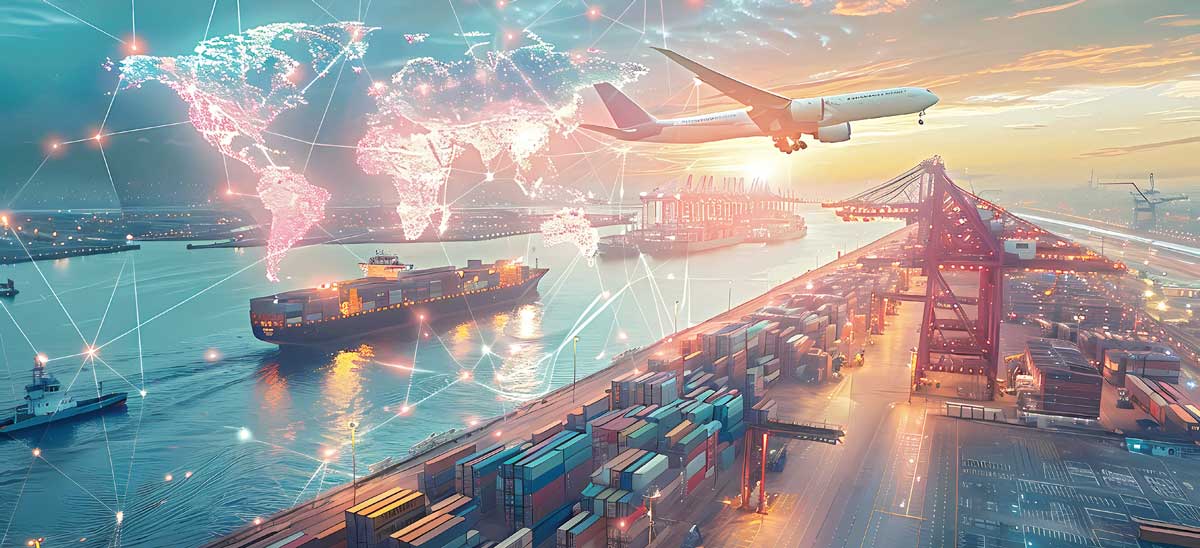
Digital twins and spatial AI are transforming cement logistics by enabling real-time visibility, predictive decision-making, and smarter multi-modal operations across the supply chain. Dijam Panigrahi highlights how immersive AR/VR training is bridging workforce skill gaps, helping companies build faster, more efficient, and future-ready logistics systems.
As India accelerates infrastructure investment under flagship programs such as PM GatiShakti and the National Infrastructure Pipeline, the pressure on cement manufacturers to deliver reliably, efficiently, and cost-effectively has never been greater. Yet for all the modernisation that has taken place on the production side, the end-to-end logistics chain, from clinker dispatch to the last-mile delivery of bagged cement to construction sites, remains a domain riddled with inefficiencies, opacity and manual decision-making.
The good news is that a new generation of spatial computing technologies is now mature enough to transform this reality. Digital twins, spatial artificial intelligence (AI) and immersive augmented and virtual reality (AR/VR) training platforms are converging to offer cement producers something they have long sought: real-time visibility, autonomous decision-making at the operational edge, and a scalable solution to the persistent skills gap that hampers workforce performance.
Advancing logistics with digital twins
The cement supply chain is uniquely complex. A single integrated plant may manage limestone quarrying, kiln operations, grinding, packing and despatch simultaneously, with finished product flowing through rail, road, and waterway networks to reach hundreds of regional depots and distribution points. Coordinating this network using spreadsheets, siloed ERP data, and phone calls is not merely inefficient; it is a structural liability in a competitive market where delivery reliability is a key differentiator.
Digital twin technology offers a way out. A cement logistics digital twin is a continuously updated, three-dimensional virtual replica of the entire supply chain, from the truck loading bays at the plant to the inventory levels at district depots. By ingesting data from IoT sensors on conveyor belts and packing machines, GPS trackers on road and rail fleets, weighbridge records, and weather feeds, the digital twin provides planners with a single, authoritative picture of where every ton of cement is, in real time.
The value, however, goes well beyond visibility. Because the digital twin mirrors the physical system in dynamic detail, it can run scenario simulations before decisions are executed. If a primary rail corridor is disrupted, logistics managers can model alternative routing options, shifting volumes to road or coastal shipping, and assess the cost and time implications within minutes rather than days. If a packing line at the plant is running below capacity, the twin can automatically recalculate dispatch schedules downstream and alert depot managers to adjust receiving resources accordingly.
For cement companies operating multi-plant networks across geographies as varied as Rajasthan and the North-East, this kind of end-to-end situational awareness is transformative. It collapses information latency from hours to seconds, enables proactive rather than reactive logistics management, and creates the data foundation upon which AI-driven decision-making can be built. Companies that have deployed logistics digital twins in comparable heavy-industry contexts have reported reductions in transit time variability of up to 20 per cent and meaningful decreases in demurrage and detention costs, savings that flow directly to the bottom line.
Smart logistics operations
A digital twin is only as powerful as the intelligence layer that sits on top of it. This is where Spatial AI becomes the critical differentiator for cement logistics.
Traditional logistics management systems are reactive. They record what has happened and flag exceptions after the fact. Spatial AI systems, by contrast, are proactive. They continuously analyse the state of the logistics network as represented in the digital twin, identify emerging bottlenecks before they crystallise into delays, and recommend corrective actions.
At the plant gate, AI-powered visual inspection systems using spatial depth-sensing cameras can assess truck conditions, verify load integrity and confirm seal tamper status in seconds, replacing the manual checks that currently slow throughput. At the depot level, Spatial AI can monitor stock drawdown rates in real time, cross-reference them against pending customer orders and inbound shipment ETAs, and automatically trigger replenishment orders when safety thresholds are approached. In transit, AI systems processing GPS and telematics data can detect anomalous vehicle behaviour, including extended stops, route deviations, speed irregularities and alert fleet managers instantly.
Perhaps most significantly for Indian cement logistics, Spatial AI can optimise the complex multi-modal routing decisions that are central to competitive cost management. Given the variability in road quality, seasonal accessibility, rail rake availability, and regional demand patterns across India’s vast geography, the combinatorial complexity of routing optimisation is beyond human planners working with conventional tools. AI systems can process this complexity continuously and adapt routing recommendations as conditions change, reducing empty running, improving vehicle utilisation and cutting fuel costs.
The agentic dimension of modern AI is particularly relevant here. Agentic AI systems do not merely analyse and recommend; they act. In a cement logistics context, this means an AI system that can, within pre-authorised boundaries, directly communicate revised dispatch instructions to plant teams, update booking confirmations with freight forwarders and reallocate available rail rakes across plant locations, all without waiting for a human to process a recommendation and make a call. For logistics executives, this represents a genuine shift from managing a workforce to setting the rules of engagement and reviewing outcomes. The operational tempo achievable with agentic AI simply cannot be matched by human-in-the-loop systems working at the pace of emails and phone calls.
Bridging the skills gap
Technology investments in digital twins and spatial AI will deliver diminishing returns if the human workforce cannot operate effectively within the new systems they create. This is a challenge that India’s cement industry cannot afford to underestimate. The sector relies on a large, geographically dispersed workforce, including truck drivers, depot managers, despatch supervisors, fleet maintenance technicians, many of whom have been trained on paper-based processes and manual workflows. Retraining this workforce for a digitised, AI-augmented environment is a substantial undertaking, and conventional classroom or on-the-job training methods are poorly suited to the scale and pace required.
Immersive AR and VR training platforms offer a fundamentally different approach. By creating photorealistic, interactive simulations of logistics environments, such as a plant dispatch bay, a depot yard, the interior of a cement truck cab, allow workers to practice complex procedures and decision-making scenarios in a safe, consequence-free virtual environment. A depot manager can work through a simulated rail rake delay scenario, making decisions about customer allocation and communication
without the pressure of real orders being affected. A truck driver can practice the correct procedure for securing a load of bagged cement without the risk of a road incident.
The learning science case for immersive training is compelling. Studies consistently show that experiential, simulation-based learning produces faster skill acquisition and higher retention rates than didactic instruction, with some research indicating retention rates three to four times higher for VR-based training compared to classroom methods. For complex operational procedures where muscle memory and situational awareness matter as much as conceptual knowledge, the advantage of immersive simulation is even more pronounced.
Today’s leading cloud-based spatial computing platforms enable high-fidelity AR and VR training experiences to be delivered on standard mobile devices, removing the hardware barrier that has historically made immersive training impractical for large, distributed workforces. This is particularly relevant for cement companies with depots and logistics operations in tier-two and tier-three locations, where access to specialised training hardware cannot be assumed.
The integration of AR into live operations also creates ongoing learning opportunities beyond formal training programs. As an example, maintenance technicians equipped with AR overlays can receive step-by-step guidance for equipment procedures directly in their field of view, reducing error rates and service times for critical plant and fleet assets.
New strategy, new horizons
India’s cement industry is entering a period of intensifying competition, rising logistics costs, and demanding customers with shrinking tolerance for delivery variability. The companies that will lead over the next decade will be those that treat logistics not as a cost centre to be minimised, but as a strategic capability to be built.
Digital twins, spatial AI and immersive AR/VR training are not distant future technologies, they are deployable today on infrastructure that Indian cement companies already operate. The question is not whether to adopt them, but how quickly to do so and where to begin.
About the author:
Dijam Panigrahi is Co-Founder and COO of GridRaster Inc., a provider of cloud-based spatial computing platforms that power high-quality digital twin and immersive AR/VR experiences on mobile devices for enterprises. GridRaster’s technology is deployed across manufacturing, logistics and infrastructure sectors globally.