Connect with us

Concrete

Turning Downtime into Actionable Intelligence

Published

on

Shares

Stoppage Insights instantly identifies root causes and maps their full operational impact.

In cement, mining and minerals processing operations, every unplanned stoppage equals lost production and reduced profitability. Yet identifying what caused a stoppage remains frustratingly complex. A single motor failure can trigger cascading interlocks and alarm floods, burying the root cause under layers of secondary events. Operators and maintenance teams waste valuable time tracing event chains when they should be solving problems. Until now.
Our latest innovation to our ECS Process Control Solution(1) eliminates this complexity. Stoppage Insights, available with the combined updates to our ECS/ControlCenter™ (ECS) software and ACESYS programming library, transforms stoppage events into clear, actionable intelligence. The system automatically identifies the root cause of every stoppage – whether triggered by alarms, interlocks, or operator actions – and maps all affected equipment. Operators can click any stopped motor’s faceplate to view what caused the shutdown instantly. The Stoppage UI provides a complete record of all stoppages with drill-down capabilities, replacing manual investigation with immediate answers.

Understanding root cause in Stoppage Insights
In Stoppage Insights, ‘root cause’ refers to the first alarm, interlock, or operator action detected by the control system. While this may not reveal the underlying mechanical, electrical or process failure that a maintenance team may later discover, it provides an actionable starting point for rapid troubleshooting and response. And this is where Stoppage Insights steps ahead of traditional first-out alarm systems (ISA 18.2). In this older type of system, the first alarm is identified in a group. This is useful, but limited, as it doesn’t show the complete cascade of events, distinguish between operator-initiated and alarm-triggered stoppages, or map downstream impacts. In contrast, Stoppage Insights provides complete transparency:

  • Comprehensive capture: Records both regular operator stops and alarm-triggered shutdowns.
  • Complete impact visibility: Maps all affected equipment automatically.
  • Contextual clarity: Eliminates manual tracing through alarm floods, saving critical response time.


David Campain, Global Product Manager for Process Control Systems, says, “Stoppage Insights takes fault analysis to the next level. Operators and maintenance engineers no longer need to trace complex event chains. They see the root cause clearly and can respond quickly.”

Driving results
1.Driving results for operations teams
Stoppage Insights maximises clarity to minimise downtime, enabling operators to:
• Rapidly identify root causes to shorten recovery time.
• View initiating events and all affected units in one intuitive interface.
• Access complete records of both planned and unplanned stoppages

  1. Driving results for maintenance and reliability teams
    Stoppage Insights helps prioritise work based on evidence, not guesswork:
    • Access structured stoppage data for reliability programmes.
    • Replace manual logging with automated, exportable records for CMMS, ERP or MES.(2)
    • Identify recurring issues and target preventive maintenance effectively.

  2. A future-proof and cybersecure foundation
    Our Stoppage Insights feature is built on the latest (version 9) update to our ACESYS advanced programming library. This industry-leading solution lies at the heart of the ECS process control system. Its structured approach enables fast engineering and consistent control logic across hardware platforms from Siemens, Schneider, Rockwell, and others.
    In addition to powering Stoppage Insights, ACESYS v9 positions the ECS system for open, interoperable architectures and future-proof automation. The same structured data used by Stoppage Insights supports AI-driven process control, providing the foundation for machine learning models and advanced analytics.
    The latest releases also respond to the growing risk of cyberattacks on industrial operational technology (OT) infrastructure, delivering robust cybersecurity. The latest ECS software update (version 9.2) is certified to IEC 62443-4-1 international cybersecurity standards, protecting your process operations and reducing system vulnerability.

What’s available now and what’s coming next?
The ECS/ControlCenter 9.2 and ACESYS 9 updates, featuring Stoppage Insights, are available now for:

  • Greenfield projects.
  • ECS system upgrades.
  • Brownfield replacement of competitor systems.
    Stoppage Insights will also soon integrate with our ECS/UptimeGo downtime analysis software. Stoppage records, including root cause identification and affected equipment, will flow seamlessly into UptimeGo for advanced analytics, trending and long-term reliability reporting. This integration creates a complete ecosystem for managing and improving plant uptime.

(1) The ECS Process Control Solution for cement, mining and minerals processing combines proven control strategies with modern automation architecture to optimise plant performance, reduce downtime and support operational excellence.
(2) CMMS refers to computerised maintenance management systems; ERP, to enterprise resource planning; and MES to manufacturing execution systems.

Concrete

Jammu Division Begins First Cement Rail Traffic to Anantnag

Cement Loading From Kathua for Anantnag to Begin on September 14

Published

on

By

Shares


Jammu Railway Division has placed an indent for the first movement of cement by rail within the division, linking Shaheed Captain Sunil Kumar Choudhary Kathua Railway Station with Anantnag Railway Station. Loading for the consignment is scheduled to begin on September 14.

Continue Reading

Concrete

Hard Worker Wins Three Honours at Kyoorius Design Awards

Ramco Cements’ brand secures Grand Prix and two Blue Elephant honours.
Published

on

By

Shares


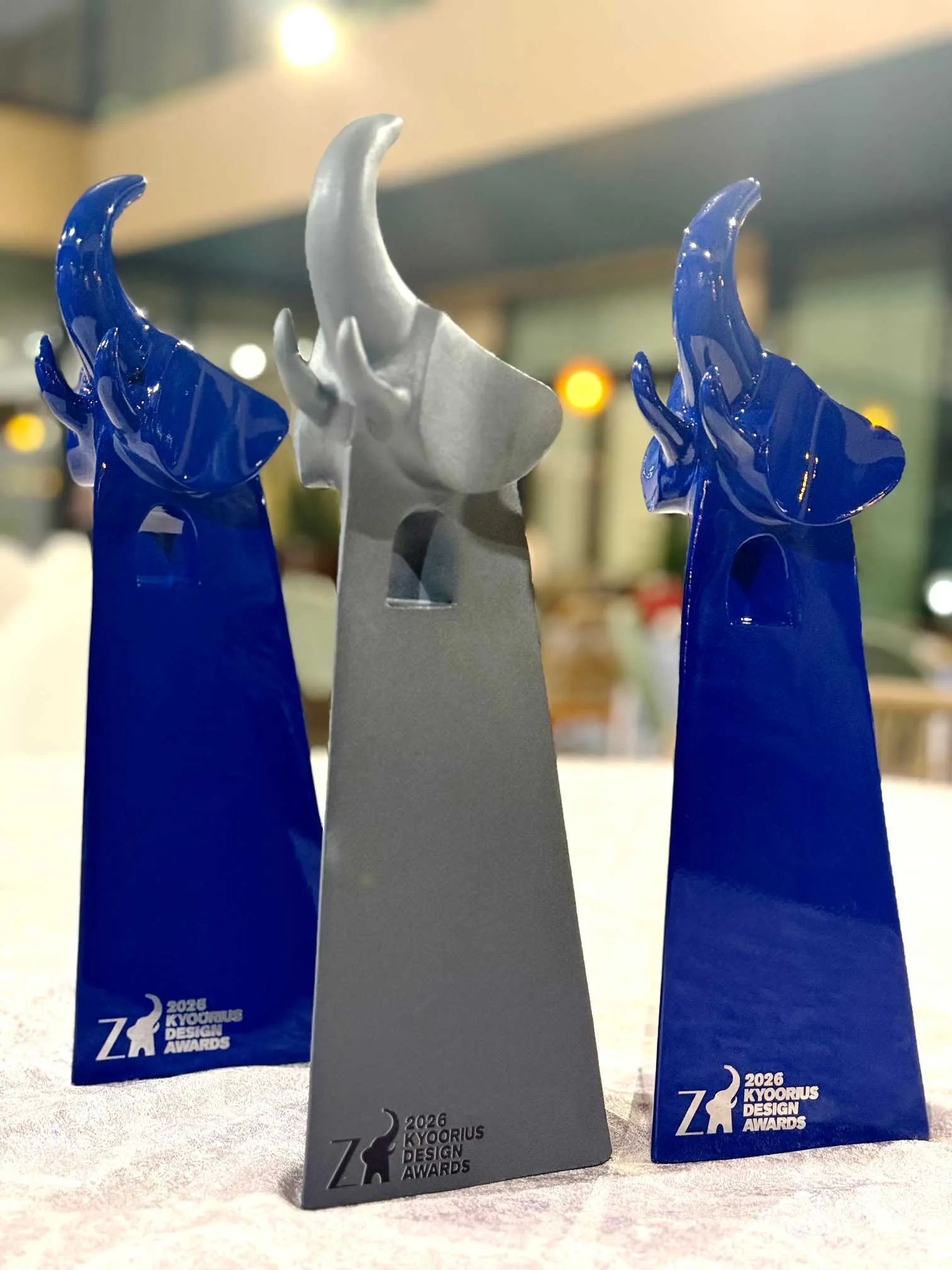
The Ramco Cements Limited’s construction chemicals brand, Hard Worker, has won three honours at the Kyoorius Design Awards 2026, including the Grand Prix – Grey Elephant in the Design in Action category.
The brand also secured two Blue Elephant honours, one for Design in Action and another for Packaging, recognising the design approach behind its brand identity and packaging.
Launched in 2025, Hard Worker entered the construction chemicals segment with the brand promise, “Hard-working products for hardworking people.” Its visual identity uses animals and birds to represent product benefits. The camel represents the water-retention capability of Hard Worker Eco Plaster, while the cheetah represents the speed and performance of Hard Worker Block Fix.
The visual language has been extended across packaging, retail, communication, literature, digital platforms and other brand touchpoints. Hard Worker uses bold colours, distinctive animal illustrations and simple visual storytelling to communicate product benefits across markets and audiences, including construction workers and applicators.
“For Hard Worker, design was never an afterthought. It was fundamental to how we wanted to build the brand. In a category that is largely functional, we wanted to create a brand that people could recognise, understand and remember instantly. The Kyoorius recognition is a wonderful validation of this design-led approach,” said Mr. AV Dharmakrishnan, CEO, The Ramco Cements Limited.
Mr. Balaji K. Moorthy, Executive Director – Marketing, Ramco Cements said “In a category where communication has traditionally been product-led and functional, we wanted Hard Worker to stand apart by making design an integral part of the brand experience. From the distinctive animal-led packaging to our communication across consumer and trade touchpoints, every element was designed to make the brand more memorable and the product benefits easier to understand.”
Within its first 12 months, Hard Worker crossed Rs 3.5 bn in sales. The latest recognition follows six honours secured by the brand’s campaign at the Kyoorius Creative Awards earlier in 2026, including the Grey Elephant Grand Prix for its Eco Plaster film.
The Kyoorius Design Awards recognise outstanding design work in India’s visual communications sector across multiple categories and platforms. The 2026 awards were announced on 12 September in Goa.
The Ramco Cements Limited is part of the Ramco Group and operates across cement and allied building-material solutions. Hard Worker is its construction chemicals brand, offering solutions across key construction applications.

Continue Reading

Concrete

Cement Firms to Invest Rs. 130 bn in Green Energy by FY28

Cement companies plan to expand clean energy capacity to 6 GW by FY28

Published

on

By

Shares


India’s major cement companies are set to raise their clean energy capacity to 6 GW by March 2028 from around 4 GW at the end of March 2026, according to ratings agency ICRA. The planned expansion is expected to involve investments of Rs. 130 bn over the next two years.

The additional capacity could generate annual savings of Rs. 62 bn to Rs. 67 bn, resulting in an estimated payback period of 1.8 to 2.2 years. Cement is an emission-intensive industry, and leading producers have established net-zero roadmaps covering the next 15 to 20 years.

The calcination process accounts for 57 to 60 per cent of the sector’s total emissions, while fuel combustion contributes 27 to 30 per cent and electricity consumption accounts for 10 to 13 per cent. ICRA said the figures highlighted the need for a broad decarbonisation strategy involving green power, blended cement, alternative fuels and improvements in clinker efficiency.

Green energy is considered one of the most commercially attractive decarbonisation options because it can reduce emissions while lowering operating costs. Every 5 per cent increase in green power replacement can reduce power and fuel costs by Rs. 15 to Rs. 16 per tonne. A 25 per cent replacement level could therefore save Rs. 75 to Rs. 80 per tonne and expand operating margins by 140 to 160 basis points.

Cement producers are also assessing carbon capture, utilisation and storage, although high implementation costs, energy requirements and limited transport and storage infrastructure are expected to slow commercial adoption. The government has proposed Rs. 200 bn over five years to support deployment across key sectors. Meanwhile, companies are targeting thermal substitution rates of 10 to 15 per cent over the next three to five years, compared with the current industry level of around 6 per cent.

Continue Reading

Video Thumbnail

    SIGN-UP FOR OUR GENERAL NEWSLETTER

    Trending News