Milind Khangan, Manager – Marketing, Vertex Market Research, discusses how cement, India’s hard-to-abate sector, is paving the path to Net Zero.
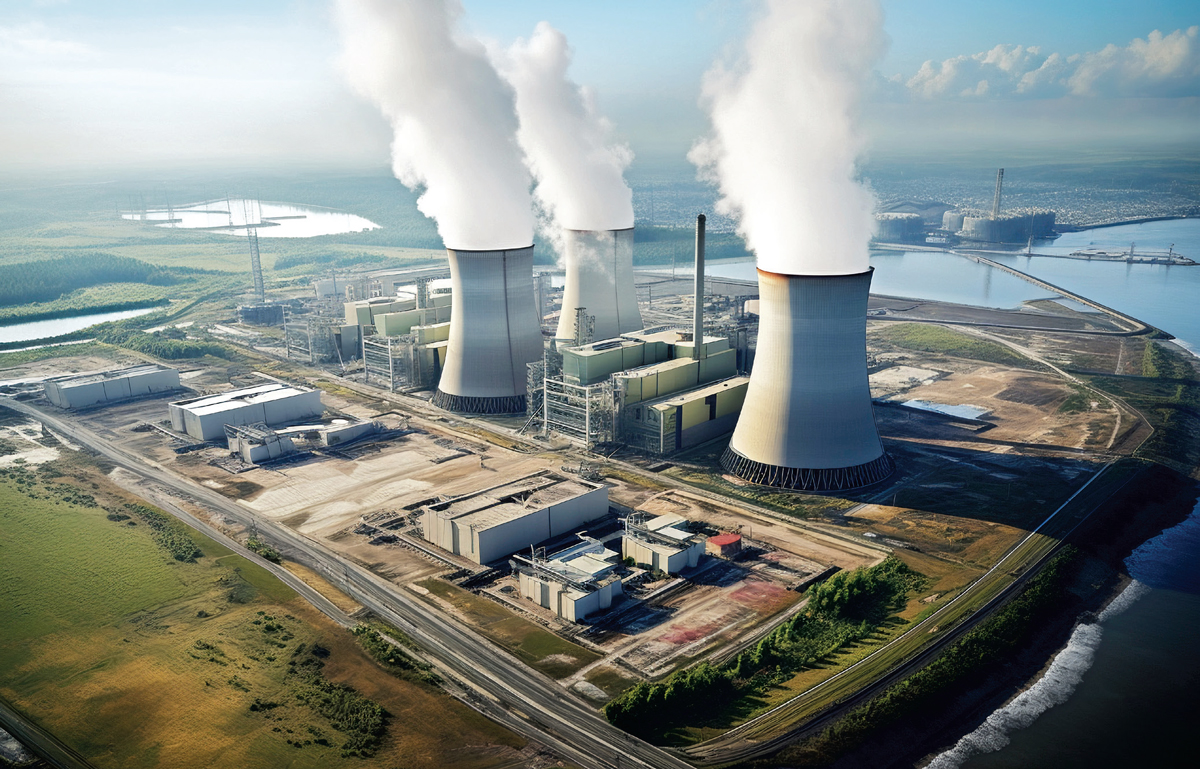
The Indian cement industry, the world’s second-largest, holds an installed capacity of around 700 million tonnes per annum (MTPA) and is fundamental to India’s infrastructure growth and urbanisation. However, it remains one of the country’s most challenging ‘hard-to-abate’ sectors, contributing nearly 7–8 per cent of national industrial CO2 emissions.
With India’s commitment to achieving Net-Zero by 2070, decarbonising cement production has become a national strategic priority. The sector’s transformation can be understood through the 3Cs of Decarbonisation — Cut emissions, Cement innovation, and Carbon capture and utilisation. Together, these pillars, underpinned by digital optimisation, automation and enabling policy frameworks, represent a structured pathway towards deep emission reduction while maintaining industrial competitiveness. Government-backed pilot projects and public-private testbeds are helping transition the sector from demonstration to early commercial adoption, creating a foundation for large-scale transformation.
Cut: Cutting operational emissions (near-term, high ROI)
The first pillar ‘Cut’ focuses on immediate, high-impact interventions targeting emissions from fuel combustion and electricity use, which collectively account for around 30 per cent of the industry’s total emissions.
Fuel switching and AFR
Co-processing Refuse-Derived Fuel (RDF), industrial waste, and biomass is steadily replacing coal and other high-carbon fossil fuels. This approach not only lowers Scope 1 emissions but also contributes to waste management in urban and industrial clusters.
- Ambuja Cements increased its AFR consumption in kilns to 9.4 per cent in H1 FY25 from 7 per cent in H1 FY24, indicating an improved Thermal Substitution Rate (TSR).
- Securing consistent, reliable and high-quality RDF feedstock through municipal partnerships has become a strategic priority.
Waste Heat Recovery (WHR)
WHR systems convert residual heat from the pyroprocess into captive electricity, reducing Scope 2 emissions and enhancing thermal efficiency. Increasingly, WHR is being integrated with renewable energy (RE) sources to stabilise green power supply.
- As of March 2025, UltraTech Cement held 342 MW of WHR capacity, contributing to a total green energy portfolio of 1.36 GW, including solar and wind.
- Dalmia Bharat increased its renewable energy share to 39 per cent in Q2 FY25, targeting 45 per cent by the end of the fiscal year.
- In August 2025, UltraTech commissioned a 7.5 MW Hybrid Round-the-Clock (RTC) project (solar + wind + battery) in Gujarat in August 2025 to stabilise renewable energy supply.
Energy efficiency and process optimisation
Advanced digitised process controls, AI-driven kiln optimisation, and predictive maintenance
systems reduce clinker overburn, stabilise AFR use, and optimise thermal efficiency. Closed-loop kiln control using AI/ML is increasingly identified as a strategic differentiator.
- AI and machine learning-based closed-loop kiln control delivers thermal energy savings of 5-10 per cent and reduces downtime.
- Imubit reported clinker production efficiency improvements of 5-10 per cent and fuel consumption reductions of 3-5 per cent by deployment of Closed-Loop AI Optimisation (AIO).
Renewable power procurement
Vertex Market Research expects the expansion of on-site solar, wind, and open-access corporate PPAs is reducing reliance on grid electricity and mitigating Scope 2 emissions. The trend is shifting towards hybrid and RTC renewable solutions integrating solar, wind, and battery systems.
- UltraTech added 269 MW of renewable capacity in Q4 FY25, meeting approximately 46 per cent of its power requirements. The total capacity consists of 1,021 MW of solar, wind, and hybrid energy sources and 342 MW of WHRS.
- In its FY25 annual report, Dalmia Bharat announced that its total operational renewable energy (RE) capacity target is set to increase from 267 MW to 595 MW by the end of fiscal year 2026.
Green hydrogen integration
Supported by the National Green Hydrogen Mission, pilot projects are underway to explore green hydrogen as a substitute fuel in kilns and grinding units. While widespread commercial deployment is anticipated post-2030, early trials in calciners and low-temperature operations are creating a technological base for future zero-carbon heat applications.
Decarbonisation targets and commitments
Indian majors are aligning their climate goals with the Science Based Targets initiative (SBTi).
- Ambuja and ACC are committed to Net Zero by 2050 and are the only 2 cement companies in India undergoing Net Zero target validation from the Science Based Targets initiative (SBTi).
- UltraTech and Ambuja Cement aim for a 27 per cent reduction in Scope 1 CO2 emissions by 2032 and have already achieved a 12 per cent reduction.
Cement: Product and process innovations (medium-term structural change)
The second pillar ‘Cement’ centres on re-engineering materials, clinker ratios, and manufacturing processes to achieve structural emission reduction. It aims to reduce clinker intensity and embodied carbon, thereby addressing the intrinsic process emissions (around 60 per cent of total CO2 output).
Clinker substitution and SCMs
While fly ash and slag remain key SCMs, their long-term availability could decline as the power and steel sectors decarbonise. Consequently, the industry is diversifying into calcined clays, silica fume, and limestone fillers to sustain clinker replacement rates. Multi-component (ternary and quaternary) blends are being tested to maximise emission reduction potential.
Limestone calcined clay cement (LC3)
LC3 technology enables up to 50 per cent clinker replacement using locally available clays and limestone, achieving 30–40 per cent lower CO2 emissions without significant cost escalation.
- In July 2025, JK Cement and JK Lakshmi launched India’s first commercial LC3 under BIS IS 18189:2023.
- Early implementation of LC3 in infrastructure projects such as the Noida International Airport signals growing market acceptance.
Novel kiln concepts
The calcination process is a major source of process emissions. To address calcination-related emissions, innovations such as electrified calciners and Electric Arc Calciners (EAC) are being piloted.
- The collaboration between Dalmia Cement and SaltX Technology is focused on advancing the Electric Arc Calciner (EAC) pilot project in India. These pilots are heavily dependent on low-cost renewable electricity. Although at a pre-commercial stage, such technologies are vital for achieving deep decarbonisation beyond 2035.
Blended products portfolio and cement use efficiency (CUE)
The GCCA India–TERI Decarbonisation Roadmap (March 2025) projects that optimised mix designs and multi-blend cements could reduce India’s cement demand from 1,440 MT to 944 MT by 2047, a 34 per cent reduction. Efficient structural design, increased Ready-Mix Concrete (RMC) use, and multi-component blends will be critical enablers.
Recarbonation and circular concrete
Concrete naturally reabsorbs CO2 during its lifecycle, a process termed recarbonation. GCCA India estimates that recarbonation could offset up to 5.9 per cent of cumulative cement sector emissions by 2070. Recycling concrete aggregates can accelerate this process, closing material loops and promoting circularity.
Carbon: CCUS and carbon management (long-term, residual emissions)
The ‘Carbon’ pillar addresses intrinsic process emissions from clinker calcination, which cannot be fully eliminated through fuel switching, process optimisation or clinker substitution.
Carbon capture and utilisation (CCU) and testbeds
India’s approach prioritises CCU over storage (CCS) to convert captured CO2 into value-added products to offset high CAPEX, improving project economics.
India prioritises CCU over storage, converting captured CO2 into value-added products to offset high CAPEX. DST-supported public-private pilot projects validate indigenous technologies such as oxygen-enhanced calcination and solvent-based capture. Pilot-scale operations (1–2 tpd) target products including lightweight concrete blocks, precipitated calcium carbonate, and formic acid.
- In May 2025, the Department of Science and Technology (DST) launched five CCU testbeds for the cement sector under a public–private partnership (PPP) framework.
- These pilots (1–2 TPD scale) are testing oxygen-enhanced calcination and solvent-based capture technologies, with utilisation routes for precipitated calcium carbonate, lightweight blocks, and formic acid.
Policy and financial levers
The Carbon Credit Trading Scheme (CCTS), established under the Energy Conservation (Amendment) Act 2022, mandates GHG intensity reduction for large cement plants. This creates
financial incentives for low-carbon investments and CCUS adoption.
- The Carbon Credit Trading Scheme (CCTS), established under the Energy Conservation (Amendment) Act, 2022, is now being implemented. The Bureau of Energy Efficiency (BEE) released notifications in mid-2025, setting GHG Emission Intensity (GEI) targets for large entities. Cement is a compliance sector with targets for 2 per cent reduction in GEI for FY 2025-26, increasing in subsequent years.
- Cement plants are mandated to meet GHG Emission Intensity reduction targets, creating a financial incentive for CCUS adoption and low-carbon cement production. The establishment of a domestic carbon market provides the critical price signal for high-CAPEX solutions such as CCUS. This creates a direct financial mandate for CCUS and low-carbon investment.
Hub-and-cluster infrastructure
Developing shared CCU infrastructure across cement clusters or hubs can lower capital intensity per plant. High-density cement regions such as Andhra Pradesh, Telangana, Gujarat and Rajasthan are under evaluation for hub-and-cluster carbon management models, in alignment with GCCA India’s recommendations.
Conclusion
Indian cement industry is entering a decisive decade of transformation. Through the 3Cs approach, the sector is not merely mirroring global practices but crafting a contextually tailored, India-specific roadmap to Net-Zero.
Near-term measures under Cut can be rapidly scaled, Cement innovations will drive material efficiency and cost competitiveness, and high-tech Carbon management will mitigate unavoidable and residual emissions. Success hinges on sustained policy continuity, financial incentives, functional carbon credit trading scheme, and close coordination among industry leaders, government agencies, and R&D institutions. The collective goal is to translate pilot projects into scalable business models that preserve competitiveness while achieving verifiable emission reductions and positioning India as a global benchmark in low-carbon cement manufacturing.
ABOUT THE AUTHOR:
Milind Khandan, Manager – Marketing, Vertex Market Research, comes with over five years of experience in market research, lead generation and team management.

















 Concrete4 weeks ago
 Concrete2 weeks ago
 Concrete2 weeks ago
 Concrete4 weeks ago