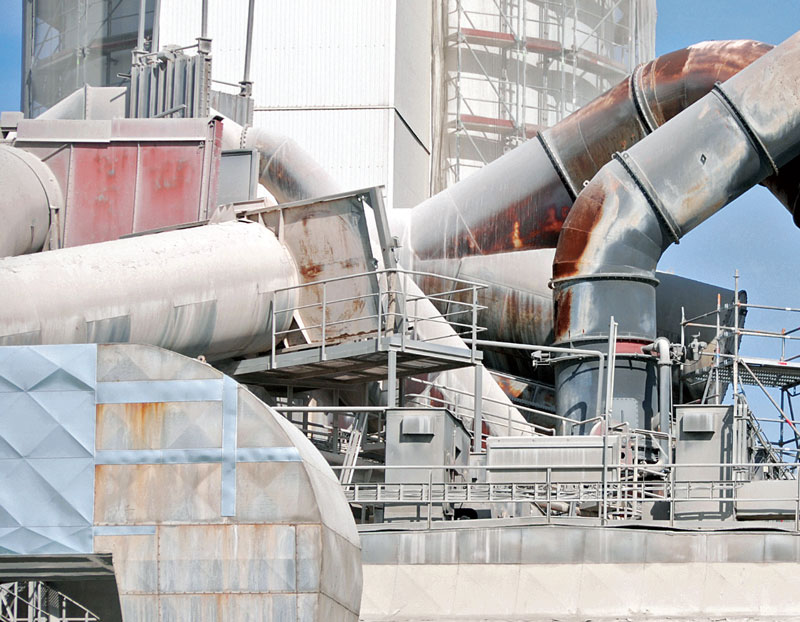
Effective dust control defines the health, efficiency, and sustainability of every modern cement plant. ICR explores how advanced filtration, smart design, and vigilant monitoring are shaping cleaner, compliant, and future-ready operations.
The generation of dust in cement production is far from a mere nuisance — it carries serious health, environmental, and operational consequences. In many industrial hubs across India, concentrations of PM2.5 and PM10 routinely exceed both national and World Health Organisation limits, intensifying respiratory and cardiovascular burdens on surrounding communities and workers. According to a review in Cement Industry Pollution and Its Impact on the Environment (MDPI), chronic exposure to cement dust is linked to impaired lung function, bronchitis, asthma, and even cardiovascular ailments.
Moreover, dust does not only threaten human health — it corrodes machinery, reduces equipment life, and degrades product quality through contamination. In cement plants, uncontrolled emissions from mills, crushers, coolers, and material handling can lead to 7–10 per cent loss of product as fugitive dust. This hidden inefficiency translates into higher energy costs, increased maintenance and consumables, and compromised environmental performance. It’s therefore not just an issue of compliance — dust control is integral to both operational excellence and sustainable stewardship.
Sources of dust across the cement process
Dust generation in cement manufacturing begins right at the source: raw material handling and preparation. Bulk material movement — loading, unloading, conveying, and crushing of limestone, clay, and other raw feed — liberates particulates, especially fine dust. According to dust-monitoring sources, clinker coolers, crushers, grinders, and material-handling equipment are among the principal dust emission points within a plant. In addition, the preheating and pyroprocessing zones see fugitive dust from kiln feed handling, preheater cyclones, and internal recirculation flows — all of which require robust interception and filtration upstream of the main stack.
Clinker production and cooling stages are especially dust-intensive, because hot clinker is quenched and cooled, releasing fine particulates and dust. According to Cement Industry Pollution and Its Impact on the Environment, particulate emissions remain one of the key pollution sources throughout cement production, including from kiln and cooler exhausts. In many plants, coolers’ air discharge carries significant dust load unless intercepted through bag filters or dedusting units. Moreover, in clinker transport and storage — including rotary or bucket transfer systems — mechanical abrasion and wind entrainment can cause further dust losses.
The cement grinding and packing section also contributes substantial dust emissions. The fine grinding of clinker, gypsum, and additives creates ultra-fine particles that can escape if mill circuits, separators, or filter stages are not optimally designed. Material spillage, pneumatic conveying, and packaging operations are common sources of fugitive dust in this zone. In operational literature, raw material handling followed by cement grinding are regularly cited as among the highest dust contributors in a cement plant.
Lalit Joshi, Co-Founder and Director, LeapThree Materials says, “Advanced non-woven materials are using different high-performance fibres and blending of the same to achieve effective and customised solutions for the projects and individual units to meet the targets sets by stringent emission norms. Though we are far from the western countries benchmark of allowed emission, but it has come down drastically in recent years and plants are also doing all the compliance using advanced materials made using high performance fibres like polyacrylonitrile, meta aramid and poly imide.”
Filtration technologies
Filtration is central to dust control in cement plants, because even with preventive design measures, residual particulates must still be captured before flue gases are emitted. Among the most widely used systems today are fabric filters (bag filters), electrostatic precipitators (ESPs), and hybrid combinations or newer gas-cleaning technologies. According to a review in Journal of International Society for Science and Engineering (2025), fabric filters boast superior performance in capturing fine particulate matter, largely independent of gas conditions, making them especially effective for meeting stringent emission norms. ESPs remain favoured in some high-temperature stages due to their ability to operate with lower pressure drop and lower parasitic energy when conditions are ideal, but they are sensitive to gas composition and require careful design.
In practice, many plants have shifted from ESPs to bag filters—or retrofitted existing ESPs into hybrid configurations—to meet stricter emission standards. In fact, utility in the cement industry has shown that replacing ESPs with bag filter systems can reduce outlet dust concentrations from around 35 mg/m³ down to 6 mg/m³. According to Improvement of Cement Plant Dust Emission by Bag Filter (2018), this also yielded a marginal CO2 reduction by virtue of lower electricity consumption. Such performance gains are a driving factor behind the trend: many industry voices now regard bag filters as the new benchmark for gas filtration in cement plants, especially in plants aiming for ultra-low emissions.
Yet filtration systems are not without challenges. Filter media degrade over time, leakage or bag damage can erode performance, and maintenance becomes critical. A recent study A Study on Failure Rate, Reliability, and Collection Efficiency Trend of Bag Filters in a Cement Plant (2023) observed that while bag filters can achieve initial efficiencies approaching 99.998 per cent, collection efficiency may decline to ~95.05 per cent by the 15th year of service. To sustain high performance, design must account for filter area, pulse cleaning strategy, gas flow distribution, fabric selection (e.g. temperature resistance, chemical resistance), and ease of maintenance access. Hybrid systems—combining ESPs, cyclones, or scrubbers with bag filters—are increasingly popular in complex gas streams to balance efficiency, energy consumption, and reliability.
Prevent, optimise, maintain and monitor
Preventive design and process optimisation form the first line of defence in effective dust control — the goal is to minimise dust generation before filtration even begins. Thoughtful layouts of conveyors, transfer points, drop heights, and enclosure strategies can substantially reduce entrainment. For example, optimising air velocities to keep dust entrained, ensuring proper duct slopes, and minimising sharp drops in material transfer all help suppress fugitive emissions. Using enclosed and covered conveyor systems, choke points, and inerting measures further curbs dust liberation. In the context of cement plants, integrating dust minimisation into process design — for instance by matching pneumatic transport pressures, reducing material tumbling, and limiting turbulence — creates a baseline reduction in the dust load that filtration systems must handle.
Maintenance and monitoring are equally crucial for sustaining filtration effectiveness over the long term. Even the best-designed system will lose performance if leaks, worn media, or dirty filters go undetected. According to A Study on Failure Rate, Reliability, and Collection Efficiency Trend of Bag Filters in a Cement Plant (2023), collection efficiency of bag filters can fall from 99.998 per cent in the early years down to ~95.05 per cent by the 15th year, underscoring the need for vigilant upkeep. Regular inspections, bag leak detection systems, and real-time monitoring of differential pressures and gas flows help identify underperforming compartments before they compromise overall performance. Use of distributed optical fibre or pressure sensing within baghouses is increasingly being explored to localise bag failures.
Jerad Heitzler, Training Manager, Martin Engineering says, “Dust emissions don’t just create a harmful environment for those working in the area. Abrasive particulates make their way into exposed machine parts and rolling components, causing them to wear quicker, seize and require replacement sooner. Particulates also clog air intakes of nearby equipment, further raising the need for maintenance and downtime. Then as it settles, dust builds up to cover walkways and stairs, engulfing control units, obscuring signage and, in some cases making access for maintenance impossible without a full shutdown and clean-up.”
To optimise maintenance planning, predictive and condition-based strategies are becoming indispensable. Rather than rigid maintenance schedules, data-driven health indices (e.g. pressure drop trends, pulse valve performance, vibration, temperature anomalies) can trigger maintenance only when needed, reducing unnecessary downtime. Application of preventive maintenance scheduling models, such as those developed via mathematical programming or metaheuristic algorithms, helps cement plants balance reliability and cost in their bag filter programmes. This approach ensures both high dust collection performance and economic operation over the life of the system, turning filtration integrity into a reliable contributor to sustainable plant operation.
Energy and cost
Energy consumption is a significant component of the cost equation when deploying dust filtration systems — the energy needed to drive fans, maintain pressure differentials, and operate cleaning pulses adds up. According to Energy Benchmarking Manual for the Indian Cement Industry (2023), many Indian cement plants are already among the world’s most efficient, yet still have considerable headroom for energy improvements given the wide performance spread across the industry. In fact, in cement manufacturing more broadly, energy expenditures (fuel + electricity) often account for 20-40 per cent of total production costs. Thus, any inefficiency in filtration — high resistance, leaks, or excessive cleaning cycles — directly burdens the bottom line.
On the upside, well-designed filtration systems and process integration can actually yield energy savings and cost reduction. For example, deploying advanced waste-heat recovery (WHR) solutions can lower clinker costs by 3.81 per cent and cut indirect CO2 emissions substantially, making the overall process more energy efficient. Moreover, optimising filter design — reducing pressure drop, improving gas flow distribution, using pulses more judiciously, and selecting low-resistance fabric — can diminish fan power demand. In the context of dust collection, using reverse-air regeneration or intelligent control to avoid over-cleaning can further trim energy use. In sum, the cost of filtration should be viewed not merely as a parasitic load but as an opportunity: every kilowatt saved reinforces the case for high-performance, low-emission plant design.
Regulatory framework and emission standards
India has a structured regulatory framework governing emissions and dust control, primarily enforced through the Central Pollution Control Board (CPCB) under the Environment (Protection) Act, Air Act, and allied rules. The CPCB has issued Guidelines for Continuous Emission Monitoring Systems (CEMS) to ensure real-time measurement of stack pollutants including particulates, SO2 and NOx, and mandates minimum stack heights (usually 30 m) to assist dispersion. In addition, ambient air quality norms (National Ambient Air Quality Standards, NAAQS) set upper limits for PM2.5 and PM10 concentrations in industrial zones, which industries must help adhere to through emission control.
More recently, regulatory impetus is tightening further: many state pollution control boards are demanding stricter limits on particulate emissions (e.g. 50 mg/Nm³ target values), zero or minimal fugitive emissions plans, and rigorous leak-detection and control systems. According to a report by emerging industrial norms, plants failing to comply with emission or fugitive dust standards may face penalties, closure orders or forced remedial action. Moreover, environmental clearances for new expansions and modernisation increasingly require demonstration of best available technologies (BAT) for dust control and air pollution—pushing filtration systems and process optimisation into the sphere of not just compliance but strategic investment.
Conclusion
The road to sustainable air management in the cement industry lies in recognising that dust control is no longer an operational add-on but a defining feature of modern plant design and environmental stewardship. From quarry to kiln and grinding to packing, every stage of production now demands an integrated approach that prioritises preventive design, energy-efficient filtration, and continuous monitoring. With CPCB’s tightening emission
norms and global ESG expectations, compliance has evolved into a matter of reputation and resilience. A truly sustainable plant must minimise its particulate footprint not only within regulatory limits but also in alignment with community expectations and climate objectives. The cement sector, as one of India’s most energy- and emission-intensive industries, stands to gain enormously by embedding smart dust control and air-management strategies into its sustainability roadmap.
Looking ahead, the convergence of digitalisation, advanced materials, and predictive maintenance will redefine how cement plants manage air quality. Data-driven diagnostics, AI-assisted leak detection, and adaptive fan-control systems will ensure filtration operates at peak efficiency while conserving energy. But technology alone cannot deliver sustainability; it must be matched with a culture of accountability, skilled workforce training, and continuous process improvement. The journey towards sustainable air management is, therefore, not just about cleaner stacks — it is about creating plants that breathe efficiency, responsibility, and innovation into every cubic metre of air they release.
– Kanika Mathur