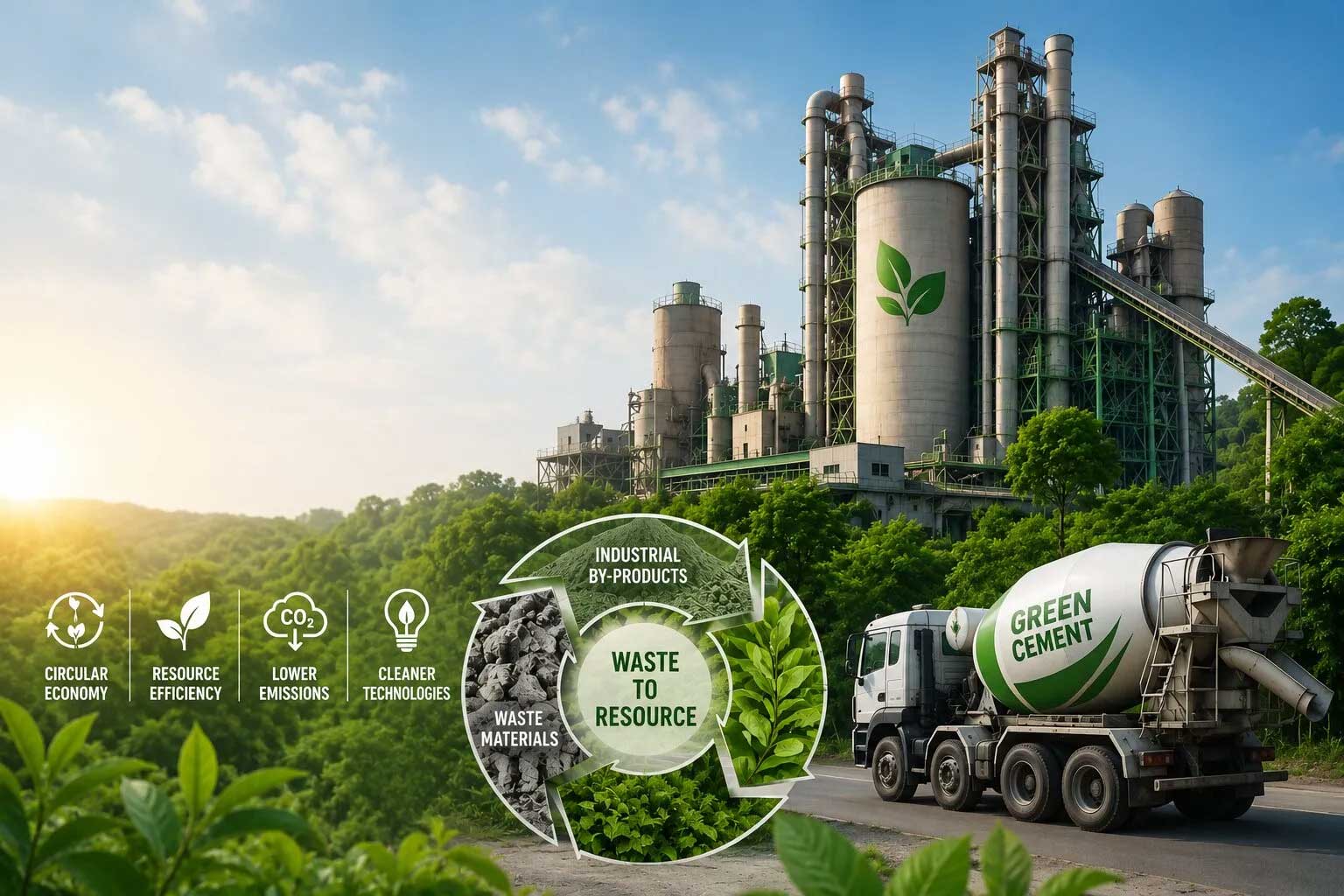
In the concluding part of this article on skilling, Dr SB Hegde highlights the changes that are imminent in the new Cement 5.0 era.
In the first part of this two-part series, we read about the simple, step-by-step plan for cement industry leaders to train their teams, build flexibility and develop future-ready leaders. Let us continue to understand the important aspects of the cement sector that require specialised training and skilling.
Cybersecurity
As cement plants use more smart devices and digital systems, they face higher risks from cyberattacks. A 2024 Kaspersky report says that 60 per cent of industrial IoT systems are attacked each year. Cement plants are especially at risk because they now rely heavily on connected technology.
One cyberattacks can stop production, cause huge financial losses and leak important data—like emission reports needed for government rules such as the EU’s GDPR.
To avoid this, workers need to learn cybersecurity basics, like how to spot fake emails (phishing) and advanced skills like protecting industrial control systems. Certifications like CompTIA Security+ can help employees build the right skills.
UltraTech Cement started a cybersecurity program in 2024, training 200 IT staff and successfully reduced cyber incidents by 40 per cent in its digital centres.
Companies should also run cybersecurity drills, helping workers practice how to respond quickly to attacks. These drills can cut response time by 25 per cent, limiting damage when real threats happen.
Cybersecurity training must be part of all digital command centre programmes, since safe data systems are key to running the plant smoothly.
By building strong cybersecurity skills,
cement companies can protect their technology, avoid shutdowns and keep the trust of customers and regulators.
Using extended reality
Extended reality (XR), which includes virtual reality (VR) and augmented reality (AR), is changing how cement workers are trained. These tools offer realistic and hands-on training experiences without real-world risks.
With VR, workers can practice difficult jobs like fixing kilns or running carbon capture systems in a safe digital setup. A 2024 PwC study found that VR training reduces learning time by 40 per cent and helps workers remember more—by up to 75 per cent—compared to traditional training.
AR, using devices like Microsoft HoloLens, can show step-by-step instructions on real equipment, helping workers do tasks like maintenance with 15 per cent fewer mistakes.
In 2024, Cemex in Mexico used VR to train 300 operators on automated kilns. This led to a 20 per cent cut in training costs and 15 per cent fewer errors.
Companies should build XR labs to train at least 10 per cent of their workers every year, especially for high-risk tasks like carbon capture maintenance. These labs can also help workers understand net-zero goals by simulating situations like storing carbon dioxide.
Partnering with tech companies like Microsoft can make these tools more affordable. XR can
also boost teamwork, allowing workers to practice working together in virtual spaces—supporting agile team building.
By using extended reality, cement companies can train workers faster, reduce risks and prepare their teams for the advanced technologies of Cement 5.0.
Diversity, equity and inclusion
Diversity, equity and inclusion (DEI) are important for Cement 5.0 because they help bring in new talent and fresh ideas, especially in an industry that has mostly been male-dominated. Right now, only 15 per cent of cement industry workers are women, according to a 2024 report by the Global Cement and Concrete Association. This limits the talent pool, especially for roles in data science and sustainability.
A 2024 McKinsey study shows that diverse teams are 25% more innovative and can perform 20 per cent better financially. Also, when workplaces are inclusive, 70 per cent of employees feel more motivated to join training and development programmes.
Holcim started a ‘Women in Cement’ programme in 2023. It trained 500 women for technical and leadership roles and helped increase the number of women working in its European plants by 10 per cent.
Cement companies should work with groups like Women in Mining to create special training programs for women and other underrepresented groups. Unconscious bias training—which helps people become aware of hidden prejudices—can cut down workplace conflicts by 30 per cent, according to a 2024 Deloitte study, and make the work environment more friendly for everyone.
Setting clear targets, such as having 25 per cent women in technical jobs by 2030, can help companies stay on track. When teams include people with different backgrounds and viewpoints, they are better at solving big problems like making low-carbon cement.
In short, by focusing on DEI, cement companies can build stronger teams, attract top talent and lead the way in innovation.
Employee well-being
Cement 5.0 brings many changes, such as new technologies and sustainability goals. These changes can create stress and burnout for workers. A 2024 Mercer study found that 80 per cent of employees feel burned out because of the pressure from digital changes. This can lower productivity and make more people want to leave their jobs.
Taking care of employee well-being helps improve training participation and overall morale. A 2024 Gallup study shows that when employees feel good and are engaged, 70 per cent of them are more likely to share new ideas.
In 2024, LafargeHolcim started a wellness programme in North America for 2,000 employees. It included mental health support and led to a 20 per cent increase in training participation and 10 per cent drop in absenteeism.
Cement companies can partner with wellness apps like Headspace to offer mindfulness training, which helps workers manage stress. Also, giving flexible work schedules, especially during intense training periods, can improve work-life balance and reduce employee turnover by 15 per cent.
Managers should also track well-being as part of performance reviews. This includes things like stress levels and job satisfaction, which can help them better support their teams.
By focusing on employee well-being, cement companies can build a stronger, healthier and more motivated workforce—one that is ready to learn, adapt and succeed in the Cement 5.0 era.
Leadership pipelines
In the Cement 5.0 era, leaders need a mix of technical skills, sustainability knowledge, and people management abilities to guide their companies through fast changes. A 2024 KPMG report says that leaders who use AI and data analytics help increase innovation by 25 per cent.
Leaders also need to handle new rules, like the EU’s Carbon Border Adjustment Mechanism, and manage supply chain issues. For example, in 2024, ACC Limited started a leadership academy that trained 60 managers in AI-based decision-making and sustainability. This led to a 20 per cent rise in important project approvals and 15 per cent better employee engagement.
Companies should build leadership programs that focus on analytical thinking (which will be 10 per cent of training by 2027) and creative problem-solving (8 per cent). Leaders should also practice scenario planning to prepare for sudden changes, like new policies or supply disruptions.
Mentoring 5-10 per cent of high-potential employees for future leadership roles is also important. Using 360-degree feedback, where feedback comes from peers and team members, can improve leadership by 20 per cent by helping leaders build emotional intelligence.
By developing strong leaders, cement companies can move faster toward net-zero goals and create a culture that supports innovation and growth.
Cross-industry collaboration
The cement industry can learn from other sectors, like steel and energy, because they face similar challenges such as reducing carbon emissions and using new digital technologies. A 2024 World Economic Forum report says that sharing skills between industries can make training 30 per cent more efficient and help companies learn important things like how to use carbon capture or AI tools.
In 2024, the First Movers Coalition, including companies like Heidelberg Materials and ArcelorMittal, trained 1,000 workers from both cement and steel industries in carbon capture. This led to a 10 per cent drop in emissions in trial projects.
Cement companies should join global groups like the Cement and Concrete Breakthrough initiative, which was started at COP28, to share training materials and ideas. Creating common training programs for skills like data science or automation can lower training costs by 25 per cent.
Events like cross-industry hackathons, where workers from different sectors work together on solving problems like low-carbon cement, can lead to new ideas and faster progress. These partnerships give cement companies access to expertise, tools, and faster innovation, helping them move forward in the Cement 5.0 era.
Global talent mobility
The cement industry works across the world. Countries like Europe lead in new technologies such as carbon capture, while countries like India and Africa have fast-growing demand. A 2024 EY report says that moving skilled workers across countries helps increase innovation by 20 per cent and fills skill gaps in different regions.
In 2024, Dalmia Bharat started a programme that sent 50 Indian engineers to work in cement plants in Europe. This helped them learn carbon capture technology faster and cut emissions by 10 per cent in test projects.
Cement companies should build global learning centres, where experts can teach others using online tools, which also saves 30 per cent on travel costs. AI-powered translation tools can help workers understand training in different languages, making learning easier for everyone.
Companies can also encourage workers to take international assignments by offering rewards like promotions. Sharing knowledge across borders means good ideas and smart methods—like advanced automation—spread quickly, helping every region keep up with Cement 5.0 progress.
Overcoming barriers
Training workers with new skills is important, but it often faces problems like employee resistance, high costs and old-fashioned training methods. A 2024 ScienceDirect study showed that when workers are more open to learning, training works much better. That’s why training should be personalised.
In 2024, Ambuja Cement launched its ‘Skill Up’ programme, which used artificial intelligence to create training plans based on each person’s needs. This helped 1,500 employees, increased participation by 40 per cent, and reduced skill gaps by 25 per cent.
Companies can use platforms like Degreed to build custom learning paths. Giving rewards like digital badges or bonuses can increase interest in training by 35 per cent, as per a 2023 LinkedIn report. Sharing examples of success—like how AT&T reduced employee turnover by 34 per cent through upskilling—can encourage others to join in.
Also, clearly explaining how training can lead to better jobs or higher pay makes workers 40 per cent less likely to resist. By creating a workplace culture that values learning, cement companies can prepare their people for the future.
A simple roadmap for success
To succeed in the Cement 5.0 Era, companies need a clear plan to train and prepare their workers for new technologies and sustainability goals. This includes teaching employee’s data science to improve operations, helping them learn automation skills to manage smart factories and training them in green practices to meet climate targets.
Agile teams help companies adapt quickly. Digital command centres give real-time updates, while cybersecurity keeps all systems safe. Virtual and augmented reality tools make training faster, safer, and more engaging.
Building a team that includes people from different backgrounds and supports mental health creates a motivated and inclusive workforce. Good leaders are key to pushing new ideas and driving change. Working with other industries and countries helps companies learn faster and grow quicker.
Companies should spend 5-10 per cent of their budgets on training, just like Holcim did when it invested $100 million between 2020 and 2024. Creating a Cement 5.0 task force can help match employee training plans with digital and environmental goals.
Using AI-based tools and virtual training to reach 20 per cent of employees every year will help speed up skill development. Partnering with tech companies like Siemens and top universities will bring in the latest training programmes.
Since half of all workers will need new skills by 2025, it’s important to start now to stay ahead in the industry.
Conclusion
The Cement 5.0 era is a big opportunity for the cement industry to lead in both sustainability and new technologies. But success will depend mostly on people.
By training employees in data science, automation, and green practices, companies can lower costs, reduce pollution, and meet the rising demand for cement. Agile teams and digital control centres help work run more smoothly, while cybersecurity keeps systems safe.
Using tools like virtual and augmented reality makes training more interesting and effective. Focusing on diversity and inclusion brings fresh ideas to solve difficult problems. Taking care of employees’ mental and physical well-being keeps them motivated.
Strong leaders are needed to guide the industry toward its climate goals. Working together with other industries and sharing talent across countries helps speed up progress.
By putting people first—through smart investments in training and building a culture that values learning—cement companies can become leaders in a cleaner, smarter future. The time to act is now, so the industry can hit its net-zero target by 2040 and stay competitive in a changing world.
References
1. World Economic Forum. (2023). Future of Jobs Report 2023.
2. International Energy Agency. (2023). Cement Technology Roadmap.
3. Deloitte. (2024). Industry 5.0: The Future of Manufacturing.
4. McKinsey & Company. (2024). The Future of Cement: Digital Transformation and Sustainability.
5. OECD. (2023). Automation and the Future of Work.
6. Global Cement and Concrete Association. (2024). Cement Industry Roadmap to Net Zero.
7. PwC. (2024). VR and AR in Workforce Training.
8. AIHR. (2024). Agile HR: Transforming Talent Management.
9. BCG. (2024). Digital Command Centres in Industry.
10. Kaspersky. (2024). Cybersecurity in Industrial IoT.
11. KPMG. (2024). Human-Centric Leadership in Industry 5.0.
12. ScienceDirect. (2024). Psychological Factors in Workforce Upskilling.
13. LinkedIn. (2023). Workplace Learning Report.
14. Holcim. (2024). Plants of Tomorrow Initiative.
15. Heidelberg Materials. (2024). Cement 4.0 Programme.
16. Cemex. (2024). Sustainability and Automation Report.
17. Lafarge Canada. (2025). Bath Plant CCUS Project.
18. UltraTech Cement. (2023). Digital Command Centre Case Study.
19. Dalmia Bharat. (2024). Agile Team Implementation.
20. Ambuja Cement. (2024). Skill Up Programme.
21. Mercer. (2024). Global Talent Trends Report.
22. Gallup. (2024). State of the Global Workplace.
23. EY. (2024). Global Talent Mobility Report.
24. European Cement Research Academy. (2024). Automation in Cement Production.
About the author:
Dr SB Hegde, a global cement industry leader with over 30 years of experience, is a Professor at Jain College of Engineering, India, and a Visiting Professor at Pennsylvania State University, USA.