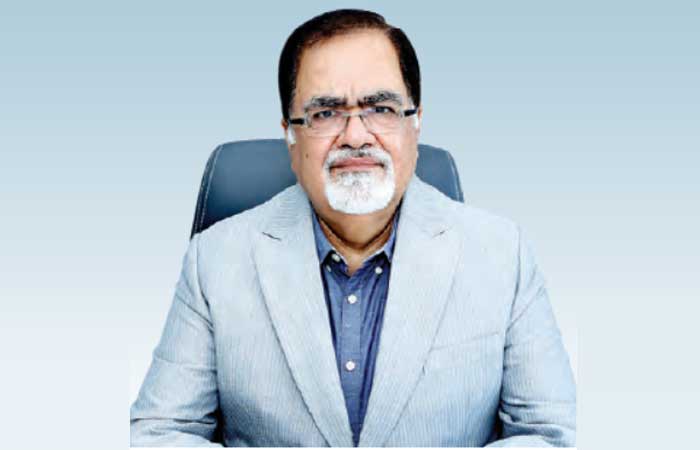
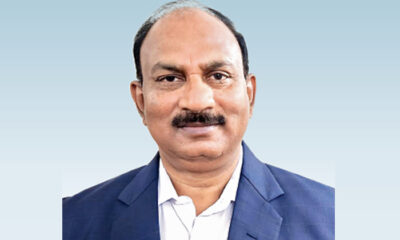
Ashok Kumar Dembla, President and Managing Director, Humboldt Wedag, speaks about a future-ready vision for a Net Zero industry.
In this in-depth interview, a senior leader Ashok Kumar Dembla, President and Managing Director, KHD Humboldt Wedag India reflects on the company’s transformative journey in India—from early challenges and landmark projects to cutting-edge innovations in sustainability and digitalisation.
How has KHD technology evolved to match the needs of Indian cement producers?
Over the years, our solutions have evolved in accordance with the dynamic requirements of Indian cement manufacturers. What began as a transfer of advanced machinery and process know-how has grown into a comprehensive portfolio that now includes digitalisation, energy-efficient process equipment and decarbonisation technologies.
We have embraced digital twin solutions, real-time process optimisation software and innovative fuel technologies (for example, our Pyrorotor® systems) that enable plants to maintain high efficiency while accommodating the variable fuel mix and environmental pressures typical of the region. Our continuous investments in R&D ensure that every new innovation is tailored to support the operational challenges as well as the sustainability goals of Indian cement producers
How has the role of your India operations grown within KHD’s global strategy?
Today, our Indian operations play a central role in KHD’s global footprint. India is more than just a market—it is a strategic hub where engineering excellence meets next-generation production challenges. With a robust team our India operations contribute significantly to the development, adaptation and support of our global technologies. The local team’s insights and innovations feed directly into our worldwide R&D processes, ensuring that our solutions are not only globally competitive but also exquisitely tailored to regional nuances. This integrated approach reinforces our global strategy of ‘Cement beyond Carbon’ by leveraging local expertise to drive sustainability and technological advancement
What were challenges when you rejoined HW India in Year 2016 and how they were addressed?
The company was facing a few major challenges namely settlement of ACC – Jamul, stabilisation of Dalmia Belgaum and teething problems of various grinding units of UTCL namely Rajashree Line 4 and UTCL Raipur (raw material grinding) and various issues of Ghorahi Cement Line 1 in Nepal (yellow clinker, high power consumption and stabilisation of Cement Grinding with semi-finish Grinding Unit) and stabilisation of JSW Slag grinding Units. Most important for leadership was to bring team in correct direction and keep them motivated to meet challenges which Company was facing. We started working on all these challenges and emerged successful in
1-1.5 years.
1. ACC Jamul: Finalising the settlement with MacNally Bharat required extensive negotiations, addressing claims related to layout changes and scope adjustments. The settlement was balanced through variation orders with ACC Jamul, finalised in 2016-2017. Performance tests—NOP and PG tests—were crucial for final payments, successfully conducted with expert manpower. Modifications in V-Separator optimised raw material grinding, achieving guaranteed clinker quality with support from IKN, resolving commitments by early 2017.
2. Dalmia Bharat, Belgaum: A challenging start due to raw material variability and unavailable mining rights led to operational inefficiencies. By optimising raw mix fineness and adjusting grinding parameters, clinker quality improved for OPC production. Cement grinding faced roller surface damage, prompting the development of repair procedures in collaboration with German welding specialists. Metal detection improvements and process refinements resolved the issue.
3. Ghorahi Cement, Nepal: Operational inefficiencies included high power consumption, yellow clinker and cooler performance. Installing VFDs for process fans helped reduce power consumption, while raw material adjustments mitigated MgO-related yellow clinker issues. Cooler performance was refined by adjusting airflow dynamics, optimising Pyro Jet burner operation for this small-diameter kiln.
4. UTCL: Both Rajashree Line 4 and Raipur faced challenges in raw material grinding, particularly limestone distribution to multiple Roller Presses. Rajashree benefited from a well-sized crusher, while Raipur’s crusher limitations led to oversized feed and roller shaft failures, requiring extended stabilisation efforts, crusher capacity upgrades, and refined material distribution.
5. JSW Cement: With six grinding units, cost constraints required meticulous execution. Issues emerged when shaft cracking occurred due to hydraulic pressure fluctuations, necessitating design improvements. A short-term strategy of inventory planning was adopted while a long-term redesign included a single-hump shaft design and improved water cooling, ensuring smooth operation across 12 machine (to prevent rushing) over two years.
What were the strategic moves for the company to be stable?
The market was very weak in 2016 and we were facing challenge to book an order. During this time Chettinad decided to set up a plant of 7000-8000 tpd including cement grinding at Dachepalle in AP. We focused on bidding for this plant in line with client’s requirements. Client wanted to have maximum WHR potential and preferred roller presses in raw material and cement griding. Pyro was needed with maximum AF utilisation and low-pressure cyclones. We offered five stage PH with pyro-step cooler with hydraulic drive and the intermediate roll crusher. Pyro-step cooler was an option in view of low capex and thermal efficiency at par with fourth generation coolers. We had to use the best pricing strategy apart from identical roller presses in raw materials and cement grinding i.e. RP 16 with stud rolls. Although prices offered to us against FLS (client’s earlier supplier) was not attractive, we accepted it as challenge in view of week market for plant and machinery in India in 2017.
We commissioned this project during COVID period. In spite of all difficulties, we could re-establish our goodwill as a reliable complete plant supplier.
Subsequently we quoted to ACC Ametha, a 9500 TPD plant, and it was awarded to us just before start of COVID in March 2020. Then in 2021, UTCL decided to announce their first mega expansion.
How has KHD India successfully increased revenues since 2021, and what partnerships and projects have shaped its impact on the Indian market?
Since 2021, KHD India has experienced substantial revenue growth, driven by strategic partnerships and major cement industry projects. A key factor behind this success was the rollout of UTCL projects—Sprint, Spring and Happy—along with new production line initiated by industry leaders such as Dalmia Bharat, My Home, Deccan, JSW, JK, JSPL and Satguru. As a result, KHD/HW India became the preferred technology supplier for these ventures, leading to an impressive increase in turnover.
In 2021, our revenue stood at `500 crore, which grew to `800 crore in 2022. By 2023, the turnover had reached `1,000 crore and in 2024, it further rose to `1,300 crore. The mega expansion of UTCL played a crucial role in this growth, nearly tripling our revenue within just a few years.
With this increased business volume, we also scaled up our workforce, totalling to approximately 370 employees to our Delhi office. These professionals contribute across various key functions, including sales, tendering, design and engineering, project management, field services, parts and services, finance and administration and general operations.
Looking ahead, KHD India is on track to achieve Rs.1,500 crore+ in revenue by 2025 and 2026, backed by a strong order backlog. This continued expansion has not only strengthened the company’s stability but has firmly established KHD India as the leading technology provider in the cement industry.
When did you establish your workshop, and how has it evolved over the years?
In 2006, we ran a small workshop in Sector 24, in Faridabad’s industrial area. Situated on 2,000 sq. m of land, it primarily focused on the manufacturing of burners, the assembly of coolers and welding work on roller press rolls, including periodic repair and maintenance. However, the space was quite congested, and operations became challenging during the rainy season, as only 50 per cent of the area was covered by a shed while the rest was open. Additionally, since the workshop was rented, investing significantly in infrastructure was not feasible.
After I joined the company in 2016, we began planning a new workshop at IMT Faridabad and successfully secured approval from our head office in Cologne for its installation. The first phase of the workshop was completed within a year and commenced operations in the first quarter of 2018 on a 7,800 sq. m plot. Soon after, an expansion plan was approved, enabling us to purchase an adjacent 7,800 sq. m plot, followed by an additional 4,000 sq. m for a machine shop dedicated to heavy items.
Today, we operate a state-of-the-art workshop covering a total area of 19,600 sq. m, supplemented by a rented storage area of 4,000 sq. m. This facility gives us a significant edge over competitors, as it allows us to conduct welding and refurbishing of rollers while manufacturing critical components such as roller press frames, support rolls for kilns, and various parts of roller presses. Additionally, our workshop facilitates the production of Pyro-Jet burners, separator cages and assemblies for PSC2 and PFC2 coolers, ensuring high-quality products and timely delivery.
What were the factors that contributed towards HW India entering WHR business?
Waste heat recovery became a priority for all new plants as well as old plants in view of competition in prices of cement in India. Accordingly, we decided to enter this business as our parent company was doing this business on a case-to-case basis and some knowledge was available in the company. We launched a new office at Pune in the last quarter of 2022, as good manpower is available around Pune area including sub-venders and engineering companies in this area. We were lucky to receive orders from UTCL, Deccan KCP, JSW and now Goldcrest for WHR projects including EP and EPC (without civil construction) jobs. The first job in completed and EPC job at Deccan and KCP are expected to complete by third quarter of this year.
How did HW INDIA decided to undertake EP+C jobs including PMC in recent year?
Since SINOMA China entered India with EPC job, it became necessary to work on a project model, which can give comfort to clients and remain competitive. We started building expertise in civil engineering and took EPC jobs in WHR area and developed a set of expertise in site management since the start of the year 2023. We got a chance to build a 10,000 tpd plant in border area of Rajasthan and MP on EP basis with PMC management under HW India scope. At present this project has started in April 2025 and we have ramped up good manpower for PMC management. We hope to commission this plant in 18 months and display our capability in PMC management. This will be a model available for clients who prefer to go for EPC way of project execution.
What’s your vision for KHD India over the next 25 years?
Over the next quarter-century, KHD India aims to redefine innovation and sustainability within the cement industry—both domestically and as an integral part of our global strategy. We envision becoming a leading innovation hub, spearheading digital transformation by integrating advanced automation, AI-driven process optimisation, and real-time monitoring to enhance efficiency across cement plants.
A key pillar of our vision is sustainability, with a strong commitment to decarbonisation. We are driving the development of eco-friendly production systems that significantly reduce energy consumption and carbon emissions. As part of our long-term strategy, we will strengthen collaborations with industry partners, increase investments in R&D and continue to refine specialised solutions that help our customers succeed in an increasingly competitive and environmentally conscious market.
KHD / HW India has always been at the forefront of energy-efficient cement manufacturing solutions. Our pioneering technologies include the roller press, low-NOx calciners, Pyro-Jet burners designed for reduced primary air consumption and grinding solutions that maximise the use of fly ash, slag and other additives.
One of our groundbreaking advancements, the Pyro-Rotor has revolutionised the utilisation of alternative fuels with minimal processing, allowing cement plants to replace noble fuels in calciners by up to 85-90 per cent. With 12 installations worldwide—nine in South Korea and others in China, Austria and Turkey—this technology is gaining rapid acceptance, and we expect it to expand further.
In addition, we are developing PROMAX, an AI-driven suite featuring modules for predictive maintenance, inventory management and remote-control capabilities accessible from mobile systems. The first implementation in China has been a success, and we are now offering it globally.
Our commitment to sustainability extends to pioneering oxy-fuel technology and carbon capture systems, primarily amine-based, in collaboration with partners. We are actively bidding on major projects in Europe with cement leaders such as Heidelberg, CRH and Holcim, who are spearheading the transition to Net Zero Carbon cement production.
Furthermore, we are advancing research into the electrification of clinkerisation technology and investing in pilot plant facilities for calcined clay production, a critical step toward our Net Zero Carbon goal. We have already commenced a calcined clay project in Burkina Faso, focused on the production of LC3 cement, which shall be in production by next year.
Our vision for KHD India is clear: to lead the industry with technological innovation, environmental responsibility, and a relentless commitment to progress. Through continuous advancements and global collaboration, we strive to shape a future where efficiency, sustainability and groundbreaking engineering define cement manufacturing for generations to come.