Connect with us

Economy & Market

Our focus has been integrating digital monitoring tools

Published

on

Shares

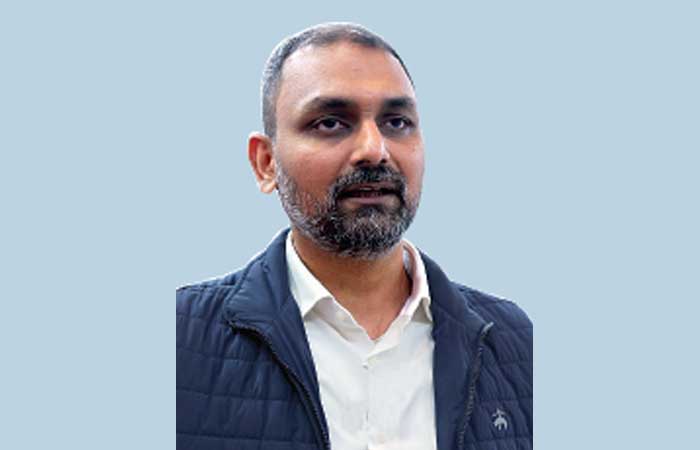
Gaurav Gautam, Business Unit Head, Beumer Group, talks about bulk material handling with predictive maintenance, digital transformation and customised sustainable solutions.

Efficient bulk material handling is crucial for the cement industry, where operational efficiency and sustainability go hand in hand. Beumer Group, a global leader in material handling solutions, is redefining industry standards with digital transformation and innovative technologies. In this exclusive interview, Gaurav Gautam, Business Unit Head, Beumer Group, discusses how their cutting-edge solutions optimise equipment effectiveness, enhance predictive maintenance and drive sustainability. From reducing carbon footprints
to improving material transport, he sheds light on the company’s commitment to future-ready operations.

Can you tell us about some of theinnovative products you supply to the cement industry and how they have helped improve operations?
We do not want to remain solely focused on products. Instead, what we are offering is a complete value proposition for our customers. While the product itself is an essential part of our offering, we also emphasise long-term services, product lifecycle cost optimisation, and total cost of ownership.
When we talk about total cost of ownership and full value propositions, a crucial element in this equation is digital transformation. We are introducing digital tools that go beyond reactive problem-solving. Rather than addressing issues after they have already occurred, we are moving towards a predictive approach. This means we are now able to analyse data and forecast potential problems before they arise—whether in the next month or three months down the line. This predictive capability enhances the overall availability and efficiency of our offerings.
Our focus is on optimising overall equipment effectiveness (OEE), which is determined by three key aspects: availability, accuracy, and throughput. These three factors collectively contribute to improving equipment efficiency. Our product portfolio covers both upstream and downstream operations. On the upstream side, we are highly active in long-distance conveying, cross-country conveyors, stacker reclaimers, and yard equipment handling machines. Additionally, we offer solutions for tall elevators and critical applications for kiln feeds and preheaters. On the downstream side, we provide innovative filling, packing, and palletising machines, ensuring seamless processing from start to finish.

Transporting bulk materials, such as raw materials from mines to cement plants, results in significant wear and tear. Similarly, carrying hot clinker from the kiln to the cooling point before it is fully cooled also causes high levels of wear and tear. How do you manage these challenges?
That is an excellent question. We are material handling experts, and our solutions start right from the mining stage. We are heavily involved in providing stockyard machines, large reclaimers and long-distance conveyors, which help optimise material transport. One of the key areas we focus on is shifting from truck-based transport to mechanical conveying solutions. This shift not only improves efficiency but also significantly reduces carbon footprint.
Once within the plant boundaries, we handle various critical applications, including kiln feed
and post-cooling material transport. Over the years, we have continuously improved our equipment,
such as bucket elevators and apron conveyors, to withstand the high wear and tear associated with cement manufacturing.
A major recent focus has been integrating digital monitoring tools into our equipment. These tools include condition monitoring sensors that track temperature variations, vibrations and operational anomalies in real-time. By capturing this data, plant operators can take proactive actions when conditions start deviating from normal parameters. This approach prevents sudden breakdowns and, in the long term, enhances the durability and reliability of the equipment.
Moving forward, digitalisation will play a key role in tackling wear and tear challenges. By increasing the number of data capture points and applying advanced analytics tools, we can gain deeper insights into equipment health and performance, ensuring a more efficient and predictive maintenance strategy.

In this entire process, what do you think is your carbon footprint, and how do you ensure sustainability in your operations?
Sustainability is a broad and complex subject. However, in my view, sustainability efforts must lead to tangible outcomes—both in terms of environmental benefits and business viability. Simply implementing sustainability initiatives for the sake of it will not be effective unless they generate measurable improvements. Sustainability must address two key aspects: its impact on human life and its contribution to business efficiency.
From a financial standpoint, sustainability initiatives should not become a burden by requiring excessive capital investments without generating returns. Instead, they should lead to long-term cost savings and efficiency gains. This is the approach we take with our products and solutions. We define sustainability ratings for our offerings and work with customers to evaluate the total cost of ownership while integrating sustainable practices.
One practical example is our work in long-distance conveying from mines to cement plants. If a cement plant traditionally relies on 100 trucks per day to transport limestone or other raw materials, replacing those with conveyor systems eliminates fossil fuel consumption, resulting in a significant reduction in CO2 emissions. Our conveyor systems are highly energy-efficient, consuming far less power than a fleet of trucks.
Another major focus area is reducing fossil fuel consumption in kilns. The adoption of alternative fuels (AFR) presents a promising solution, but the challenge lies in the processing, pre-processing, and co-processing of AFR. Alternative fuels often have high moisture content and vary widely in composition, making them difficult to handle.
To address these challenges, we are introducing several innovative solutions. These include air-supported conveyors, which eliminate the need for traditional idlers and maintenance-heavy platforms, as well as OptiFeeds, which can handle a broad range of AFR particle sizes and moisture levels. By integrating
these solutions, we aim to make alternative fuel adoption more efficient and practical, thereby contributing to the overall sustainability goals of the cement industry.

Economy & Market

Leonard Unveils Dual-Head Robotic Arm for Hazardous Industrial Demolition

Published

on

By

Shares

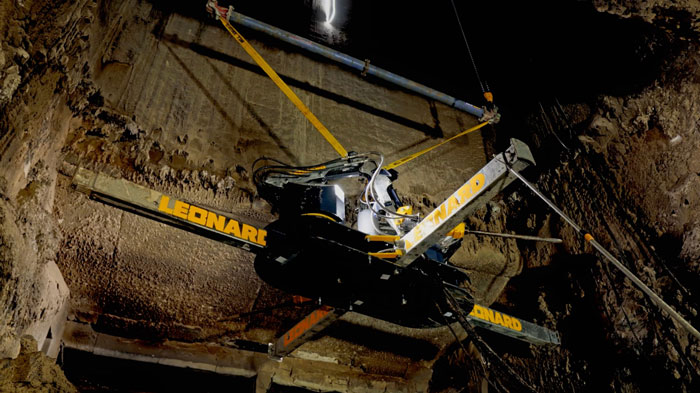
 Leonard unveils Descender Duo, a dual-head robotic demolition arm designed to improve industrial safety and reduce shutdown time by up to 50 per cent.

Industrial robotics and refractory services specialist Leonard has launched Descender Duo, a dual-head robotic demolition arm designed to improve safety, accelerate maintenance and reduce shutdown times in hazardous industrial environments. The system made its debut at Lisahally Power Station in Northern Ireland, removing 25 tonnes of slag material within hours.

Developed for the cement, metals, waste-to-energy and petrochemical industries, Descender Duo enables remote-controlled refractory demolition, anchor cutting and welding, and refractory spraying inside boilers, calciners and silos. Its vertical-access design eliminates the need for personnel to enter confined, high-risk spaces during these operations.

Weighing less than two tonnes, the pre-assembled system requires an access opening of just 1.2 m². Supported by an external overhead hoist, it uses electrically operated hydraulic stabilising legs to secure itself inside vessels. The robotic arm offers 360-degree rotation and is suited to vessels approximately 9 m in diameter, with its operating reach extendable through strategically positioned access points.

Equipped with two independently controlled robotic heads, Descender Duo can perform identical or different tasks simultaneously, including refractory demolition, anchor cutting and spraying. Its remote-control system incorporates live camera feeds, allowing operators to monitor operations without entering hazardous environments.

According to Leonard, the technology can deliver time savings of up to 50 per cent compared with manual methods. Its ability to operate at temperatures exceeding 100°C allows maintenance to begin as early as 24 hours after burner shutdown. An all-electric power supply further supports cleaner and more cost-efficient operations.

First Deployment Demonstrates Shutdown Efficiency

The system was first deployed at Burmeister & Wain Scandinavian Contractor’s (BWSC) Lisahally Power Station in Londonderry, Northern Ireland. The facility generates electricity from grade C waste wood, supplying approximately 40,000 homes and businesses.

Leonard and BWSC collaborated to develop a customised solution for the plant’s 26-metre furnace, where extensive external pipework created significant access challenges.

Mark Leonard, Managing Director, Leonard, said, “It required new thinking and rather than step away from the problem we were committed to solving it for the customer, with the customer. We’re relentless in our approach to tackling complex challenges, head-on. We took our years of cement plant experience, coupled with our working knowledge of the BWSC plant, and designed, engineered and tested a completely new vertical solution within just seven weeks from that initial conversation with the customer. That solution was the Descender Duo as we know it today.”

Traditionally, the furnace required a cooling period of up to 36 hours before preparatory work could begin, followed by manual slag removal using rope-access personnel. With Descender Duo, work commenced just 24 hours after shutdown, reducing downtime by up to one day.

The deployment removed 25 tonnes of slag within hours, eliminated the need for at least six workers to enter the hazardous furnace interior and saved 26 hours in the shutdown programme.

“The effectiveness exceeded expectation,” said Martin Doran, Plant Manager at Lisahally Power Station.

“When the Descender Duo concept was first discussed, we had to spend some time with the team from Leonard looking at how it was going to be moved into the furnace. Every site is different and that presented its own challenges, but nothing that the team couldn’t overcome. Once it was installed we were hugely impressed by its efficiency.”

Expanding Industrial Robotics Applications

Descender Duo joins Leonard’s existing portfolio of robotic maintenance solutions, including the Axis horizontal-access arm, Nano confined-space access arm, Charger cement mill media recharging system and Calibre cement mill media grading system.

Headquartered in Northern Ireland, Leonard provides robotic refractory demolition, installation, inspection and industrial maintenance services across the cement, metals, energy, biomass, glass and civil engineering sectors.

Formerly known as G Leonard, the company has more than 35 years of industry experience and operates across Europe, North America, the Middle East, Africa and Asia-Pacific.

The latest innovation reinforces Leonard’s focus on replacing hazardous manual processes with robotic systems that improve workforce safety, enhance operational efficiency and minimise industrial downtime.


Continue Reading

Concrete

Martin Engineering Appoints Ashwini Khunte as India General Manager

Published

on

By

Shares

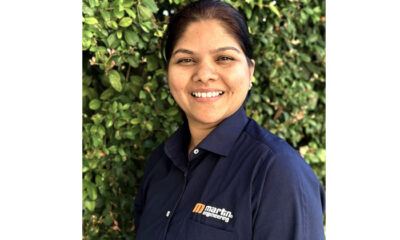
Martin Engineering names Ashwini Khunte India General Manager to strengthen operations and drive growth across key bulk material handling sectors.

Pune

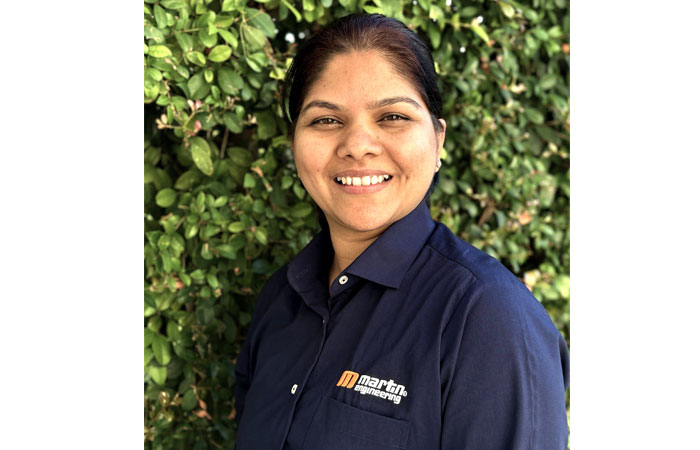
Martin Engineering, a global provider of bulk material handling solutions, has appointed Ashwini Khunte as General Manager of its India business, strengthening its leadership as the company expands its presence across the country’s cement, mining, steel, power and infrastructure sectors.

Khunte brings more than a decade of experience with Martin Engineering, having joined its Indian operations in 2013 as a Design Engineer, shortly after the company established its presence in the country in 2012.

A mechanical engineer by qualification, she spent her initial five years developing bulk material handling solutions in collaboration with the company’s operations team. During this period, she gained extensive experience addressing operational challenges in the steel, cement and coal industries. She subsequently moved into project engineering, managing major engineering, procurement and construction (EPC) and original equipment manufacturer (OEM) projects from initial enquiry to commissioning. Her responsibilities later expanded to overseeing Martin Engineering’s conveyor product portfolio in India, involving customer engagement, technical presentations and site visits across heavy industries.

In 2024, Khunte was promoted to Head of Sales & Marketing for the company’s Europe, Middle East, Africa and India (EMEAI) region. The position broadened her international market exposure and strengthened her strategic and commercial leadership capabilities.

Commenting on her appointment, Ashwini Khunte, General Manager, Martin Engineering India, said: “India represents a tremendous opportunity for Martin Engineering. The country’s continued investment in cement, mining, steel, power and infrastructure is creating increasing demand for safer, cleaner and more productive bulk material handling, and that’s exactly what we do. My priority will be to build on the strong foundations already established in India, while continuing to develop our people, strengthen customer relationships and bring practical solutions to the challenges faced by our industry.”

Robert Whetstone, Area Vice President – EMEAI, Martin Engineering, highlighted Khunte’s technical expertise, market understanding and leadership experience.

“Ashwini brings an exceptional combination of technical understanding, customer knowledge and commercial leadership. She has grown as Martin Engineering has grown, and has consistently demonstrated outstanding capability to transform her expertise into practical solutions. Her knowledge of the Indian market, together with her international experience, makes her ideally suited to lead our India business through its next stage of growth for years to come.”

Since establishing its Indian business in 2012, Martin Engineering has expanded its local workforce, manufacturing capabilities and dealership network. The company supplies conveyor products, transfer point solutions, material flow aids, training and technical support to bulk material handling industries. Khunte’s appointment positions the company to further strengthen customer relationships and expand its solutions portfolio in India’s growing industrial and infrastructure markets.

Continue Reading

Concrete

Fornnax Wins AIRIA’s Special Export Award for Rubber Machinery in 2025-26

Published

on

By

Shares

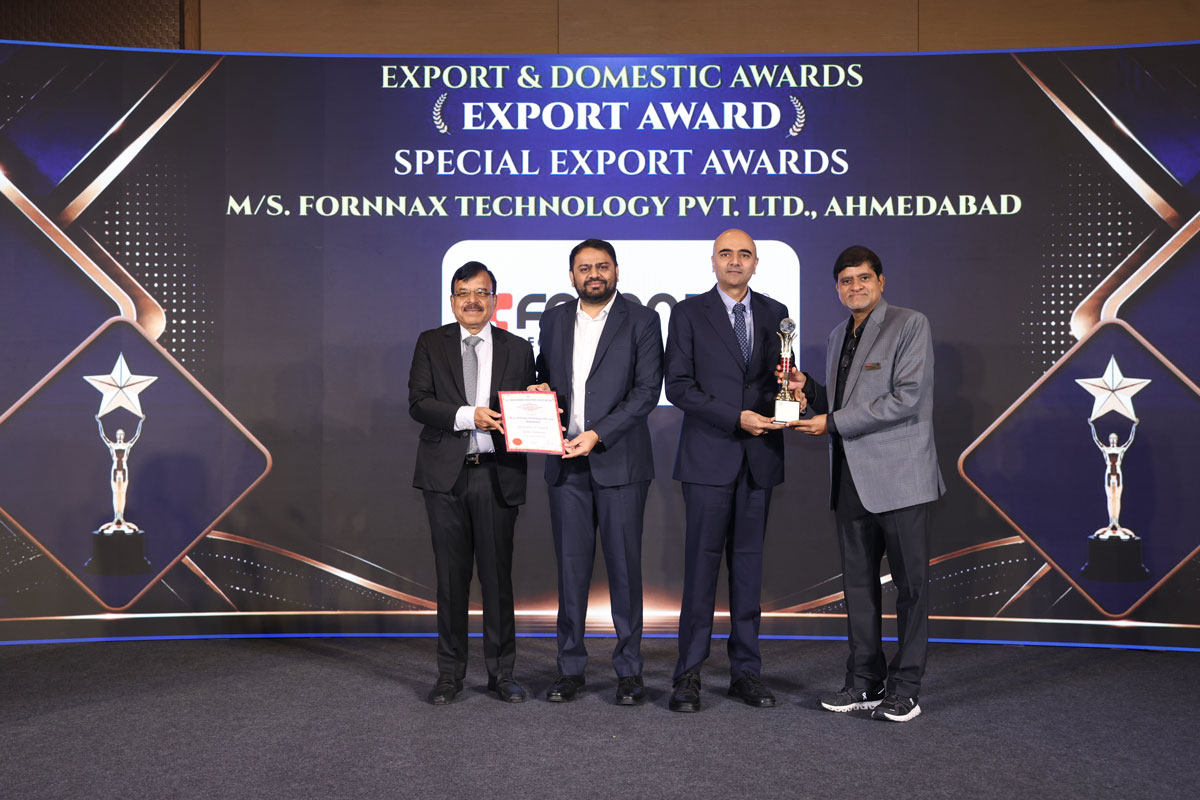
Fornnax Technology Pvt. Ltd. has been honoured with the Special Export Award – Rubber Machinery for 2025–26 by the All-India Rubber Industries Association (AIRIA), in recognition of its highest exports of tyre recycling plants to the European region.

With more than a decade of experience in India’s tyre recycling industry, Fornnax has contributed to the development of advanced recycling technologies and infrastructure. The company currently holds a 90% market share in India’s domestic tyre recycling sector, while exports account for 30% of its business, spanning markets such as Europe, Australia and the GCC.

The award marks another milestone for Fornnax, whose tyre recycling lines and advanced shredding technologies are supporting the growth of the circular economy in India and international markets.

Commenting on the recognition, Mr. Jignesh Kundaria, Founder and Director of Fornnax, said:

“This honour from AIRIA is a reflection of an incredible journey we have undertaken over the years. When we started Fornnax, there was no established recycling industry in India to follow. We chose to build for the future instead. Today, when you see India’s tyre recycling sector, it has already transformed into a dynamic, high-growth industry and we are extremely proud to have played our part in building it.”

Unlike standalone equipment suppliers, Fornnax focuses on developing complete, high-capacity recycling infrastructure. Its integrated systems combine multiple stages of shredding and size reduction to enable efficient, continuous operations. This system-level engineering approach helps recycling operators improve throughput, equipment reliability and operational consistency.

The recognition reinforces Fornnax’s commitment to developing engineering technologies that contribute to a more efficient and circular recycling ecosystem.

Looking ahead, the company aims to expand its international presence while continuing to develop advanced shredding and recycling solutions to address the growing volumes and evolving requirements of the global recycling industry.

For more information, visit: www.fornnax.com

Continue Reading

Video Thumbnail
▶

    SIGN-UP FOR OUR GENERAL NEWSLETTER

    Trending News

    SUBSCRIBE TO THE NEWSLETTER


    Don't miss out on valuable insights and opportunities to connect with like minded professionals.


      This will close in 0 seconds