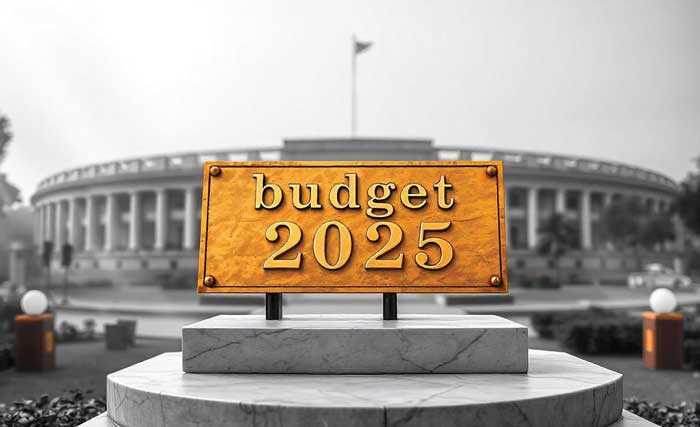
Harking on the ‘sabka vikas’ maxim, Union Budget 2025 presented several key industries, including infrastructure and urban development, with promising provisions, while endowing the middle class with reformative taxation. ICR brings you a special report.
Finance Minister Nirmala Sitharaman’s Union Budget 2025 outlined a multi-pronged approach to achieving ‘Viksit Bharat.’ Key themes included poverty eradication, quality education, and affordable healthcare. The budget focused on tax reforms, middle-class empowerment, and national economic growth. Special attention was given to the aspirations of GYAN (Garib, Yuva, Annadata, and Nari Shakti).
Union Budget 2025 also stressed the need to expedite the pending housing projects. Together with the impetus given to infrastructure and urban development, the budget bodes well for the cement sector. We reached out to key opinion leaders from the industry to understand their reaction to the budget.
Towards sustainable growth
Arun Shukla, President and Director, JK Lakshmi Cement, applauded the focus of Union Budget 2025 on expanding infrastructure through PPP models and streamlining trade and warehousing facilities, as this will create a conducive environment for cement demand, driving sustainable growth in the industry.
Elaborating further he said, “As we continue to build a stronger future for India, the 2025 Union Budget offers a clear path forward, focusing on sustainable growth, affordable housing and infrastructure development. The completion of 50,000 dwelling units in stressed housing projects and the Rs.1.5 lakh crore allocation for infrastructure will bring much-needed relief to middle-class families, helping them move closer to homeownership while fostering rapid urbanisation. We are optimistic about the Rs 10 lakh crore asset monetisation plan, which will infuse capital into new projects, sparking innovation across key sectors.”
A media release from Cement Manufacturers’ Association (CMA) said that the cement industry is poised to leverage the opportunities presented by Union Budget 2025 by ensuring steady and sustained supplies of cement to meet the nation’s growing domestic market and infrastructure demand coupled with sustainable and innovative technologies.
Lauding the budget for its comprehensive focus on holistic and inclusive development, Neeraj Akhoury, President, CMA, and Managing Director, Shree Cement, stated, “The Budget reinforces a transformative journey towards building a resilient economy for advancing India’s development goals. The various initiatives announced by the Government balance people’s aspirations with the future requirements for the country’s economic growth. The focus on increased investments on infrastructure across states amplifies opportunities and avenues for the growth of the cement sector. We appreciate the sustained core focus on infrastructure and reiterate our commitment to being partners in the nation’s progress.”
He opined that the increased spending on large scale housing and infrastructure projects will drive demand for construction materials allowing capacity expansion and promotion of innovation in sustainable practices. “We are certain that despite challenges these measures will support the cement Industry in achieving a consistent CAGR growth rate of more than 6 per cent of installed cement capacity in the present financial year. Policy reforms in Budget 2025-26 signal a reaffirmation of the Government’s intent to augment socio economic growth across core sectors,” he added.
Calling the budget a forward-looking roadmap, Parth Jindal, Vice President, CMA and Managing Director, JSW Cement, said, “It prioritises growth in key sectors such as infrastructure, manufacturing, and technology. The increased investment in technology will accelerate advancements in green cement solutions, driving both sustainability and innovation within the industry. Notable allocations, including Rs.20,000 crore to foster innovation and Rs.1.5 lakh crore in 50-year interest-free loans to states for capital expenditure on infrastructure development, are expected to significantly bolster growth in the core sectors, including cement sector.
He further added, “The budget’s focus on a three-year pipeline of projects under the public-private partnership (PPP) model will incentivise private sector investment and catalyse a transformation in the infrastructure landscape. The establishment of five National Centres of Excellence for skill development, as part of the ‘Make for India, Make for the World’ initiative, will ensure that India’s emerging workforce is well-equipped to meet the demands of a rapidly growing economy.”
Praising the Finance Minister’s efforts at prioritising sustained reforms in manufacturing, mining, power and skill development, Vivek Bhatia, MD and CEO, TKIL Industries, said, “These sectors will be key drivers of growth, infrastructure development, governance improvements and sustainable development for the country. We welcome the government’s move towards accelerating India’s manufacturing sector. Over the past decade, structural reforms have drawn global attention, and the announcement of a National Manufacturing Mission is a significant step in strengthening the Make in India initiative. This will drive clean-tech manufacturing, bolstering the ecosystem for solar cells, EV batteries, wind turbines and more.”
He added, “The `1.5 lakh crore allocation for 50-year interest-free loans is set to accelerate infrastructure development, unlocking new growth avenues for us. These strategic measures position India as a rising global manufacturing hub, seamlessly aligning with its green energy and economic ambitions. We applaud these initiatives and eagerly anticipate the forthcoming policy on critical mineral recovery, which will play a pivotal role in driving sustainable industrial growth.”
Raman Bhatia, MD, Servotech Renewable Power System, echoed the sentiments as he noted the provisions made for incentivising electricity distribution reforms. He said, “The practical approach of allowing additional borrowing for states contingent on these reforms is commendable. The inclusion of 35 additional capital goods for EV battery manufacturing is a significant boost to domestic lithium-ion battery production, a critical component for the EV sector. I particularly appreciate the emphasis on improving domestic value addition and building our ecosystem for these crucial technologies. The substantial allocation for private sector-driven R&D and innovation is another welcome move that will further accelerate progress.”
Constructing a sturdier future
Union Budget 2025 bodes well for the infrastructure and construction industries, too, which in turn directly impacts the growth of the cement sector. Emphasis on economic expansion, infrastructure growth, support for MSMEs and empowering the middle-class are several key factors that will create favourable grounds for increase in construction activities.
Lalit Parihar, Managing Director, Aaiji Group, said, “Raising the exemption limit will boost disposable income, enhancing housing affordability and driving real estate demand. Increased infrastructure spending and the Rs 1 lakh crore Urban Challenge Fund will transform cities into growth hubs, fostering redevelopment and strengthening water and sanitation systems. These measures aim to stimulate domestic consumption, address the economic slowdown, and create a business-friendly environment. Overall, the budget takes a decisive step toward urban transformation and sustainable economic growth.”
Speaking about the limitations of the budget, Narayan Saboo, Chairman, BigBloc Construction, pointed out, “The focus on consumption-driven growth, coupled with strategic spending, is expected to provide a much-needed push to the economy. Although we were little disappointed with no major tax reliefs for MSMEs. Overall, it is a steady and practical budget aimed at sustaining momentum without major surprises. The budget outlines a long-term path for fiscal consolidation while delivering a significant boost to individual taxpayers by raising the exemption limit. This move is expected to stimulate domestic consumption, addressing the ongoing economic slowdown.”
“The government has not clarified its plans for increased infrastructure spending and other growth-oriented expenditures. However, there is no mention of last year’s CAPEX shortfall, which is a notable omission. While the budget does not introduce any groundbreaking measures, it provides a stable framework to support MSMEs and economic activity,” he added.
While Rakesh Reddy, Director, Aparna Constructions, highlighted the `1 lakh crore Urban Challenge Fund and the Rs.1.5 lakh crore interest-free loan to states for infrastructure development in his reaction to the budget, he also pointed out that several key industry expectations for the real estate sector remain unaddressed. “Granting industry status to real estate, streamlining approval processes, and enhancing liquidity support for developers were essential priorities which would have gone a long way in accelerating real estate growth,” he clarified.
“We welcome the Rs.1 lakh crore Urban Challenge Fund, which will spur housing and private sector participation. The Rs.15,000 crore SWAMIH Fund-2 will help complete 40,000 stalled units, boosting consumer confidence. Expanding UDAN’s connectivity to 120 destinations will drive tier II market growth. With policy continuity and economic expansion, this budget reinforces real estate as a key pillar of India’s $5 trillion economy journey,” stated Ashish Puravankara, Managing Director, Puravankara.
Prashant Sharma, President, NAREDCO Maharashtra, said, “The Union Budget 2025-26 has emphasised economic growth and inclusive development, but the absence of specific measures for the real estate sector is a major disappointment. While the Rs.1 lakh crore Urban Challenge Fund is a step in the right direction to transform cities into growth hubs, the sector was expecting direct incentives such as industry status, single-window clearances and increased tax benefits for homebuyers.”
Ravleen Sethi, Director, CareEdge Ratings, in her report stated that the ongoing consolidation in India’s cement sector is driving competition, with companies shifting focus to profitability and expansion. While the Union Budget 2025 provides some support through infrastructure spending and housing initiatives, the lower-than-expected capex allocation raises concerns. The government aims to boost private sector investment in infrastructure, but its pace of scaling up remains uncertain. Cement companies must prioritise operational efficiency and innovation to manage near-term challenges. A long-term growth outlook remains positive, but adaptability will be key in leveraging both public and private sector opportunities.
The Union Budget 2025 lays a solid foundation for economic growth, infrastructure expansion and middle-class empowerment. While it introduces key reforms and allocations to drive sustainable development, some industry expectations remain unmet. The emphasis on urban transformation, manufacturing, and green energy signals a progressive vision for Viksit Bharat. Moving forward, effective implementation will be crucial in realising the budget’s ambitious goals.
















 Concrete1 month ago
 Concrete4 weeks ago
 Concrete1 month ago
 Concrete3 weeks ago