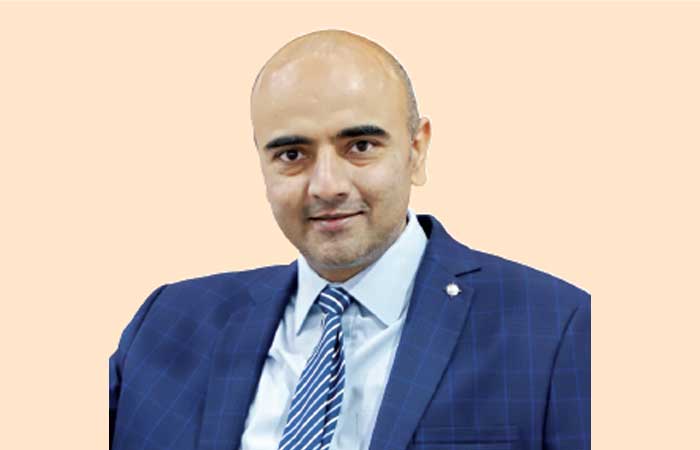
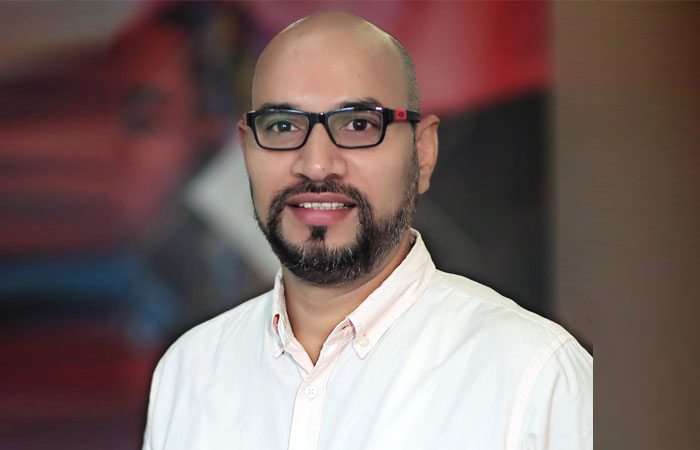
Jignesh Kundaria, CEO and Director, Fornnax, talks about transforming waste into energy and fostering eco-friendly cement production.
How does Fornnax Technology’s expertise in shredding and recycling equipment contribute in the cement industry?
The average usage of alternative fuels and raw materials in the Indian cement industry currently stands at around 6 to 8 per cent, according to the Cement Manufacturers Association (CMA). This figure indicates a substantial opportunity for improvement within the industry. Increasing the Thermal Substitution Rate (TSR) is essential for reducing dependency on conventional fossil fuels and enhancing environmental sustainability. By efficiently utilising waste materials as alternative fuels, the industry can significantly lower greenhouse gas emissions and promote a greener approach to cement production.
Fornnax Technology’s expertise in developing robust shredding and recycling machinery plays a crucial role in assisting the Indian cement industry to close this gap. By providing innovative solutions for the utilisation of AFR, Fornnax supports the industry’s efforts to increase its TSR. These advancements are pivotal in driving the Indian cement industry towards a greener and more sustainable future.
Could you elaborate on how your products, like primary and secondary shredders, can enhance the overall operational efficiency?
Our SR-MAX primary and R-Max series secondary shredders are specially designed to enhance operational efficiency in municipal solid waste management. These high-performing shredders are tailored to handle mixed and legacy waste which is stored for years in the landfills and it is highly contaminated with inert material and sand, catering to the needs of MSW recyclers and the cement industry, including Refuse Derive Fuel Manufacturers.
The primary SR-MAX series shredders boast revolutionary engineering for producing output sizes ranging from 150-400mm, depending on the knife configuration. This level of flexibility allows for customisation to meet specific requirements. Whereas, The R-Max series shredders are strong enough to deal with the contamination of solid waste meant for producing alternative fuels like RDF/SRF. Depending on the blade and screen configuration, shredders are appropriate for secondary or fine shredding to produce sizes up to 30- 80mm.
The outputs from our shredders have diverse applications. For instance, shredded municipal solid waste can serve as an alternative energy source in cement industries. Material Recovery Facilities (MRFs) utilises pre-shredded material below 400mm suitable for further sorting and separation of recyclables, such as plastics, paper, glass and metals, thereby maximising resource recovery and reducing landfill disposal.
By integrating our shredders into MSW management operations, recyclers can optimise their processes, increase efficiency, and unlock valuable energy resources.
What role does technology play in optimising the recycling of municipal waste materials for use in the cement industry?
The cement industry’s carbon footprint is staggering. It’s been said that if the cement industry were a country, it would rank among the top emitters of carbon dioxide globally. The World Economic Forums’ recent data reveals that cement production worldwide generated a whopping 1.6 billion metric tonnes of CO2 in 2022 – accounting for approximately 8 per cent of global CO2 emissions. To meet global climate targets, it’s crucial that we significantly reduce the carbon intensity of cement manufacturing by reducing the reliance on primary raw materials like fossil fuels and shift towards alternative fuel options and technology is definitely going to play a pivotal role in optimising the recycling of waste materials for use in the cement industry, Fornnax has always been the forefront of this innovation. Our research and development team continuously strives to develop cutting-edge solutions because we firmly believe that innovative recycling technology could provide solutions to the disposal problems of solid wastes in an effective and economical manner.
How Fornnax stands out from its competitors in the cement sector?
Fornnax distinguishes itself from its competitors in the cement sector by offering a comprehensive range of modern engineered and large capacity recycling solutions tailored specifically to the industry’s unique needs. Our deep understanding of the cement industry’s challenges, coupled with our expertise in advanced shredding and recycling technologies, enables us to provide efficient and sustainable solutions. Our state-of-the-art shredding equipment, such as the SR-MAX series are engineered to deliver high performance and low maintenance, ultimately meeting the demand of Refuse Derive Fuel Manufacturers and Municipal Waste Recyclers.
We always keep customers in the forefront, our team works closely with clients to understand their pain points and develop new advanced models that entirely respond to their needs under our specially formulated CBPD (Customer-Based Product Development Process) process. Additionally, our after-sales service network across India ensures prompt and timely resolution from any location. Our customer-first philosophy is rooted in the heart of Fornnax. We believe that every client interaction is an opportunity to build trust, foster innovative solutions, and deliver exceptional experiences that meet expectations.
What level of customisation do you provide to ensure the machinery aligns with customers’ distinct visions?
Fornnax Technology is committed to delivering tailored solutions that perfectly align with each customer’s unique vision. We understand that every cement plant has specific requirements and challenges, and we strive to provide customised machinery that addresses these needs precisely. Our team of experienced engineers works closely with our customers to understand their specific requirements, including production capacity, waste type, desired output size, and power constraints. Based on this in-depth understanding, we carefully select the most suitable shredding technology and customise the machine’s design and configuration to meet the specific needs of the customer.
Our customisation options extend beyond just the machine’s design. We also offer a range of additional features and services to enhance the overall performance and efficiency of our machinery. These include:
- Collaborative product development: We actively involve our customers in the product development process through workshops and discussions with our experienced engineering team
- Customer-centric approach: We prioritise understanding our customers’ needs by conducting regular site visits and surveys. This valuable feedback is essential in shaping our product development strategy.
- Incorporating customer insights: We analyse customer input meticulously and incorporate it into the design and testing phases of our equipment.
- Customer-driven innovation: Fornnax is dedicated to delivering innovative solutions that meet the evolving needs of our customers. We consistently integrate customer feedback into the final design of our products. As we continue to innovate, customer insights remain the cornerstone of our product development.
What are the key challenges in implementing advanced recycling technologies in cement plants?
As we reflect on the journey towards sustainability in the cement industry, we firmly believe that implementing alternative fuel options is a crucial step forward. However, this transition does come with its set of challenges. One major obstacle is the resistance to change, often stemming from traditional mindsets. Additionally, the remote locations of many cement plants pose logistical challenges that can’t be overlooked.
Keeping up with the ever-evolving environmental regulations is another significant challenge, requiring continuous investment in technology and process upgrades, which can be especially tough for small and medium-scale industries due to the high capital needed. Furthermore, the lack of effective waste segregation and management infrastructure can impede progress. For instance, the inconsistent quality and composition of waste materials can lead to operational challenges and reduced efficiency in cement kilns. Improper waste segregation can also result in contamination, compromising the quality of the final cement product.
Despite these hurdles, Fornnax remains optimistic about the Indian cement sector’s ongoing investment in preprocessing and waste segregation equipment. This shift towards sustainable practices is a major breakthrough not only for the cement industry but also for other sectors looking to adopt greener and more efficient technologies, setting a precedent for a more sustainable future.
Can you highlight any of your recent innovations which are set to reshape the future of the cement industry?
Our recent major launch of the game-changing SR-MAX2500 primary shredder powered by a hydraulic drive motor at IFAT 2024 Mumbai, marks a significant milestone to our commitment to providing cutting-edge waste management solutions. It is specially designed to revolutionise MSW, industrial and other waste categories by efficiently shredding challenging materials into smaller, manageable sizes.
The introduction of the SR-MAX2500 primary shredder is a major breakthrough in reducing the Indian cement industry’s dependence on imported shredders. Our SR-MAX2500 primary shredders have been meticulously engineered to handle the unique challenges posed by Indian waste, which is often highly contaminated and unsegregated.
SR-MAX2500 is set to transform waste management and cement industries in India and globally. Our objective is to equip municipal waste recycling industries with a robust and transforming solution that prioritises sustainability. By doing so, we’re aligning with the honorable Prime Minister’s vision of achieving Net Zero emissions by 2050, and committed to create a green future for our future generations.
What is Fornnax Technology’s vision for the future of sustainable recycling solutions, and what innovative strategies are needed to achieve this vision within the cement industry?
As we look to the future, Fornnax is committed to revolutionising the cement industry through sustainable recycling solutions. Driven by the increasing demand for eco-friendly waste management and growing environmental awareness, we’re optimistic about the prospects ahead. Our strategic vision focuses on innovation, customer-centricity, and targeted growth. To achieve this goal, we’re expanding our operations to Eastern Europe, Australia, GCC and other leading countries, investing heavily in research and development, and strengthening key partnerships to address the evolving needs of our clients.
Our recent acquisition of a 23-acre land parcel in Ahmedabad, Gujarat, highlights our dedication to scaling up operations and meeting the growing demand for sustainable solutions. This expansion will enable us to produce high-capacity machinery tailored to various recycling applications, including MSW, tyre, cable, e-waste, and metal processing. By adopting advanced technologies and sustainable practices, we’re poised to play a pivotal role in shaping the future of sustainable recycling within the cement industry and beyond.
– Kanika Mathur