In the dynamic realm of India›s cement industry, safety emerges as a paramount concern, with rigorous risk assessments, cutting-edge safety equipment and a culture of vigilance forming the foundational pillars. ICR delves into the various tenets of safety and the evolving parameters that cement companies should reckon with, in order to ensure a safe working environment for their workforce.
In the heart of India›s bustling industrial landscape, the cement sector stands tall as a cornerstone of growth, supplying the building blocks for progress. Yet, within the colossal structures and ceaseless machinery lies an inherent need for caution—a commitment to safeguarding the lifeblood of this vital industry: its workforce. As we delve into the intricacies of safety and safety equipment for the Indian cement industry, we unravel a narrative where resilience meets responsibility, and where the quest for growth harmonises with an unwavering commitment to the well-being of those who build the future.
In an era marked by technological leaps and infrastructural marvels, the need for stringent safety measures is more pronounced than ever. This article aims to cast a spotlight on the multifaceted landscape of safety within the Indian cement industry, exploring not only the regulatory frameworks that shape its contours but also the proactive strategies and cutting-edge safety equipment that elevate the industry›s preparedness for unforeseen challenges.
Health and safety at a cement plant is a two-way street. It is the organisation’s responsibility to create a workplace environment in order to protect their employees from the various risks. It is also the duty of every personnel to adhere to the safety rules and compliances ensued by the organisation. To streamline this and to look after the safety of the plant, specific experts and departments are set in place. Audits are also conducted from time to time to understand the maintenance and adherence to safety standards and best practices at cement plants.
RISK ASSESSMENT
In the bustling world of cement production, where raw materials transform into the very infrastructure that defines progress, the paramount significance of conducting thorough risk assessments and implementing effective risk management strategies cannot be overstated. Cement plants operate within a complex ecosystem, where machinery, human interactions and hazardous materials coalesce, presenting a mosaic of potential risks. By conducting meticulous risk assessments, the industry not only acknowledges these potential hazards but endeavours to systematically understand, evaluate and address them.
The core rationale behind such diligence lies in the preservation of human capital and the continuity of operations. Comprehensive risk assessments serve as a preemptive strike against the perils that lurk within the cement manufacturing process. Whether it is the handling of raw materials, the operation of heavy machinery, or the management of intricate production processes, each facet carries its own set of potential risks. Through a meticulous assessment of these variables, cement plants can identify weak points in their operational structure, allowing for the implementation of targeted risk management strategies.
The essence of effective risk management lies not only in the identification of potential pitfalls but in the strategic deployment of measures to mitigate, if not eliminate, these risks. From deploying state-of-the-art safety equipment to instituting stringent protocols, cement plants that embrace a holistic risk management approach bolster their resilience against unforeseen challenges. Beyond the immediate safety benefits, this approach also contributes to the overall efficiency of operations, ensuring that the gears of production continue to turn smoothly even in the face of adversity.
Anuj Kumar Mathur, Industry Expert and Consultant, and (retired) DGM – Safety, Health & Environment, Indian Oil Corporation, says, “Upholding safety standards in a manufacturing unit is a complex challenge, encompassing various facets. Human behaviour is a significant hurdle, where despite thorough safety training, factors like complacency or shortcuts can introduce risks. Shifting or reinforcing behaviours to prioritise safety demands continual focus on education, communication and cultivating a safety-conscious culture.”
“The monotony of work adds another layer to this challenge, as routine tasks may diminish vigilance towards safety protocols. Combating this involves introducing task variety, implementing job rotation and incorporating regular breaks to sustain employee engagement and attention to safety,” he adds.
In essence, the importance of risk assessment and management within cement plants transcends the realm of compliance; it becomes a cornerstone for fostering a workplace culture that values the well-being of its workforce and the sustained success of the industry. As cement plants navigate the intricate terrain of production, the vigilance afforded by robust risk assessments and management strategies becomes a beacon guiding them towards a future where safety and productivity coexist harmoniously.
PERSONAL PROTECTIVE EQUIPMENT
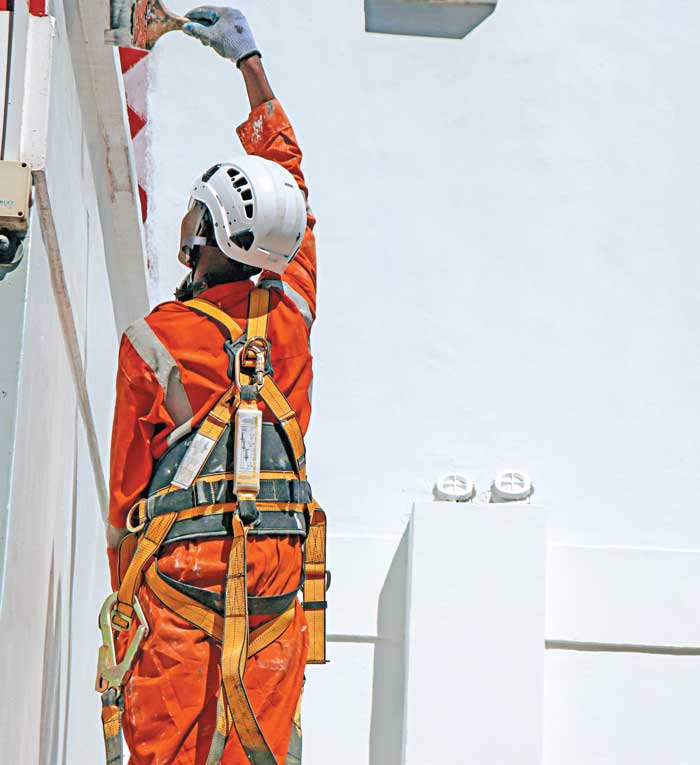
In the cement industry progress is orchestrated by the hands of skilled workers, the role of Personal Protective Equipment (PPE) emerges as a paramount safeguard. Workers engaged in various roles within the cement production process are exposed to unique hazards, demanding a tailored arsenal of safety gear to ensure their well-being. From the bustling quarries to the intricate machinery of production lines, the careful selection and utilisation of PPE become the first line of defence against potential risks.
For those toiling in the quarries and handling raw materials, heavy-duty gloves, steel-toed boots, and sturdy helmets become indispensable shields. The relentless tasks of material handling and excavation demand protection against falling debris and potential impact, making these gear essentials for the frontline warriors of the cement industry. Moving along the production line, workers involved in the intricate machinery operations find solace in specialised eye protection, ear defenders, and full-face respirators. The cacophony of machinery and the dust-laden atmosphere necessitate a tailored approach to PPE, shielding these workers from both immediate and long-term occupational hazards.
Sanjay Joshi, Chief – Projects and Manufacturing Officer (North), Nuvoco Vistas Corp, says, “For specific job requirements, we provide essential job-specific PPEs, such as full body safety harness for tasks involving fall protection, ear plugs for hearing safety, electrical safety gadgets to prevent electrical hazards, hand gloves for hand protection, welding aprons, and other specialised equipment tailored to the unique risks associated with specific tasks performed by our associates. This approach ensures that our personnel have the right safety gear to address the specific hazards they may encounter in their respective work areas, promoting a comprehensive and secure working environment.”
Navigating through the labyrinth of cement production, it becomes evident that the selection of PPE is not a one-size-fits-all endeavour. Each role demands a strategic combination of safety gear to ensure comprehensive protection. From high-visibility vests for those managing logistics to respiratory protection for those amidst dust-intensive tasks, the array of PPE paints a canvas of safety, where each brushstroke is precisely chosen to fortify against the unique challenges of the cement manufacturing process. In essence, PPE is not just equipment; it becomes a personalised armour for the dedicated workforce, ensuring that they can confront challenges with confidence and emerge unscathed in their journey to build the foundations of progress.
HAZARDS IN THE CEMENT INDUSTRY
Within the robust machinery and towering structures of the cement industry lies a tapestry of hazards and hazardous product handling that demands meticulous attention. The production process involves the manipulation of raw materials and the transformation of substances into the fundamental components of construction. Amidst this intricate dance, hazards ranging from the inhalation of dust particles to the handling of potent chemicals cast their shadows. Dust, a common byproduct of cement production, poses a respiratory hazard, necessitating vigilant measures to protect workers from potential health implications. The industry›s commitment to the well-being of its workforce is underscored by stringent protocols and advanced ventilation systems designed to minimise dust exposure and mitigate associated risks.
According to the report Risk Assessment in Cement Manufacturing Process, published in April 2019, the hazards faced in cement manufacturing process are as follows:
- Exposure to dust: Transferring of material as well as storage of material excessive dust create major problems
- Unclean platform: To do work in presence of unclean surfaces high risk should be created
- Poor supervision: Travelling over and under the transportation system
- Electrical hazards: Electrical parts such as cables, sometime shocks, and vibration possibility
- Exposure to noise: In crushing operation excessive noise created
- Falling of material: Falling of material at certain height
- Hurling of mill parts: From the mill platform high risk built up
- Kiln thermal load hazards: Thermal disturbance which affects the surface property
- In the intricate world of cement production, hazards and the handling of hazardous materials weave a narrative of caution and strategic management. Take, for instance, the omnipresent dust generated during the crushing and grinding of raw materials like limestone. This dust, laden with silica particles, poses a respiratory hazard for workers. To counter this, modern cement plants are equipped with advanced ventilation systems, dust collectors, and air filtration units. These measures not only protect workers from immediate health risks but also contribute to a long-term commitment to employee well-being.
Furthermore, the handling of raw materials introduces the industry to a range of hazards. Silica, a common component in raw materials, can lead to silicosis, a respiratory disease, if not managed carefully. Cement manufacturers invest in comprehensive training programmes to educate workers on the potential risks associated with specific materials and the correct usage of PPE. Workers involved in the extraction and transportation of raw materials are equipped with PPE such as respiratory protection, gloves, and eye protection to minimise direct contact and inhalation risks.
Transporting and storing hazardous materials also demands stringent safety measures. For instance, the storage and handling of cement additives like fly ash or slag require careful attention to prevent chemical reactions that may pose risks. Robust spill containment protocols and emergency response plans are established to swiftly address any accidental release of hazardous materials, minimising potential environmental impact and safeguarding workers and surrounding communities.
According to Ashutosh Shrivastava, Head – Corporate Safety, JK Cement, “For all the activities safety management system adopted safety management systems tools are:
- Elimination of hazards
- Process substitution
- Engineering controls like machine / equipment guarding, log out / tag out, hard barications etc.
- Administrative controls like permit to work system for high risk activities, Activity SOPs/OCP, activity risk assessment, job specific safety training, tool box talks, workplace safety inspection, safety observation tours, hazards reporting, near miss reporting, incident reporting, safety meetings, etc.”
In essence, the cement industry’s commitment to hazard management extends beyond the production process to encompass the entire lifecycle of its materials. By incorporating proactive measures, training initiatives, and the strategic use of advanced technologies, the industry not only constructs the physical foundations of progress but also ensures a resilient and secure environment for the workforce.
TECHNOLOGY AND SAFETY
Technology plays a pivotal role in elevating safety standards within cement plants, ushering in an era where innovation becomes the cornerstone of accident prevention and emergency response. One significant contribution comes in the form of real-time monitoring systems powered by sensors and Internet of Things (IoT) devices. These sensors are strategically deployed throughout the plant to continuously assess variables such as temperature, pressure, and equipment performance. By providing instant feedback, these technologies enable the early detection of anomalies, allowing for timely interventions to prevent potential accidents.
Automation is another technological ally in the quest for safety. Cement plants increasingly integrate automated processes, reducing the need for manual interventions in high-risk areas. This not only minimises the exposure of workers to hazardous environments but also enhances the precision and efficiency of operations. Automated controls can manage critical parameters, ensuring that equipment operates within safe thresholds and reducing the likelihood of accidents caused by human error.
The integration of Artificial Intelligence (AI) in predictive maintenance is transforming safety measures within cement plants. AI algorithms analyse data from equipment sensors to predict potential failures, allowing for proactive maintenance and minimising the risk of sudden breakdowns that could lead to accidents. This predictive approach not only enhances safety but also optimises the lifespan of critical machinery.
Drones are also finding applications in safety inspections, particularly in large and complex cement plants. Drones equipped with cameras and sensors can access hard-to-reach or hazardous areas, providing a comprehensive view of the plant›s condition. This not only improves the efficiency of inspections but also reduces the need for manual inspections in potentially risky environments.
Technology acts as a force multiplier in maintaining safety at cement plants, offering real-time monitoring, automation, immersive training, predictive maintenance and innovative inspection methods. As the industry continues to embrace these technological advancements, it not only fortifies its safety protocols but also paves the way for a future where the well-being of the workforce remains at the forefront of progress.
SAFETY POLICY
Safety policies serve as a comprehensive roadmap, weaving a tapestry of proactive measures and strategic initiatives to navigate the inherent challenges of cement manufacturing. At the heart of these policies lies a dedication to fostering a culture where safety is not merely a compliance requirement but an intrinsic value ingrained in every operation.
One cornerstone of safety policies in cement plants is the meticulous risk assessment process. Prioritising the identification and evaluation of potential hazards, these policies ensure that each facet of the manufacturing process undergoes thorough scrutiny. From the initial stages of raw material extraction to the final steps of product distribution, safety policies create a blueprint that anticipates, addresses and mitigates risks proactively.
The dissemination of a robust safety culture is a linchpin of these policies, underscoring the shared responsibility of every individual within the cement plant. Regular training programmes, workshops and awareness campaigns are instrumental in instilling a collective consciousness about safety protocols. This not only empowers the workforce with the knowledge to navigate potential hazards but also establishes a sense of ownership in maintaining a secure work environment.
CONCLUSION
From meticulous risk assessments to the cultivation of a robust safety culture and the integration of cutting-edge technologies, the safety policies within cement plants stand as guardians of progress. They represent a commitment to safeguarding the invaluable workforce, fostering resilience against potential hazards and creating an environment where every individual plays an active role in their well-being.
The intersection of tradition and innovation has forged an environment where not only the physical structures of progress are built but where the very foundations of safety are laid, ensuring a sustainable and secure future for the Indian cement sector. As the industry continues to evolve, its commitment to safety becomes firmer, marking a testament to its unwavering dedication to the welfare of its workforce and the enduring legacy of progress it constructs.

















 Concrete4 weeks ago
 Concrete2 weeks ago
 Concrete2 weeks ago
 Concrete4 weeks ago