

Concrete
Role of Gasification

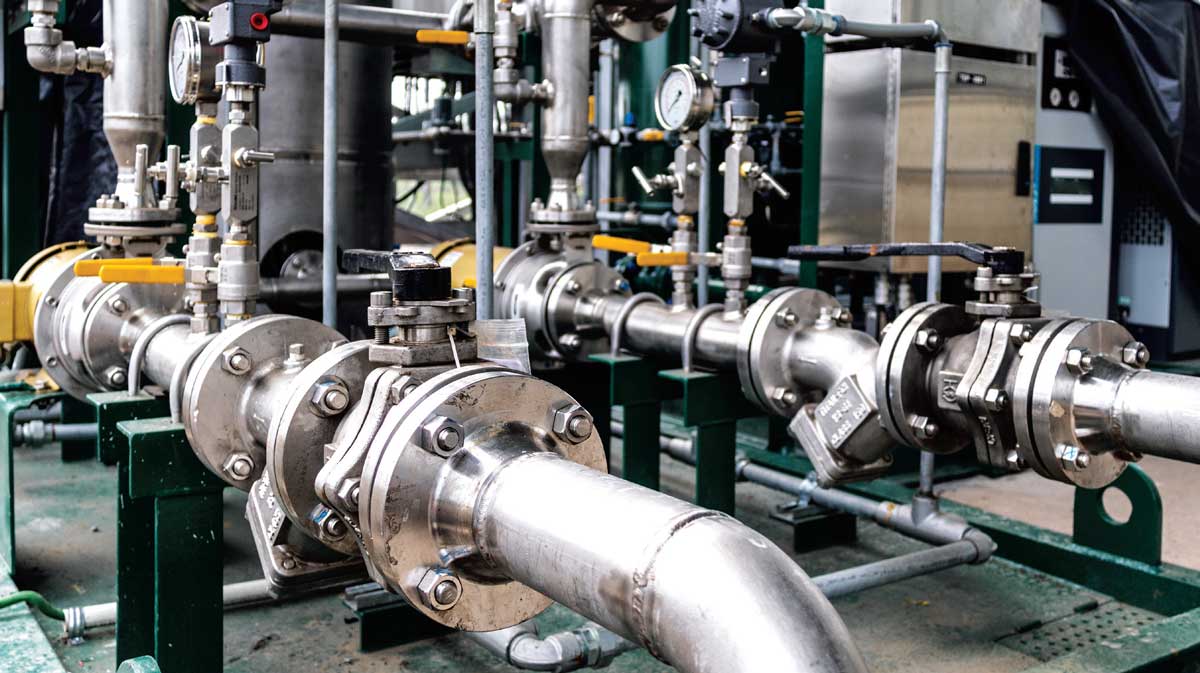
Dr Prateek Sharma, KPK Reddy, Moon Chourasia and Dr DK Panda, National Council for Cement and Building Materials (NCCBM), Ballabgarh, India, present their ideas on the integration of high ash refuse derived fuel and the role of gasification in the cement manufacturing process.
Refuse derived fuel (RDF) has been identified as one of the major fuels for the Indian cement industry to achieve TSR of around 30 per cent by 2030. However, challenges persist in maximising RDF utilisation in cement production like incomplete combustion, increased specific heat consumption, and inconsistent RDF quality due to varying sources and moisture content which can be overcome by RDF gasification. Gasification of RDF produces syngas that can be used as fuel, offering advantages in terms of combustion efficiency and clinker quality, particularly valuable for white cement manufacturing. Moreover, the ash produced in the gasification process can be repurposed as an alternative raw material. Experimental runs in a downward draft gasifier demonstrated the feasibility of RDF gasification and RDF-biomass co-gasification. A multi-zone gasifier model was also developed to simulate RDF gasification, taking into account the heterogeneous nature of RDF. The model successfully predicted the properties of the producer gas in each zone, providing a valuable tool for optimising gasification processes.
Nature of solid waste changes as societies get richer and more urbanised. Instead of biodegradable waste (wet), households generate more and more quantities of plastics, metals, and other non-biodegradable (dry) waste. 65 million tonnes of waste are generated annually in India of which over 62 million tonne is the share of Municipal Solid Waste (MSW). Only about 75-80 per cent of the municipal waste gets collected and out of this only 22- 28 per cent is processed and treated. The remaining MSW is deposited at dump yards. With population explosion and urbanisation, this trajectory is expected to reach 165 million tonnes by 2031, and up to 436 million tonnes by 2045. With this precipitous rise in the quantity of waste generated, the waste collection efficiency in India still has a lot to catch up.
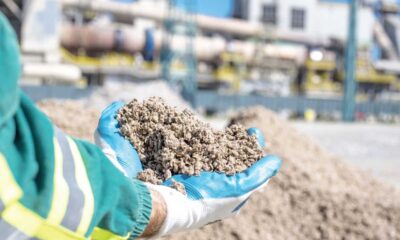
RDF is a form of MSW that has been sorted and subject to basic processing treatment. MSW is treated by shredding and dehydrating to produce Refuse Derived fuel (RDF). It largely comprises combustible components of municipal waste which has more consistent combustion characteristics than unsorted MSW. RDF roughly comprises 15-20 per cent of MSW. As per the current scenario, the availability of RDF, considering the proximity of cement plants in India, is estimated to be around 13600 tonnes of RDF per day, equivalent to 4.96 million tonnes per annum. The Indian cement industry has improved to around 7 per cent thermal substitution rate (TSR) and is targeting to achieve 30 per cent TSR by 2030. Currently, all high TSR plants (14-30 per cent) are using RDF and plastics as major fuel with 69 per cent share in quantity. Currently, biomining is also being practised all over the country’s landfills to produce fractions comprising RDF, biodegradable matter, compost, and inert component. RDF produced is being sent to cement plants. However, there are operational challenges.
CHALLENGES WITH RDF USAGE
The maximum thermal substitution rate (TSR) achieved through RDF is 80-100 per cent in the calciner, while it is limited to 50-60 per cent in the kiln burner. Different AF pre-combustion technologies, advancements in multi-channel burners, and new satellite burners have supported high TSR worldwide. Extensive efforts in modelling kiln burners and calciners lead to enhanced TSR. However, the cement industry still faces fundamental operational issues such as high CO and incomplete combustion, increased specific heat consumption, reduced flame temperature, jamming and buildups. The nature of RDF including moisture content varies enormously with changes in sources. Improper segregation, low calorific value, high chloride content, cost fluctuations and poor characterisation facilities leads to an inconsistent quality altogether affecting the production and quality. Higher RDF utilisation sometimes requires a kiln bypass system which along with pre-processing also adds up as an additional cost.
RDF GASIFICATION AS A GAME CHANGER
RDF gasification can pose a promising solution to eliminate operational issues. Gasification is the thermal conversion of carbonaceous matter into a syngas by partial oxidation. Here the trash is heated in a low-oxygen environment to the point that it breaks down into its constituent molecules. This reaction has two products: a combustible gas called syngas and inert ash or char. Syngas can be directly burned in the calciner/kiln with minimal prior cleaning. Syngas has better combustion properties in the calciner than even small size solid waste directly fed to the calciner. Moisture will participate in gasification reactions to a certain extent and increase the NCV of syngas by contributing to H2 production through water gas shift reaction. NCV variations of the input fuel mix (coal and syngas) are reduced substantially due to consistent syngas composition. Moreover, it offers better clinker quality due to no additional ash in the clinker. No ash absorption by clinker can also facilitate the usage of marginal and low-grade limestone. Thus, a hard-to-burn fuel can be made easily combustible. Gasification integration with the cement industry will help achieve the target of 25 per cent TSR within the timeframe. The GOI has set a target of 100 million tonnes of coal gasification by the year 2030. This will also facilitate co-gasification of coal and waste, having the advantage of improved syngas quality.
GASIFIER INTEGRATION CONFIGURATIONS
There can be different configurations for integrating the gasifier with the pyroprocessing system reported in literature. Fuel gasification taking place in a gasifier in the presence of kiln exhaust gas at high temperature along with a portion of tertiary air from the cooler can be one option. Syngas gets burnt in the calciner in the presence of balanced tertiary air to provide heat for raw meal calcination. Tertiary air is split between calciner and gasifier. Another configuration involves a unique concept of separate hydrogen production taking advantage of the cement manufacturing process. Ash from the gasifier can be sent to the smoke chamber where some unburnt carbon present in ash will get burnt, and the heating value can be utilised for combustion purpose. Another way of ash utilisation is an alternative raw material. The syngas can also prove to be very helpful in white cement manufacturing. As per IS 8042, the iron content in white cement should be less than 1 per cent and the degree of whiteness should be greater than 70 per cent. As syngas has no residual ash, the whiteness index and iron content can be easily maintained. One configuration involves a separate gasifier set up and syngas produced being sent to the calciner replacing conventional fuel.
MODELLING and EXPERIMENTAL RUNS
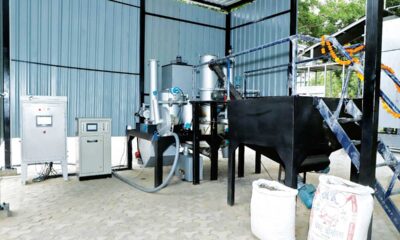
National Council for Cement and Building Materials (NCCBM) in collaboration with the Birla Institute of Technology (BITS) Pilani-Pilani campus carried out experimental runs in a downward draft gasifier for RDF gasification and RDF-biomass mix co-gasification. RDF contains ash in the range of 30-50 per cent. A multizone gasifier model was developed for RDF gasification having four zones, i.e., drying, pyrolysis, oxidation/combustion and reduction/gasification. In each zone, different thermochemical phenomena occur. A stoichiometric approach is followed for modelling the drying, pyrolysis and combustion zone. The reduction zone is modelled as a cylindrical fixed bed reactor with a uniform cross-sectional area. The developed differential equations are solved using simulation software to predict the producer gas properties. Further, to study the integration of gasifier with calciner, a stoichiometric based model has been developed for calciner along with material and energy balance which predicted calciner outlet temperatures, gas composition, SO2 and CO2 for co-processing of producer gas as an alternative fuel in white cement plant replacing petcoke at 15 per cent TSR.
RESULTS
Gasification experiments were performed with RDF fluff and RDF pelléts as feedstock and air as gasifying agents. The gas yield ranges from 2.43-3.65 Nm/kg RDF with LHV of 1.87-2.24 MJ/Nm3 RDF and cold gas efficiency of 44-60 per cent. It is observed that RDF containing high ash content in the range of ~31-51 per cent is quite challenging to gasify in a downdraft-type gasifier with operational bridging and clinker formation issues. Upon adding O2 to air as a gasifying agent, LHV and CGE increased by 78 per cent and 30 per cent, respectively further, more experimental runs were carried out using RDF and biomass mix in different ratios using air as a gasifying agent. RDF-biomass mix co-gasification results are better than RDF gasification in terms of LHV and CGE. Upon adding O2 to air as a gasifying agent for a 50:50 RDF-biomass mix, LHV and CGE uncreased by 35.5 per cent and 8.35 per cent, respectively.
The proposed multizone gasifier model can predict the output of each zone satisfactorily since the model assumptions are more realistic and cater to the heterogeneous nature of RDF. The impact of equivalence ratio (ER), moisture content and reduction zone length on the performance of the gasifier are evaluated. For calciner modelling at 15 per cent
TSR, the model predicted the calciner outlet temperature accurately compared to the baseline scenario (100 per cent petcoke firing). Considering the biogenic content in RDF, CO2 mitigation potential due to RDF utilisation as producer gas is estimated to be 10.5 per cent of the baseline scenario at 15 per cent TSR.
CONCLUSION
RDF gasification stands out as a transformative approach to address operational challenges encountered in maximising RDF utilisation. By converting RDF into a syngas, this method provides several advantages apart from overcoming the current operational challenges during co-processing of RDF in cement production. The experimental runs and modelling efforts conducted in this research explore the viability of RDF gasification as a game-changing solution. This aligns well with India’s broader environmental, energy and waste utilisation objectives, positioning RDF gasification as a sustainable and efficient means of addressing the growing issue of solid waste while contributing to the country’s sustainability goals.
ABOUT THE AUTHORS
Dr Prateek Sharma is an energy auditor, manager at Centre for Mining, Environment, Plant Engineering, and Operations. He is also a Programme Leader of Advanced Fuel Technology programme at NCCBM.
KPK Reddy is an energy auditor, Manager at Centre for Mining, Environment, Plant Engineering and Operations. He is also a member of Project Engineering and System Design at NCCBM.

Moon Chourasia is a Project Scientist at the Centre for Mining, Environment, Plant Engineering and Operations at NCCBM.

Joint Director, NCB has over 36 years of experience in the areas of Geology, Raw Materials and Mining and administrative experience as a Team Leader, Programme Leader and Head of the Centre. He has executed more than 50 major industrial R&D projects.








Concrete
Cement Prices Likely to Rise Rs. 10-15 per Bag from Mid-October
Input costs and steady demand may drive cement price increases
Concrete
Nuvoco Marks 10 Years, Targets 35 MMTPA Capacity by FY28
Nuvoco celebrates a decade of growth, targeting 35 MMTPA cement capacity by FY28.

Concrete
J&K Government Notifies City Gas Distribution Policy
Policy targets PNG and CNG expansion across all 20 districts



Cement Prices Likely to Rise Rs. 10-15 per Bag from Mid-October

Nuvoco Marks 10 Years, Targets 35 MMTPA Capacity by FY28

J&K Government Notifies City Gas Distribution Policy

JSW Cement Commissions 1 MTPA Grinding Unit at Nagaur

JSW Cement Commissions 1 MTPA Unit in Rajasthan
Cement Prices Likely to Rise Rs. 10-15 per Bag from Mid-October
Nuvoco Marks 10 Years, Targets 35 MMTPA Capacity by FY28
J&K Government Notifies City Gas Distribution Policy
JSW Cement Commissions 1 MTPA Grinding Unit at Nagaur
JSW Cement Commissions 1 MTPA Unit in Rajasthan
-

 Concrete3 weeks ago
JSW Cement Receives Rs. 2.3 bn GST Demand Notice
-

 Concrete3 weeks ago
Andhra Pradesh Clears Rs. 30 bn My Home Cement Plant
-
 Concrete4 weeks ago
Jammu Division Begins First Cement Rail Traffic to Anantnag
-
 Concrete3 weeks ago
Montra Electric, Wonder Cement Deploy 250-Vehicle EV Fleet