ICR explores the various facets around the integration of Supplementary Cementitious Materials (SCMs) into the cement manufacturing process, which has emerged as a crucial solution to enhance cost-effectiveness and environmental sustainability, resulting in effective management of issues such as carbon emissions and resource usage.
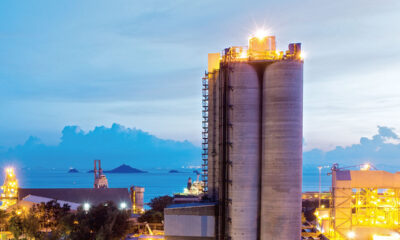
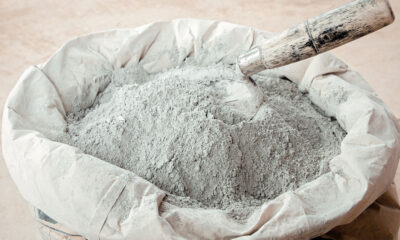
India is the second largest producer of cement in the world. Limestone is at the core of its production as it is the prime raw material used for production. The process of making cement involves extraction of this limestone from its quarries, crushing and processing it at the cement plant under extreme temperatures for calcination to form what is called a clinker (a mixture of raw materials like limestone, silica, iron ore, fly ash etc.). This clinker is then cooled down and is ground to a fine powder and mixed with gypsum or other additives to make the final product – cement. The reason we are elucidating the cement production process is to look at how supplementary cementitious materials (SCM) can be incorporated into it to make the process not only more cost effective but also environmentally responsible.
Limestone is a sedimentary rock composed typically of calcium carbonate (calcite) or the double carbonate of calcium and magnesium (dolomite). It is commonly composed of tiny fossils, shell fragments and other fossilised debris. This sediment is usually available in grey colour, but it may also be white, yellow or brown. It is a soft rock and is easily scratched. It will effervesce readily in any common acid. This naturally occurring deposit, when used in
large volumes for the cement making process is also depleting from the environment. Its extraction is the cause of dust pollution as well as some erosion in the nearby areas.
The process of calcination while manufacturing cement is the major contributor to carbon emission in the environment. This gives rise to the need of using alternative raw materials to the cement making process. The industry is advancing in its production swiftly to meet the needs of development happening across the nation.
Ratings agency Crisil forecasts an all-Indian cement consumption growth of 11 per cent year-on-year to 440Mt during the current financial year. Crisil attributed this to a 51 per cent year-on-year rise in infrastructure spending, to US$ 6.75 billion throughout the year.
Strong expansion of the industrial sector, which has fully recovered from the COVID-19 pandemic shock, is one of the main demand drivers for the cement industry. As a result, there is a strong potential for an increase in the long-term demand for the cement industry. Some of the recent initiatives, such as the development of 98 smart cities, are expected to significantly boost the sector.
Aided by suitable governmental foreign policies, several foreign players such as Lafarge-Holcim, Heidelberg Cement and Vicat have invested in the country in the recent past. A significant factor, which aids the growth of this sector, is the ready availability of raw materials for making cement, such as limestone and coal.
According to Indian Brand Equity Foundation (IBEF), cement demand in India is exhibiting a CAGR of 5.65 per cent between 2016-22. Nearly 32 per cent of India’s cement production capacity is based in South India, 20 per cent in North India, 13 per cent in Central, 15 per cent in West India, and the remaining 20 per cent is based in East India. India’s cement production is expected to increase at a CAGR of 5.65 per cent between FY16-22, driven by demands in roads, urban infrastructure and commercial real estate. India’s cement production was expected to range between 380-390 million tonnes in FY23, a growth rate of 8 to 9 per cent y-o-y.
Between FY12 and FY23, the installed capacity grew by 61 per cent to 570 MT from 353 in FY22. The Indian cement sector’s capacity is expected to expand at a compound annual growth rate (CAGR) of 4 to 5 per cent over the four-year period up to the end of FY27. It would thus begin the 2028 financial year at 715-725 MT/ year in installed capacity.
Sameer Bharadwaj, Head – Manufacturing Excellence, JK Cement, says, “The key feature of SCMs is their Pozzolanic properties, which refers to its capability to react with calcium hydroxide (CH) to form calcium silicate hydrate (C-S-H). Likewise, with the increased conventional fuel prices, adopting green energy utilisation is now become a necessity in order to bring down the cement manufacturing cost, in a similar manner adoption of SCMs to a larger extent is a must requirement in order to bring down the clinker factor because clinker manufacturing will anyhow emit carbon emissions for calcination of limestone, but what we as a sustainable oriented manufacturer can contribute toward less carbon emissions is to produce more blended cement with less requirement of clinker.”
“At JK Cement, we manufacture various types of blended cements in which the contribution of SCM is well within the BIS norms. Major SCM’s are fly ash and slag which are procured from nearby thermal power plants and steel industries. We produce PPC (fly ash based) at all our manufacturing units in which 35 per cent (maximum) fly ash is being utilised. Also, to promote the more usage of blended cement, we are producing premium category PPC Cement which has a compressive strength equivalent to OPC. In our Muddapur plant in the South of India, we are also producing Portland Slag Cement (PSC),” he adds.
“The production of SCMs require less energy as compared to traditional cement and support in reducing carbon emission and use of fossil fuels to combat environmental challenges like depleting natural resources, climate change and air pollution. The other advantage of using SCM is enhancing the durability of concrete. Mixing SCMs can make concrete long-lasting and efficient, promoting conservation of resources. By using durable concrete with SCMs during construction of green buildings, it becomes possible to reduce the need for frequent repairs, replacements, and extend the lifespan of buildings. For instance, materials such as fly ash and slag carry the potential to mitigate alkali-silica reactions which often lead to formation of cracks in buildings and impact concrete’s durability.
By incorporating SCMs, it becomes possible to avoid the damaging effects and achieve stronger and structurally sound buildings with longer lifespans,” says Arun Shukla, President and Director, JK Lakshmi Cement.
Dr SB Hegde, Professor Jain University, India and Visiting Professor, Penn State University, United States of America says, “The use of SCMs in cement production is primarily to reduce carbon emissions. This can result in tax incentives and compliance benefits, further improving the overall profitability of cement manufacturing. Let us take a hypothetical example of an Indian cement plant with an annual production capacity of one
million tonnes.”
“SCMs like fly ash, in the case of Wonder Cement, are actually an industrial waste product, which if left unattended, can cause nuisance for the environment. Our cement plant consumes this industrial waste and in turn also preserves the natural resources of limestone and coal which would be used as a raw material and as a source of energy for the manufacturing of cement,” says RS Kabra, Executive Vice President – Commercial, Wonder Cement.
According to a report by McKinsey titled Cementing Your Lead: The Cement Industry in the Net-Zero Transition, October 2023, alternative cementitious materials, such as low-carbon cement or geopolymer concrete, have historically struggled to scale. However, current investment trends and rapid technological advancements have allowed start-ups to disrupt the alternative-cementitious space with low-carbon offerings. For example, Brimstone replaces limestone in traditional cement production with calcium-silicate rock, and Sublime Systems uses an electrochemical process that eliminates the need for a kiln. Although these approaches are novel, investment data indicates that appetite for alternative cementitious materials is high: Brimstone announced a $55 million funding round in 2022, and Sublime Systems has raised more than $40 million in two funding rounds since 2021.
In particular, supplementary cementitious materials (SCMs) offer promising ways to significantly reduce the carbon footprint of traditional cement and concrete. Traditional SCMs—such as fly ash, ground granulated blast-furnace slag (GGBFS), and silica fume—can be used to partially replace the clinker used in cement or the cement content used in concrete. This can have both sustainability and cost benefits, but SCMs are typically not fully leveraged.
In many markets, local and regional standards limit the volume of traditional SCMs in cement based on their hydraulic and cementitious properties. For example, the European Union limits fly ash to a maximum of 35 percent, whereas the United States limits it to 40 percent. New SCMs such as calcined clay, limestone, and recycled concrete may require a reevaluation of these standards to maximise both the performance and decarbonisation potential of cement and concrete, particularly as the availability of traditional SCMs decreases.
Exploring Long Term Benefits of SCMs
SCMs are materials that can be used in cement manufacturing to partially replace traditional Portland cement clinker, thereby reducing the environmental impact of cement production. The incorporation of SCMs in cement helps reduce the carbon footprint, energy consumption and natural resource usage associated with cement production.
Some of the most used SCMs are:
• Fly ash is a fine, powdery byproduct of coal combustion in power plants. It is rich in silica and alumina and is often used as an SCM in cement production. When properly processed and blended, fly ash can improve concrete workability, reduce heat of hydration, and enhance long-term durability.
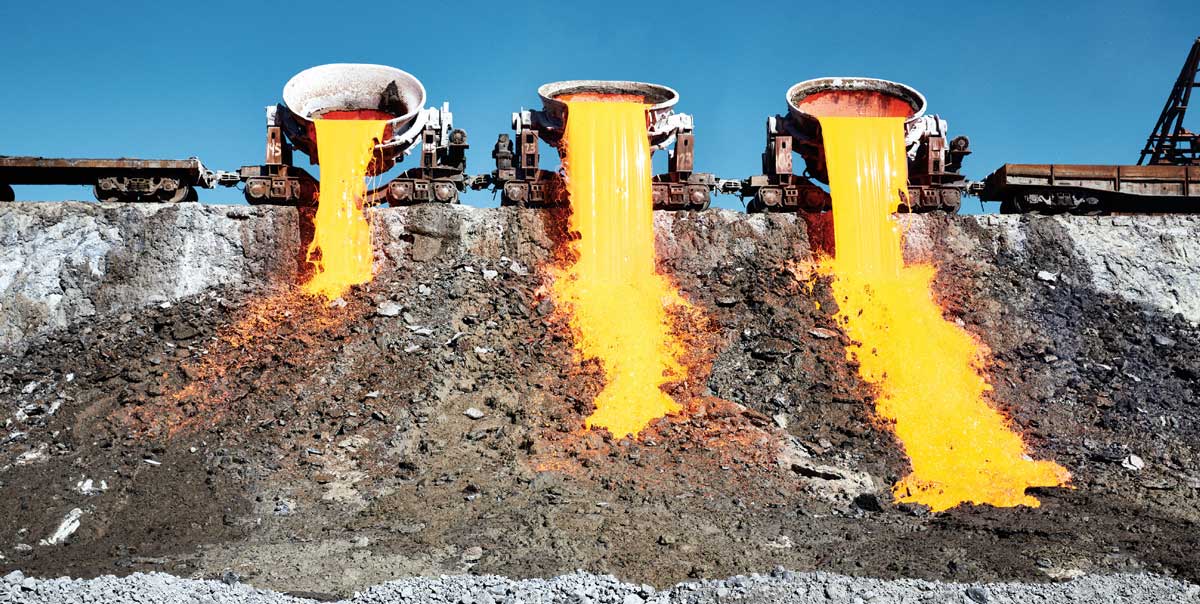
• Blast furnace slag is a byproduct of iron production and consists of glassy granules with latent hydraulic properties. Ground granulated blast furnace slag (GGBFS) is commonly used as an SCM in cement to improve concrete properties and reduce the heat of hydration.
• Silica fume is a very fine, amorphous silicon dioxide powder obtained from the production of silicon and ferrosilicon alloys. It is highly reactive and is used in small quantities to enhance the strength, durability, and impermeability
of concrete.
• Natural pozzolans, such as calcined clay, calcined shale, or volcanic ash, can be used as SCMs in cement manufacturing. They are rich in reactive silica and alumina and can improve concrete performance when properly processed and blended.
• Limestone and calcined clays (LC3) are materials that can be used in cement to reduce the clinker content. Limestone and clay are mixed with clinker, reducing the carbon dioxide emissions associated with traditional Portland cement.
“Use of alternative fuels and raw materials impacts the emission rates of the cement plant. 3 to 4 per cent of global greenhouse gas emissions are caused by landfills. Use of alternative fuels and raw materials avoids formation of dioxins and furans and
reduces Nox generation” says Amarjit Bhowmic, GM – Procurement (AFR Incharge), Heidelberg Cement India.
“CEMS is the quantity of hazardous substances coming from the stacks, measurements are performed every 2 seconds and are recorded in a secured place, where human access is not possible. Annual spot checks are done by a third party” he adds.
IMPACT OF SCMs
The use of SCMs in the production of cement can have several significant impacts, both positive and negative, on the cement manufacturing process. The most significant positive impact of using SCMs is the reduction in carbon emissions. SCMs allow for a partial replacement of clinker, which is the most energy-intensive and carbon-intensive component in cement production.
By using SCMs, cement manufacturers can reduce their greenhouse gas emissions, as clinker production is responsible for a substantial portion of the carbon footprint associated with cement. Additionally, the incorporation of SCMs typically requires less energy compared to clinker production, leading to cost savings and environmental benefits. This reduction in energy consumption also contributes to environmental sustainability by conserving natural resources.
Many SCMs can enhance the performance of cement, such as increasing durability, reducing heat of hydration, and improving workability. This can lead to better-quality concrete and greater customer satisfaction. Furthermore, SCMs are often derived from industrial byproducts or waste materials, and their use in cement production helps repurpose
and recycle these materials, reducing the need for landfill disposal.
Dr Hegde explains how by incorporating 20 per cent fly ash, a common SCM, into its cement mix, the plant can realise significant cost savings, in the following ways:
• Reduced raw material costs: Assuming a cost savings of Rs 200 per tonne (as fly ash is typically cheaper than clinker), the annual savings would be Rs 20 million.
• Energy savings: A 10 per cent reduction in energy costs due to reduced clinker production would result in savings of Rs 10 million.
• Transportation costs: Savings from reduced transportation costs might amount to Rs 5 million annually.
• Regulatory benefits: Tax incentives and compliance benefits might contribute another Rs 5 million.
This hypothetical case illustrates that by incorporating SCMs into their cement production processes, Indian cement manufacturers can potentially save Rs 40 million annually. These cost savings can significantly impact the overall profitability of the business. Beyond cost savings, this practice aligns with sustainability goals, reduces carbon emissions, and opens doors to regulatory benefits.
Kabra affirms, “With the use of this supplementary cementitious material, we are saving substantial heat value, electricity and natural minerals.”
As the Indian construction industry continues to expand, cement manufacturers should get the new amendment done as early as possible from BIS for higher addition of SCMs in blended cements and also get the new IS codes in place for ‘Newer and Emerging Cementitious’ materials in the months to come.
Role of Technology
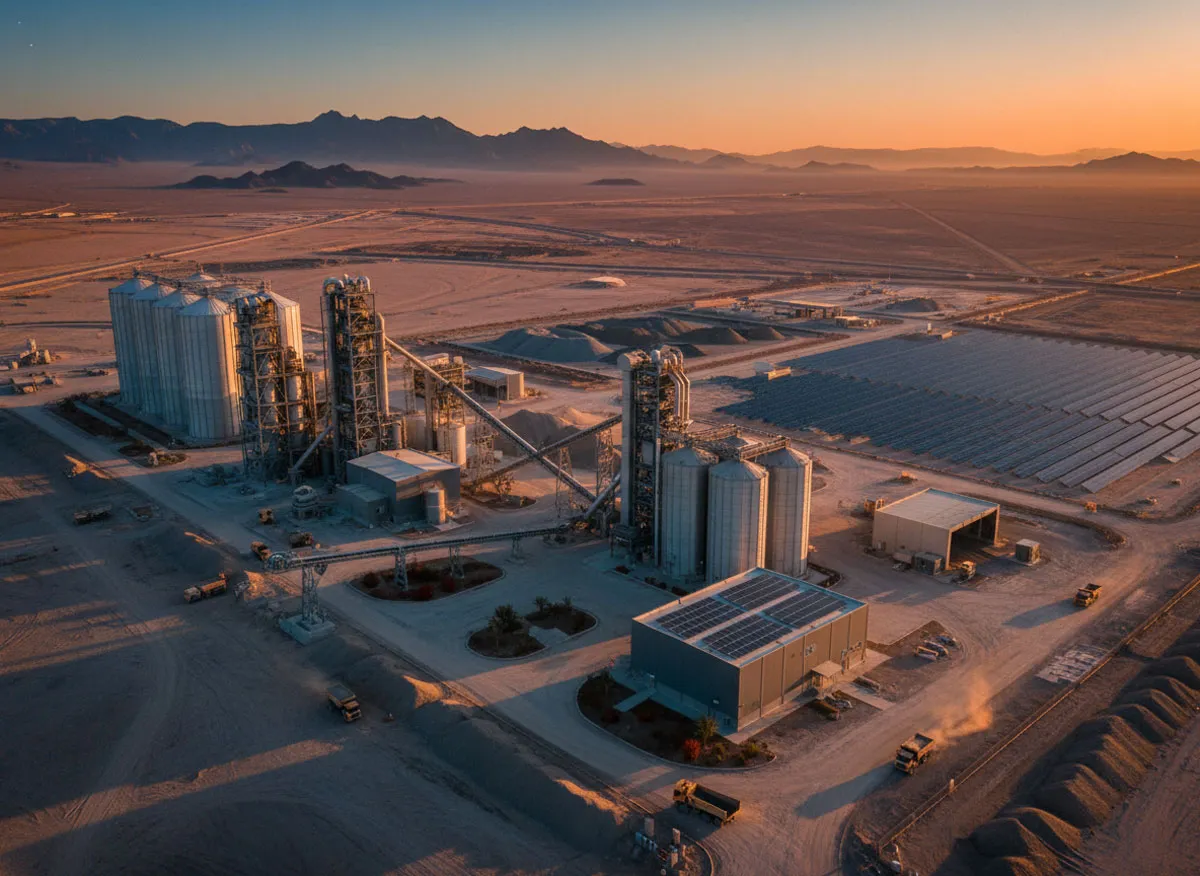
Technology is fundamental to the effective use of supplementary cementitious materials in cement plants. It allows for precise control over material handling, quality, mix design, and production processes, resulting in more sustainable and high-performance cement products. Additionally, technology helps cement plants comply with environmental regulations and reduce their carbon footprint, contributing to a greener and more sustainable cement industry.
Advanced systems streamline SCMs handling and storage, employing automated conveyors and robotics to efficiently transport materials while minimising manual labour. Quality control is bolstered by cutting-edge technology, with online sensors and analytical instruments continuously monitoring SCMs properties to meet stringent standards.
Furthermore, advanced grinding and blending technologies ensure the homogeneous mixing of SCMs, enhancing reactivity in the final cement product. In the kiln, energy-efficient designs and alternative fuels are deployed to reduce energy consumption and carbon emissions during clinker production. Alternative clinker materials, activated SCMs, energy-efficient equipment, and emissions control technologies all contribute to a more sustainable and eco-friendly cement production process.
Conclusion
Cement manufacturing in India, like many parts of the world, faces the dual challenge of meeting the growing demand for construction materials while minimising its environmental impact. A critical strategy employed in this endeavour is the incorporation of SCMs in cement production.
As India continues to align its construction practices with global sustainability initiatives, these standards play a pivotal role in fostering innovation and responsible SCMs use in cement manufacturing. The collaboration between industry stakeholders and the BIS standards ensures that the nation’s construction materials are not only of high
quality but also environmentally conscious,contributing to a more sustainable and resilient built environment.